
In the ever-evolving landscape of firearm technology, few accessories spark as much intrigue and misunderstanding as the suppressor. Often mislabeled as a “silencer” in popular culture, this sophisticated device represents a significant advancement in acoustic engineering applied to firearms. Far from rendering a gunshot inaudible, a suppressor is a precision-engineered gadget designed to mitigate the explosive sound signature, reduce muzzle flash, and enhance the overall shooting experience. Understanding its intricate design, the scientific principles behind its operation, and its practical applications reveals a compelling narrative of technological ingenuity aimed at refining a powerful tool. This exploration delves deep into the suppressor as a piece of advanced tech, examining its mechanics, materials, evolution, and practical impact.

The Core Technology: How Suppressors Work
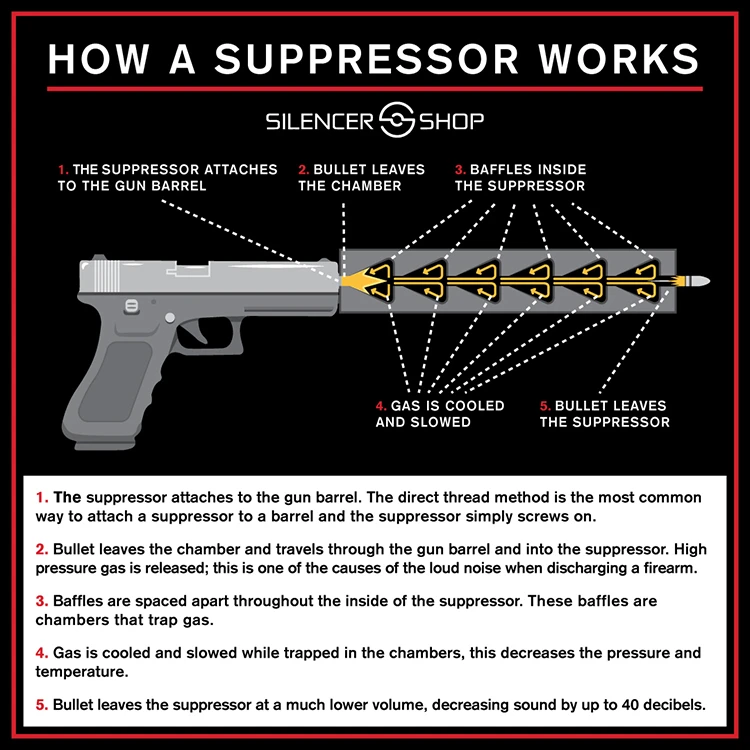
At its heart, a firearm suppressor is an acoustical and thermodynamic marvel. Its primary function is to manage the rapid expansion of hot, high-pressure gases that propel a projectile, which are the fundamental source of a gunshot’s deafening report. When a bullet exits the barrel, these gases escape supersonically, creating a shockwave and the characteristic “bang.” A suppressor works by creating an environment where these gases can expand and cool more gradually before being released into the atmosphere, significantly reducing the sound intensity.
Sound Attenuation Mechanisms
The process of sound attenuation within a suppressor is multifaceted, relying on a combination of physical principles:
-
Gas Redirection and Expansion Chambers: Upon firing, the bullet passes through the suppressor. Immediately behind it, the high-pressure gases are channeled into a series of expansion chambers. These chambers provide volume for the gases to expand, reducing their pressure and velocity. This initial expansion is crucial in dropping the gas pressure to below supersonic speeds before they exit the device.
-
Baffles and Internal Geometry: The most distinctive internal feature of a suppressor is its baffle stack. Baffles are a series of precisely shaped and spaced obstructions designed to create turbulence and further redirect the escaping gases. Each baffle acts like a small obstacle course, forcing the gases to change direction, slow down, and mix with cooler air inside the suppressor. This turbulent flow dissipates kinetic energy from the gas, converting it into heat and further reducing the acoustic signature. Different baffle designs, such as K-baffles, conical baffles, or even advanced “flow-through” designs, offer varying levels of sound reduction, recoil management, and backpressure mitigation.
-
Heat Absorption and Dissipation: As gases expand and collide with the internal surfaces of the suppressor, a significant amount of their energy is converted into heat. The material properties of the suppressor play a critical role in absorbing and dissipating this heat, contributing to both the acoustic performance and the device’s durability.
Materials Science and Construction
The extreme conditions within a suppressor — intense heat, high pressure, and corrosive gasses — demand robust and specialized materials. Modern suppressors are testament to advanced materials science:
-
Metals and Alloys: The most common materials include stainless steel (for durability and corrosion resistance), titanium (for lightweight strength and excellent heat dissipation), and inconel (a nickel-chromium superalloy prized for its extreme heat resistance, making it ideal for high-volume or full-auto fire). Aluminum is sometimes used for lighter, lower-pressure applications, though less common for direct-thread baffles due to heat constraints.
-
Manufacturing Processes: Precision machining is paramount in suppressor construction to ensure concentricity and prevent baffle strikes (where the bullet clips an internal baffle). Advanced manufacturing techniques like wire EDM (Electrical Discharge Machining) are used for precise baffle cuts. More recently, additive manufacturing (3D printing) is revolutionizing suppressor design, allowing for complex internal geometries that were previously impossible to achieve through traditional machining. This opens doors for optimized gas flow paths, integrated monolithic cores, and tailored performance characteristics.
-
Coatings and Finishes: External coatings (e.g., Cerakote, nitride finishes) provide corrosion resistance, reduce glare, and enhance aesthetics. Internal coatings can further protect against carbon buildup and reduce friction.
Key Components and Their Roles
A typical suppressor comprises several critical components, each serving a distinct purpose:
-
Mounting System: This attaches the suppressor to the firearm. Common types include direct thread (screwing directly onto the barrel threads) and quick-detach (QD) systems, which use proprietary muzzle devices (flash hiders or muzzle brakes) that allow for rapid attachment and removal. QD systems often incorporate features to reduce carbon lock and ensure consistent point-of-impact shift.
-
Blast Chamber: The first chamber the bullet enters after exiting the barrel. It’s designed to contain the initial surge of high-pressure gases, reducing their velocity before they reach the baffle stack. This chamber is often the most heavily stressed part of the suppressor.
-
Baffle Stack/Monocore: The core of the suppressor, consisting of multiple baffles or a single, intricately machined monolithic core. This is where the primary gas expansion and redirection occur, responsible for the bulk of the sound reduction.
-
Tube/Housing: The outer shell that encases the internal components, providing structural integrity and protection.
-
End Cap: The cap at the muzzle end of the suppressor, through which the bullet exits. It helps to direct the remaining gases and protect the internal components.
Beyond Sound: Additional Technological Benefits and Considerations
While sound reduction is the primary perceived benefit, suppressors offer a suite of other technological advantages that enhance the shooting experience and expand tactical capabilities. These aspects highlight the suppressor as more than just an acoustic dampener, but a comprehensive firearm enhancement gadget.
Recoil Reduction and Muzzle Flash Mitigation
-
Recoil Reduction: The suppressor’s ability to redirect and manage exiting gases inherently contributes to recoil mitigation. By trapping and slowing these gases, the forward thrust often associated with muzzle blast is diminished, reducing the felt recoil for the shooter. This translates to quicker follow-up shots, improved accuracy, and a more comfortable shooting experience, especially with higher-caliber firearms. Some suppressor designs specifically incorporate features like internal expansion volumes or venturi ports to optimize this effect.
-
Muzzle Flash Mitigation: The bright flash accompanying a gunshot is caused by hot, unburnt gases igniting upon contact with atmospheric oxygen. By containing these gases within the suppressor and allowing them to cool and expand before exiting, a significant reduction, often complete elimination, of muzzle flash is achieved. This is a critical tactical advantage, preventing the shooter from being visually exposed in low-light conditions and preserving night vision. For hunters, it also prevents startling game with a bright flash.
Enhanced Shooting Environments
The technological benefits of suppressors extend to creating more conducive and safer shooting environments:
-
Hearing Protection: The most immediate and significant benefit. While a suppressed firearm is rarely “silent,” it typically reduces the sound pressure level to below the 140 dB threshold, often bringing it down to a level where dedicated hearing protection might not be strictly necessary, or at least significantly reduces the risk of permanent hearing damage. This allows for clearer communication between shooters and instructors on the range, and a more pleasant experience for everyone present.
-
Reduced Noise Pollution: For shooting ranges near residential areas or for hunters in wilderness settings, suppressors dramatically reduce the environmental noise footprint. This can help mitigate complaints, allow for more flexible range hours, and foster better community relations for shooting sports.
-
Tactical Applications: In military and law enforcement contexts, suppressors are invaluable. They facilitate stealth operations by reducing the signature of gunfire, make communication easier within a team without the need for hearing protection, and disorient the enemy’s ability to locate the shooter. The reduction of muzzle flash is also crucial for maintaining concealment and preserving night vision.
Integration and Compatibility
Modern suppressor technology emphasizes modularity and broad compatibility, allowing users to tailor their setups:
-
Attachment Methods: Beyond direct thread and QD, some suppressors offer interchangeable end caps or mounting systems, allowing a single suppressor to be used across multiple firearms or with different calibers within a specified range.
-
Firearm Types: Suppressors are designed for a vast array of firearms, from rimfire pistols and rifles to centerfire rifles and even shotguns. The internal volume and material strength are scaled according to the caliber and pressure involved.
-
Caliber Considerations: Suppressors are typically rated for specific calibers or ranges of calibers. A .30 caliber suppressor can usually handle anything up to .30 caliber, including smaller rounds like 5.56mm. However, using a suppressor with a bullet diameter larger than its bore can lead to a catastrophic “baffle strike” or even structural failure. Understanding these compatibility specifics is crucial for safe and effective use.
Evolution of Suppressor Technology and Design Trends
The journey of the suppressor from its early 20th-century origins to today’s high-tech devices is a testament to continuous innovation in acoustic engineering, materials science, and manufacturing.
Historical Development
-
Early Designs (Early 1900s): Hiram Percy Maxim, son of machine gun inventor Hiram Stevens Maxim, patented the first commercially successful “Maxim Silencer” in 1909. These early designs often used a series of offset internal discs or spiral baffles to deflect and cool gases. They were relatively crude by modern standards but demonstrated the fundamental principle.
-
Mid-20th Century Advancements: During WWII and the Cold War, military interest spurred further development. Designs became more robust, often employing simple cone baffles. Materials were generally steel, and manufacturing was less precise, leading to bulky and less efficient devices.
-
Post-War Innovation: The late 20th century saw a greater focus on efficiency and durability. Researchers began to deeply understand gas dynamics within the suppressor, leading to more refined baffle geometries and material selections.
Modern Innovations
The 21st century has been a golden age for suppressor technology, driven by advancements in materials, manufacturing, and computational fluid dynamics (CFD):
-
Modular Designs: Many modern suppressors feature modular components, allowing users to change the length, caliber rating, or even internal baffle stack. This versatility means a single suppressor can serve multiple roles, adapting to different firearm platforms or mission requirements. For instance, a long configuration might be used for maximum sound reduction on a bolt-action rifle, while a shorter module could be used on a carbine where maneuverability is key.
-
3D Printing (Additive Manufacturing): This has been a game-changer. 3D printing allows for the creation of incredibly complex, single-piece monocore designs or highly optimized baffle structures that would be impossible or cost-prohibitive to machine traditionally. These designs can precisely control gas flow, improve heat dissipation, and optimize acoustic performance in ways previously unimagined. Materials like titanium and inconel are now regularly 3D printed into suppressor components.
-
Advanced Materials: Beyond traditional metals, composite materials and more exotic alloys are being explored to further reduce weight, enhance heat resistance, and improve durability, pushing the boundaries of what’s possible in terms of size-to-performance ratio.
-
Flow-Through Designs: A significant recent innovation aims to reduce “backpressure.” Traditional suppressors trap a considerable volume of gas, which can be forced back into the firearm’s action, causing increased wear, carbon fouling, and sometimes reliability issues on gas-operated firearms. Flow-through designs actively vent gases forward, reducing the amount pushed back into the system, improving firearm function and shooter comfort by reducing gas blowback.
Future Outlook
The trajectory of suppressor technology points towards even greater sophistication:
-
Smart Suppressors: Integration of sensors to monitor internal temperature, pressure, or even round count, feeding data back to a smart device or heads-up display.
-
Integrated Systems: Suppressors built directly into a firearm’s barrel or receiver from the factory, offering a seamless and optimized package rather than an add-on accessory.
-
Adaptive Performance: Suppressors that can dynamically adjust their internal geometry (e.g., via actuated baffles) to optimize performance for different ammunition types or environmental conditions.
-
Further Miniaturization and Weight Reduction: Continuous efforts to achieve maximum sound reduction in the smallest and lightest package possible, without sacrificing durability.
Addressing Common Misconceptions and Technical Realities
Despite their technological sophistication, suppressors remain shrouded in popular misconceptions, primarily fueled by media portrayals. Understanding the technical realities is crucial.
The “Silencer” Misnomer vs. Suppressor
The most prevalent misconception is the term “silencer.” As discussed, no firearm accessory can render a gunshot truly silent. Even with a suppressor, a firearm still produces an audible report, especially when using supersonic ammunition (where the bullet itself creates a sonic crack). The term “suppressor” accurately describes its function: to suppress or reduce the sound signature, not eliminate it entirely. This technical distinction is vital for accurate discourse and understanding.
Decibel Reduction Metrics
Understanding decibel (dB) reduction is key to appreciating suppressor performance:
-
What is dB? Decibels are a logarithmic unit, meaning a small numerical change represents a large change in sound intensity. A 10 dB reduction roughly halves the perceived loudness.
-
Hearing Safety Threshold: The threshold for permanent hearing damage is generally accepted as 140 dB for impulse noise. Most suppressed firearms aim to bring the peak sound level below this mark.
-
Typical Performance: A good suppressor typically reduces firearm noise by 20-40 dB. While this is a significant reduction, a suppressed 9mm pistol might still register around 125-135 dB, comparable to a jackhammer or a very loud clap – certainly not silent. Suppressed .22LR firearms with subsonic ammunition can be much quieter, sometimes approaching the sound of an air rifle.

Maintenance and Durability
Like any piece of precision technology, suppressors require specific care:
-
Cleaning: Carbon buildup is an inevitable byproduct of combustion. Over time, this can reduce efficiency and even cause internal components to bind. While some suppressors are “user-serviceable” (designed to be disassembled for cleaning), many centerfire rifle suppressors are sealed units that rely on harsh cleaning solvents or ultrasonic cleaners to clear carbon buildup, as disassembly could compromise structural integrity.
-
Material Longevity: The lifespan of a suppressor is directly tied to its materials and how it’s used. Inconel and titanium suppressors are designed for extreme durability and high-volume fire, while aluminum or less robust steel might be better suited for lighter-duty applications.
-
Heat Management: Repeated rapid firing can cause suppressors to become extremely hot, potentially leading to mirage (heat haze distorting optics), material fatigue, and even burns. Proper cooling and understanding the suppressor’s heat rating are critical for safe and long-term use. Suppressor covers made from high-temperature resistant materials are often used to mitigate heat signature and prevent burns.
In conclusion, the firearm suppressor is a testament to sophisticated technological design and engineering. Far from being a mythical “silencer,” it is a precisely crafted device that leverages advanced physics, materials science, and manufacturing techniques to significantly reduce noise, mitigate recoil and flash, and enhance the overall utility and safety of firearms. As technology continues to advance, we can anticipate even more innovative designs, further cementing the suppressor’s role as a cutting-edge gadget in the world of firearms.
aViewFromTheCave is a participant in the Amazon Services LLC Associates Program, an affiliate advertising program designed to provide a means for sites to earn advertising fees by advertising and linking to Amazon.com. Amazon, the Amazon logo, AmazonSupply, and the AmazonSupply logo are trademarks of Amazon.com, Inc. or its affiliates. As an Amazon Associate we earn affiliate commissions from qualifying purchases.