
In the pursuit of peak vehicle performance, automotive technology has evolved far beyond simple horsepower metrics. Modern engineering focuses heavily on the “driver-machine interface,” ensuring that every input from the steering wheel translates into precise, predictable movement on the pavement. Central to this pursuit is a seemingly simple yet technologically vital component: the strut tower brace. While often viewed as a purely mechanical upgrade, the strut tower brace represents a sophisticated application of structural engineering, material science, and physics designed to solve the inherent limitations of unibody vehicle construction.

To understand what a strut tower brace is for, one must first understand the high-stress environment of a modern suspension system. As vehicles navigate corners at high speeds, the chassis is subjected to immense lateral forces. These forces do not just affect the tires and springs; they act upon the very frame of the car, causing microscopic but impactful warping. The strut tower brace is the technological solution to this “chassis flex,” serving as a bridge that maintains the integrity of the vehicle’s geometry under load.
The Engineering Behind the Brace: Maximizing Structural Integrity
At its core, a strut tower brace is a performance technology designed to increase the torsional rigidity of a vehicle’s chassis. In most modern passenger cars, the suspension is housed within “strut towers”—the reinforced parts of the unibody that hold the tops of the shock absorbers and springs. While these towers are designed to handle vertical loads from bumps and potholes, they are less equipped to handle the lateral (side-to-side) loads generated during hard cornering.
Understanding Chassis Flex
When a driver enters a sharp turn, the weight of the vehicle shifts to the outside wheels. This creates a leverage effect where the top of the strut tower on the outside of the turn wants to pull away from the engine bay, while the inside tower is pushed inward. This phenomenon is known as chassis flex. Although the movement might only be a few millimeters, it is enough to alter the suspension geometry. When the towers move, the camber and toe angles of the wheels change, resulting in a loss of tire contact patch and a “mushy” or less responsive steering feel.
The Role of Geometry in Suspension Tech
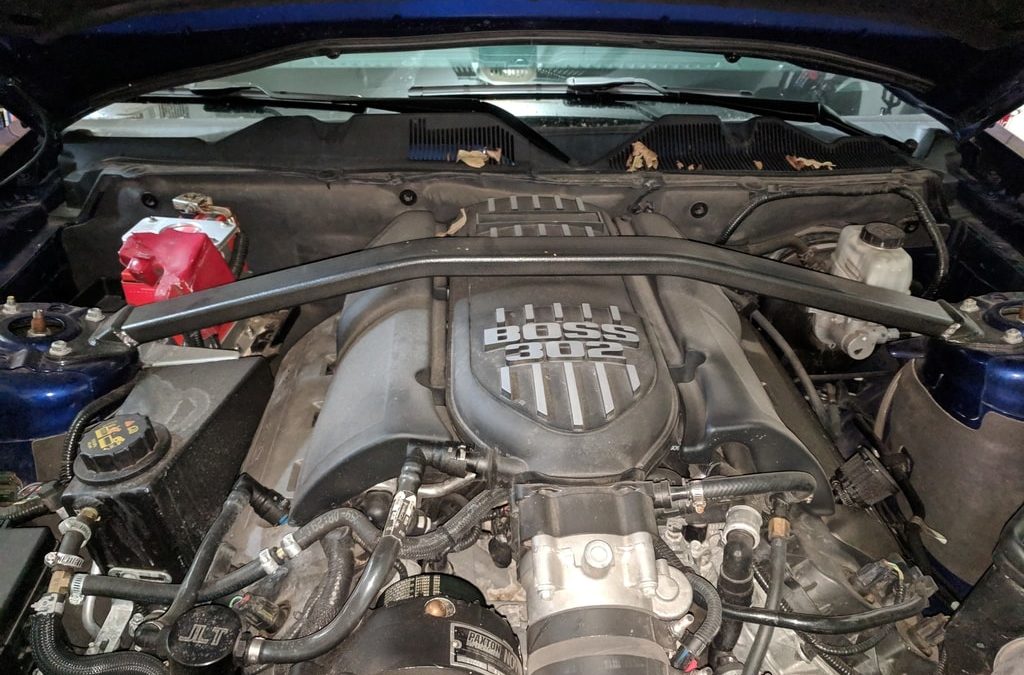
The strut tower brace functions by “tying” the two towers together. By creating a solid connection across the engine bay, the brace forces the towers to work in tandem. Instead of one tower bending independently under load, the brace distributes that force across both sides of the chassis. This triangulation effectively turns the engine bay into a rigid box rather than an open “U” shape. From a technological standpoint, this preserves the alignment settings that engineers worked so hard to calibrate, ensuring that the tires remain flat against the road for maximum grip.
Material Science and Manufacturing: High-Tech Solutions for Performance
The efficacy of a strut tower brace is not just in its presence, but in the technology used to manufacture it. Not all braces are created equal; the transition from basic steel tubes to advanced composite materials represents a significant leap in automotive aftermarket technology.
From Steel to Carbon Fiber: The Evolution of Materials
Early iterations of strut braces were often heavy steel bars. While effective at reducing flex, they added significant “sprung weight” to the front of the vehicle, which can negatively impact weight distribution. Modern tech has shifted toward high-strength aluminum alloys and, increasingly, carbon fiber composites.
Carbon fiber braces represent the pinnacle of this technology. Utilizing the same resin-transfer molding processes found in aerospace engineering, these braces offer a strength-to-weight ratio that steel cannot match. Carbon fiber is uniquely suited for this application because it can be engineered with specific fiber orientations to resist tension in one direction while remaining lightweight. This allows engineers to create a component that is incredibly stiff in the horizontal plane (to stop tower flex) while being light enough to avoid affecting the car’s center of gravity.
Precision Engineering and CNC Fabrication
The manufacturing of mounting brackets has also seen a technological revolution through Computer Numerical Control (CNC) machining. To ensure a strut brace actually improves handling, the fitment must be absolute. Any “play” or gap in the mounting hardware would allow for energy loss and render the brace useless. High-end braces are now machined from single blocks of 6061-T6 billet aluminum, ensuring that the interface between the brace and the car’s chassis is seamless. This level of precision ensures that the mechanical energy is transferred immediately through the brace rather than being absorbed by loose bolts or thin, stamped-metal brackets.

Digital Integration: How Modern Tech Simulates and Optimizes Brace Design
The development of a strut tower brace today involves significantly more than just measuring the distance between two bolts. It is a process rooted in digital simulation and data-driven optimization.
Finite Element Analysis (FEA) in Performance Tuning
Before a physical prototype is ever created, engineers use Finite Element Analysis (FEA) software. This technology allows designers to create a digital twin of a vehicle’s front-end geometry and subject it to simulated racing conditions. By applying virtual lateral loads of 1.0g or higher, the software identifies exactly where the chassis is most likely to deform.
FEA tech allows for the optimization of the brace’s shape. For instance, engineers might discover that a straight bar is less effective than a slightly curved one, or that specific gusseting is required near the mounting points. This software-driven approach ensures that the final product provides the maximum possible increase in rigidity with the minimum amount of material.
Telemetry and Real-Time Data Monitoring
In professional tuning environments, the impact of a strut tower brace is verified using high-speed telemetry. Using strain gauges attached to the chassis and laser sensors to measure wheel-well displacement, technicians can visualize the reduction in flex in real-time. This data is then fed back into the vehicle’s tuning software to recalibrate how the electronic power steering (EPS) and active damping systems respond to driver input. By stabilizing the hardware (the chassis), the software (the electronic stability control) can perform more predictably, as it no longer has to compensate for the “noise” of a flexing frame.
The Impact on Vehicle Dynamics and User Experience
What does this technology mean for the actual user? The primary goal of a strut tower brace is to enhance the feedback loop between the car and the driver. When the chassis is rigid, the steering feels more “connected.”
Steering Precision and Feedback Loops
One of the most immediate technological benefits of a strut brace is the sharpening of steering turn-in. Without a brace, there is a split-second delay when a driver turns the wheel as the chassis flexes before the suspension fully loads up. By eliminating this flex, the strut brace ensures that steering input results in immediate directional change. This is a critical component of “tactile tech”—the physical sensations that allow a driver to feel the limits of the vehicle’s grip through the steering column.
Interaction with Electronic Stability Control (ESC)
Modern cars are packed with sensors—accelerometers, gyroscopes, and wheel-speed sensors—that feed data into the Electronic Stability Control (ESC) system. These systems make thousands of micro-adjustments per second to keep the car stable. However, if the chassis is flexing, the data these sensors receive can be inconsistent. A strut tower brace provides a stable platform for these electronic systems to operate. When the physical structure of the car behaves predictably, the digital safety nets can intervene more precisely, often leading to a smoother and less intrusive driving experience during spirited maneuvers.
Future Trends: Active Bracing and Smart Suspension Systems
As we look toward the future of automotive technology, the concept of the strut tower brace is evolving. We are moving toward a transition from “passive” components to “active” or “smart” structural reinforcements.
Researchers are currently exploring the use of “shape-memory alloys” and piezoelectric materials in chassis bracing. Imagine a strut brace that can change its rigidity based on the driving mode selected—softening for comfort during highway cruising to absorb vibrations, and stiffening instantly when “Track Mode” is engaged. Furthermore, the integration of structural components with the vehicle’s central processing unit could allow for real-time monitoring of chassis stress, alerting drivers to structural fatigue or alignment shifts before they become safety issues.
In conclusion, a strut tower brace is far more than a simple metal bar. It is a vital piece of performance technology that bridges the gap between mechanical engineering and digital precision. By mitigating chassis flex, utilizing advanced material science, and benefiting from rigorous FEA simulation, the strut tower brace ensures that modern vehicles can fully realize the potential of their high-tech suspension systems. It remains a testament to the idea that in the world of technology, sometimes the most effective solutions are those that provide a solid foundation for everything else to build upon.
aViewFromTheCave is a participant in the Amazon Services LLC Associates Program, an affiliate advertising program designed to provide a means for sites to earn advertising fees by advertising and linking to Amazon.com. Amazon, the Amazon logo, AmazonSupply, and the AmazonSupply logo are trademarks of Amazon.com, Inc. or its affiliates. As an Amazon Associate we earn affiliate commissions from qualifying purchases.