
The earth beneath our feet is a dynamic and ever-shifting entity. For millennia, humanity has experienced the raw power of seismic events, ranging from barely perceptible tremors to cataclysmic upheavals that reshape landscapes and challenge civilizations. But what truly defines an earthquake as “strong”? This question transcends simple qualitative descriptions; it delves into the realm of scientific measurement, technological sophistication, and the complex understanding of the forces at play deep within our planet. In essence, a “strong” earthquake is not merely a matter of subjective experience, but a quantifiable event determined by seismic wave amplitude, energy release, and the profound impact it has on its surroundings, all of which are meticulously analyzed through advanced technological means.

The scientific community employs a suite of sophisticated tools and methodologies to measure, classify, and interpret earthquakes. At the forefront of this endeavor are seismic networks, sophisticated arrays of seismometers and accelerometers strategically deployed across the globe. These instruments, the technological eyes and ears of seismology, are designed to detect even the slightest ground motion. Their data, transmitted in real-time, forms the bedrock of our understanding of seismic activity. But quantifying strength is a multi-faceted challenge, requiring us to move beyond mere detection to an assessment of the event’s intensity and magnitude, and crucially, to understand the underlying physical processes that generate these powerful releases of energy.
The Technological Pillars of Earthquake Measurement
Understanding the “strength” of an earthquake is fundamentally a technological pursuit. It relies on precise instrumentation, advanced data processing, and the sophisticated algorithms that translate raw seismic wave data into meaningful metrics. Without these technological advancements, our comprehension of seismic events would remain largely anecdotal and qualitative. The modern seismological toolkit represents decades of innovation in sensor design, data acquisition, and computational analysis, enabling us to not only detect but also characterize the power of these geological phenomena with remarkable accuracy.
Seismometers and Accelerometers: The Digital Detectives
The primary instruments used to detect and measure earthquakes are seismometers and, for events with greater impact, accelerometers. Seismometers are highly sensitive devices that record the ground motion caused by seismic waves. Early seismometers were mechanical, relying on the inertia of a suspended mass to register movement. However, modern seismometers are predominantly digital, employing sophisticated electronic sensors that convert physical motion into electrical signals. These signals are then digitized and transmitted for analysis.
- Seismic Wave Detection: When seismic waves, generated by the rupture of rock along a fault, propagate through the Earth, they cause the ground to oscillate. Seismometers, meticulously calibrated and often buried to minimize surface noise, capture these oscillations. The amplitude of the recorded motion directly relates to the energy carried by the seismic waves. A larger amplitude generally indicates a stronger earthquake.
- Accelerometer’s Role: While seismometers excel at detecting very small ground motions, accelerometers are designed to measure the rate of change of velocity, effectively capturing the acceleration of the ground. This is particularly crucial in assessing the forces that can cause structural damage. For significant earthquakes, accelerometers provide vital data on peak ground acceleration (PGA), a key parameter in engineering seismology and disaster preparedness. The data from these instruments, often collected by dense regional networks, provides a granular view of how ground motion varies spatially.
Data Acquisition and Transmission: The Global Nervous System
The effectiveness of seismic measurement hinges on the ability to rapidly and reliably acquire and transmit data from vast networks of sensors spread across the globe. This requires robust infrastructure and sophisticated communication protocols, forming a global nervous system for earthquake monitoring.
- Real-time Data Streams: Modern seismic networks are designed for real-time data acquisition. Sensors continuously stream their readings, often wirelessly or via dedicated fiber optic lines, to central processing hubs. This instantaneous flow of information is critical for rapid earthquake detection, location, and magnitude estimation, enabling swift dissemination of alerts to affected regions.
- Global Collaboration and Data Sharing: The international nature of seismology necessitates seamless data sharing. Organizations like the United States Geological Survey (USGS) and the Incorporated Research Institutions for Seismology (IRIS) maintain extensive seismic data archives, accessible to researchers worldwide. This collaborative approach accelerates scientific discovery and improves the accuracy of global earthquake models. The development of standardized data formats and communication protocols, such as the SeedLink protocol, has been instrumental in facilitating this global exchange.
Quantifying Strength: Magnitude and Intensity Scales
The concept of earthquake “strength” is not a single, simple metric. Instead, it is assessed through various scales, each capturing a different aspect of the event’s power and impact. These scales have evolved over time, driven by technological advancements in measurement and a deeper understanding of seismology.
Magnitude Scales: Measuring the Earthquake’s Energy
Magnitude scales are designed to quantify the energy released by an earthquake at its source. They are logarithmic, meaning that a one-unit increase in magnitude represents a tenfold increase in the amplitude of seismic waves and approximately 32 times more energy released.
- Richter Scale (Local Magnitude, ML): Developed by Charles Richter in the 1930s, the original Richter scale was designed for Southern California and used seismograms recorded by a specific type of seismometer. While historically significant, it has limitations for larger, more distant earthquakes and has largely been superseded.
- Moment Magnitude Scale (Mw): The most widely used and scientifically robust scale today is the Moment Magnitude Scale (Mw). This scale is derived from the seismic moment, a physical measure that accounts for the area of fault rupture, the amount of slip, and the rigidity of the rock. Mw provides a more accurate representation of the energy released by larger earthquakes and is less susceptible to saturation than the Richter scale. The calculation of seismic moment relies on sophisticated analysis of seismic wave data, including the longest period seismic waves, which are less affected by local site conditions. This involves spectral analysis of seismic waveforms to determine the corner frequency and the amplitude of the seismic moment.
Intensity Scales: Assessing the Ground Shaking and Impact
Intensity scales, unlike magnitude scales, do not measure the energy released at the earthquake’s source. Instead, they describe the effects of the earthquake at a particular location, based on observed damage, ground shaking, and human perception.
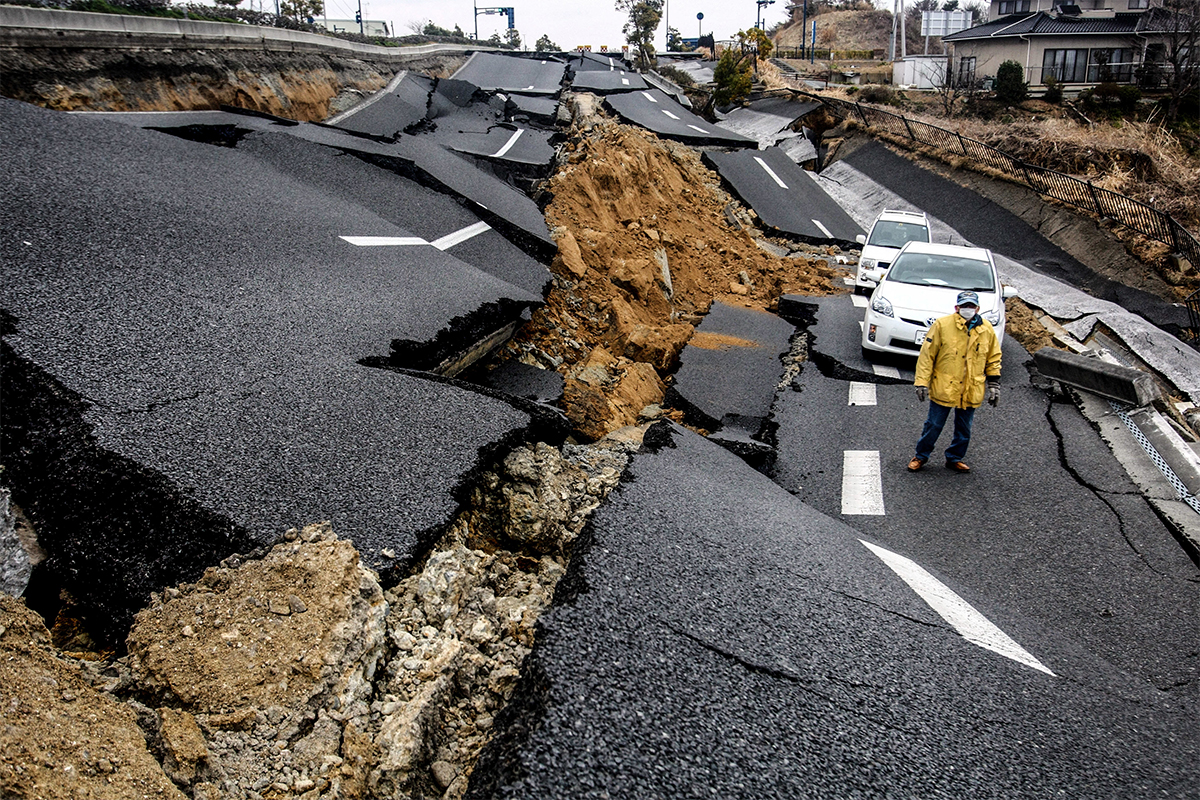
- Modified Mercalli Intensity (MMI) Scale: The MMI scale is a qualitative scale ranging from I (not felt) to XII (catastrophic destruction). It is based on eyewitness accounts, damage surveys, and observations of how the earthquake affected people, buildings, and the natural environment. While subjective, MMI is invaluable for understanding the historical impact of earthquakes, especially before the widespread adoption of seismographs. Modern applications of MMI often involve correlating ground motion parameters (like PGA) with observed damage to refine the accuracy of intensity estimations.
- Peak Ground Acceleration (PGA) and Velocity (PGV): In engineering seismology, more direct measurements of ground motion like PGA and PGV are crucial. These are physical parameters directly recorded by accelerometers. Higher PGA values indicate more violent shaking and are strongly correlated with the potential for structural damage. These instrumental measures provide a more objective and quantifiable assessment of shaking intensity than purely observational scales.
Technological Innovations in Earthquake Prediction and Early Warning
While true prediction of earthquakes remains an elusive goal, technological advancements have made significant strides in earthquake early warning systems and in improving our understanding of seismic hazards, all driven by sophisticated data analysis and computational power. These systems are designed to provide precious seconds to minutes of advance notice, allowing for critical protective actions.
Early Warning Systems: Leveraging Real-Time Seismic Data
Earthquake early warning systems (EEWS) are a triumph of modern technology, utilizing the fundamental principles of seismic wave propagation to provide a warning before damaging seismic waves arrive.
- The Science Behind EEWS: Earthquakes generate different types of seismic waves. The fastest are the P-waves (primary waves), which are compressional and less damaging. Slower are the S-waves (secondary waves), which are shear waves and responsible for most of the shaking and destruction. EEWS detect the initial P-waves, estimate the earthquake’s location and magnitude, and then calculate how much time will pass before the slower, more damaging S-waves arrive at various locations. This provides a critical window for action.
- Technological Components: These systems rely on a dense network of seismometers, high-speed data transmission, and rapid processing algorithms. Advanced machine learning and artificial intelligence are increasingly being integrated to improve the speed and accuracy of earthquake characterization, reducing false alarms and enhancing the reliability of the warning. Examples of operational EEWS include Japan’s UrEDAS and the US’s ShakeAlert.
Advanced Modeling and Simulation: Understanding Seismic Behavior
Beyond real-time warnings, technology plays a crucial role in understanding the underlying physics of earthquakes and predicting future seismic hazards through sophisticated modeling and simulation.
- Computational Seismology: Powerful supercomputers are used to model the complex processes of fault rupture and seismic wave propagation. These simulations help scientists understand how different types of faults behave, how stress accumulates, and how seismic waves interact with geological structures. This allows for the development of more accurate hazard maps and building codes.
- Artificial Intelligence and Machine Learning: AI and machine learning are being applied to analyze vast datasets of seismic information, identifying subtle patterns that might precede larger events. While not yet capable of precise prediction, these technologies are improving our ability to assess seismic risk and understand the long-term behavior of fault systems. For instance, AI can be used to sift through seismic noise for faint signals that might indicate precursory activity or to improve the automatic detection and characterization of seismic events in real-time.
The Impact of Technology on Seismic Resilience
The ultimate goal of understanding and measuring strong earthquakes is to enhance societal resilience. Technology is not just about detection and measurement; it’s about translating that knowledge into actionable strategies that protect lives and infrastructure.
Smart Infrastructure and Building Codes
Modern engineering, heavily reliant on technological advancements, is designed to withstand the forces of even strong earthquakes.
- Seismic Design and Retrofitting: Building codes are constantly updated based on the latest seismological data and engineering research. Technologies like base isolation systems, dampers, and advanced structural materials are employed to design buildings that can absorb and dissipate seismic energy, preventing collapse. Retrofitting older structures with these technologies is also a critical aspect of improving seismic resilience.
- Sensor Networks in Structures: Embedding sensors within critical infrastructure, such as bridges, dams, and skyscrapers, allows for continuous monitoring of their structural integrity during and after an earthquake. This real-time feedback can inform immediate safety assessments and guide repair efforts.

Public Awareness and Disaster Preparedness Tools
Technology empowers individuals and communities to be better prepared for seismic events.
- Mobile Alert Systems: Smartphone applications and public alert systems leverage the information from EEWS to deliver warnings directly to people’s devices, providing crucial seconds for “drop, cover, and hold on.”
- Educational Platforms and Simulations: Digital platforms and virtual reality simulations can educate the public about earthquake safety procedures and the science behind earthquakes, fostering a more informed and prepared populace. The dissemination of real-time seismic information through online portals and social media channels also plays a vital role in public awareness during and after an event.
In conclusion, the question of “what is a strong earthquake” is deeply intertwined with technological progress. From the sophisticated seismometers that detect the faintest tremors to the advanced algorithms that quantify energy release and the early warning systems that buy precious time, technology is the indispensable tool that allows us to measure, understand, and ultimately mitigate the devastating impact of these powerful natural phenomena. As technology continues to evolve, so too will our capacity to confront the seismic forces that shape our planet.
aViewFromTheCave is a participant in the Amazon Services LLC Associates Program, an affiliate advertising program designed to provide a means for sites to earn advertising fees by advertising and linking to Amazon.com. Amazon, the Amazon logo, AmazonSupply, and the AmazonSupply logo are trademarks of Amazon.com, Inc. or its affiliates. As an Amazon Associate we earn affiliate commissions from qualifying purchases.