
The world of finance is inherently dynamic, characterized by periods of robust growth punctuated by inevitable downturns. Among these market corrections, the term “stock crash” conjures images of rapid, widespread panic and significant wealth destruction. For both seasoned investors and curious newcomers, understanding what constitutes a stock crash—its mechanics, causes, and implications—is not merely academic; it’s fundamental to navigating the complex landscape of personal finance and investment strategy. Far more than just a bad day on Wall Street, a stock crash signifies a profound disruption to market equilibrium, often with ripple effects that extend deep into the real economy. This article will demystify stock crashes, differentiating them from other market fluctuations, exploring their historical context, uncovering their root causes, and providing actionable insights for investors seeking to build resilience against such tumultuous events.
Unpacking the Concept: Defining a Stock Crash
At its core, a stock market crash refers to a sudden, severe, and often unexpected drop in stock prices across a significant portion of the market. While there’s no universally agreed-upon numerical threshold, it’s generally characterized by a dramatic, double-digit percentage decline in major market indices (like the S&P 500 or Dow Jones Industrial Average) within a very short timeframe—often a single day or a few consecutive days. The psychological impact is as crucial as the statistical one, marked by widespread panic selling, loss of confidence, and an overwhelming sense of uncertainty among investors.
Differentiating Crashes, Corrections, and Bear Markets
To fully grasp the severity of a stock crash, it’s essential to distinguish it from other common market downturns:
- Market Correction: A market correction is a short-term decline of 10% or more from a recent peak in a stock index. Corrections are quite common, occurring, on average, once every 1-2 years, and are often seen as healthy adjustments that prune speculative excesses. They typically resolve relatively quickly.
- Bear Market: A bear market is a more prolonged and significant downturn, characterized by a decline of 20% or more from recent highs, lasting for at least two months or longer. Bear markets are symptomatic of deeper economic or financial issues and can span months or even years.
- Stock Crash: A stock crash is a more acute and intense event than either a correction or a bear market. While it can often initiate or accelerate a bear market, its defining feature is the speed and severity of the decline, often involving drops of 20% or more within days or even hours, fueled by panic and a rapid erosion of investor confidence. The element of surprise and the overwhelming sentiment of fear are hallmarks of a crash.
Key Characteristics of a Market Crash
Several identifying features mark a true stock market crash:
- Rapid and Severe Decline: Prices plummet steeply over a very short period, often erasing years of gains in mere days.
- Panic Selling: Investors, driven by fear, rush to sell their holdings, further exacerbating the downturn as sell orders overwhelm buy orders.
- High Volatility: Price swings become extremely erratic and unpredictable, reflecting intense uncertainty.
- Widespread Impact: The decline isn’t confined to a few sectors but affects the broader market, dragging down a wide range of stocks.
- Loss of Confidence: There’s a significant erosion of investor and consumer confidence, leading to a pull-back in spending and investment.
- Systemic Risk: Crashes can sometimes expose or trigger systemic risks within the financial system, leading to broader economic instability.
The Catalysts: Common Causes of Stock Market Crashes
Stock market crashes are rarely the result of a single isolated event; more often, they are the culmination of several underlying factors creating a fragile market environment ripe for collapse. These catalysts can range from economic fundamentals to psychological phenomena, often interacting in complex ways.
Economic Recession and Overvaluation Bubbles
One of the most frequent precursors to a stock market crash is a preceding period of unsustainable economic growth or irrational exuberance, leading to asset bubbles.
- Asset Bubbles: These occur when the price of an asset (like stocks, real estate, or specific commodities) rises rapidly and significantly beyond its intrinsic value, driven by speculative buying rather than fundamental economic performance. Investors buy because prices are rising, hoping to sell at an even higher price, creating a self-fulfilling prophecy until the bubble bursts.
- Economic Recession: A recession, defined as a significant decline in economic activity spread across the economy, lasting more than a few months, often follows or coincides with a market crash. Indicators like falling GDP, rising unemployment, and declining corporate profits signal a deteriorating economic environment that can trigger or worsen a market downturn. When investors anticipate or confirm a recession, they sell off stocks in anticipation of lower corporate earnings.
Geopolitical Turmoil and Unexpected Shocks
External, unforeseen events can act as powerful triggers, sending shockwaves through financial markets.
- Geopolitical Instability: Major geopolitical events, such as wars, terrorist attacks, significant political crises, or sudden shifts in international relations, can inject immense uncertainty into markets. The prospect of disrupted trade, supply chains, or regional conflicts can lead investors to flee risk assets.
- Unexpected Shocks (Black Swans): These are extremely rare and unpredictable events that have severe consequences, often only explainable in hindsight. Examples include natural disasters of unprecedented scale, sudden technological disruptions, or global pandemics (like COVID-19 in 2020), which can rapidly bring economic activity to a halt and trigger widespread market panic.
Policy Errors and Systemic Financial Risks
Missteps by policymakers or inherent vulnerabilities within the financial system can also set the stage for a crash.
- Monetary Policy Errors: Central banks, in their attempt to manage inflation and economic growth, can sometimes make policy decisions that inadvertently destabilize markets. For instance, raising interest rates too aggressively can stifle economic growth and make borrowing more expensive, reducing corporate profitability and making stocks less attractive relative to safer assets like bonds.
- Regulatory Failures and Systemic Risks: Inadequate financial regulation can allow excessive risk-taking to build up within the banking system or other financial institutions. When these risks materialize—such as widespread defaults on subprime mortgages (2008) or over-leveraged hedge funds—they can trigger a contagion effect, where the failure of one institution threatens the stability of the entire financial system, leading to a broad market collapse.
A Historical Perspective: Echoes from the Past
History offers a sobering reminder that stock crashes, while painful, are recurring features of market cycles. Examining past crashes provides valuable lessons about their diverse causes, characteristics, and recovery paths.
The Great Depression (1929)
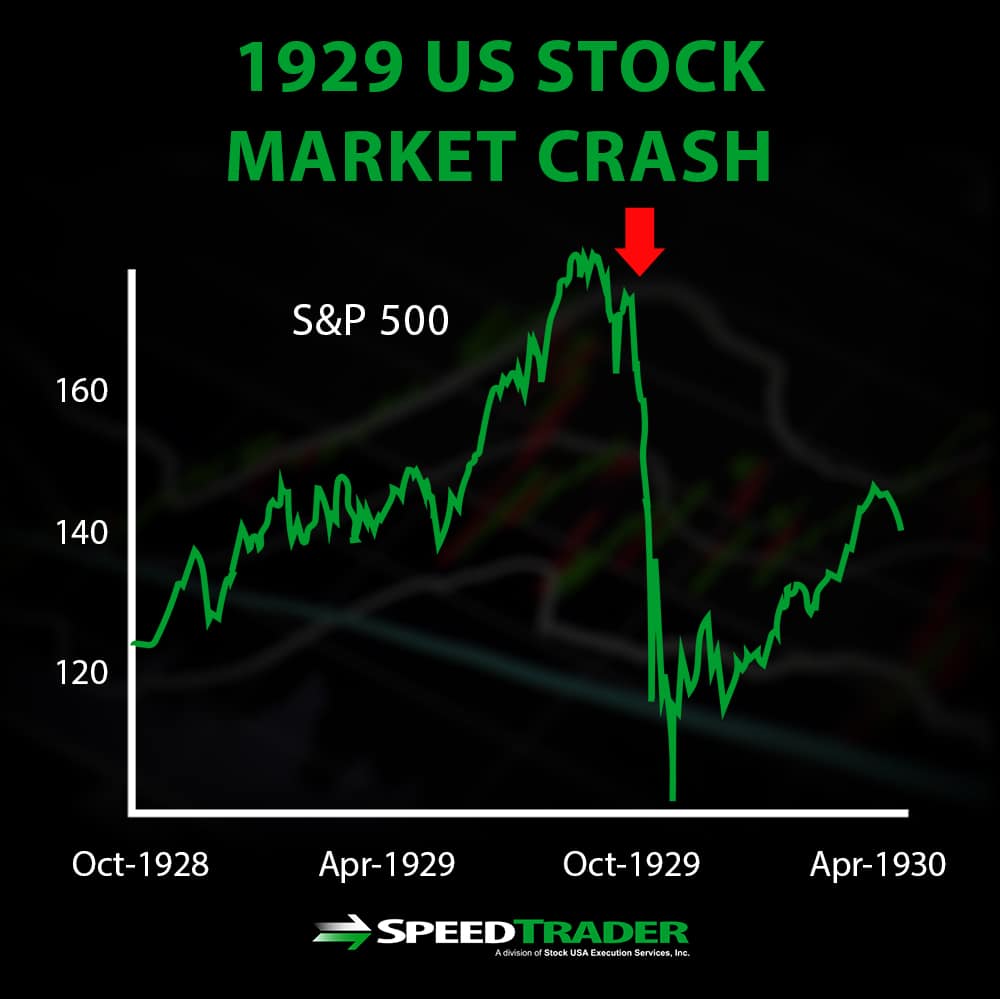
Often cited as the most devastating market crash in history, “Black Tuesday” on October 29, 1929, saw the Dow Jones Industrial Average fall 12% in a single day, following an 11% drop on Black Monday. This collapse signaled the beginning of the Great Depression, a decade-long economic slump. The crash was preceded by years of speculative buying, loose credit, and an overvalued market, exacerbated by widespread margin trading. The ensuing panic selling wiped out billions in wealth and paralyzed the global economy.
Black Monday (1987)
On October 19, 1987, global stock markets experienced their largest one-day percentage drop in history. The Dow Jones Industrial Average plummeted an astonishing 22.6% in a single trading session. While the underlying economy was not in a recession, contributing factors included programmed trading, portfolio insurance (a strategy that automatically sold stocks as prices fell), overvaluation concerns, and a perceived lack of monetary policy coordination. Despite the dramatic drop, the market recovered relatively quickly, and the crash did not trigger a major recession.
The Dot-Com Bust (2000)
Leading up to the year 2000, a speculative bubble formed around internet-based companies. Investors poured money into technology companies, often with little or no revenue, driven by the promise of future growth. When the bubble burst, starting in March 2000, many dot-com companies saw their valuations evaporate. The NASDAQ Composite, heavily weighted with tech stocks, lost nearly 80% of its value over the next two and a half years. This crash highlighted the dangers of speculative bubbles and investing purely on hype.
The Global Financial Crisis (2008)
Originating in the U.S. housing market with the subprime mortgage crisis, the Global Financial Crisis led to a severe stock market crash in late 2008. Major financial institutions failed or required bailouts, triggering a widespread loss of confidence in the banking system. The S&P 500 fell by over 50% from its peak in October 2007 to its trough in March 2009. This crisis underscored the interconnectedness of global financial markets and the systemic risks posed by lax lending standards and complex financial instruments.
The COVID-19 Market Plunge (2020)
In March 2020, the onset of the global COVID-19 pandemic triggered an unprecedentedly rapid stock market crash. As governments imposed lockdowns and economic activity ground to a halt, the S&P 500 fell by approximately 34% in just over a month—the fastest bear market entry in history. Unlike previous crashes, this was primarily driven by an external, non-financial shock. However, rapid and aggressive monetary and fiscal policy responses by central banks and governments helped the market rebound with remarkable speed, illustrating the impact of decisive interventions.
Navigating the Storm: Strategies for Investors
While stock crashes are an inevitable part of market cycles, investors are not powerless against their impact. Prudent financial planning and disciplined investment strategies can significantly mitigate losses and even position investors for future gains. The key is to remain calm, avoid emotional decision-making, and stick to a well-thought-out plan.
The Importance of a Long-Term Investment Horizon
One of the most crucial principles during a crash is maintaining a long-term perspective. For those investing for retirement or other distant goals, short-term market fluctuations are less critical than the long-term trend. Historically, stock markets have always recovered from crashes and corrections, eventually reaching new highs.
- Time in the Market, Not Timing the Market: Trying to predict the bottom of a crash or the peak of a bull market is notoriously difficult and often leads to missed opportunities. Staying invested through downturns allows investors to participate in the eventual recovery.
- Focus on Fundamentals: During volatile periods, it’s easy to get caught up in the noise. Instead, focus on the fundamental strength of the companies you own or are considering buying. Healthy balance sheets, strong management, and viable business models are more resilient.
Diversification and Asset Allocation
Diversification is the bedrock of risk management and particularly vital in preparing for market downturns.
- Spread Your Investments: Don’t put all your eggs in one basket. Diversify across different asset classes (stocks, bonds, real estate, commodities), industries, geographies, and company sizes. When one sector or asset class performs poorly, others may hold steady or even gain, cushioning the blow.
- Strategic Asset Allocation: Align your asset allocation with your risk tolerance, financial goals, and time horizon. Younger investors with longer time horizons might tolerate more stock exposure, while those nearing retirement might favor a higher allocation to less volatile assets like bonds. Regularly review and adjust your allocation.
Dollar-Cost Averaging and Rebalancing
These two strategies are powerful tools for managing volatility and optimizing returns over time.
- Dollar-Cost Averaging (DCA): This involves investing a fixed amount of money at regular intervals, regardless of market conditions. When prices are high, your fixed sum buys fewer shares; when prices are low (during a crash), it buys more shares. Over time, this strategy averages out your purchase price and can be highly effective during volatile periods, reducing the risk of making a large investment at an inopportune time.
- Rebalancing: Periodically adjusting your portfolio back to its target asset allocation. If stocks have plummeted, your stock allocation might be below your target. Rebalancing would involve selling some assets that have performed well (e.g., bonds) and buying more of the underperforming assets (e.g., stocks). This forces you to “buy low and sell high,” a fundamental principle of successful investing.
Maintaining Liquidity and Avoiding Panic
Having access to cash and resisting emotional reactions are critical during a crash.
- Emergency Fund: Ensure you have a robust emergency fund (3-6 months of living expenses) in a highly liquid account, separate from your investment portfolio. This prevents you from being forced to sell investments at a loss to cover unexpected expenses during a downturn.
- Avoid Emotional Decisions: The most dangerous action during a crash is panic selling. Reacting to fear by liquidating your holdings locks in losses and prevents you from participating in the eventual recovery. Instead, adhere to your predetermined investment plan. Recognize that market downturns are temporary and part of the investing cycle.
Beyond the Crash: Recovery and Resilience
While stock crashes are undoubtedly challenging, they are not permanent. Markets possess an inherent ability to recover, often with surprising speed, leading to new periods of growth. Understanding this cyclical nature is key to building financial fortitude.
The Inevitable Rebound: Market Cycles
History consistently shows that markets recover. Every major crash and bear market has been followed by a recovery and a subsequent bull market. The exact timing and speed of recovery are unpredictable, but the pattern of decline, stabilization, and eventual growth is a constant. Factors driving recovery include:
- Economic Rebound: Governments and central banks often implement stimulative fiscal and monetary policies during downturns to kickstart economic activity.
- Corporate Adaptability: Businesses adapt to new environments, innovate, and find efficiencies, leading to improved earnings.
- Investor Confidence Returns: As economic indicators improve and uncertainty subsides, investors regain confidence and re-enter the market.
- Undervalued Assets: Crashes create opportunities to buy fundamentally strong companies at discounted prices, attracting new capital.
Learning from Adversity: Building Financial Fortitude
Each crash offers valuable lessons for investors and policymakers alike. For individuals, these events underscore the importance of disciplined saving, smart investing, and unwavering patience.
- Stress-Testing Your Plan: A crash acts as a stress test for your financial plan. It reveals whether your asset allocation truly matches your risk tolerance and if your emergency fund is adequate.
- Discipline Over Emotion: The most successful investors are often those who can remain disciplined during periods of extreme fear and greed. They understand that market volatility is normal and that a long-term strategy, executed consistently, is the most reliable path to wealth accumulation.
- Embrace Volatility: Rather than fearing volatility, savvy investors learn to understand and even embrace it. Downturns, while uncomfortable, present opportunities for those prepared to take advantage of them by buying quality assets at reduced prices.
In conclusion, a stock crash is a severe and rapid market decline, distinct from corrections or bear markets, driven by a confluence of economic, geopolitical, and psychological factors. While impactful, understanding its mechanisms and adhering to sound financial principles—like diversification, long-term thinking, and dollar-cost averaging—can empower investors to not only survive these turbulent periods but also emerge stronger and more resilient, ready to capitalize on the inevitable market recovery.
aViewFromTheCave is a participant in the Amazon Services LLC Associates Program, an affiliate advertising program designed to provide a means for sites to earn advertising fees by advertising and linking to Amazon.com. Amazon, the Amazon logo, AmazonSupply, and the AmazonSupply logo are trademarks of Amazon.com, Inc. or its affiliates. As an Amazon Associate we earn affiliate commissions from qualifying purchases.