
In the architectural world of software development, the efficiency of an application often boils down to how it manages and organizes data. Among the fundamental building blocks taught to every computer scientist and software engineer is the “stack.” While the term is frequently used in different contexts—such as a “tech stack” (the collection of languages and frameworks used to build a project)—the stack as a data structure is a specific, linear concept that dictates how data is stored, accessed, and removed.
Understanding the stack is not merely an academic exercise. It is a prerequisite for mastering memory management, recursion, and the very way processors execute instructions. Whether you are debugging a “stack overflow” error or designing a complex algorithm for expression parsing, a granular understanding of the stack is essential. This article explores the mechanics, applications, and implementation of stacks within the modern programming landscape.
The Core Mechanics: Understanding Last-In, First-Out (LIFO)
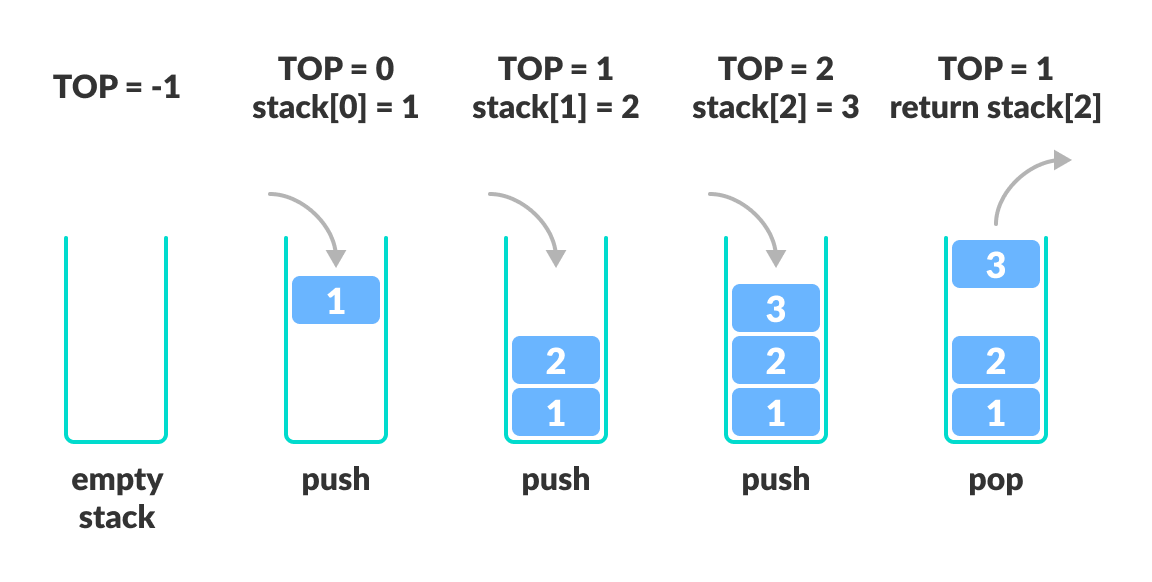
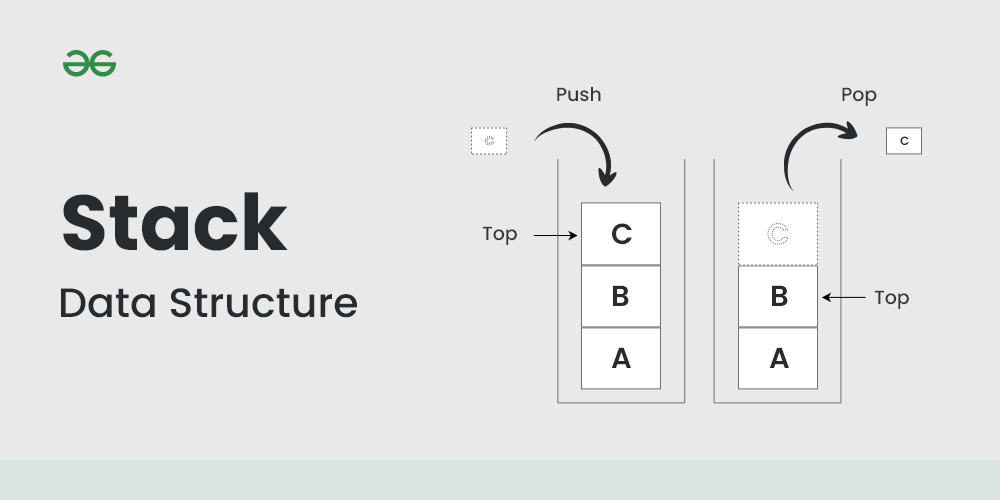
At its simplest level, a stack is a linear data structure that follows a particular order in which operations are performed. This order is known as LIFO: Last-In, First-Out. To visualize this, imagine a physical stack of cafeteria trays. You place a new tray on the top (push), and when someone needs a tray, they take the one that was most recently added (pop). You cannot remove the bottom tray without first removing all the trays above it.
In programming, this restricted access is what makes the stack so powerful. Unlike an array or a linked list where you might access elements at any index, a stack limits interaction to the “top” of the structure.
Primary Operations: Push and Pop
The two fundamental operations that define a stack are Push and Pop.
- Push: This operation adds an element to the top of the stack. If the stack has a fixed size and is already full, attempting to push a new element results in a “stack overflow” condition.
- Pop: This operation removes the topmost element from the stack. If the stack is empty and a pop is attempted, it results in a “stack underflow.”
These operations are highly efficient. Because they only interact with the top of the data structure, both Push and Pop have a time complexity of O(1), meaning they take a constant amount of time regardless of how many elements are already in the stack.
Helper Functions: Peek and IsEmpty
Beyond the core actions, most stack implementations include utility functions to make data handling safer and more intuitive:
- Peek (or Top): This allows a programmer to view the value of the topmost element without actually removing it. This is useful in logic where the next step depends on the current state, but the state must be preserved.
- IsEmpty: A boolean check that returns true if the stack contains no elements. This is a critical safety check performed before any “Pop” operation to prevent runtime errors.
- IsFull: In environments where memory is statically allocated (like a fixed-size array), this check ensures there is room for another “Push” operation.
Real-World Applications of Stacks in Software
The stack is far more than a theoretical concept; it is the silent engine behind many of the features we take for granted in modern computing. Because it naturally handles nested structures and “reversing” processes, it is the go-to choice for several critical tasks.
The Call Stack and Function Execution
Perhaps the most vital use of a stack is the Call Stack (or execution stack). When a program calls a function, the computer needs a way to remember where to return once that function finishes. The system “pushes” the return address and the function’s local variables onto the call stack.
If that function calls another function, the process repeats. Once the innermost function completes, its data is “popped” off the stack, and the CPU uses the stored return address to jump back to the previous function. This is why recursive functions—functions that call themselves—rely so heavily on the stack. Without a stack, the computer would “forget” its place in the execution flow.
Undo/Redo Functionality
Almost every modern productivity tool, from Microsoft Word to Adobe Photoshop, features an “Undo” button. This is a classic implementation of a stack. Every action you take—typing a word, changing a color, deleting a line—is pushed onto an “Undo Stack.” When you hit Ctrl+Z, the software pops the most recent action off that stack and reverses it. To support “Redo,” the popped action is often pushed onto a separate “Redo Stack.”
Expression Evaluation and Syntax Parsing
Compilers and interpreters use stacks to make sense of the code we write. For example, when a compiler encounters a mathematical expression like 3 * (4 + 5), it uses a stack to handle the parentheses and the order of operations.
Similarly, stacks are used for delimiter matching. When you write code, your IDE checks if every opening brace { has a corresponding closing brace }. It does this by pushing opening braces onto a stack and popping them when a closing brace is found. If the stack is empty when it shouldn’t be, or if there are items left over, the code is syntactically incorrect.
Memory Management: The Stack vs. The Heap
In the context of low-level programming and system architecture, the word “stack” often refers to a specific region of a computer’s RAM. Understanding the distinction between “stack memory” and “heap memory” is crucial for writing performant, bug-free code.
How the Stack Stores Local Variables
When a program runs, the OS allocates a block of memory for the stack. This memory is managed automatically by the CPU. When a function is called, a “stack frame” is created to store local variables and parameters.
The primary advantage of stack memory is speed. Because the memory is managed in a LIFO manner, the pointer just moves up and down. There is no need for complex searching for free memory blocks. However, the stack is limited in size. If you declare a massive array locally or create an infinite recursion loop, you will encounter the dreaded “Stack Overflow,” where the program attempts to use more memory than is allocated for the stack.
The Heap: A Necessary Alternative
In contrast to the stack, the Heap is a large pool of memory used for dynamic allocation. If you don’t know how much data you will need until the program is actually running, you use the heap. Unlike the stack, the heap does not automatically manage itself. In languages like C or C++, the programmer must manually “free” heap memory. In languages like Java or Python, a “garbage collector” handles this. While the heap is much larger and more flexible than the stack, it is significantly slower to access and manage.
Implementing a Stack in Popular Languages
While the logic of a stack remains constant, the implementation varies depending on the language’s philosophy and built-in capabilities.
Stacks in Python
In Python, you don’t need a specialized “Stack” class because the built-in list type is already an efficient stack.
- To Push, you use
.append(). - To Pop, you use
.pop().
Python’s list is dynamic, so you rarely have to worry about the stack being “full” until you run out of system memory entirely. For more specialized needs, thecollections.dequeobject is often used because it allows for faster O(1) additions and removals from both ends.
Stacks in Java and C++
In Java, there is a literal Stack class, though modern documentation often suggests using the Deque interface (via ArrayDeque) for better performance. Java’s implementation is thread-safe, making it robust for complex multi-threaded applications.
In C++, the Standard Template Library (STL) provides a std::stack container adapter. It is highly flexible, allowing developers to choose the underlying structure (like a vector or list) while providing the standard stack interface. This allows for fine-tuned performance optimization, which is a hallmark of C++ development.

Conclusion: The Foundation of Algorithmic Thinking
The stack is a testament to the power of simplicity in computer science. By imposing a strict LIFO constraint on data access, the stack provides an elegant solution to some of the most complex problems in computing—from managing the flow of function calls to enabling the “undo” feature in our favorite apps.
For developers, the stack is more than just a way to store data; it is a mental model. It teaches us how to think about nested logic, how to manage memory efficiently, and how to anticipate the way a machine will execute our code. Whether you are working in a high-level language like Python or a low-level language like C, the principles of the stack remain a cornerstone of robust software engineering. Understanding the stack is not just about knowing a data structure; it is about understanding the very heartbeat of modern programming.
aViewFromTheCave is a participant in the Amazon Services LLC Associates Program, an affiliate advertising program designed to provide a means for sites to earn advertising fees by advertising and linking to Amazon.com. Amazon, the Amazon logo, AmazonSupply, and the AmazonSupply logo are trademarks of Amazon.com, Inc. or its affiliates. As an Amazon Associate we earn affiliate commissions from qualifying purchases.