
In a world increasingly driven by digital innovation and complex technological systems, seemingly simple foundational concepts often hold immense and understated power. Among these, the “square angle” stands out as a geometric bedrock that underpins an astonishing array of technological applications, from the fundamental architecture of our software to the intricate design of physical hardware. Far from being a mere abstract mathematical concept, the square angle – or a 90-degree angle – is a universal constant defining orthogonality, parallelism, and perpendicularity, crucial principles that enable precision, stability, and functionality across the tech landscape. This exploration delves into why understanding the square angle is not just an academic exercise but a critical insight for anyone engaging with or shaping the future of technology. We will unpack its pervasive influence, examining its role in everything from user interface design to robotics, and how its consistent application facilitates the seamless operation and continuous evolution of our tech-centric world.

The Geometric Cornerstone of Digital Design
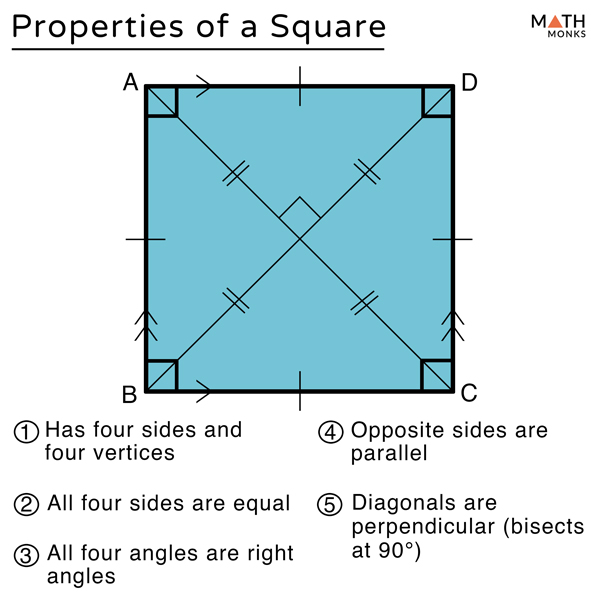
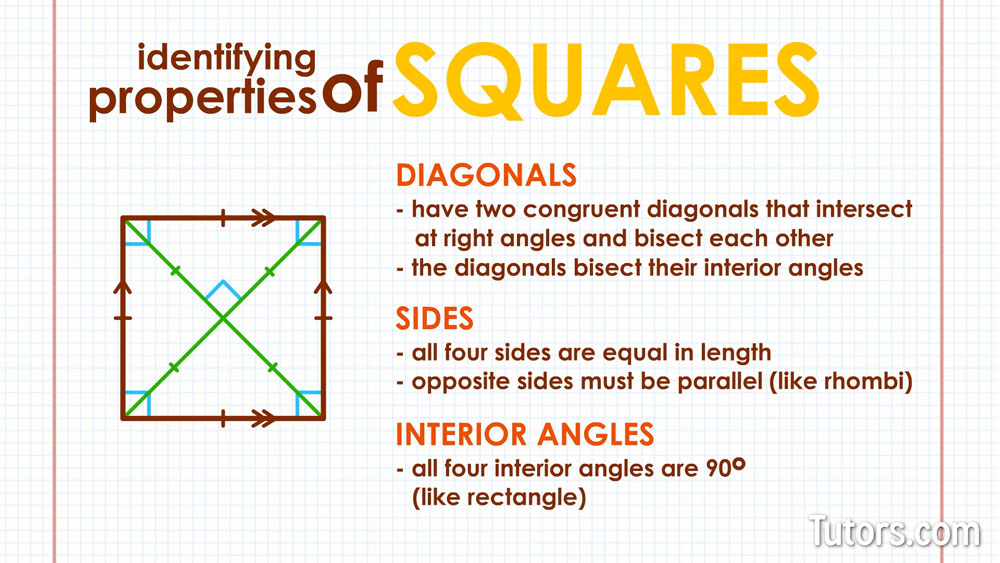
At its core, a square angle represents the intersection of two lines or planes at precisely 90 degrees. This fundamental geometric relationship, known as orthogonality, is far more than an abstract concept; it is a universal principle that dictates how elements align, interact, and provide structure within both the digital and physical realms of technology. Its ubiquity makes it the silent architect behind much of what we perceive as stable, efficient, and intuitive in modern tech.
Defining Orthogonality: The 90-Degree Standard
Orthogonality is the mathematical term describing perpendicularity, where two vectors, lines, or planes meet at a right angle (90 degrees). This principle is paramount because it implies independence and non-interference. In computing, for instance, orthogonal components or functions are designed to operate without affecting each other, simplifying system design, debugging, and maintenance. Imagine a software architecture where different modules are highly coupled and interdependent; a change in one could inadvertently break another. By striving for orthogonal design, developers create cleaner, more robust systems where components perform distinct tasks, interfacing through well-defined, perpendicular pathways that minimize unintended side effects. This pursuit of orthogonality helps prevent the cascading failures common in poorly structured systems, thereby enhancing stability and scalability. It’s the digital equivalent of ensuring that the beams supporting a structure meet at a perfect right angle, distributing weight evenly and preventing collapse.
From Euclidean Principles to Pixel Grids
The journey of the square angle from ancient Euclidean geometry to the modern digital display is a testament to its enduring relevance. Every pixel on your screen, every button in an application, and every virtual object in a 3D environment is fundamentally organized within a Cartesian coordinate system, which relies exclusively on square angles. This system, with its perpendicular X, Y, and Z axes, provides a definitive framework for positioning and orienting objects in space. Whether you’re designing a responsive web layout, creating textures for a game character, or rendering complex scientific visualizations, the underlying grid is always orthogonal.
Consider the familiar grid layout of most user interfaces: icons are typically arranged in rows and columns, windows are rectangular, and even curved elements often conform to an underlying orthogonal bounding box. This is not arbitrary; it’s because our visual perception and cognitive processing are highly attuned to these predictable structures. A consistent reliance on square angles provides a sense of order, balance, and predictability, making digital interfaces easier to navigate and understand. Without the implicit order imposed by square angles and orthogonal grids, digital landscapes would devolve into chaotic, unmanageable jumbles, hindering interaction and making advanced computing practically impossible.
Applications in Software Development and User Experience
The influence of the square angle permeates every layer of software development, from the logical structures that define code to the visual interfaces users interact with daily. Its inherent clarity and predictability make it an indispensable tool for creating efficient, robust, and user-friendly digital experiences.
Building Intuitive User Interfaces (UI/UX)
The square angle is arguably the most influential geometric element in user interface (UI) and user experience (UX) design. Most digital screens are rectangular, and within them, virtually all interactive elements—buttons, text fields, navigation bars, content blocks—are also predominantly rectangular or conform to an underlying orthogonal grid. This is not merely an aesthetic choice; it’s deeply rooted in human psychology and practical design principles. Rectangular elements are easy to align, space, and organize, creating a visual hierarchy that guides the user’s eye and reduces cognitive load.
For example, responsive web design heavily relies on grid systems built upon orthogonal principles. Content blocks dynamically adjust their size and position while maintaining their relative perpendicular alignment, ensuring a consistent and readable experience across diverse devices. Furthermore, the concept of “safe areas” in mobile app design, padding around content to prevent elements from being cut off, inherently relies on defining rectangular boundaries. Without the predictable structure provided by square angles, UI elements would clash, overlap, and create visual confusion, transforming intuitive interactions into frustrating puzzles. The clarity afforded by a 90-degree intersection allows designers to create interfaces that are not only aesthetically pleasing but also profoundly functional and accessible.
The Backbone of 3D Graphics and Game Engines
In the realm of 3D graphics and game development, the square angle is the very foundation upon which virtual worlds are constructed. Every object, character, and environment in a 3D space is mathematically defined and rendered using Cartesian coordinates (X, Y, Z axes), which are inherently orthogonal. When a 3D model is created, its vertices are positioned relative to these perpendicular axes. Textures are mapped onto surfaces, often using UV coordinates that also form a 2D orthogonal grid.
Game engines heavily leverage square angles for collision detection, physics simulations, and rendering pipelines. For instance, bounding boxes—invisible rectangular prisms that enclose 3D objects—are used for quick collision checks. If two bounding boxes don’t intersect, their complex 3D models don’t need further, more intensive intersection calculations, significantly optimizing performance. Lighting calculations, shadow casting, and camera frustum culling (determining what objects are within the camera’s view) all rely on geometric computations involving right angles to determine visibility and interaction accurately. From the simple block-like structures of early pixel art games to the incredibly complex, photorealistic environments of modern AAA titles, the mathematical precision offered by square angles is indispensable for creating immersive and believable digital realities.
Data Structures and Algorithmic Efficiency
Beyond visual interfaces, square angles play a subtle but significant role in the underlying logic of software—specifically in data structures and algorithmic efficiency. Many fundamental data structures leverage concepts akin to orthogonality to organize and access information efficiently. For instance, matrices (2D arrays) are inherently orthogonal, organizing data in rows and columns that intersect at right angles, providing direct access to elements using two indices. This structure is critical in fields like image processing, scientific computing, and machine learning, where vast datasets need to be processed quickly.
Furthermore, algorithms often implicitly or explicitly utilize square angle principles for spatial partitioning. Quadtrees and Octrees, for example, are tree-based data structures used in computer graphics and spatial indexing (e.g., geographic information systems) to subdivide 2D and 3D space, respectively. Each node in these trees represents a square (for quadtrees) or a cube (for octrees) that is recursively subdivided into four or eight smaller, orthogonal regions. This orthogonal subdivision allows for incredibly efficient querying, searching, and managing of spatial data, significantly speeding up tasks like finding objects within a certain radius or rendering only visible parts of a complex scene. The ability to partition space orthogonally is a cornerstone of optimizing many computationally intensive tasks in modern software.
Precision in Hardware, Robotics, and Physical Computing
The significance of the square angle extends beyond the virtual realm, becoming a critical factor in the design, manufacturing, and operation of physical technology. In hardware engineering, robotics, and industrial design, the ability to create and maintain precise 90-degree angles is paramount for functionality, reliability, and safety.
Engineering Circuit Boards and Electronic Components
Printed Circuit Boards (PCBs) are the literal foundations of nearly all modern electronic devices, and their design is a masterclass in applying square angles. Traces (the conductive pathways), component pads, and the board itself are predominantly laid out in an orthogonal grid. While diagonal traces are sometimes used for specific signal integrity reasons, the vast majority of connections and component placements adhere to 90-degree angles. This facilitates efficient routing, minimizes electromagnetic interference (EMI) by controlling signal paths, and simplifies manufacturing processes. Automated pick-and-place machines, which assemble components onto PCBs, rely on the precise orthogonal alignment of pads to accurately place tiny resistors, capacitors, and integrated circuits.
The internal structure of semiconductor chips also often leverages square angles. Transistors and other elements are fabricated in intricate, orthogonally arranged patterns to maximize density and minimize signal travel distances. Even the physical connectors that link components (USB, HDMI, Ethernet) are designed with square edges and right-angle contacts to ensure a secure, stable, and reliable physical connection. Deviations from these precise right angles could lead to poor contact, signal loss, short circuits, or outright failure of the electronic device.
Robotics, Automation, and Spatial Awareness
In robotics and automation, the square angle is fundamental to precision, navigation, and manipulation. Robot arms, for instance, are often designed with joints that allow movement along orthogonal axes (X, Y, Z rotations or linear movements). This enables precise control over the robot’s end-effector, allowing it to pick up objects, perform welding, or assemble products with accuracy measured in micrometers. The programming of these robots heavily relies on defining waypoints and trajectories using Cartesian coordinates, which are, again, based on orthogonal relationships.
For mobile robots and autonomous vehicles, accurate spatial awareness is critical. Lidar and radar systems generate point clouds that map environments using three-dimensional orthogonal coordinates. Algorithms then process this data, identifying objects, obstacles, and navigable paths by analyzing their relative positions and orientations, often segmenting space into orthogonal grids for efficient processing. Even the sensors themselves (e.g., accelerometers and gyroscopes) measure forces and rotations along orthogonal axes, providing the robot with essential information about its own orientation and movement in relation to its environment. Without the underlying concept of perpendicularity, defining a robot’s operational space, ensuring its stability, or programming its movements with the required precision would be virtually impossible.
Industrial Design: Ergonomics and Aesthetics
In industrial design, which bridges engineering and aesthetics, the square angle contributes significantly to both the functionality and the visual appeal of technological products. From the sleek lines of a smartphone to the robust casing of a server rack, rectangular forms dominate. This is not arbitrary; square angles facilitate modularity, stacking, and efficient use of space. Gadgets are designed to fit together, sit flush against surfaces, and be easily handled, all facilitated by their orthogonal dimensions.
Ergonomics, the science of designing products for human use, also benefits from the square angle. Keyboards are laid out in an orthogonal grid, and monitors are rectangular, aligning with our natural field of vision and optimizing content display. Even the internal organization of components within a device is often rectangular, simplifying manufacturing and assembly, as well as enabling easier repairs and upgrades. The clean, purposeful aesthetic often associated with modern tech products is frequently a direct result of meticulous design guided by the principles of square angles, creating products that are both visually appealing and inherently practical.
The Unseen Impact: Why Understanding Square Angles Matters in Tech
The pervasive presence of square angles across various technological domains underscores its profound, albeit often unacknowledged, importance. Beyond specific applications, the understanding and deliberate application of this fundamental geometric principle yield crucial benefits that drive the entire tech ecosystem forward.
Ensuring Accuracy and Reliability
At the heart of every technological advancement lies the demand for accuracy and reliability. Whether it’s the precise placement of a drone’s camera, the unerring execution of a surgical robot, or the flawless rendering of a complex data visualization, precision is paramount. The square angle provides a universal standard for alignment and measurement. When components are designed with orthogonal relationships, their interactions become predictable and measurable. This predictability directly translates into reliability, as systems built on precise geometric foundations are less prone to error, malfunction, or misalignment. In critical applications like aerospace engineering or medical devices, where even minor inaccuracies can have catastrophic consequences, the rigorous application of square angles in design and manufacturing is not merely beneficial but absolutely essential for ensuring safety and operational integrity.
Driving Innovation in Emerging Technologies
While seemingly a basic concept, the square angle continues to be a catalyst for innovation, especially in cutting-edge fields. In augmented reality (AR) and virtual reality (VR), for instance, the accurate mapping of the real world into a digital, orthogonal coordinate system is fundamental to creating convincing and interactive experiences. Head-mounted displays rely on precise inertial measurement units (IMUs) that track rotations along orthogonal axes, allowing users to navigate and interact naturally within virtual environments. Similarly, computer vision algorithms, which power autonomous vehicles and facial recognition, heavily depend on identifying and processing orthogonal features within images to understand spatial relationships and object boundaries. Even in quantum computing, while dealing with complex quantum states, the underlying logical gates and quantum architectures often seek orthogonal bases to simplify complex interactions and ensure computational integrity, albeit in a highly abstract mathematical sense. The clarity and structure provided by square angles allow researchers and developers to build increasingly complex and sophisticated systems, pushing the boundaries of what technology can achieve.
Bridging the Digital-Physical Divide
Perhaps one of the most significant impacts of the square angle is its role in seamlessly bridging the divide between the digital and physical worlds. In an era of cyber-physical systems, IoT devices, and advanced manufacturing, the precise translation of digital designs into tangible objects and vice-versa is critical. CAD (Computer-Aided Design) software, which designers and engineers use to create everything from microchips to entire buildings, relies exclusively on orthogonal representations. These digital blueprints, defined by square angles, are then translated into instructions for 3D printers, CNC machines, and robotic assembly lines, which in turn fabricate physical objects with corresponding orthogonal precision.
This consistent geometric language ensures that what is designed in the digital realm can be accurately manufactured and integrated into the physical world. Without this common denominator, the intricate dance between design, simulation, and manufacturing would be chaotic and inefficient. The square angle, therefore, acts as a fundamental Rosetta Stone, allowing machines and humans to communicate and collaborate on complex projects, enabling the creation of smart factories, intelligent infrastructure, and advanced products that blur the lines between virtual and tangible realities. Its enduring simplicity belies its profound influence, cementing its status as an indispensable concept for anyone navigating or contributing to the technological landscape.
aViewFromTheCave is a participant in the Amazon Services LLC Associates Program, an affiliate advertising program designed to provide a means for sites to earn advertising fees by advertising and linking to Amazon.com. Amazon, the Amazon logo, AmazonSupply, and the AmazonSupply logo are trademarks of Amazon.com, Inc. or its affiliates. As an Amazon Associate we earn affiliate commissions from qualifying purchases.