
In the complex world of construction and real estate development, every component plays a critical role in a project’s structural integrity and, by extension, its financial viability. Among these, the foundation stands paramount – it is quite literally the bedrock upon which an entire investment rests. When we talk about foundations, one of the most common and fundamental types encountered is the spread footing. Far from being a mere technical detail, understanding what a spread footing is, how it functions, and its various forms is essential for anyone involved in managing budgets, making investment decisions, or assessing property value.
This article will delve into the concept of spread footings, not just from an engineering perspective, but critically, from a financial one. We will explore how this foundational element impacts project costs, long-term property value, risk management, and overall investment strategy within the “Money” domain.
The Financial Cornerstone: Understanding Spread Footings in Construction Economics
At its core, a spread footing is a type of shallow foundation designed to distribute the concentrated load from a wall, column, or pier over a larger area of soil, thereby reducing the stress on the soil to an acceptable level. Imagine a heavy book (the building) placed on soft ground (the soil). If the book has small feet, it might sink. A spread footing is like giving that book a larger, flat base, allowing it to rest more stably without sinking. This simple principle is a cornerstone of structural engineering, and equally, a significant factor in construction economics.
Basic Definition and Its Cost Implications
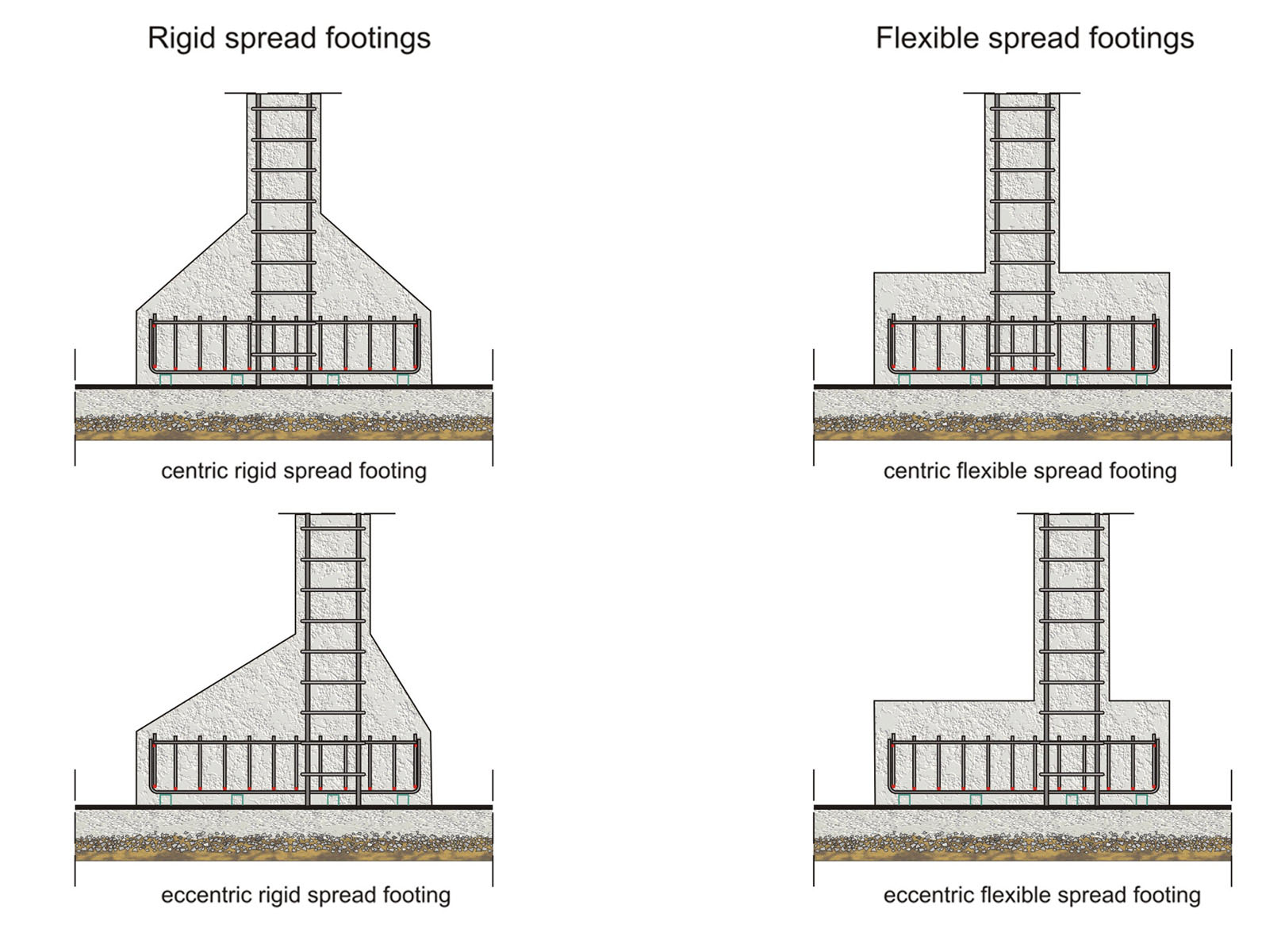
Spread footings are typically made of reinforced concrete and are wider than the structural element they support. They can be square, rectangular, or continuous (strip footings) beneath walls. Their primary function is to prevent excessive settlement, differential settlement (where one part of a building settles more than another), and rotation of the structure.
From a financial standpoint, the decision to use spread footings – and the specific type and size – is an early and critical budgetary consideration. Their design is directly influenced by the building’s weight, the soil’s bearing capacity, and local building codes.
- Initial Cost: Spread footings are generally among the most cost-effective foundation solutions for structures built on stable, high-bearing capacity soils. Their relative simplicity in excavation and concrete pouring compared to deep foundations (like piles or caissons) often translates to lower initial material and labor costs. However, these costs are highly variable.
- Geotechnical Investigation: Before any footing design, a geotechnical investigation is a mandatory upfront investment. While it adds to initial project costs, skimping on this crucial step can lead to catastrophic financial repercussions later. Understanding soil conditions dictates the size, depth, and reinforcement of the footing, directly influencing concrete volume, rebar tonnage, and excavation complexity, all of which have direct cost implications.
- Material and Labor Costs: The price of concrete, steel reinforcement (rebar), formwork, and the skilled labor for excavation and pouring are significant components. Fluctuations in these commodity markets can dramatically impact foundation costs, making accurate and flexible budgeting essential for developers and investors.
Types of Spread Footings and Their Economic Impact
Different types of spread footings are chosen based on specific structural needs and soil conditions, each carrying distinct economic implications:
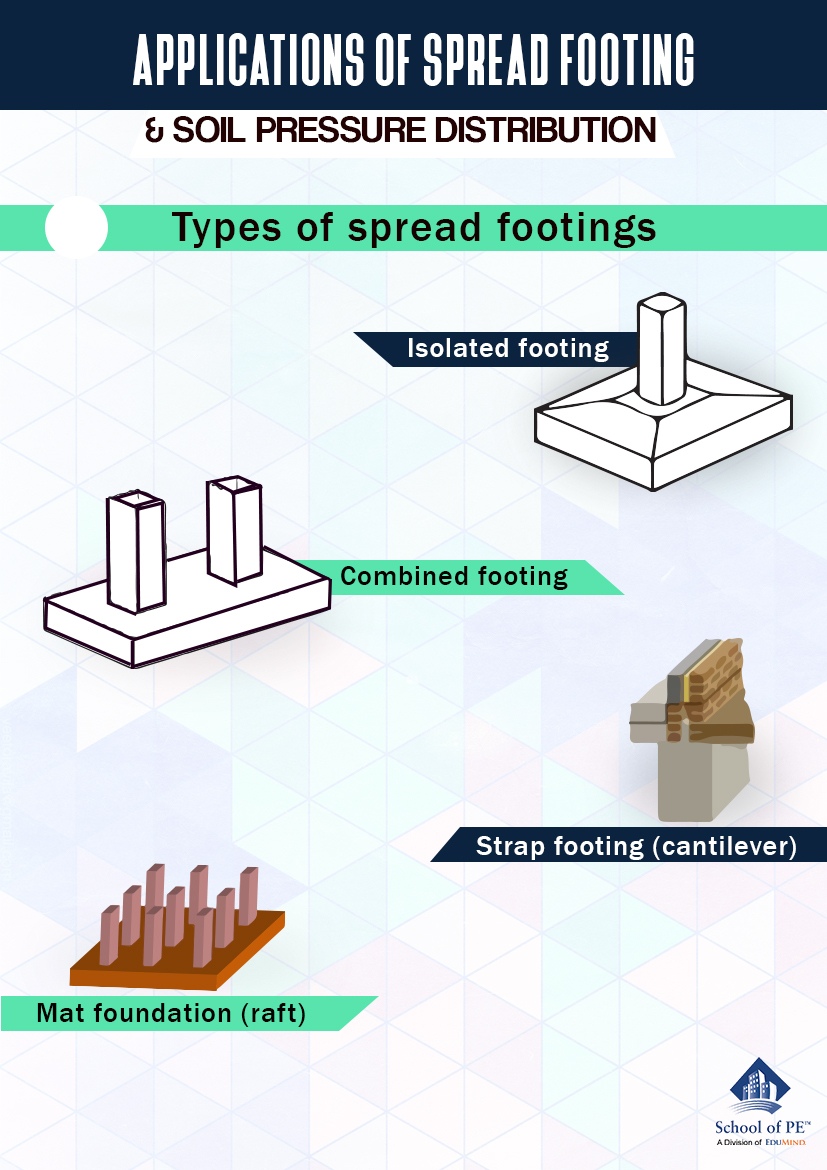
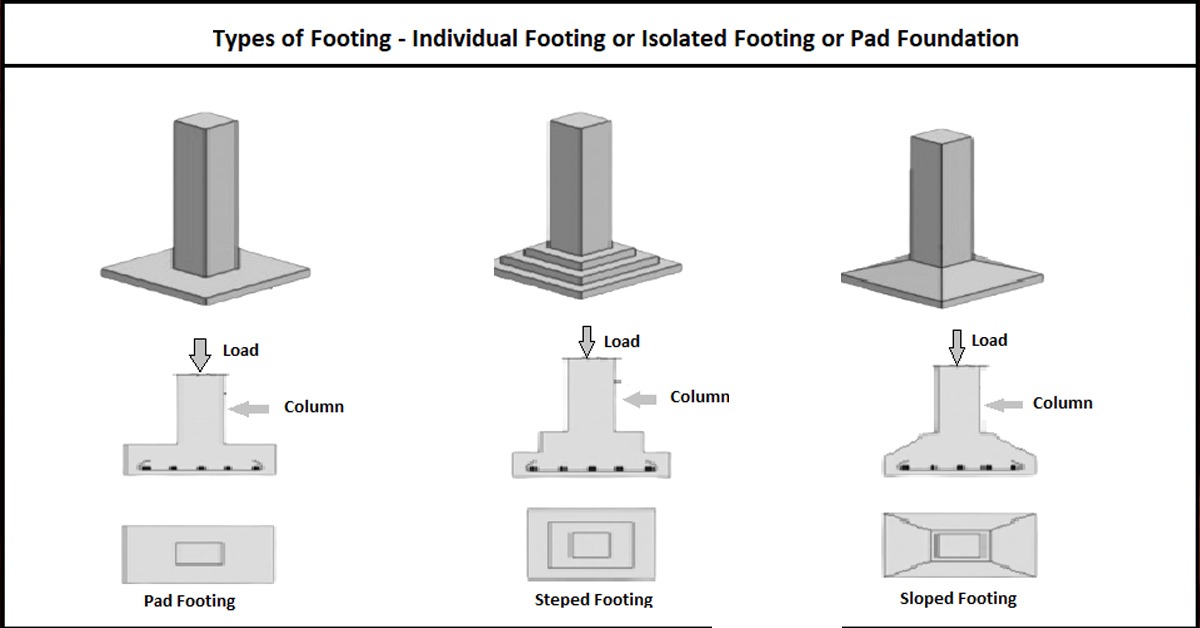
- Isolated or Pad Footings: Used to support individual columns, these are typically square or rectangular. Their cost-effectiveness makes them popular for multi-story framed structures where loads are concentrated at discrete points.
- Strip or Wall Footings: Continuous footings that support load-bearing walls. They are efficient for distributing linear loads over a wider area and are commonly found in residential and commercial buildings with continuous wall foundations. Their financial efficiency comes from continuous, albeit shallower, excavation and pouring.
- Combined Footings: When two or more columns are so close that their isolated footings would overlap, or when a column is near a property line, a combined footing supports multiple columns. This design is often more complex and thus more expensive in terms of material and labor, but it becomes necessary to ensure structural stability and optimize land use, offering long-term value despite higher upfront costs.
- Cantilever or Strap Footings: Similar to combined footings, these are used when a column is very close to a property line, making it impossible to center an isolated footing. A strap beam connects the eccentric footing to an interior footing, effectively distributing the load. The added complexity of the strap beam increases costs but is a necessary investment to maximize usable space on constrained sites.
- Mat or Raft Foundations: While not strictly “spread footings” in the traditional sense, a mat foundation is essentially a large, continuous spread footing covering the entire footprint of the building. It’s used when soil bearing capacity is very low, or column loads are extremely heavy and closely spaced. Financially, mat foundations are significantly more expensive due to the massive concrete and steel volumes, but they can be the only viable solution for very tall or heavy structures on poor soil, preventing prohibitive deep foundation costs or outright structural failure.
Each type presents a cost-benefit analysis. A developer must weigh the additional material and labor costs of a more complex footing against the long-term benefits of enhanced stability, optimized space, and reduced risk of future structural issues.
Spread Footings and Property Value: An Investment Perspective
For real estate investors, understanding the foundation system of a property goes far beyond engineering jargon. It’s a critical component of due diligence, directly impacting a property’s current valuation, future appreciation, and overall investment security. A sound foundation, particularly one employing well-designed spread footings, is an invisible asset that underpins the entire financial value of a structure.
Long-Term Investment Protection
A properly designed and constructed spread footing system is the ultimate guardian of a property’s structural integrity. This translates directly into long-term investment protection:
- Reduced Risk of Structural Issues: Buildings with robust foundations are far less prone to cracks in walls, uneven floors, or more severe structural failures that can be incredibly costly to repair. For an investor, avoiding these issues means safeguarding equity and preventing unforeseen capital expenditures.
- Enhanced Market Value: When buying or selling property, the condition of the foundation is a major inspection point. A well-maintained and structurally sound foundation enhances a property’s marketability and value. Conversely, foundation issues can significantly devalue a property, leading to reduced offers or requiring expensive repairs before sale.
- Lower Maintenance Costs: While foundations themselves require little maintenance, a failing foundation can cause damage throughout the entire structure. Investing in a quality foundation initially can lead to substantially lower long-term maintenance costs for the building as a whole.
Renovation and Expansion Considerations
For investors looking to renovate, expand, or repurpose a property, the existing spread footing system is a crucial financial determinant:
- Load Capacity Assessment: Before adding stories or heavy equipment, the existing footings must be assessed for their capacity to bear increased loads. If they are insufficient, strengthening or even replacing existing footings can be an extremely expensive undertaking, often involving underpinning or new foundation construction. This can easily make a renovation project financially unfeasible.
- Excavation Challenges: Any work around existing footings requires careful planning and execution to avoid undermining the foundation. This adds complexity and cost to excavation, utility upgrades, or landscaping projects.
- Property Line Constraints: If a building is near a property line, expanding the footprint might be limited by existing spread footings that cannot be extended without encroaching on neighboring land or requiring complex cantilevered solutions.
Due Diligence for Real Estate Investors
Savvy real estate investors should always make foundation inspection a cornerstone of their due diligence process.
- Professional Inspections: Engage experienced structural engineers or foundation specialists to evaluate the type, condition, and adequacy of the existing spread footings.
- Review of Construction Documents: Accessing original architectural and structural drawings can provide invaluable information about the foundation design and specifications.
- Awareness of Soil Conditions: Understand the local soil types and potential issues (e.g., expansive clays, liquefaction zones) that might impact foundation performance over time. A property on problematic soil with an inadequate foundation is a significant financial risk.
- Understanding Repair Costs: Familiarize yourself with the typical costs of foundation repairs in your region. This knowledge empowers you to negotiate effectively or to walk away from properties with prohibitive foundation issues.
Mitigating Financial Risk Through Proper Foundation Design
In the realm of business finance, risk management is paramount. For construction and real estate, inadequate foundations represent one of the most significant and potentially devastating financial risks. The initial investment in meticulous design and quality construction of spread footings is a powerful shield against future liabilities, costly repairs, and potential legal disputes.
Geotechnical Investigations: An Essential Upfront Investment
As mentioned earlier, a comprehensive geotechnical investigation, though an upfront cost, is perhaps the most critical investment in foundation risk mitigation.
- Informed Design Decisions: Soil reports provide crucial data on bearing capacity, settlement characteristics, presence of groundwater, and potential for expansive soils. This data allows structural engineers to design spread footings that are optimally sized and reinforced for the specific site, preventing over- or under-design.
- Cost Efficiency: While geotechnical surveys cost money, they prevent expensive guesswork. Without accurate soil data, engineers might err on the side of caution, leading to oversized and unnecessarily costly footings, or worse, undersized footings that fail.
- Legal Protection: Documented geotechnical reports provide a professional basis for design decisions, offering a layer of legal protection should foundation issues arise in the future.
Avoiding Costly Foundation Failures: The Price of Poor Planning
Foundation failures, whether minor or catastrophic, are almost invariably expensive. The financial consequences can include:
- Extensive Repairs: Repairing a failing foundation often involves underpinning, slabjacking, or rebuilding sections, all of which are invasive, time-consuming, and require specialized contractors. Costs can easily run into tens or hundreds of thousands of dollars, far exceeding the initial savings from cutting corners.
- Devaluation of Property: Even after repair, a property with a history of foundation failure may carry a stigma, potentially impacting its resale value. Disclosure requirements can also deter future buyers.
- Legal Liabilities: If a foundation fails due to negligent design or construction, developers, contractors, and even engineers can face costly lawsuits from property owners, insurance companies, or tenants.
- Project Delays and Business Interruption: For commercial properties, a foundation failure can halt operations, leading to lost revenue and reputational damage. For development projects, delays due to foundation issues can incur significant penalties, increased financing costs, and missed market opportunities.
Investing in skilled engineering, quality materials, and diligent construction practices for spread footings is not an expense; it’s a strategic investment in the financial stability and longevity of the entire project.
Economic Drivers and Market Trends in Foundation Construction
The economics of spread footing construction are influenced by a dynamic interplay of material costs, labor availability, and evolving sustainability trends. Staying abreast of these drivers is crucial for accurate financial forecasting and strategic decision-making in real estate and construction.
Material Costs and Supply Chain Impacts
The primary materials for spread footings are concrete and steel reinforcement (rebar). Their prices are subject to global commodity markets, energy costs, and supply chain disruptions.
- Concrete Volatility: The cost of cement, aggregates, and water, coupled with transportation expenses, makes concrete pricing variable. Geopolitical events, energy price spikes, or even local quarry closures can significantly impact project budgets.
- Steel Price Fluctuations: Rebar prices are notoriously volatile, tied to global steel production, demand from other industries, and tariffs. Locking in material costs through early procurement contracts can be a strategic financial move for large projects.
- Supply Chain Resilience: The COVID-19 pandemic highlighted the fragility of global supply chains. Developers are increasingly considering local sourcing options for materials to mitigate risk and reduce transportation costs, impacting the final cost of spread footings.
Labor Shortages and Skilled Trades
The construction industry, particularly in specialized areas like foundation work, faces persistent labor shortages.
- Increased Labor Costs: A scarcity of skilled concrete workers, rebar installers, and heavy equipment operators drives up labor wages. This directly impacts the cost of installing spread footings.
- Productivity and Quality: Experienced labor ensures efficient and high-quality work, minimizing errors and rework, which are significant financial drains. Investing in a skilled workforce, even at higher wages, can often lead to greater overall cost-effectiveness.
- Technological Adoption: To counter labor shortages and improve efficiency, some companies are exploring automation and prefabrication techniques for foundation components, potentially altering the cost structure of spread footings in the future.
Sustainable Foundation Solutions and Their Financial Payoffs
As environmental concerns grow, sustainable construction practices are gaining traction, even in foundation design. While some “green” options might have higher upfront costs, they can offer long-term financial benefits.
- Reduced Carbon Footprint: Using low-carbon concrete mixes or recycled aggregates for spread footings can contribute to green building certifications (e.g., LEED), which can enhance property value and marketability.
- Efficiency in Construction: Innovative foundation systems that reduce material waste or accelerate construction time can offer economic benefits, even if the materials themselves are more specialized.
- Resilience to Climate Change: Designing foundations to be more resilient to extreme weather events, such as increased flooding or soil erosion, is a crucial long-term investment that protects assets from climate-related damage and associated repair costs.
In conclusion, a spread footing is much more than a block of concrete; it is a profound financial commitment and a critical determinant of a property’s economic future. From the initial investment in geotechnical surveys and material procurement to its long-term impact on property value, maintenance costs, and risk mitigation, every aspect of a spread footing carries significant financial weight. For investors, developers, and property owners, a deep understanding of this foundational element is indispensable for making sound financial decisions and securing the long-term prosperity of their real estate ventures. Ignoring the financial implications of the foundation is to build a financial house of cards, whereas a well-planned spread footing provides a solid, enduring base for wealth and stability.
aViewFromTheCave is a participant in the Amazon Services LLC Associates Program, an affiliate advertising program designed to provide a means for sites to earn advertising fees by advertising and linking to Amazon.com. Amazon, the Amazon logo, AmazonSupply, and the AmazonSupply logo are trademarks of Amazon.com, Inc. or its affiliates. As an Amazon Associate we earn affiliate commissions from qualifying purchases.