
The “sploof” has long existed in the periphery of casual culture as a DIY solution to odor management. While it is often discussed in anecdotal terms as a simple household gadget, its design principles touch upon fundamental concepts in air filtration, molecular adsorption, and environmental engineering. Whether deployed in small residential spaces or as a component of air quality management, the sploof functions as a basic air purifier designed to mitigate the olfactory impact of aerosolized particulates and gases.
The Engineering Principles of Adsorption and Filtration
At its core, a sploof is a portable filtration device. Its primary purpose is to capture smoke or vapor through a medium that neutralizes odors before the air is exhausted back into the environment. To understand how this works, one must look at the physics of particle capture and chemical adsorption.

Mechanical Filtration
The first stage of a sploof typically involves mechanical filtration. This is usually achieved through a dense material—often activated carbon or simple fibers like dryer sheets—that forces the air to pass through a labyrinthine path. As air is pushed through these layers, larger particulates (smoke or vapor solids) become trapped within the fibers. This process is essentially a miniature version of the high-efficiency particulate air (HEPA) systems used in industrial air scrubbers.
Adsorption via Activated Carbon
The true heavy lifting in effective odor mitigation is done through adsorption, a process distinct from absorption. While absorption involves one substance being taken into the bulk of another, adsorption involves the adhesion of atoms, ions, or molecules from a gas or liquid to a surface. Activated carbon, the gold standard for this process, is processed to have a massive surface area per gram. By “activating” the carbon through high-temperature steam or chemical treatments, manufacturers create a network of microscopic pores. When odorous molecules pass through this carbon, they become trapped within these pores, effectively scrubbing the odor from the air stream before it exits the device.
Evolution from DIY Projects to Professional Solutions
The term “sploof” originated from the crude, homemade versions that characterized early iterations of the device. However, as the demand for discreet air quality management in residential settings has grown, the technology has transitioned into a commercial product category.
The Evolution of Materials
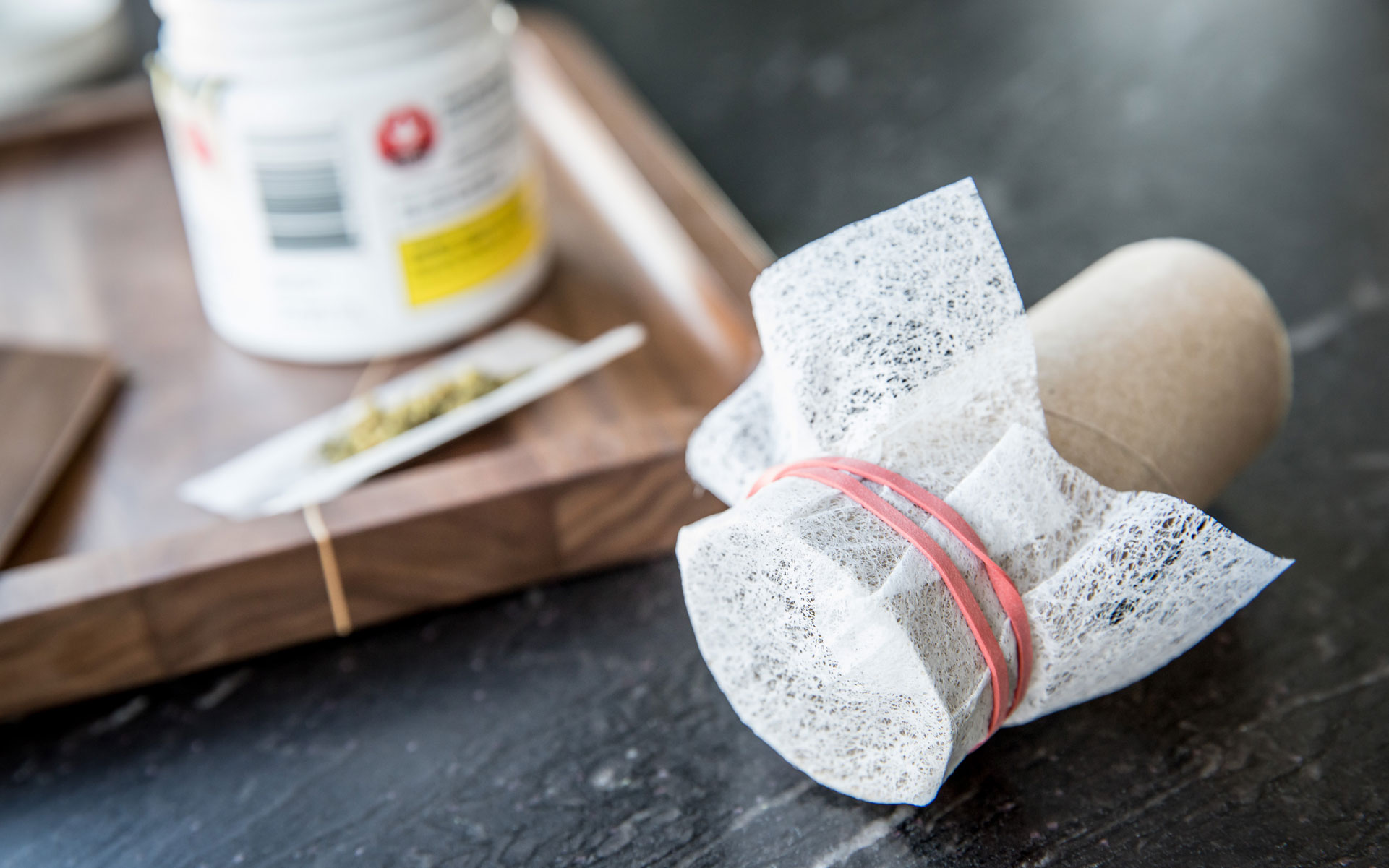
Early DIY sploofs often relied on cardboard tubes (such as the center of a paper towel roll) stuffed with scented dryer sheets. While these provided a rudimentary masking effect, they were flawed. The masking agents in dryer sheets often simply layer a perfume over the original odor rather than removing it. Modern, commercially engineered devices have moved toward high-density HEPA filters and medical-grade activated carbon, which neutralize rather than mask the odor.
Precision Engineering in Compact Form
The transition from homemade to manufactured sploofs has seen a focus on airflow dynamics. A poorly designed filter restricts airflow too significantly, creating backpressure that makes the device difficult to use. Modern manufacturers now utilize computational fluid dynamics (CFD) to ensure that the filter media allows for adequate breath-through while maintaining maximum contact time between the air and the carbon surface. This balance is critical; if the air moves too quickly, there isn’t enough time for the odor molecules to be captured by the filter, rendering the device ineffective.

Applications in Residential Air Quality Management
While the sploof is a niche tool, its role in localized air quality management is significant. In modern, multi-unit residential buildings where ventilation systems are shared or airflow is restricted, the management of localized odors is a practical concern for many occupants.
The Physics of Air Dispersion
In an enclosed room, odors disperse via Brownian motion—the random movement of particles in a fluid. Without intervention, these molecules eventually reach a state of equilibrium throughout the space. By introducing a filtration device like a sploof directly at the source of the emission, the user interrupts the dispersion process. By removing the molecules before they can distribute throughout the room, the device functions as a targeted source-control measure, significantly reducing the burden on secondary air purifiers or ventilation systems.
Integration with Broader Air Purification
It is important to recognize that a sploof is not a replacement for comprehensive air purification. In a professional setting, air quality management involves a layered approach. A sploof acts as the first line of defense, mitigating the odor at the point of origin. However, for total indoor air quality (IAQ) control, it must be paired with other systems, such as:
- HEPA Air Purifiers: These are necessary to capture the residual particulate matter that may escape the primary source.
- Active Ventilation: Ensuring proper air exchange rates (ACH) via HVAC systems or exhaust fans remains the most effective way to manage VOCs (Volatile Organic Compounds) and overall indoor air health.
- Humidity Control: Maintaining optimal humidity levels prevents the premature degradation of filter media, as high humidity can saturate activated carbon, reducing its efficiency.
Safety, Sustainability, and Future Trends
As the category matures, the conversation around sploofs has shifted toward sustainability and material safety. Early versions used plastics that were not heat-resistant or synthetic fragrances that could potentially introduce their own VOCs into the air stream.
Material Safety
Modern, professional-grade devices prioritize non-toxic, heat-resistant materials. This is crucial when dealing with warm air streams, which can cause low-quality plastics to off-gas. High-quality devices now utilize food-grade silicone, aluminum, or high-density polymers that are inert and safe for repeated use.
The Sustainability Factor
The environmental impact of disposable filtration devices is a growing concern. Many entry-level products are designed as single-use items, leading to significant waste. The industry is currently trending toward modularity. New designs feature replaceable filter cartridges rather than disposable housing units. This shift not only reduces plastic waste but also allows for the customization of filtration levels—users can choose different densities of carbon depending on the specific odor profile they are looking to mitigate.
Future Innovations in Odor Neutralization
Looking ahead, the development of photocatalytic oxidation (PCO) technology could change how sploofs function. PCO uses ultraviolet light to excite a catalyst (such as titanium dioxide), which breaks down odorous molecules into harmless byproducts like carbon dioxide and water. While currently too expensive and power-intensive for small, portable devices, the miniaturization of these components suggests that the next generation of odor-neutralization tools will move beyond simple physical filtration and into active chemical decomposition.
For now, the sploof remains a testament to the effectiveness of applied physics in everyday life. By understanding the underlying principles of adsorption and airflow, one can better appreciate the engineering required to maintain odor-neutral environments in restricted spaces. Whether used in the context of personal air management or as a study in portable filtration technology, the device serves as a practical application of air science, bridging the gap between basic DIY ingenuity and sophisticated environmental filtration.
aViewFromTheCave is a participant in the Amazon Services LLC Associates Program, an affiliate advertising program designed to provide a means for sites to earn advertising fees by advertising and linking to Amazon.com. Amazon, the Amazon logo, AmazonSupply, and the AmazonSupply logo are trademarks of Amazon.com, Inc. or its affiliates. As an Amazon Associate we earn affiliate commissions from qualifying purchases.