
Blackjack, often heralded as one of the most accessible and engaging casino games, captivates millions with its blend of luck and strategy. Among the array of strategic decisions a player can make, “splitting” stands out as one of the most powerful and, when employed correctly, one of the most financially advantageous. Far from a mere technical maneuver, splitting is a critical strategic play that directly impacts a player’s risk profile, potential payouts, and overall long-term profitability at the blackjack table. Understanding what a split is and, more importantly, when and why to execute it, is fundamental to mastering the game and optimizing one’s financial outcomes.

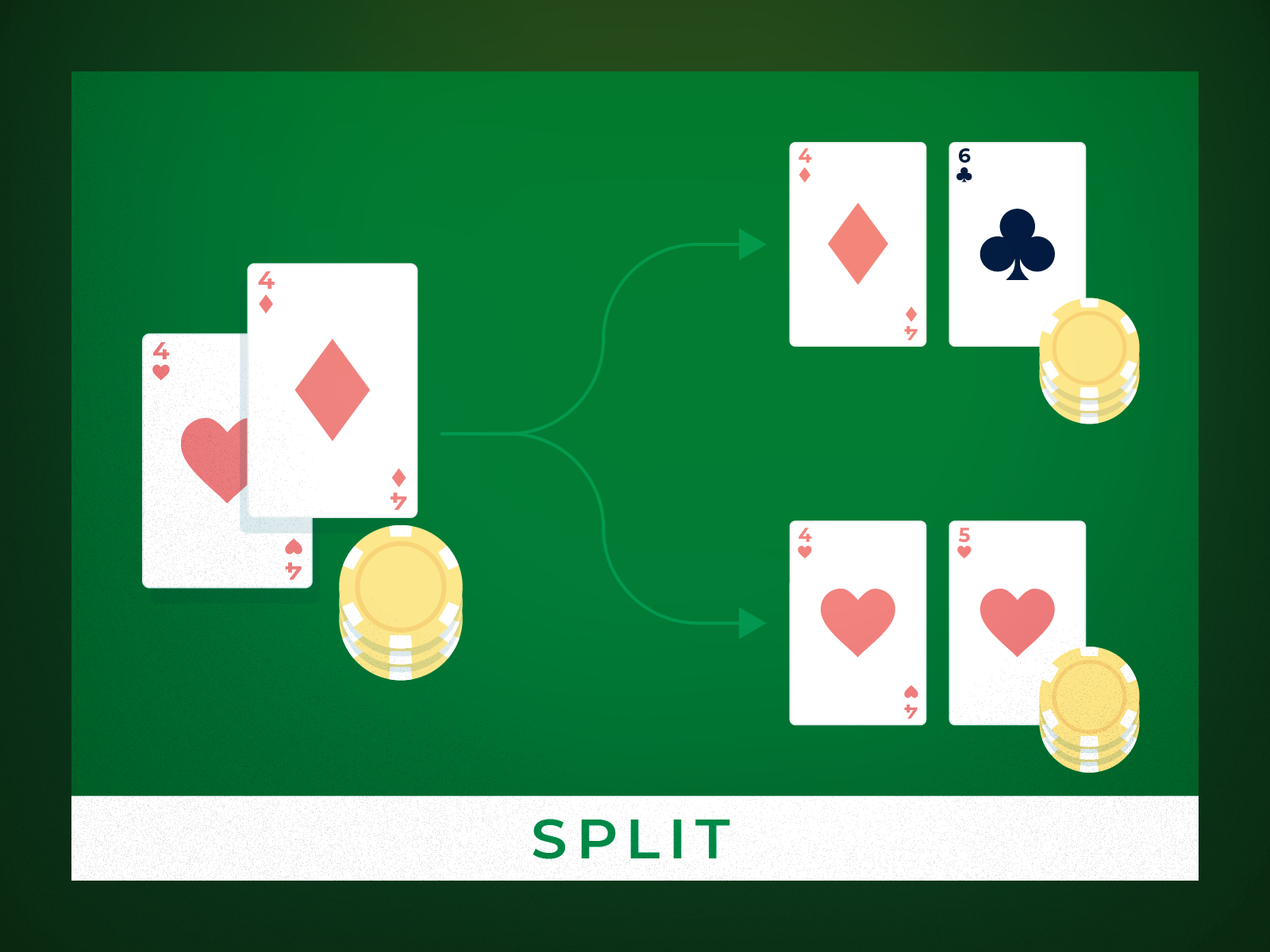
At its core, a split in blackjack allows a player to transform a single, less-than-ideal hand into two potentially strong hands. This opportunity arises when a player is dealt two cards of the same rank, such as a pair of 8s or a pair of Aces. Instead of playing these two cards as a single hand, the player opts to “split” them, effectively creating two separate hands. Each new hand then receives an additional card, and the player must place a second wager, equal to their original bet, on the newly formed second hand. This decision instantly doubles the player’s exposure – both their potential risk and their potential reward – underscoring its profound financial implications. A well-timed split can turn a losing hand into two winning hands, or conversely, a poorly executed split can double a player’s losses. Thus, splitting is not just about playing cards; it’s about making calculated financial decisions under pressure, leveraging probabilities to manage capital effectively.
The Mechanics and Financial Foundations of Splitting
Understanding the practical mechanics of splitting is the first step toward appreciating its strategic depth. When a player receives two cards of equal rank, the dealer will typically offer the option to split. If the player chooses to do so, their original hand is physically separated into two distinct hands.
Initiating the Split and Doubling Your Investment
The process begins by placing an additional bet next to the new second hand, an amount identical to the initial wager. This means that a player who originally bet $10 now has $20 in play across two hands. Each of these new hands is then treated independently. The dealer will deal a second card to the first hand, and the player will play that hand out according to standard blackjack rules (hitting, standing, doubling down, or potentially resplitting). Once the first hand is resolved, the dealer moves to the second hand, deals its second card, and that hand is also played out independently. The financial implication here is immediate and direct: a single decision has effectively doubled the player’s active investment in that round, simultaneously doubling their potential earnings or losses. This necessitates a robust understanding of bankroll management and a clear strategic rationale for undertaking such an increased financial commitment. Without a solid strategy, doubling your financial exposure can quickly deplete your funds rather than grow them.
Rules Variations and Their Financial Impact
It’s crucial to be aware that specific rules governing splitting can vary between casinos, and these variations directly impact the expected value of certain split decisions. For instance, some casinos allow players to “resplit” if they receive another pair on one of their split hands, potentially creating three or even four hands from an original pair. This increases the player’s capital at risk but also multiplies their opportunities to win. Another critical rule pertains to splitting Aces. Many casinos restrict players to receiving only one additional card per Ace and often do not allow resplitting Aces. Furthermore, if a player splits Aces and receives a 10-value card, this is usually counted as 21, not a blackjack, meaning it won’t pay out at the higher 3:2 ratio. These subtle differences in rules can significantly alter the mathematical profitability of splitting in various situations. Savvy players understand that checking the house rules before playing is not merely a formality but a critical financial due diligence step, influencing everything from optimal strategy to expected returns on their capital. For example, a game that allows resplitting of Aces offers a slightly better edge for the player, making the decision to split aces even more financially attractive.
Strategic Splitting: Maximizing Your Financial Edge
While the opportunity to split presents itself with any pair, the decision to actually split is not always financially prudent. Optimal blackjack strategy dictates specific scenarios where splitting significantly improves a player’s long-term expected value, turning a potentially weak hand into two strong ones, or avoiding a disastrous total.
Pairs You Should Always Split: The Non-Negotiable Financial Plays
Two pairs stand out as mandatory splits under almost all circumstances due to their overwhelming positive expected value:
- Aces (A, A): Always split Aces. A hand of two Aces starts as a mediocre 2 or a soft 12. However, splitting them creates two new hands, each starting with 11, a phenomenal starting point. Receiving a 10-value card on either hand immediately yields 21. Even if rules limit you to one card per Ace, the statistical advantage of starting with two hands both valued at 11, hoping for tens, is so profound that it overrides any other consideration. From a financial perspective, this is a prime example of leveraging an initial moderate investment (your original bet) into two highly probable winning hands, maximizing your potential profit for the round.
- Eights (8, 8): Always split 8s. An initial hand of 16 is widely considered the worst hand in blackjack. Hitting on 16 risks busting with any card from 6 through King (over 60% chance), while standing against any dealer upcard above 6 is almost certainly a loss. Splitting 8s transforms this high-risk 16 into two hands starting with 8. Each 8 has a much better chance of improving to a respectable total (18 or 19 with a 10-value card, or even higher) than the original 16. This is a defensive financial play designed to mitigate the extreme risk of 16 and turn it into two hands with better, albeit not guaranteed, winning probabilities. You are essentially salvaging a very bad situation and giving yourself two chances to win or at least improve your position.
Pairs You Should Never Split: Avoiding Financial Pitfalls
Conversely, some pairs are almost always better played as a single hand:
- Tens (10, 10) / Face Cards: Never split 10s (including Jacks, Queens, Kings). A hand of 20 is an incredibly strong total, second only to a natural blackjack. The probability of winning with 20 is exceptionally high against almost any dealer upcard. Splitting 10s would break up this near-certain winning hand, creating two hands of 10, each with a lower probability of reaching 20 or 21. From a financial standpoint, splitting 10s is a reckless move that diminishes a high-probability win into two lower-probability outcomes, effectively reducing your expected return. You already have a strong financial position; don’t gamble it away.
- Fives (5, 5): Never split 5s. A pair of 5s totals 10. This is an excellent hand to double down on, especially against a dealer’s weak upcard, as hitting a 10-value card gives you 20. Splitting 5s would create two hands, each starting with 5, which are very weak. The strategic advantage of having a hand of 10, perfect for a double down, far outweighs the risk of splitting. Financially, doubling down on 10 offers a better return on investment than splitting and playing two weak hands.
- Fours (4, 4): Generally, never split 4s. A hand of 8 is a reasonable starting point, and hitting on 8 has a good chance of improvement. Splitting 4s creates two hands of 4, both very weak. The only exception often cited is against a dealer’s 5 or 6 if specific rules like surrender or doubling after split are available, but for general play, it’s a financial risk not worth taking.
Situational Splits: Balancing Risk and Reward
For other pairs, the decision to split often hinges on the dealer’s visible upcard, embodying a calculated risk-reward scenario:
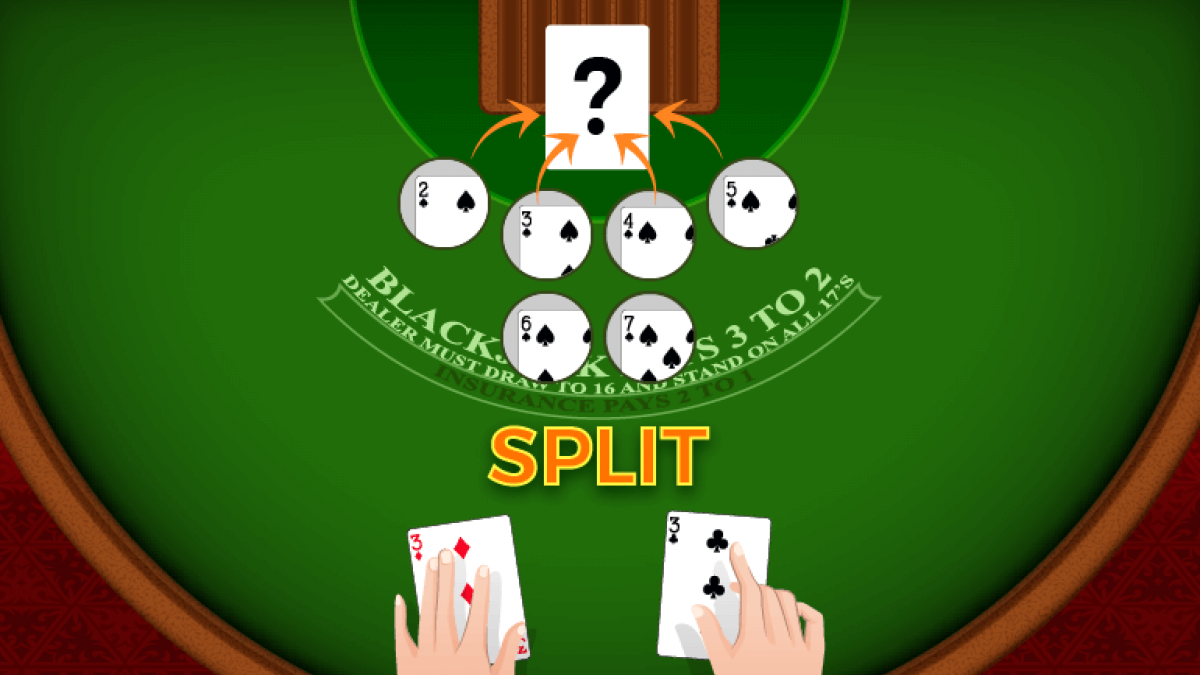
- Twos (2, 2), Threes (3, 3), Sevens (7, 7): Split these pairs against a dealer’s upcard of 2 through 7. The logic here is that the dealer is more likely to bust with these weaker upcards (4, 5, 6 particularly). By splitting, you create two opportunities to potentially win against a vulnerable dealer. This is an aggressive financial strategy, attempting to capitalize on the dealer’s statistical disadvantage.
- Sixes (6, 6): Split 6s against a dealer’s 2 through 6. Similar to 2s, 3s, and 7s, this capitalizes on the dealer’s weak position.
- Nines (9, 9): Split 9s against a dealer’s 2 through 6, and against a dealer’s 8 or 9. Do not split 9s against a dealer’s 7 (because 18 is a good total against 7) or a 10/Ace (because the dealer likely has a strong hand, and your 18 is decent enough to stand on). The decision for 9s is a fine balance between securing a strong 18 and creating two new hands with high potential against specific dealer vulnerabilities.
Each of these strategic decisions is rooted in mathematical probability and expected value, aiming to optimize a player’s financial outcome over time. Deviating from these established strategies often leads to a decrease in expected winnings and an increase in long-term losses.
The Financial Rationale and Psychology of Splitting
Beyond the immediate tactical application, understanding the financial and psychological underpinnings of splitting provides a deeper appreciation for its role in prudent blackjack play. Splitting is fundamentally about managing risk, leveraging opportunities, and making informed decisions with your capital at stake.
Risk Management and Expected Value
The decision to split is a classic example of risk management in action. By doubling your bet, you are increasing your financial exposure. However, for the ‘always split’ pairs (Aces and Eights), this increased risk is justified by a significantly improved expected value. An expected value (EV) in gambling represents the average outcome if a particular decision were repeated an infinite number of times. When basic strategy dictates a split, it means that, on average, splitting that pair will yield a higher return or a smaller loss over the long run compared to playing it as a single hand. For example, playing 16 as one hand has a high negative EV. Splitting 8s, while doubling the bet, transforms this into two hands, each with a higher EV, collectively leading to a better overall outcome. This is not about guaranteed wins on every hand but about maximizing your chances of financial success over many rounds.
Conversely, not splitting 10s is about preserving a high-positive EV situation. Breaking up a near-certain win for two lower-probability outcomes is financially unsound, as it reduces your overall expected return. Therefore, the strategic guidelines for splitting are not arbitrary; they are derived from meticulous statistical analysis aimed at optimizing a player’s financial longevity and potential profit at the blackjack table.
Bankroll Management and Psychological Discipline
Splitting also has significant implications for bankroll management. Since it requires an additional bet equal to your original wager, a series of splits can quickly deplete a limited bankroll if not managed carefully. A player who frequently splits must have sufficient funds to cover these additional wagers without putting their entire session at risk. This underscores the need for a well-defined bankroll strategy, where players only bring money they can afford to lose and manage their betting units responsibly. Aggressive splitting, even when strategically correct, demands a deeper reserve.
Psychologically, splitting requires discipline and a strong grasp of probability over intuition. Many players are hesitant to split a pair of 8s (turning a “bad” 16 into two “bad” 8s in their mind) or a pair of Aces (because they’re already great), often driven by fear of doubling their loss or greed to keep a sure thing. However, adhering to basic strategy, even when it feels counter-intuitive, is crucial. Overcoming the emotional impulse to avoid perceived risk, or to protect what feels like a sure win, is vital for long-term financial success in blackjack. The “gut feeling” rarely aligns with the statistically optimal financial decision. A disciplined player understands that the math, not emotion, dictates the best course of action for their money.
Advanced Considerations and Mastery of the Split
Mastering the split in blackjack goes beyond memorizing a basic strategy chart; it involves understanding rule nuances, recognizing table conditions, and maintaining psychological composure. These advanced considerations further refine a player’s ability to extract maximum financial value from the game.
Resplitting and Dealer Upcards
As mentioned earlier, some casinos allow “resplitting,” meaning if you split a pair of 8s and then receive another 8 on one of your new hands, you can split that new pair of 8s again. This can lead to three or even four hands in play from a single initial hand. While significantly increasing your wager, resplitting often offers an even greater advantage in specific situations, particularly with certain pairs against weak dealer upcards. For example, resplitting 2s or 3s against a dealer’s 5 or 6 offers multiple opportunities to build winning hands against a dealer who is statistically more likely to bust. Understanding when resplitting is permitted and strategically beneficial is an advanced financial maneuver, allowing for multi-pronged attacks on the dealer’s weak position. It means doubling down on an opportunity to multiply your investment and potential returns.
The dealer’s upcard remains the single most important factor in deciding whether to split any pair other than Aces and 8s. A strong dealer upcard (7, 8, 9, 10, Ace) often necessitates a more conservative approach, as the dealer is less likely to bust and more likely to achieve a strong total. Conversely, a weak dealer upcard (2, 3, 4, 5, 6) opens up more aggressive splitting opportunities, as the dealer has a higher probability of exceeding 21. This constant evaluation of the dealer’s vulnerability is a cornerstone of intelligent blackjack play and directly informs your financial decisions.
Table Conditions and Online Play
The number of decks in play can subtly influence splitting strategy, particularly for pairs like 9s. While basic strategy charts generally provide optimal decisions for typical 6-8 deck games, single or double-deck games might have minor variations due to altered probabilities. Similarly, playing blackjack online versus in a land-based casino can present different experiences. Online games often use continuous shuffling machines (CSM) or digital random number generators (RNGs), making card counting impossible and emphasizing strict basic strategy adherence. Land-based casinos, especially those dealing from a shoe, might offer opportunities for advantage play if a player possesses advanced skills like card counting, which could slightly modify splitting decisions based on the remaining card composition. For the vast majority of players, however, adhering to basic strategy, regardless of platform, remains the most financially sound approach.
The Human Element: Overcoming Bias
Finally, the human element in blackjack often presents the biggest hurdle to optimal splitting. Confirmation bias, the gambler’s fallacy, and loss aversion can all lead players astray. For instance, after a few split hands result in losses, a player might develop an aversion to splitting, even when strategy dictates it. Or, conversely, a string of wins from splitting might encourage over-aggressive splitting in situations where it’s not advised. Professional players and those committed to long-term financial success understand that each hand is an independent event (in games without card counting) and that adherence to mathematically proven strategy is paramount, regardless of recent outcomes. This emotional discipline is crucial to protecting one’s bankroll and ensuring that strategic decisions are based on logic, not fleeting sentiment.
Mastering the Art of Splitting for Financial Gain
Understanding “what is a split in blackjack” is merely the entry point. True mastery lies in recognizing the profound financial implications of this strategic move. Splitting is not a gamble in the purest sense; it is a calculated decision based on mathematical probabilities designed to optimize your expected return. By transforming one hand into two, you double your investment, but crucially, you also double your opportunities to win or mitigate losses.
From the non-negotiable splits of Aces and 8s, which are almost universally profitable long-term strategies, to the more nuanced decisions based on the dealer’s upcard for pairs like 2s, 3s, and 7s, every choice is rooted in maximizing your financial edge. Avoiding financially detrimental splits, such as 10s and 5s, is equally vital for preserving capital. Ultimately, blackjack is a game where disciplined strategy, particularly regarding moves like splitting, significantly influences your long-term financial success. By internalizing the mechanics, strategic imperatives, and underlying financial rationale, players can elevate their game from mere chance to a sophisticated exercise in capital management and probability assessment, ensuring that every split decision is a step towards greater profitability at the tables.
aViewFromTheCave is a participant in the Amazon Services LLC Associates Program, an affiliate advertising program designed to provide a means for sites to earn advertising fees by advertising and linking to Amazon.com. Amazon, the Amazon logo, AmazonSupply, and the AmazonSupply logo are trademarks of Amazon.com, Inc. or its affiliates. As an Amazon Associate we earn affiliate commissions from qualifying purchases.