
The S&P 500, often referred to simply as “the S&P,” is one of the most widely recognized and followed stock market indices in the world. It stands as a critical benchmark for the performance of large-cap U.S. equities and is frequently cited as a proxy for the overall health of the American economy. For investors, economists, and market analysts alike, understanding the S&P 500 is fundamental to grasping the dynamics of the financial landscape. More than just a list of companies, it represents a meticulously constructed portfolio designed to reflect the breadth and depth of the U.S. stock market. Delving into its composition, methodology, and significance reveals why this index holds such sway in investment conversations and financial strategies globally.

Understanding the S&P 500: A Benchmark of American Business
At its core, the S&P 500 is an index that tracks the stock performance of 500 of the largest publicly traded companies in the United States. Its purpose is to provide a broad snapshot of the market’s performance, allowing investors to gauge the general direction and strength of the U.S. stock market without having to analyze thousands of individual stocks. It’s not a collection of every company, but rather a curated selection intended to represent the most influential sectors and industries that drive the American economy.
What is a Stock Market Index?
To fully appreciate the S&P 500, it’s essential to first understand what a stock market index is. An index is a statistical measure of the change in a stock market’s value. It comprises a hypothetical portfolio of stocks, typically weighted by factors like market capitalization, and is used to represent a particular segment of the market or the market as a whole. Indices like the S&P 500 serve as benchmarks, making it easier to compare the performance of various investment strategies, funds, or even individual stocks against a standardized measure. They strip away the noise of individual stock fluctuations to provide a clearer picture of broader market trends.
The Origins and Evolution of the S&P 500
The S&P 500’s origins trace back to 1923 when Standard Statistics Company (which later merged with Poor’s Publishing to become Standard & Poor’s) introduced a stock index covering 233 companies. It wasn’t until March 4, 1957, that the index, then known as the “Standard & Poor’s 500 Stock Composite Index,” was officially launched with its current 500-company composition. This marked a significant milestone, as it was the first index to be electronically calculated and distributed in real-time, offering unprecedented transparency and timeliness. Over the decades, the S&P 500 has evolved, adapting its methodology to reflect changes in market structure and corporate finance, but its fundamental role as a bellwether of U.S. economic activity has remained constant.
How Companies are Selected for the Index
The selection of companies for the S&P 500 is not arbitrary. It’s governed by a committee at S&P Dow Jones Indices, which applies specific criteria to ensure the index remains representative and relevant. While market capitalization (the total value of a company’s outstanding shares) is a primary factor – generally, companies must have a market cap of at least $14.6 billion as of the most recent update – it’s not the only one. Other critical criteria include domicile (must be a U.S. company), liquidity (sufficient trading volume), public float (a substantial portion of shares available to the public), sector representation (to ensure diversification across industries), and profitability (four consecutive quarters of positive reported earnings). The committee also considers factors like whether a company is an operating company (excluding some holding companies) and if it’s listed on a major U.S. exchange (NYSE or NASDAQ). This rigorous selection process ensures that the S&P 500 comprises large, liquid, and economically significant companies, making it a robust reflection of the broader market.
The Mechanics Behind the S&P 500
Understanding the S&P 500 goes beyond knowing it comprises 500 large U.S. companies; it requires appreciating the specific methodology used to calculate and maintain the index. The way companies are weighted and the ongoing management of the index are crucial to its accuracy and utility as a market indicator. This mechanical precision is what gives the S&P 500 its authoritative status in the financial world.
Market-Cap Weighting Explained
Unlike some other indices, such as the Dow Jones Industrial Average which is price-weighted, the S&P 500 is a market-capitalization-weighted index. This means that companies with larger market capitalizations (share price multiplied by the number of outstanding shares) have a greater impact on the index’s movement than companies with smaller market caps. For example, a 1% move in a company like Apple, with its multi-trillion-dollar market capitalization, will affect the S&P 500 much more significantly than a 1% move in a company with a market cap of only $20 billion, even though both are components of the index. This weighting methodology naturally gives more influence to the largest and often most economically significant companies, thereby reflecting the overall market more accurately by size. It’s often adjusted for “free float,” meaning only shares readily available for public trading are counted, rather than all outstanding shares, including those held by insiders or restricted.
The Role of S&P Dow Jones Indices
The S&P 500 is maintained and published by S&P Dow Jones Indices, a joint venture between S&P Global, CME Group, and News Corp. This independent body is responsible for all aspects of the index’s management, including defining the selection criteria, evaluating potential candidates, making additions and deletions, and calculating the index’s value in real-time. The committee’s decisions are based on objective criteria and a commitment to maintaining the index’s integrity and representativeness. This separation from investment firms or political entities ensures that the index remains a neutral and reliable measure of market performance, free from potential conflicts of interest. Their ongoing oversight ensures that the index adapts to market changes, such as mergers, bankruptcies, or new listings, while adhering to its core objective.
Criteria for Inclusion: Beyond Size
While market capitalization is a critical threshold, the S&P Dow Jones Indices committee considers several other factors to ensure the quality and representativeness of the index constituents. Beyond the minimum market cap of approximately $14.6 billion, a company must be publicly listed on a major U.S. exchange (NYSE or NASDAQ) and have a public float of at least 10% of its shares. Liquidity is also paramount, requiring sufficient trading volume to ensure that the stock can be bought and sold without significant price impact. Furthermore, companies must demonstrate financial viability, typically by reporting positive earnings in the most recent quarter and over the previous four consecutive quarters (excluding discontinued operations). Sector balance is also a consideration, although the committee does not target specific sector weights, they do aim to ensure that the index broadly reflects the sector breakdown of the U.S. economy. These qualitative and quantitative factors collectively ensure that the S&P 500 is not just a list of the 500 biggest companies, but a robust and liquid reflection of America’s leading enterprises.
Why the S&P 500 Matters to Investors
For investors, the S&P 500 is more than just a data point; it’s a powerful tool and a critical benchmark that informs strategies, evaluates performance, and provides accessible pathways to market participation. Its significance stems from its ability to offer broad market exposure and a historical track record of consistent growth.
A Barometer of the US Economy
Often called the “stock market’s thermometer,” the S&P 500 is widely regarded as the best single gauge of large-cap U.S. equities and a leading indicator of the U.S. economy. Because its components are major corporations whose operations span various industries and often globally, their collective performance provides insights into consumer spending, corporate profitability, and investor sentiment. A rising S&P 500 typically signals economic expansion and optimism, while a declining index can forewarn of economic contraction or uncertainty. This makes it an invaluable reference point for policymakers, economists, and individuals trying to understand the economic environment.

Diversification Through a Single Investment
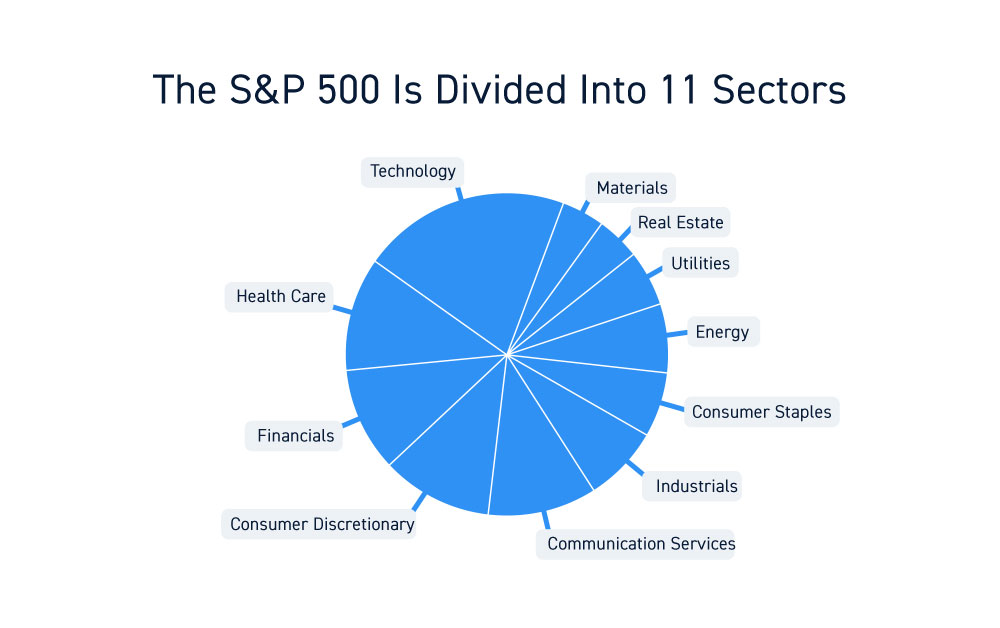
One of the S&P 500’s most attractive features for investors is the instant diversification it offers. By investing in a fund that tracks the S&P 500, an investor effectively gains exposure to 500 different companies across numerous sectors, including technology, healthcare, financials, consumer discretionary, and industrials. This broad exposure significantly reduces the risk associated with investing in individual stocks. If one company or even an entire sector underperforms, the impact on the overall portfolio is mitigated by the performance of the other 499 components. This level of diversification is difficult and costly to achieve by purchasing individual stocks, making the S&P 500 an efficient way for most investors to spread risk.
Long-Term Growth Potential and Historical Performance
Historically, the S&P 500 has demonstrated remarkable long-term growth. Despite numerous economic downturns, market corrections, and global crises, the index has consistently recovered and trended upwards over decades. While past performance is not indicative of future results, its historical average annual return has been approximately 10-12% (depending on the period and whether dividends are reinvested), showcasing its potential as a wealth-building engine. This consistent long-term appreciation is a key reason why the S&P 500 is a cornerstone of many retirement portfolios and long-term investment strategies. It embodies the power of compounding returns over extended periods.
Common Investment Vehicles: ETFs and Index Funds
Investors don’t directly “buy” the S&P 500. Instead, they invest in financial products designed to mirror its performance. The most common vehicles are Exchange Traded Funds (ETFs) and S&P 500 index mutual funds.
S&P 500 ETFs are funds that hold the stocks in the S&P 500 in the same proportions as the index. They trade like individual stocks on an exchange, offering flexibility and real-time pricing.
S&P 500 index mutual funds are similar but are typically bought and sold once a day at their net asset value. Both options provide a simple, cost-effective way for individual investors to gain diversified exposure to the large-cap U.S. stock market without needing to select or manage individual stocks. They benefit from low expense ratios compared to actively managed funds, as their objective is simply to track the index.
Investing in the S&P 500: Practical Approaches
For many investors, the goal is not to beat the market, but to capture its returns efficiently. Investing in the S&P 500 offers a practical and often superior approach to achieving this, especially for long-term wealth accumulation. The ease of access and cost-effectiveness of S&P 500-tracking investments make them ideal for various investor profiles.
S&P 500 ETFs: Accessibility and Low Costs
S&P 500 Exchange Traded Funds (ETFs) have revolutionized how everyday investors can access the market. These funds are designed to track the performance of the S&P 500 index by holding a portfolio of stocks that closely matches the index’s composition and weighting. They trade on stock exchanges like individual stocks, meaning you can buy and sell them throughout the trading day at market prices. This liquidity, combined with typically very low expense ratios (management fees), makes S&P 500 ETFs an incredibly popular choice. Major providers like Vanguard, iShares, and State Street offer highly liquid and cost-efficient S&P 500 ETFs, allowing investors to gain instant diversification and broad market exposure with minimal effort.
Index Mutual Funds: Professional Management
Similar to ETFs, S&P 500 index mutual funds also aim to replicate the performance of the S&P 500. The key difference is their trading mechanism; mutual funds are typically bought and sold directly through a fund company or brokerage at the end of the trading day, based on their Net Asset Value (NAV). While they don’t offer the intra-day trading flexibility of ETFs, they are often favored for long-term, systematic investing, such as through automatic contributions from paychecks. Many 401(k) and IRA plans offer S&P 500 index mutual funds as a core investment option, providing professional management of the underlying portfolio (though the strategy is passive index tracking) with similarly low expense ratios.
Considerations Before Investing
While investing in the S&P 500 offers significant advantages, it’s not without considerations. Investors should understand that, while diversified across 500 companies, the S&P 500 is still concentrated in large-cap U.S. stocks. It does not provide exposure to small-cap or mid-cap companies, nor does it inherently diversify into international markets or other asset classes like bonds or real estate. Therefore, for a truly diversified portfolio, S&P 500 exposure might be part of a broader asset allocation strategy. Additionally, like any stock market investment, it is subject to market volatility and the risk of loss, though its diversified nature tends to smooth out short-term fluctuations compared to individual stocks. Investors should align their investment horizon, risk tolerance, and financial goals with the characteristics of S&P 500 investments.
Criticisms and Limitations of the S&P 500
Despite its widespread acceptance and utility, the S&P 500 is not without its critics and inherent limitations. Understanding these aspects provides a more balanced perspective on its role as a market benchmark and investment vehicle.
Concentration Risk
One of the primary criticisms of the S&P 500, particularly in recent years, is its increasing concentration. Due to its market-capitalization weighting, the largest companies within the index exert a disproportionately large influence on its overall performance. For instance, a handful of mega-cap technology companies have come to represent a significant percentage of the S&P 500’s total weight. While these companies have often been growth leaders, this concentration means that the index’s performance can be heavily swayed by the fortunes of just a few entities. This introduces a form of concentration risk, where the “diversification” benefit might be less robust than it appears if a small number of top-heavy constituents face significant headwinds.
Not Truly “The Entire Market”
While the S&P 500 is considered a broad measure, it explicitly focuses on large-cap U.S. companies. It does not include mid-cap, small-cap, or micro-cap companies, which represent a significant portion of the total U.S. equity market in terms of company count, even if not market capitalization. These smaller companies often exhibit different risk-reward profiles and can outperform or underperform large-caps during various market cycles. Therefore, relying solely on the S&P 500 as a proxy for the entire U.S. stock market can lead to an incomplete picture, missing out on opportunities or trends in smaller segments.
Backward-Looking Indicator
Like all historical data, the S&P 500’s movements are a reflection of past and current economic conditions and investor sentiment. While analysts often extrapolate from its trends, the index itself is a backward-looking indicator. It tells us what has happened, not what will happen. Economic forecasts and investment decisions should not rely solely on the S&P 500’s past performance without considering forward-looking analyses, fundamental economic shifts, and potential future events that could impact its trajectory. While it is an excellent tool for assessing historical market performance, it does not possess predictive powers for the future.
aViewFromTheCave is a participant in the Amazon Services LLC Associates Program, an affiliate advertising program designed to provide a means for sites to earn advertising fees by advertising and linking to Amazon.com. Amazon, the Amazon logo, AmazonSupply, and the AmazonSupply logo are trademarks of Amazon.com, Inc. or its affiliates. As an Amazon Associate we earn affiliate commissions from qualifying purchases.