
The pursuit of truly immersive and captivating audio experiences often leads us down a rabbit hole of technical terms and specialized equipment. Among these, the “woofer” stands out as a crucial component, responsible for a significant portion of what we perceive as the “feel” of sound. But what exactly is a sound woofer, and why is it so important? In the context of a website that delves into technology, brand strategy, and money, understanding the woofer transcends a mere technical curiosity; it touches upon the quality of our technological investments, the brand perception associated with high-fidelity audio, and potentially even the financial considerations of building a superior sound system.

The Foundation of Audio: Understanding Speaker Drivers and Frequencies
Before we can truly appreciate the role of a woofer, we need to understand the fundamental building blocks of a loudspeaker. A loudspeaker, at its core, is a transducer – it converts electrical signals into mechanical vibrations, which in turn create sound waves that travel through the air to our ears. These vibrations are produced by a “driver,” the essential component that generates the sound.
Most modern speaker systems employ multiple drivers, each optimized to reproduce a specific range of frequencies. This division of labor is essential because no single driver can efficiently and accurately produce the entire spectrum of human hearing, which typically spans from 20 Hz (very low bass) to 20,000 Hz (very high treble).
The Frequency Spectrum Explained
To grasp the woofer’s significance, let’s break down the audio frequency spectrum:
- Sub-bass Frequencies (20 Hz – 60 Hz): This is the deepest, most felt part of the sound. Think of the rumbling of an earthquake in a movie, the powerful thud of a kick drum, or the resonant notes of a pipe organ. These frequencies are more felt than heard and are crucial for creating a sense of scale and impact.
- Bass Frequencies (60 Hz – 250 Hz): This range forms the foundation of most music and soundtracks. It includes the fundamental notes of bass guitars, the warmth of male voices, and the body of string instruments. This is where the “oomph” of your audio primarily resides.
- Mid-range Frequencies (250 Hz – 4,000 Hz): This is the most sensitive range for human hearing. It encompasses the majority of vocal clarity, the distinct sounds of instruments like pianos and guitars, and the crucial details that make audio intelligible.
- Treble Frequencies (4,000 Hz – 20,000 Hz): This range provides brightness, detail, and airiness. It includes the shimmer of cymbals, the clarity of sibilant consonants in speech, and the subtle nuances that contribute to a realistic soundstage.
The Woofer’s Domain: Mastering the Low End
This brings us to the star of our discussion: the woofer. A woofer is a loudspeaker driver specifically designed to reproduce low-frequency audio signals. Its primary role is to handle the bass and sub-bass ranges. The term “woofer” itself is onomatopoeic, derived from the “woof” sound that a dog makes, reflecting its ability to produce those deep, resonant tones.
Why Specialized Drivers for Bass?
Reproducing low frequencies requires a different approach than producing mid-range or treble sounds. Here’s why a dedicated woofer is so important:
- Cone Size and Excursion: To generate the long, powerful sound waves associated with bass, woofers typically have larger cones. These larger cones have more surface area to push more air. Furthermore, woofers are designed to have a significant “excursion,” meaning the cone can move back and forth over a greater distance. This increased movement is essential for creating the pressure variations in the air that we perceive as low-frequency sound.
- Motor System Strength: The “motor system” of a speaker driver, which includes the magnet and voice coil, is what drives the cone’s movement. For woofers, this motor system needs to be robust and powerful to accurately control the large cone and produce the significant air displacement required for bass.
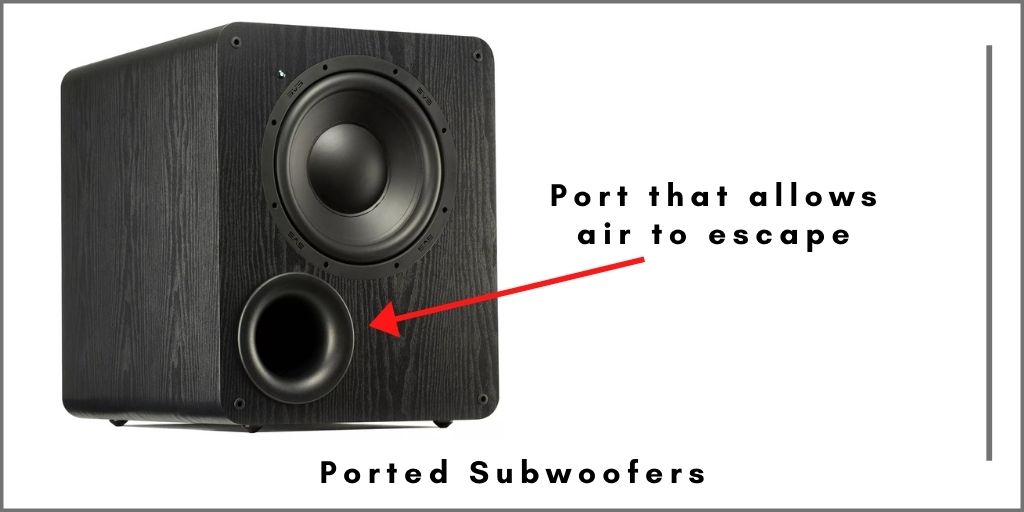
- Cabinet Design: The enclosure or cabinet in which a woofer is housed plays a critical role in its performance. Various cabinet designs, such as sealed enclosures, ported (bass reflex) enclosures, and passive radiators, are employed to optimize the woofer’s output, control unwanted resonances, and extend the bass response.
The Impact of a Good Woofer on Your Audio Experience
The presence and quality of a woofer have a profound impact on the overall listening experience:
- Emotional Resonance: Bass frequencies are deeply connected to our emotions. They create a sense of power, impact, and immersion. A well-executed bassline can make music feel alive and engaging, while powerful low-end effects in movies can heighten tension and excitement.
- Soundstage Depth: The low end contributes significantly to the perceived depth and scale of the soundstage. Without adequate bass, music can sound thin and two-dimensional, and movie scenes can lack the sense of environment and presence.
- Impact and Dynamics: Explosions, thunderclaps, and the thump of a kick drum are all characterized by their low-frequency impact. A capable woofer ensures these sounds are reproduced with the necessary force and dynamism, making the audio feel more realistic and thrilling.
- Musicality and Fullness: Many musical instruments, such as bass guitars, cellos, and pianos, produce fundamental notes and harmonics that fall within the woofer’s range. A good woofer provides the richness, body, and fullness that these instruments are meant to have.
Beyond the Woofer: The Synergy of a Complete Audio System

While the woofer is crucial for the low end, it’s important to remember that it’s just one piece of a larger audio puzzle. A truly superior sound system relies on the harmonious integration of different driver types, each handling its designated frequency range with precision.
The Role of Other Drivers
- Mid-range Drivers: These drivers handle the vital mid-range frequencies, which are critical for vocal clarity and the definition of many instruments. A good mid-range driver ensures that vocals are articulate and that instruments have their distinct character.
- Tweeters: Tweeters are responsible for the high frequencies, adding sparkle, detail, and air to the sound. They reproduce the shimmer of cymbals, the clarity of a violin’s upper register, and the subtle nuances that contribute to realism.
In a multi-driver system (which is most common for quality audio reproduction), the frequencies are typically crossed over at specific points by a “crossover network.” This electronic circuit directs the appropriate frequency ranges to the respective drivers.
Types of Speaker Systems and Woofer Integration
- Bookshelf Speakers: These are typically smaller and often contain a woofer and a tweeter, with some larger models incorporating a mid-range driver as well. They are designed for smaller to medium-sized rooms and can provide surprisingly robust bass for their size, especially when paired with a subwoofer.
- Floorstanding Speakers (Tower Speakers): These larger speakers usually house multiple woofers, often in addition to mid-range drivers and tweeters. They are designed to fill larger rooms and deliver a more powerful and extended bass response.
- Subwoofers: For those seeking the ultimate in low-frequency performance, a dedicated subwoofer is the answer. A subwoofer is essentially a loudspeaker system designed solely for reproducing the lowest of the low frequencies (often extending below the typical range of a woofer in a full-range speaker). They are typically powered (meaning they have their own amplifier) and are a critical component for home theater enthusiasts and audiophiles who crave deep, impactful bass.
The Brand and Money Connection: Investing in Quality Audio
The decision to invest in a sound system, and by extension, the quality of its woofers, is often intertwined with considerations of brand and money.
Brand Perception and Audio Quality
High-fidelity audio systems are often associated with premium brands and a certain lifestyle. Companies that focus on audio excellence often invest heavily in research and development to create superior drivers, including woofers. The brand’s reputation is built on the quality of its sound, and a well-designed woofer is a significant factor in achieving that.
For consumers, choosing a reputable audio brand can offer a degree of assurance regarding the performance and longevity of their investment. When a brand consistently delivers excellent bass reproduction, it builds trust and reinforces its premium positioning in the market. Understanding the technical specifications, including the type and size of the woofer, can help consumers make informed purchasing decisions that align with their brand preferences and desired audio fidelity.
Financial Considerations of Superior Bass
The pursuit of exceptional bass performance often comes with a higher price tag. This is for several reasons:
- Material Science and Engineering: High-quality woofers utilize advanced materials for their cones (such as carbon fiber, kevlar, or specialized paper composites) and robust motor systems. The engineering required to achieve accurate, distortion-free bass reproduction is complex and costly.
- Amplification Requirements: Driving a larger woofer with significant excursion requires more power from the amplifier. This can lead to the need for more powerful (and therefore more expensive) amplifiers or powered speakers with integrated amplifiers.
- Cabinet Construction: The acoustic design and construction of the speaker cabinet are crucial for optimizing woofer performance. Premium cabinets are often built with dense, inert materials and employ sophisticated porting or bracing techniques to minimize resonance and distortion, adding to the overall cost.
- The Subwoofer Factor: As mentioned, dedicated subwoofers represent a significant additional investment. However, for many, the ability to precisely control and reproduce the deepest bass frequencies is worth the financial outlay.
For individuals and businesses, understanding the value proposition of a good woofer can inform their spending. Whether it’s a personal audio setup for enjoying music and movies or a professional audio system for a studio or commercial space, the investment in quality bass components can significantly enhance the overall experience and contribute to a desired brand image of sophistication and attention to detail.
Conclusion: The Unsung Hero of Impactful Sound
In the world of audio, the woofer might not always be the most glamorous component, but it is undeniably one of the most important. It is the engine that drives the low frequencies, providing the foundation, impact, and emotional resonance that transform mere sound into a truly immersive experience. From the thunderous roar of a cinematic explosion to the deep, grooving bassline of your favorite song, the woofer is the unsung hero working tirelessly to bring your audio to life. By understanding its role and the factors that contribute to its performance, you can make more informed decisions when investing in audio technology, aligning your choices with both your technological aspirations and your financial considerations, and ultimately, enhancing the brands you engage with through superior sound.
aViewFromTheCave is a participant in the Amazon Services LLC Associates Program, an affiliate advertising program designed to provide a means for sites to earn advertising fees by advertising and linking to Amazon.com. Amazon, the Amazon logo, AmazonSupply, and the AmazonSupply logo are trademarks of Amazon.com, Inc. or its affiliates. As an Amazon Associate we earn affiliate commissions from qualifying purchases.