
In the era of high-speed connectivity and ubiquitous smart devices, the way we consume and create folklore has undergone a fundamental transformation. What was once whispered around campfires or passed down through oral tradition is now codified in the language of pixels, metadata, and algorithmic amplification. The “skinwalker dog” is a prime example of this digital evolution. While the term finds its roots in deep-seated Navajo traditional beliefs regarding shapeshifting entities, its modern incarnation is a purely technological phenomenon.
To understand what a skinwalker dog is today, one must look beyond the mythology and into the mechanisms of the digital age: how short-form video algorithms, generative artificial intelligence, and digital manipulation techniques have converged to create a new genre of “uncanny valley” horror that thrives on our screens.

The Algorithmic Birth of Digital Folklore
The rise of the “skinwalker dog” phenomenon cannot be decoupled from the architecture of social media platforms like TikTok, YouTube Shorts, and Instagram Reels. Unlike the static creepypastas of the early 2000s—which relied on text-heavy forums like 4chan or Reddit—modern digital legends are visual, visceral, and optimized for engagement.
TikTok and the Short-Form Horror Loop
The TikTok algorithm is designed to identify “high-retention” content. When a user pauses a video, rewatches a segment, or rushes to the comment section to ask, “Is that real?”, the platform’s machine-learning engine notes the engagement. Videos featuring dogs acting in “un-canine” ways—standing on hind legs, exhibiting human-like facial expressions, or making unusual vocalizations—trigger a physiological response in the viewer known as the “startle reflex.” This creates a feedback loop: the more unsettling the content, the more the algorithm pushes it to a wider audience, effectively “birthing” a trend through sheer computational power.
The Mechanics of the Uncanny Valley in Viral Video
From a technical perspective, the skinwalker dog thrives in the “uncanny valley”—a hypothesis in aesthetics where a humanoid (or in this case, a familiar animal) looks and moves almost, but not exactly, like a real being, causing a sense of revulsion. Digital creators leverage this by using specific video filters and editing software to subtly distort the proportions of a dog. By lengthening a limb or widening an eye by a few pixels, the creator utilizes basic computer vision principles to trick the human brain into seeing something “wrong,” which the digital community then labels as a “skinwalker.”
AI-Generated Nightmares: The Tech Behind the Image
As we move deeper into the 2020s, the “skinwalker dog” has transitioned from simple video edits to sophisticated AI-generated imagery. The democratization of high-end generative tools has allowed the average user to create hyper-realistic, yet impossible, creatures that defy the laws of biology.
Generative Adversarial Networks (GANs) and Distorted Realism
Most of the compelling “evidence” of skinwalker dogs found online today is a product of Generative Adversarial Networks (GANs). These systems consist of two neural networks—a generator and a discriminator—working against each other to create a realistic image. However, AI often struggles with the precise anatomy of animals, frequently resulting in “glitches” such as extra joints, fused shadows, or distorted paws. In a tech-literate society, these are recognized as AI artifacts; however, within the subculture of digital horror, these technical failings are recontextualized as the “incomplete transformation” of a shapeshifter.
Prompt Engineering the Paranormal
The evolution of the skinwalker dog is also a study in prompt engineering. By inputting specific descriptors into AI models like Midjourney or DALL-E 3—terms such as “bioluminescent eyes,” “unnatural canine posture,” or “highly detailed taxidermy aesthetic”—users can generate high-fidelity assets that populate the “skinwalker” tag on social media. This represents a shift from capturing the unknown to manufacturing it through intentional data manipulation, where the “ghost in the machine” is quite literally the algorithm’s inability to render a perfect dog.
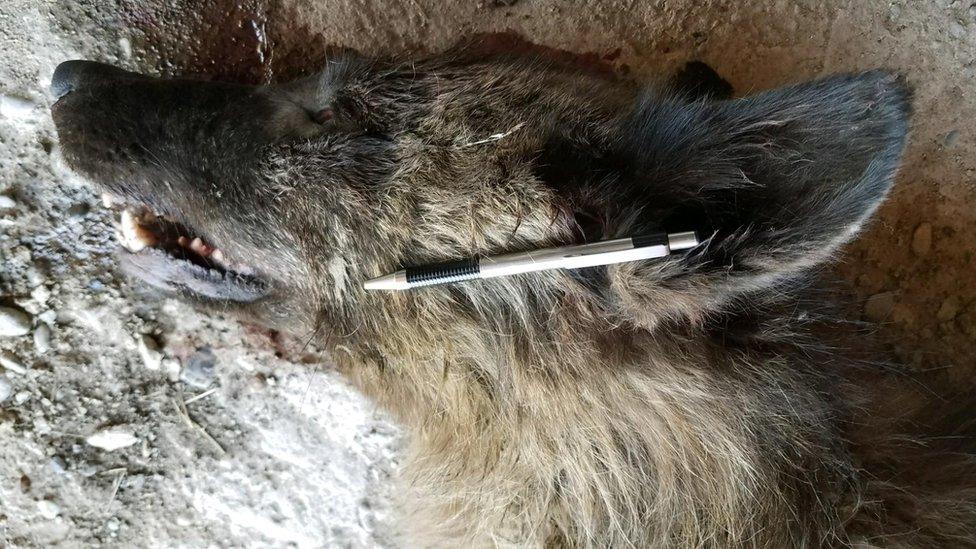
Digital Forensic Analysis: Fact vs. Filter
With the proliferation of “skinwalker dog” sightings, a counter-movement of digital forensics has emerged. Tech-savvy investigators now use a variety of software tools to debunk these viral sensations, highlighting the thin line between reality and digital artifice.
Post-Processing and Video Manipulation Techniques
Many viral skinwalker dog videos are the result of sophisticated post-processing. Content creators often use software like Adobe After Effects or DaVinci Resolve to implement “Puppet Warp” tools on video frames. This allows them to manipulate the movement of a dog in a way that looks fluid yet anatomically impossible. Additionally, the use of “low-light” filters is a common technical trick; by artificially introducing “noise” or “grain” to a video, creators can mask the seams of their digital edits, relying on the viewer’s brain to fill in the gaps with fear rather than logic.
The Role of Deepfakes in Modern Urban Legends
While deepfake technology is most commonly associated with political figures or celebrities, it has found a niche in the “cryptozoology” tech space. “Deep-animal-motion” transfer allows a creator to map human movements onto the skeletal structure of a 3D dog model. When a viewer sees a “skinwalker dog” performing a human-like wave or gait, they are often seeing a motion-capture overlay. The technical sophistication required to pull this off is decreasing, meaning the “barrier to entry” for creating convincing digital folklore is at an all-time low.
The Network Effect: How Social Platforms Shape Collective Belief
The concept of a skinwalker dog is not just a technological product; it is a networked one. The way information moves across the internet today allows for a “consensus reality” to form around digital fabrications with unprecedented speed.
Echo Chambers and the Speed of Information
The speed at which a “skinwalker dog” video can go viral is facilitated by the interconnectedness of our digital ecosystems. A video uploaded in a remote part of the world can be analyzed, remixed, and redistributed by thousands of creators within hours. This “Network Effect” creates a sense of ubiquity. When a user sees five different videos of “unnatural dogs” in their feed, the sheer volume of content—regardless of its technical authenticity—begins to lend a sense of credibility to the myth. This is a byproduct of algorithmic curation, which prioritizes consistency over fact-checking.
Monetizing the Macabre: The Economy of Clickbait Tech
There is a significant financial incentive for creators to produce skinwalker dog content. The “horror-tech” niche is highly lucrative on platforms that share ad revenue, such as YouTube. By utilizing trending keywords and high-contrast, AI-manipulated thumbnails, creators can drive millions of views. This has led to the development of “content farms” that use automated scripts and basic AI tools to churn out dozens of “paranormal” videos daily. In this context, the skinwalker dog is less a mythological creature and more a high-performing digital asset designed to maximize Click-Through Rate (CTR) and Cost Per Mille (CPM).

The Synthesis of Tradition and Technology
What is a skinwalker dog? In the modern context, it is a digital artifact—a synthesis of ancient cultural narratives and cutting-edge 21st-century technology. It represents the point where our primal fears meet our digital capabilities.
As AI continues to advance and our ability to distinguish between a rendered frame and a captured photo diminishes, the “skinwalker dog” serves as a harbinger of a new era of digital deception. We are no longer in an age where “seeing is believing.” Instead, we are in an age where the algorithm dictates what we see, and the AI determines how we perceive it. The skinwalker dog is the ultimate ghost in the machine: a creature made of code, fed by engagement, and sustained by the very technology that was supposed to demystify the world. In the end, the “transformation” isn’t happening to the dog—it’s happening to the way we interpret reality in a tech-driven society.
aViewFromTheCave is a participant in the Amazon Services LLC Associates Program, an affiliate advertising program designed to provide a means for sites to earn advertising fees by advertising and linking to Amazon.com. Amazon, the Amazon logo, AmazonSupply, and the AmazonSupply logo are trademarks of Amazon.com, Inc. or its affiliates. As an Amazon Associate we earn affiliate commissions from qualifying purchases.