
The concept of a “singularity” in physics often conjures images of black holes and the Big Bang, moments where our current understanding of the universe breaks down. But what exactly does this enigmatic term signify, and why is it so central to our quest to comprehend the cosmos? While seemingly abstract, the implications of singularities touch upon the very fabric of reality, pushing the boundaries of technology, influencing how we brand complex ideas, and even prompting us to think about the potential future of our economy and existence.
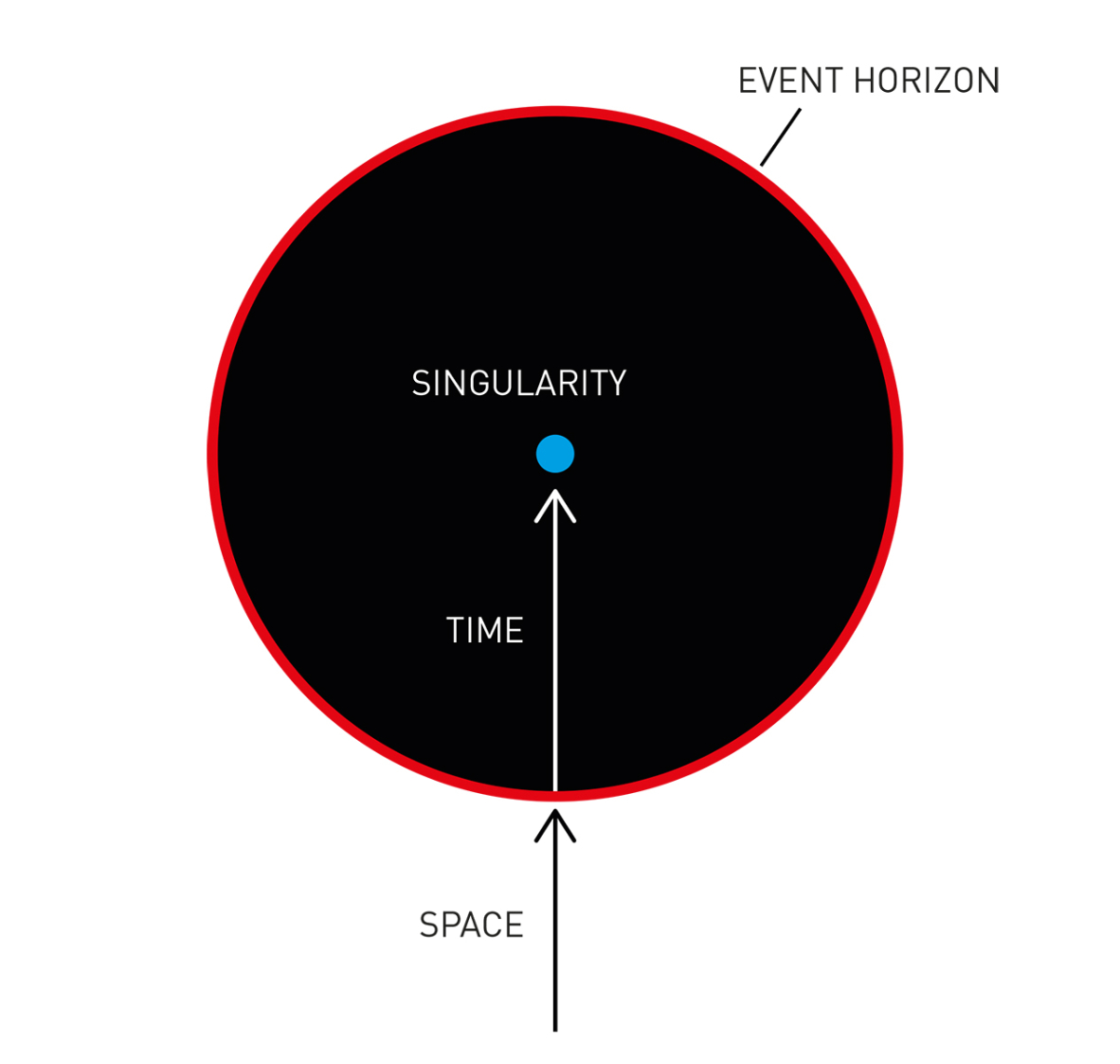
At its core, a singularity represents a point in space-time where certain physical quantities become infinite. These aren’t just large numbers; they are values that defy mathematical description and physical measurement within our established theories. Imagine trying to divide by zero – the result is undefined, a conceptual breakdown. A singularity is a similar, albeit far more profound, breakdown in the equations that govern gravity and the universe.
The Gravitational Singularity: Where Physics Meets the Infinite
The most familiar examples of singularities arise in the realm of gravity, specifically within the framework of Einstein’s General Relativity.
Black Holes: Cosmic Drainpipes of Spacetime
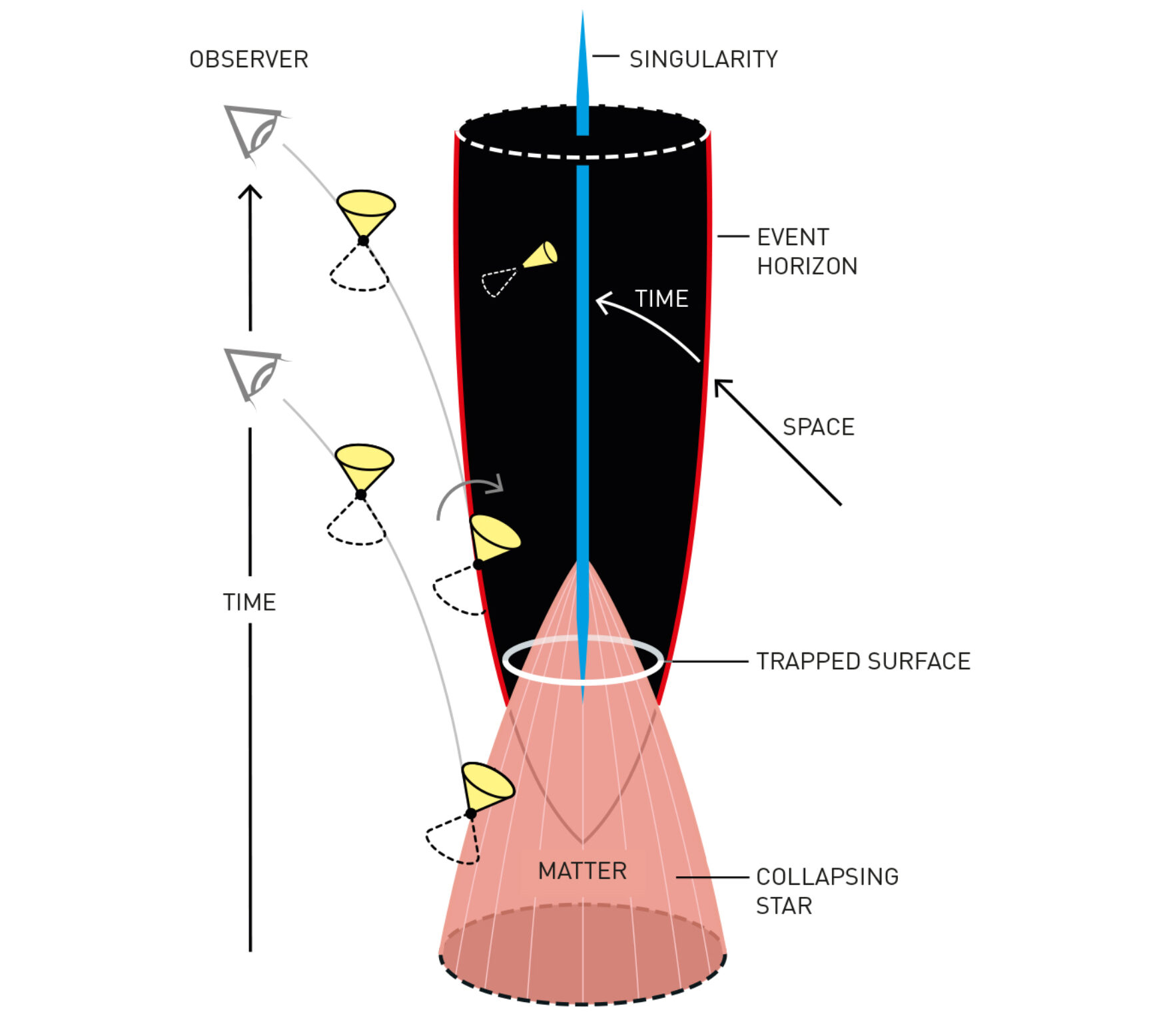
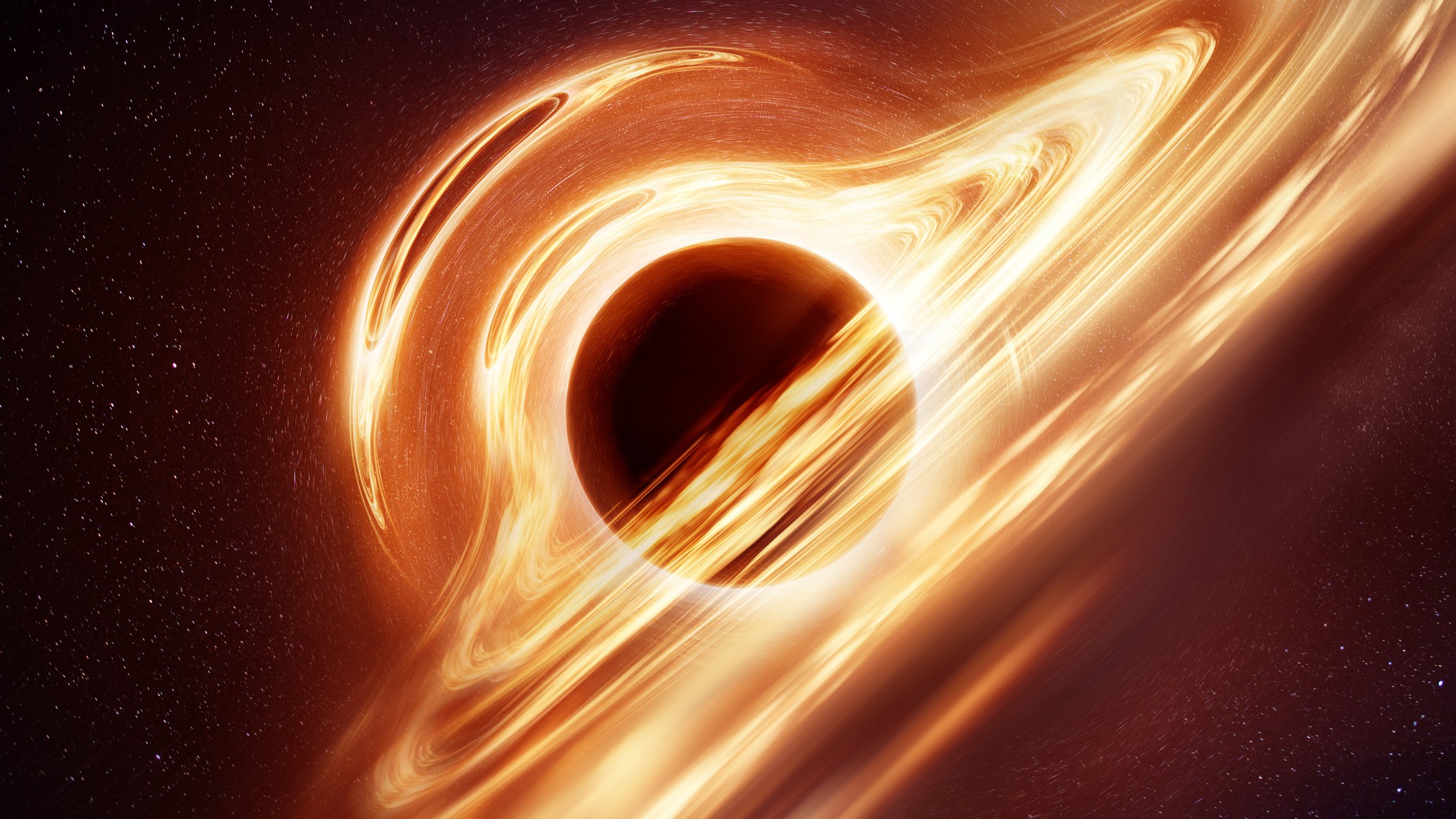
Black holes are perhaps the most iconic manifestations of gravitational singularities. Formed from the catastrophic collapse of massive stars, their gravitational pull is so immense that nothing, not even light, can escape once it crosses a boundary known as the event horizon.
According to General Relativity, at the heart of a black hole lies a singularity – a point of infinite density and curvature of spacetime. Here, the familiar laws of physics, as we understand them, cease to apply. Time and space become inextricably warped, leading to an environment so extreme that our current mathematical models can’t accurately describe what happens there. The singularity itself is thought to be a point of zero volume and infinite mass, a conceptual paradox that highlights the limitations of our theories when confronted with such extreme conditions.
The study of black holes, driven by the theoretical concept of their central singularity, has spurred significant advancements in observational astronomy and theoretical physics. Detecting gravitational waves, ripples in spacetime predicted by Einstein and now observed, provides indirect evidence for the existence of these extreme objects and the gravitational phenomena associated with them. Understanding black hole singularities is crucial for developing a more complete picture of gravity and its behavior under extreme circumstances.
The Big Bang: The Universe’s Own Beginning
Another profound singularity in physics is the Big Bang, the prevailing cosmological model for the universe’s origin. This model suggests that the universe began in an extremely hot, dense state approximately 13.8 billion years ago and has been expanding ever since.
The Big Bang singularity, much like the singularity within a black hole, is understood as a point in spacetime where the density and temperature of the universe were infinite. It represents the origin point of space and time itself, a moment before which our current concepts of “when” and “where” lose their meaning. Extrapolating backwards from the expanding universe leads us to this singular point, a theoretical boundary beyond which our current physics cannot reliably venture.
The Big Bang singularity presents a significant challenge for cosmologists. It implies that our current understanding of physics, particularly General Relativity, is incomplete. Physicists believe that a more comprehensive theory, such as a quantum theory of gravity, is needed to accurately describe the conditions at the very beginning of the universe. This quest for a unified theory is one of the most significant driving forces in modern physics.
Beyond Gravity: Singularities in Other Fields
While gravity is the most common context for singularities, the concept also appears in other areas of physics, albeit with different interpretations and implications.
Quantum Mechanics and the Measurement Problem
In quantum mechanics, the idea of a “singularity” can be loosely applied to the collapse of the wave function. When a quantum system is in a superposition of multiple states, it exists in a probabilistic haze. The act of measurement, however, causes this wave function to collapse instantaneously into a single definite state. This seemingly abrupt and non-deterministic transition has led some to consider it a “quantum singularity” – a point where the continuous evolution of the quantum state is interrupted by a discrete and singular event.
While not a singularity in the same sense as infinite density, it highlights the profound and often counter-intuitive nature of quantum phenomena. Understanding these transitions is crucial for the development of quantum computing and other quantum technologies, which aim to harness these probabilistic behaviors for computational power.
The Information Paradox: A Theoretical Conundrum
The information paradox, particularly in relation to black holes, also hints at a form of conceptual singularity. According to quantum mechanics, information can never be truly lost. However, if matter falls into a black hole and is ultimately destroyed at the singularity, the information it carried seems to vanish from the universe, violating this fundamental principle.
Resolving this paradox requires physicists to reconsider how information behaves in the extreme conditions near a black hole’s singularity. Theories like string theory and loop quantum gravity propose mechanisms by which information might be preserved, perhaps encoded on the event horizon or in a modified state near the singularity. This ongoing debate pushes the boundaries of our understanding of quantum mechanics, gravity, and the nature of information itself.
The Singularity and Our Future: Technological, Brand, and Financial Implications
While the immediate context of a physical singularity is the extreme edge of the universe, the concept resonates with broader themes that impact our technological advancements, how we brand complex ideas, and even our financial futures.
Technological Singularity: The Dawn of Superintelligence
The concept of a “Technological Singularity” is a speculative future event, often discussed in the context of artificial intelligence. It refers to a hypothetical point in time when artificial intelligence surpasses human intelligence, leading to rapid and irreversible technological growth.
This isn’t a singularity of infinite density, but rather a point of exponential acceleration. Imagine AI developing at such a pace that it can recursively improve itself, leading to a cascade of advancements that are beyond human comprehension. This “runaway” technological progress could transform every aspect of society, from science and medicine to economics and our very definition of consciousness.
The implications for technology are profound. Companies investing in AI research are essentially betting on reaching this potential singularity, or at least significant milestones on the path towards it. Understanding this concept is vital for navigating the ethical, social, and economic landscapes that will be shaped by increasingly sophisticated AI.
Branding the Unknowable: Communicating Cosmic Mysteries
Communicating complex scientific concepts like singularities presents a unique branding challenge. How do you create a brand or narrative around something that is, by definition, beyond our complete understanding?
The “brand” of a singularity in physics is one of mystery, frontier science, and the limits of human knowledge. It attracts curiosity and funding for research, but it also requires careful explanation to avoid misinterpretations or sensationalism. Think of the visual branding used by space agencies – black backgrounds, celestial imagery, and evocative language – all designed to capture the awe and wonder associated with these cosmic phenomena. Effectively branding scientific frontiers involves balancing the allure of the unknown with the rigor of scientific inquiry.
Financial Horizons and the Singularity of Economic Transformation
The idea of a singularity, when viewed through a financial lens, can prompt us to consider moments of profound economic transformation. While not a literal physical singularity, these are points where existing economic models and assumptions are dramatically altered.
Consider the impact of technologies like the internet or AI on financial markets and income generation. These innovations can create entirely new industries, disrupt established businesses, and fundamentally change how individuals earn and manage money. The rise of online income, side hustles, and the rapid evolution of financial tools are all symptoms of this ongoing economic transformation.
The “singularity” in finance might represent a future where AI-driven investing, decentralized finance (DeFi), or the automation of labor leads to unprecedented wealth creation or, conversely, significant economic disruption. Understanding these potential inflection points is crucial for personal finance planning, investment strategies, and business finance. Just as physicists grapple with the breakdown of their equations at a singularity, investors and businesses must adapt to the breakdown of old economic paradigms.
The Enduring Allure of the Unknown
The singularity in physics, whether at the heart of a black hole, the origin of the Big Bang, or the hypothetical future of superintelligence, represents a boundary. It’s a point where our current theories falter, inviting us to push the limits of our understanding and to develop new frameworks for comprehending the universe. These abstract concepts, while rooted in fundamental physics, have a surprising resonance with our efforts to innovate in technology, brand complex ideas, and navigate the ever-evolving landscape of finance. The pursuit of understanding singularities is a testament to humanity’s enduring drive to explore the unknown and to unravel the most profound mysteries of existence.
aViewFromTheCave is a participant in the Amazon Services LLC Associates Program, an affiliate advertising program designed to provide a means for sites to earn advertising fees by advertising and linking to Amazon.com. Amazon, the Amazon logo, AmazonSupply, and the AmazonSupply logo are trademarks of Amazon.com, Inc. or its affiliates. As an Amazon Associate we earn affiliate commissions from qualifying purchases.