
Understanding the dynamics of supply and demand is fundamental to navigating the world of business and economics. While the concept of a “shift” in a curve might sound technical, it’s a crucial indicator of underlying economic changes that directly impact pricing, production, and profitability. For businesses operating within the “Money” niche, grasping what a shift in the supply curve signifies is not just an academic exercise; it’s essential for informed decision-making, strategic planning, and ultimately, financial success. This article delves into the intricacies of supply curve shifts, focusing on their implications for businesses and investors.
The Foundations: Understanding the Supply Curve
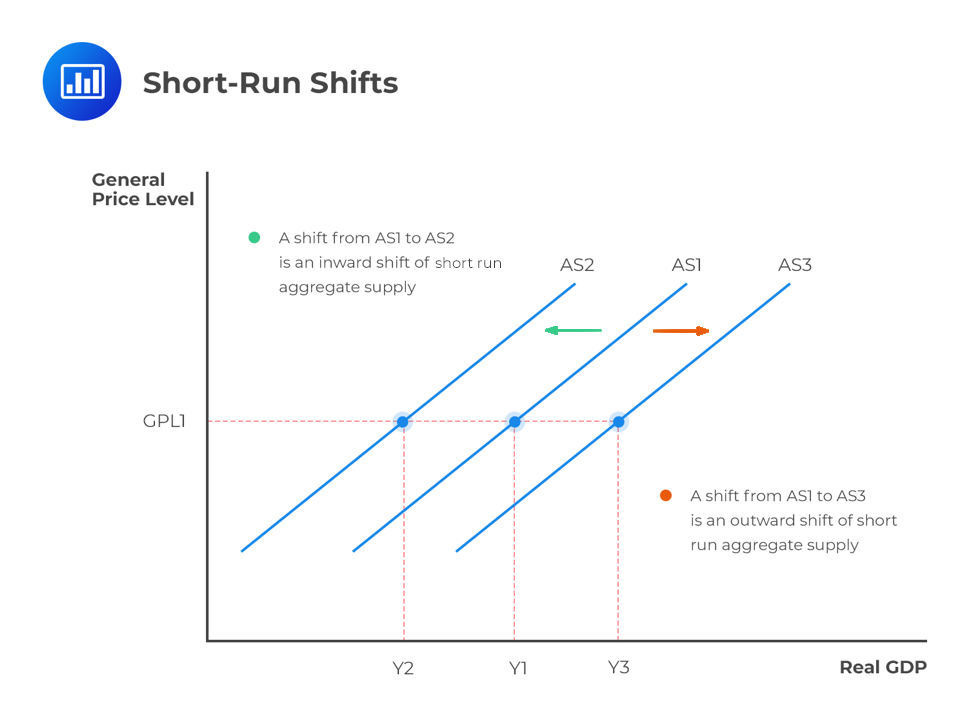
Before exploring what causes a shift, it’s vital to establish a clear understanding of the supply curve itself. In economics, a supply curve is a graphical representation that illustrates the relationship between the price of a good or service and the quantity that producers are willing and able to offer for sale at that price, over a given period.
The Law of Supply
At its core, the supply curve is dictated by the law of supply. This economic principle states that, all other factors remaining constant, as the price of a good or service increases, the quantity supplied will also increase, and vice versa. This positive correlation exists because higher prices generally translate to higher potential profits for producers, incentivizing them to produce and sell more. Conversely, lower prices reduce profitability, leading producers to decrease their output.
Movement Along the Curve vs. A Shift of the Curve
It’s critical to distinguish between a movement along the supply curve and a shift of the supply curve.
-
Movement Along the Curve: This occurs when there is a change in the price of the good or service itself. If the price of a product rises, we move up and to the right along the existing supply curve, indicating an increase in the quantity supplied. If the price falls, we move down and to the left, signifying a decrease in the quantity supplied. The curve itself remains unchanged.
-
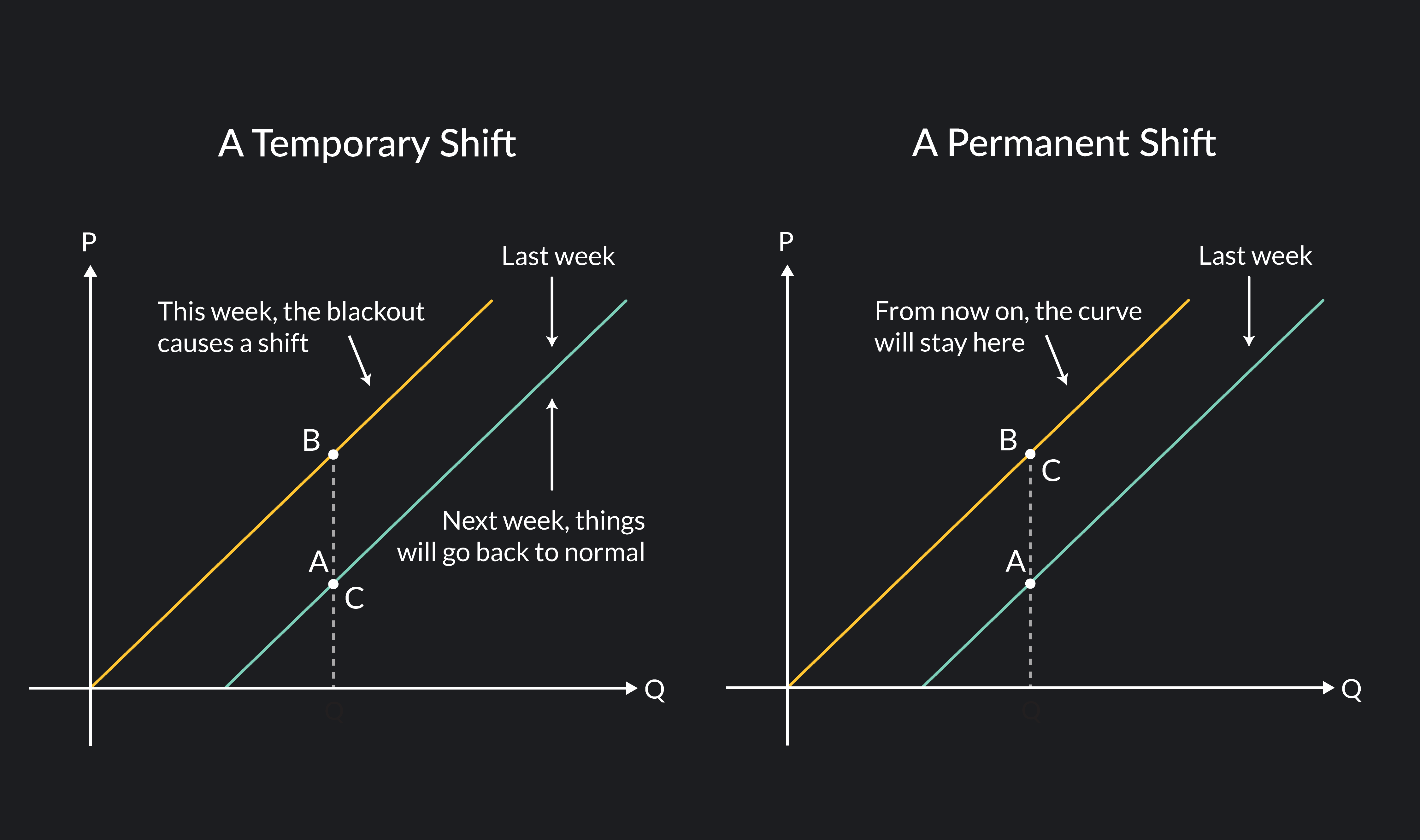
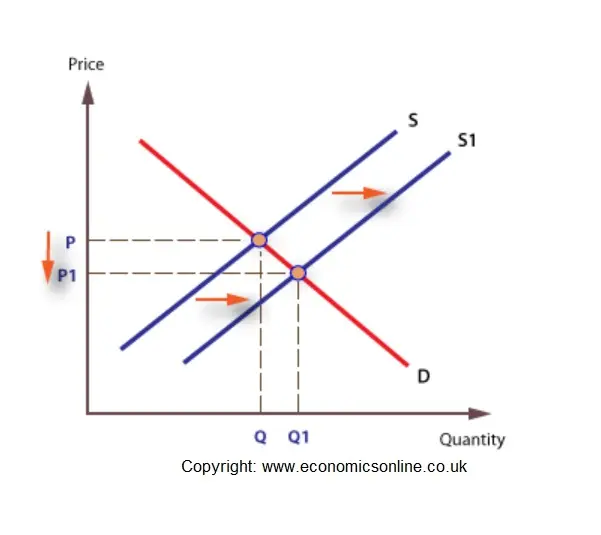
Shift of the Curve: This is the focus of our discussion. A shift in the supply curve indicates a change in the quantity supplied at every given price. This means that at each possible price point, producers are now willing to supply either more or less of the good or service than before. A shift to the right signifies an increase in supply, while a shift to the left signifies a decrease in supply. These shifts are driven by factors other than the price of the good or service itself.
Determinants of a Supply Curve Shift
A shift in the supply curve is triggered by changes in factors that affect the cost of production, the efficiency of production, or the availability of resources. For businesses and investors, understanding these determinants is key to anticipating market changes and adjusting strategies accordingly.
Input Costs: The Price of Production
One of the most significant drivers of supply shifts is a change in the cost of inputs required to produce a good or service. Inputs include raw materials, labor, energy, and capital.
-
Decreased Input Costs: If the price of raw materials falls, or if labor becomes cheaper due to technological advancements or increased productivity, the cost of producing a good decreases. This makes production more profitable at every price level. Consequently, businesses will be willing and able to supply a greater quantity of the good at each price. This leads to a rightward shift of the supply curve. For example, a reduction in the price of microchips would lower the cost of producing electronic devices, potentially leading to increased supply of smartphones and computers.
-
Increased Input Costs: Conversely, if the price of essential inputs rises, the cost of production increases. This squeezes profit margins, making it less attractive for businesses to produce at previous levels. To maintain profitability, they may need to charge higher prices. If prices cannot be raised sufficiently, or if demand is elastic, businesses might reduce their output. This results in a leftward shift of the supply curve. For instance, a surge in oil prices will increase the cost of transportation and manufacturing for many industries, leading to a potential decrease in the supply of various goods.
Technology and Productivity
Technological advancements play a crucial role in influencing supply. Innovations that improve the efficiency of production processes can significantly impact the quantity supplied.
-
Technological Improvements: New technologies often enable businesses to produce more output with the same amount of inputs, or even fewer inputs. This reduces the cost per unit and increases profitability. As a result, producers are incentivized to supply more at every price. This leads to a rightward shift in the supply curve. The automation of manufacturing processes, for instance, has drastically increased the supply of many consumer goods over time.
-
Decreased Productivity: Conversely, a decline in productivity, perhaps due to outdated technology, labor disputes, or natural disasters affecting operational efficiency, can increase the cost of production per unit. This would lead to a leftward shift of the supply curve as businesses are able to supply less at each price.
Government Policies and Regulations
Government actions can significantly influence the supply of goods and services through various policies.
-
Subsidies: Government subsidies are financial incentives provided to businesses to encourage the production of certain goods or services. For example, subsidies for renewable energy aim to increase the supply of clean power. These subsidies effectively lower the cost of production for businesses, leading to a rightward shift in the supply curve.
-
Taxes: Conversely, an increase in taxes on production or specific goods can raise the cost of doing business. Higher excise taxes on cigarettes, for instance, increase the cost of selling them, leading to a decrease in the quantity supplied at each price. This results in a leftward shift of the supply curve.
-
Regulations: New or more stringent regulations, such as environmental protection standards or safety requirements, can increase the cost of compliance for businesses. These additional costs can lead to a leftward shift of the supply curve as producers may be forced to scale back production or pass on higher costs, which could reduce demand.
Expectations About Future Prices
A producer’s expectations about future prices can also influence their current supply decisions.
-
Expectation of Higher Future Prices: If producers anticipate that the price of their good or service will rise significantly in the future, they might choose to withhold some of their current supply, storing it to sell later at the higher price. This leads to a temporary leftward shift in the current supply curve.
-
Expectation of Lower Future Prices: If producers expect prices to fall in the future, they might try to sell as much as possible now before the price drops. This can lead to an increase in current supply, causing a rightward shift in the supply curve.
Number of Sellers
The overall market supply is the sum of the individual supplies of all producers in that market. Therefore, changes in the number of sellers directly impact the supply curve.
-
Increase in the Number of Sellers: When more businesses enter a market, the total quantity supplied at each price generally increases. This leads to a rightward shift of the market supply curve. For instance, the proliferation of online platforms has made it easier for new entrepreneurs to enter various markets, increasing overall supply.
-
Decrease in the Number of Sellers: If some businesses exit a market, perhaps due to unprofitability or consolidation, the total quantity supplied at each price will decrease. This results in a leftward shift of the market supply curve.
The Impact of Supply Curve Shifts on Business and Investment
Understanding the determinants of supply shifts is only the first step. The real value lies in recognizing their implications for businesses and investors.
For Businesses: Pricing, Production, and Profitability
-
Increased Supply (Rightward Shift): When supply increases, assuming demand remains constant, the equilibrium price of a good or service tends to fall, and the equilibrium quantity sold tends to rise.
- Pricing Strategies: Businesses facing increased supply might need to lower their prices to sell their larger output. This can be a challenge, especially if input costs haven’t decreased proportionally.
- Production Adjustments: Businesses might need to ramp up production to take advantage of lower prices and potentially capture a larger market share. However, they must carefully manage inventory to avoid overstocking.
- Profitability: While lower prices can squeeze profit margins per unit, the increased volume sold can lead to higher overall profits. Conversely, if competition intensifies due to increased supply, firms might struggle to maintain profitability.
-
Decreased Supply (Leftward Shift): When supply decreases, assuming demand remains constant, the equilibrium price tends to rise, and the equilibrium quantity sold tends to fall.
- Pricing Strategies: Businesses experiencing a decrease in supply often have the opportunity to increase prices. This can be beneficial for profitability, but they must be mindful of the price elasticity of demand – if demand is very elastic, raising prices could significantly reduce sales volume.
- Production Adjustments: Businesses may need to reduce production to align with the lower available supply. This might involve difficult decisions regarding workforce or operational capacity.
- Profitability: Higher prices can boost profit margins per unit. However, the reduced quantity sold means that overall profit might not increase as much as expected, or could even decrease if the demand reduction is substantial. Businesses that can secure their supply chains or have more efficient production processes often fare better in such scenarios.
For Investors: Identifying Opportunities and Risks
-
Anticipating Shifts: Savvy investors look for factors that are likely to cause shifts in supply curves for specific industries or companies. For example, an investor might anticipate a rightward shift in the supply of electric vehicles due to falling battery costs and government incentives, suggesting potential growth opportunities in related companies.
-
Sectoral Analysis: Understanding supply shifts helps investors identify industries that are poised for growth (e.g., due to technological advancements leading to increased supply and lower prices) or those facing challenges (e.g., due to rising input costs leading to decreased supply and higher prices).
-
Risk Management: A leftward shift in the supply of a key commodity that a company relies on can pose a significant risk. Investors need to assess a company’s vulnerability to such supply disruptions and consider companies with diversified supply chains or strong hedging strategies.
-
Opportunity in Scarcity: Conversely, a decrease in supply can create opportunities for companies that can still produce and sell their goods at higher prices, or for those who are well-positioned to benefit from the scarcity of a particular resource.
Conclusion
A shift in the supply curve is a powerful signal of economic change. For any entity operating in the financial or business realm, from a sole proprietor to a multinational corporation or an individual investor, understanding these shifts is not optional; it’s a strategic imperative. By carefully analyzing the determinants of supply – input costs, technology, government policies, expectations, and the number of sellers – businesses can proactively adjust their strategies, optimize production, and navigate pricing challenges. Investors can leverage this knowledge to identify promising opportunities, mitigate risks, and make more informed investment decisions. In the dynamic world of commerce, mastering the concept of supply curve shifts is a key component of achieving sustainable financial growth and success.
aViewFromTheCave is a participant in the Amazon Services LLC Associates Program, an affiliate advertising program designed to provide a means for sites to earn advertising fees by advertising and linking to Amazon.com. Amazon, the Amazon logo, AmazonSupply, and the AmazonSupply logo are trademarks of Amazon.com, Inc. or its affiliates. As an Amazon Associate we earn affiliate commissions from qualifying purchases.