
In the intricate world of finance and investing, few terms are as fundamental yet often misunderstood as “a share.” Far from a mere piece of paper or a digital entry, a share represents a crucial building block in the architecture of corporate ownership and wealth creation. At its core, a share signifies a unit of ownership in a company, granting its holder a claim on a portion of the company’s assets and earnings. Understanding what a share truly entails is the first step for anyone looking to navigate the stock market, comprehend business finance, or build a personal investment portfolio. This article will delve into the multifaceted nature of shares, exploring their definition, role in financial markets, the motivations behind their issuance, and the perspective of investors.

The Fundamental Unit of Company Ownership
To grasp the essence of investing, one must first clearly define what a share represents and how it establishes a link between a company and its owners.
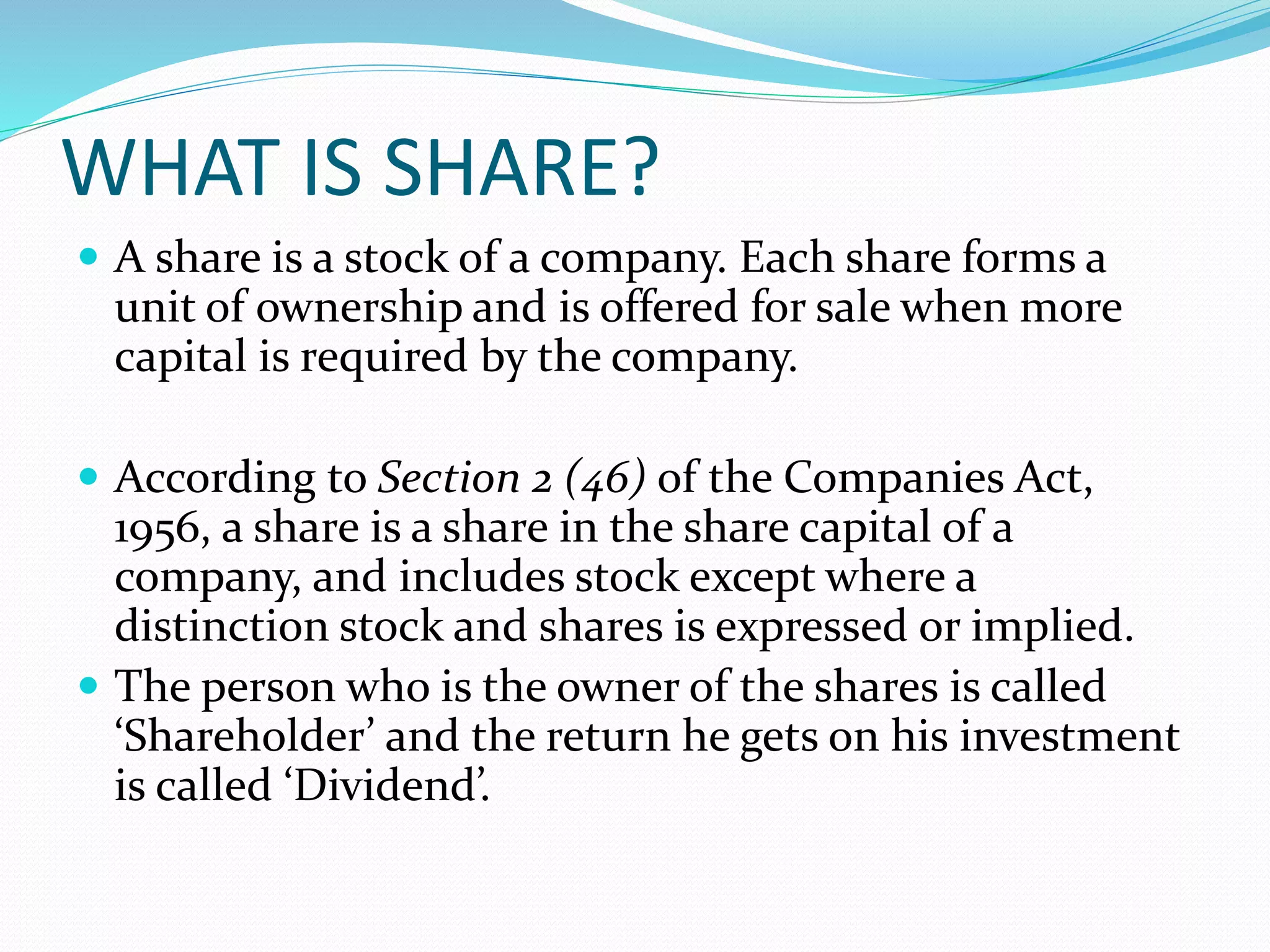
Defining a Share: More Than Just a Piece of Paper
Historically, a share was represented by a physical stock certificate, a tangible proof of ownership. Today, while some companies still offer physical certificates, most shares are held electronically in brokerage accounts. Regardless of their form, each share represents a fractional ownership interest in the company that issued it. If a company has 1 million shares outstanding and an individual owns 1,000 shares, that individual owns 0.1% of the company. This percentage, however small, carries with it certain rights and potential benefits. It’s this underlying concept of fractional ownership that makes shares such a powerful financial instrument, allowing individuals to participate in the growth and success of enterprises without necessarily owning the entire business.
Equity and Ownership: How Shares Represent Stakes
The ownership represented by shares is often referred to as “equity.” When you buy shares, you are essentially buying equity in a company. This equity entitles you to a portion of the company’s profits (often distributed as dividends) and, in the event of liquidation, a share of its assets after all debts have been paid. Critically, as an owner, you also bear some of the risk. If the company performs poorly, the value of your shares may decline. This direct relationship between ownership, risk, and reward is central to the concept of equity investment. It fosters a connection between the investor’s financial well-being and the company’s operational success.
Types of Shares: Common vs. Preferred
While the general definition of a share holds true, there are primarily two distinct types of shares that investors encounter: common shares and preferred shares, each with its own set of characteristics and rights.
Common Shares: These are the most prevalent type of shares and what most people refer to when they talk about “stocks.” Common shareholders typically have voting rights, allowing them to participate in corporate decisions, such as electing the board of directors. They also have the potential for greater capital appreciation if the company’s value grows significantly. However, common shareholders are last in line to receive payment if the company goes bankrupt, after creditors and preferred shareholders. The upside potential is higher, but so is the risk.
Preferred Shares: Preferred shareholders generally do not have voting rights. However, they are granted preference over common shareholders in receiving dividends and in the distribution of assets during liquidation. Dividends for preferred shares are usually fixed and paid out before common share dividends. This makes them less volatile than common shares and often appealing to investors seeking a steady income stream and less risk, though with limited capital appreciation potential compared to common shares. Some preferred shares may also be convertible into common shares under certain conditions.
The Role of Shares in Financial Markets
Shares are not merely static representations of ownership; they are dynamic instruments that drive the functioning of financial markets, facilitating capital formation and wealth distribution on a global scale.
Public vs. Private Companies: Listing Shares on Exchanges
The distinction between public and private companies is crucial in understanding where shares are traded.
Private companies are owned by a small group of individuals, often the founders, their families, or private investors. Their shares are not traded on public stock exchanges, and ownership changes hands through private transactions.
Public companies, in contrast, have offered their shares to the general public through an initial public offering (IPO). Once public, their shares are listed and traded on organized stock exchanges like the New York Stock Exchange (NYSE), NASDAQ, or the London Stock Exchange (LSE). This public listing makes shares accessible to a wide range of investors and subjects the company to greater regulatory scrutiny and transparency requirements.
IPOs and Secondary Markets: How Shares are Bought and Sold
The journey of a share from its issuance to its trading lifecycle involves several stages.
Initial Public Offering (IPO): This is the process by which a private company first offers its shares to the public. An IPO is typically managed by investment banks, which help the company determine the offering price and facilitate the sale of shares to institutional and retail investors. The primary purpose of an IPO is to raise significant capital for the company’s growth, expansion, or debt repayment, and to allow early investors (founders, venture capitalists) to realize returns on their investments.
Secondary Markets: Once shares have been sold in an IPO (the primary market), they are then traded among investors on secondary markets—the stock exchanges. Here, existing shares are bought and sold without direct involvement from the issuing company. The price of shares in the secondary market fluctuates based on supply and demand, company performance, economic conditions, and investor sentiment. This continuous trading activity provides liquidity, allowing investors to buy and sell shares relatively easily, which is a key factor in attracting investment.
Market Valuation and Share Price: Factors Influencing Value
The price of a share on the stock market is a dynamic reflection of various factors, collectively determining its market valuation.
Supply and Demand: At the most basic level, share prices are governed by supply and demand. If more investors want to buy a company’s shares than sell them, the price tends to rise, and vice versa.
Company Performance: Fundamental factors like a company’s revenue growth, profitability, earnings per share (EPS), dividend payouts, and future growth prospects are paramount. Strong financial performance and positive outlooks typically drive share prices higher.
Economic Conditions: Broader macroeconomic factors, such as interest rates, inflation, GDP growth, and employment figures, significantly influence investor sentiment and market trends, impacting share prices across the board.
Industry Trends and Competitive Landscape: The health and growth potential of the industry a company operates in, as well as its competitive position within that industry, are critical considerations. Disruptive technologies or new market entrants can quickly alter a company’s perceived value.
Investor Sentiment and News: Market psychology, major news events (e.g., product launches, mergers, scandals, geopolitical events), and analyst recommendations can cause short-term fluctuations in share prices.
Why Companies Issue Shares
From the company’s perspective, issuing shares is a strategic decision with profound implications for its financing, ownership structure, and growth trajectory.
Capital Generation: Funding Growth and Operations
The primary reason companies issue shares is to raise capital. Selling ownership stakes in the company provides a vital source of funding that doesn’t incur debt, unlike loans or bonds. This equity capital can be used for a myriad of purposes:
- Expansion: Funding new projects, entering new markets, or building new facilities.
- Research and Development: Investing in innovation to develop new products or improve existing ones.
- Acquisitions: Buying other companies to gain market share or new capabilities.
- Working Capital: Covering day-to-day operational expenses, especially for startups or growth-stage companies that may not yet be consistently profitable.
- Debt Repayment: Using equity to pay down existing debt, thereby strengthening the balance sheet and reducing interest expenses.
Attracting Investors: Spreading Risk and Expanding Ownership
By issuing shares, companies can tap into a broad pool of investors, from large institutional funds to individual retail investors. This not only provides capital but also diversifies the ownership base. Spreading ownership among many shareholders mitigates the concentration of risk that might exist if only a few individuals owned the company. It can also bring in diverse perspectives and expertise, though often the day-to-day management remains with the executive team. Public listing also enhances a company’s visibility and reputation, which can be beneficial for attracting talent and business partnerships.
Mergers, Acquisitions, and Stock Options: Strategic Uses
Beyond direct capital raising, shares serve several other strategic purposes:
Mergers and Acquisitions (M&A): Shares can be used as currency in M&A deals. Instead of paying cash, an acquiring company might offer its own shares to the shareholders of the target company. This can be an attractive option when cash reserves are low or when it’s strategically beneficial to integrate the ownership structures.
Employee Stock Option Plans (ESOPs): Many companies grant stock options or restricted stock units (RSUs) to employees as part of their compensation package. These incentives align employee interests with shareholder interests, motivating them to work towards increasing the company’s value. Employees stand to gain if the company’s share price rises.
Leveraging Market Confidence: A strong share price reflects market confidence in a company’s future. This confidence can make it easier to raise additional capital in the future, negotiate favorable terms with suppliers and customers, and attract top talent.
The Investor’s Perspective: Benefits and Risks
For investors, acquiring shares is a calculated decision driven by the potential for financial gain, but it also comes with inherent risks that must be carefully managed.
Potential for Capital Appreciation: Buying Low, Selling High
One of the primary attractions of investing in shares is the potential for capital appreciation. This occurs when the market price of a share increases over time. Investors who buy shares at a lower price and sell them later at a higher price realize a capital gain. This growth is typically driven by the company’s improved financial performance, industry growth, successful product launches, or positive economic conditions. For many long-term investors, capital appreciation forms the bulk of their investment returns.
Dividends and Income Generation: Rewards for Ownership
Beyond capital appreciation, many companies distribute a portion of their profits to shareholders in the form of dividends. Dividends are typically paid out quarterly, semi-annually, or annually, providing a regular income stream to investors. While not all companies pay dividends (growth companies often reinvest profits back into the business), dividend-paying stocks are particularly appealing to income-focused investors, retirees, or those seeking to compound their returns by reinvesting dividends. The stability of dividend payments can also act as a buffer during periods of market volatility.
Voting Rights and Corporate Governance: Having a Say
For common shareholders, the ownership of shares often comes with voting rights. These rights allow shareholders to have a say in important corporate matters, such as electing the board of directors, approving major mergers or acquisitions, and voting on executive compensation plans. While individual retail investors may feel their single vote holds little weight against institutional investors, collective action and engagement in corporate governance can influence company strategy and accountability. Attending annual general meetings (AGMs) or proxy voting allows shareholders to exercise these rights.
Risks Associated with Share Ownership: Volatility, Company Performance, Market Downturns
Despite the potential rewards, investing in shares is not without risks.
Market Volatility: Share prices can be highly volatile, fluctuating significantly in short periods due to market sentiment, news, or broader economic trends. This volatility means that the value of an investment can decrease as well as increase.
Company-Specific Risk: The performance of an individual company is subject to various factors, including management decisions, competitive pressures, product failures, legal issues, and industry downturns. Poor company performance can lead to a decline in share price, and in extreme cases, bankruptcy, leading to a total loss of investment.
Economic Downturns: Recessions or broader economic crises can negatively impact the entire stock market, causing share prices to fall across sectors, even for fundamentally sound companies.
Liquidity Risk: While most publicly traded shares are highly liquid, some smaller or less frequently traded stocks might be harder to sell quickly without affecting their price.
Understanding Share Performance and Analysis
To make informed investment decisions, understanding how to evaluate share performance and the different analytical approaches is paramount.
Key Metrics for Evaluation: EPS, P/E Ratio, Market Cap
Investors use a variety of financial metrics to assess a company’s health and the attractiveness of its shares:
Earnings Per Share (EPS): This metric indicates how much profit a company makes for each outstanding share. It’s calculated by dividing a company’s net income by the total number of its outstanding common shares. A consistently growing EPS often signals a healthy, profitable company.
Price-to-Earnings (P/E) Ratio: The P/E ratio is derived by dividing a company’s current share price by its earnings per share. It’s a widely used valuation multiple that tells investors how much they are willing to pay for each dollar of earnings. A high P/E ratio might indicate that investors expect high future growth, while a low P/E ratio might suggest undervaluation or a pessimistic outlook.
Market Capitalization (Market Cap): This is the total value of all of a company’s outstanding shares. It’s calculated by multiplying the current share price by the total number of outstanding shares. Market cap helps classify companies into categories like small-cap, mid-cap, and large-cap, which often correlates with different risk and growth profiles.
Dividend Yield: For income investors, dividend yield (annual dividend per share divided by the share price) is crucial, indicating the return on investment purely from dividends.
Fundamental vs. Technical Analysis: Different Approaches to Valuation
Investors employ different methodologies to analyze shares and predict future price movements:
Fundamental Analysis: This approach involves evaluating a company’s intrinsic value by examining its financial statements (balance sheet, income statement, cash flow statement), management, business model, competitive advantages, industry conditions, and economic outlook. Fundamental analysts seek to determine if a company’s shares are undervalued or overvalued relative to its true worth. Their goal is often to identify long-term investment opportunities.
Technical Analysis: In contrast, technical analysis focuses on studying past market data, primarily price and volume charts, to identify patterns and trends that might predict future price movements. Technical analysts believe that all relevant information is already reflected in the stock price and that historical patterns tend to repeat themselves. They use various indicators, such as moving averages, relative strength index (RSI), and MACD, to make trading decisions, often with a shorter-term outlook.
Diversification and Portfolio Management: Mitigating Risk Through Strategy
A critical strategy for managing the risks associated with share ownership is diversification. Instead of putting all capital into one company’s shares, investors spread their investments across various companies, industries, and even asset classes (e.g., bonds, real estate). This reduces the impact of poor performance from any single investment on the overall portfolio.
Effective portfolio management also involves:
- Asset Allocation: Deciding how to distribute investments among different asset classes based on risk tolerance and financial goals.
- Regular Rebalancing: Adjusting the portfolio periodically to maintain the desired asset allocation.
- Continuous Monitoring: Staying informed about market conditions and the performance of individual investments.

Conclusion
A share is much more than a simple financial instrument; it is a gateway to participating in the economic growth and innovation that drive the global economy. For companies, issuing shares is a powerful mechanism for raising capital, attracting talent, and strategically managing their growth. For investors, shares offer the potential for significant wealth creation through capital appreciation and dividend income, coupled with the opportunity to influence corporate governance. However, this potential comes with inherent risks, necessitating a thorough understanding of financial markets, diligent analysis, and prudent portfolio management strategies. By demystifying “what is a share,” individuals are empowered to make informed decisions, transforming abstract financial concepts into tangible steps towards achieving their financial aspirations.
aViewFromTheCave is a participant in the Amazon Services LLC Associates Program, an affiliate advertising program designed to provide a means for sites to earn advertising fees by advertising and linking to Amazon.com. Amazon, the Amazon logo, AmazonSupply, and the AmazonSupply logo are trademarks of Amazon.com, Inc. or its affiliates. As an Amazon Associate we earn affiliate commissions from qualifying purchases.