
In the dynamic world of finance, few terms are as fundamental yet often misunderstood as a “share in stocks.” For anyone looking to navigate the investment landscape, understanding what a stock share represents is not just beneficial; it’s absolutely essential. Far from being a mere piece of paper or a digital entry, a share is the quintessential building block of modern corporate finance, embodying a fractional ownership in a publicly traded company. It’s the ticket to participating in the growth, successes, and sometimes, the challenges, of businesses ranging from innovative tech giants to established industrial powerhouses. This article will delve into the multifaceted nature of stock shares, unraveling their definition, purpose, value dynamics, and the critical role they play for both companies and individual investors in the intricate ecosystem of global capital markets.
The Core Concept: A Slice of Company Ownership
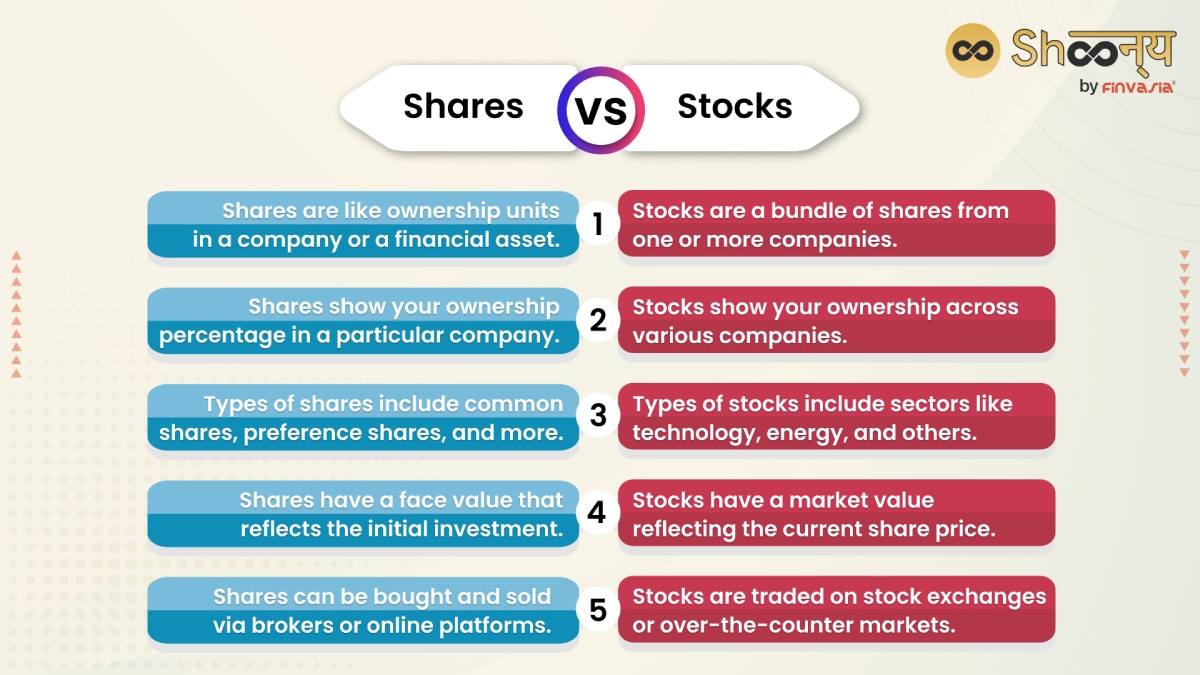
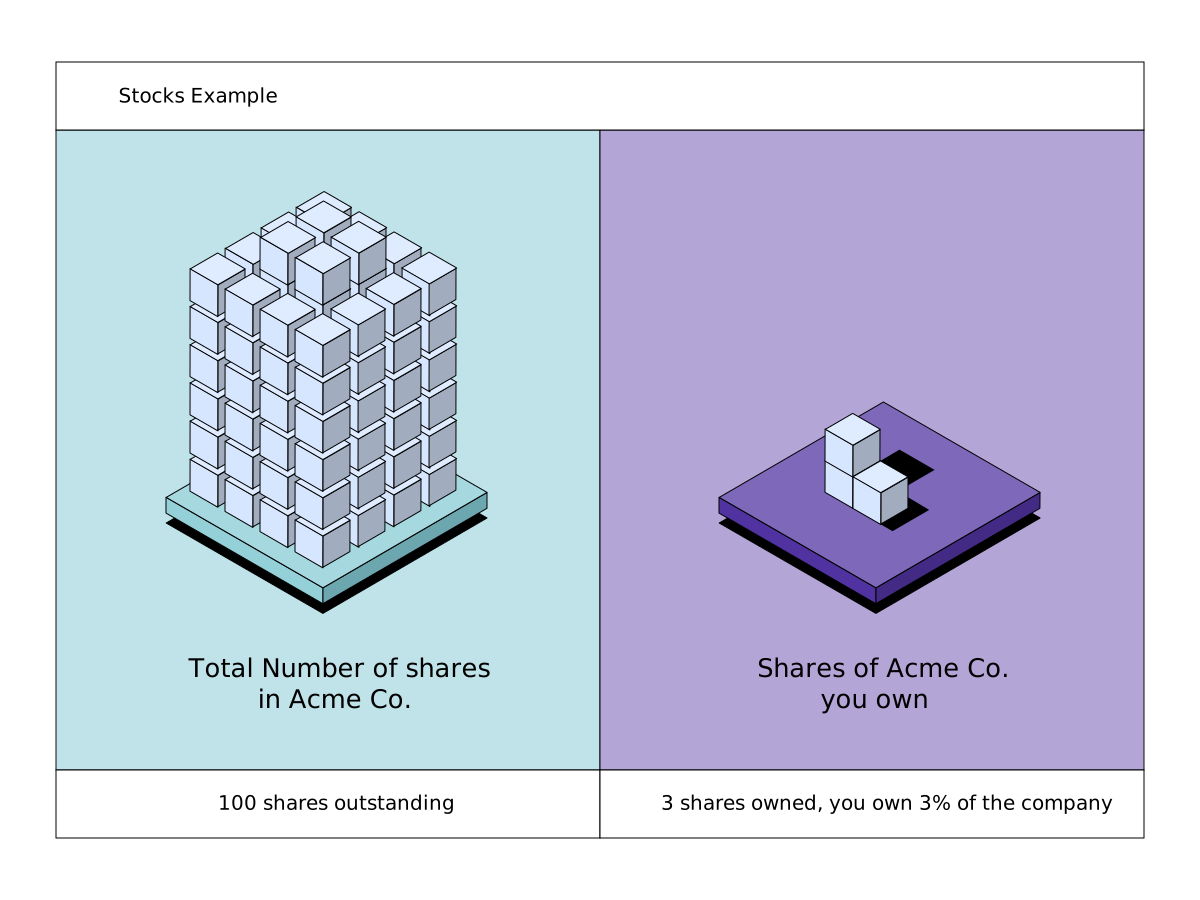
At its most fundamental level, a share in a stock represents a unit of ownership in a company. When you purchase a share, you are literally buying a small piece of that company. This concept forms the bedrock of modern capitalism and allows individuals to partake in the economic activity of corporations.
Defining a Stock Share
A stock share, often simply referred to as a “stock,” is a financial instrument that signifies part-ownership in a corporation and represents a proportionate claim on the company’s assets and earnings. Companies issue shares to raise capital, which they then use to fund operations, expansion, research and development, or to pay off debt. For investors, owning shares means becoming a part-owner of the business, albeit often a very small one, with certain rights and potential benefits. This ownership stake is transferable, meaning shares can be bought and sold among investors, typically on a stock exchange.
The Legal Basis of Ownership
The ownership conferred by a stock share is not merely symbolic; it comes with legal rights and responsibilities. These rights are typically outlined in the company’s charter and bylaws. The most common type of stock, common stock, usually grants shareholders voting rights, allowing them to elect the board of directors and vote on major corporate policies. Shareholders also have a residual claim on the company’s assets and earnings, meaning they are entitled to a portion of the company’s profits (if distributed as dividends) and, in the event of liquidation, a share of any remaining assets after creditors have been paid. While owning shares means being an owner, it’s important to note that it doesn’t give individual shareholders direct control over the company’s day-to-day operations, which are managed by the appointed executive team and overseen by the board.
From Private to Public: The Role of Shares in Capital Markets
The journey of a company often begins as a private entity, funded by founders, friends, family, and venture capitalists. As a company grows and requires substantial capital for further expansion, it may decide to “go public” through an Initial Public Offering (IPO). This process involves issuing shares to the general public for the first time. The issuance of these shares transforms the company from private to public, allowing it to tap into a much larger pool of capital from individual investors and institutions alike. Once public, these shares are then traded on stock exchanges (like the NYSE or NASDAQ), creating a secondary market where existing shares can be bought and sold among investors, providing liquidity and continuous price discovery. This mechanism is crucial for the efficient allocation of capital across the economy, enabling promising businesses to access the funds they need to innovate and grow, ultimately driving economic progress.
Why Companies Issue Shares: Fueling Growth and Innovation
Companies don’t issue shares merely as an administrative exercise; it’s a strategic financial decision with profound implications for their growth trajectory, operational capabilities, and long-term sustainability. The primary motivation behind issuing shares is to raise capital, but the benefits extend far beyond just financing.
Capital Generation for Expansion
The most direct and compelling reason for a company to issue shares is to generate capital. Unlike debt financing, which requires regular interest payments and eventually repayment of the principal, equity financing (issuing shares) does not impose these immediate financial obligations. The capital raised through share issuance provides companies with the necessary funds for various initiatives:
- Expansion: Opening new branches, entering new markets, or scaling existing operations.
- Research and Development (R&D): Investing in innovation to create new products or improve existing ones.
- Acquisitions: Buying other companies to gain market share, technology, or talent.
- Debt Reduction: Paying off existing debts to strengthen the balance sheet and reduce financial risk.
- Working Capital: Funding day-to-day operations and ensuring sufficient liquidity.
By issuing shares, companies can access significant capital without incurring additional debt, allowing them greater flexibility and reduced financial strain, particularly during periods of rapid growth or economic uncertainty.
Attracting and Retaining Talent
Shares, particularly in the form of stock options or restricted stock units (RSUs), are powerful tools for attracting, motivating, and retaining top talent. In competitive industries, especially technology, offering equity compensation allows companies to provide employees with a direct stake in the company’s success.
- Alignment of Interests: When employees own shares, their financial interests are aligned with those of the shareholders. They are incentivized to work harder and contribute more effectively, as the company’s success directly translates to the value of their holdings.
- Long-Term Retention: Stock options and RSUs often come with vesting schedules, meaning employees gain full ownership over a period of years. This encourages employees to stay with the company for the long term, reducing turnover and preserving institutional knowledge.
- Competitive Compensation: For startups and growing companies that may not be able to offer exceptionally high salaries initially, equity compensation can make their overall package highly competitive, promising significant upside if the company performs well.
Liquidity for Founders and Early Investors
For the original founders and early-stage investors (like angel investors and venture capitalists), issuing shares publicly through an IPO provides a crucial opportunity to gain liquidity for their investments. These individuals and entities often invest in companies during their riskiest stages, providing vital capital when traditional lenders might be unwilling.
- Exit Strategy: An IPO serves as a primary exit strategy for these early backers, allowing them to sell some or all of their shares on the open market and realize a return on their investment. This return is often essential for them to fund their next ventures or for founders to diversify their personal wealth.
- Validation: A successful IPO also validates the business model and growth potential of the company, boosting its reputation and making it easier to attract future investment and partnerships. Without the prospect of an eventual public offering or acquisition, many early-stage investors would be hesitant to provide the seed capital that fuels innovation.
Deconstructing Share Value: Price, Performance, and Perception
The perceived value of a share is a complex interplay of objective financial data, market sentiment, and macroeconomic factors. Understanding what drives share prices is key to comprehending the dynamics of the stock market.
Factors Influencing Share Price
A stock’s price is not static; it constantly fluctuates based on a multitude of factors, reflecting the market’s collective assessment of the company’s current and future prospects.
- Supply and Demand: This is the most immediate driver. If more investors want to buy a stock than sell it, its price will rise. Conversely, if there are more sellers than buyers, the price will fall.
- Company Earnings and Growth Prospects: Strong earnings reports, positive revenue growth, and optimistic forecasts for future performance typically drive share prices up. Investors are willing to pay more for companies that are profitable and expected to grow.
- Economic Conditions: Broader economic indicators like GDP growth, interest rates, inflation, and employment figures significantly impact corporate profitability and investor confidence. A robust economy generally bodes well for the stock market.
- Industry Trends and Competitive Landscape: Changes within an industry, technological advancements, regulatory shifts, and the competitive actions of rivals can all affect a company’s prospects and, consequently, its share price.
- Management Quality and Corporate Governance: The reputation and effectiveness of a company’s leadership team, along with sound corporate governance practices, can instill confidence in investors, contributing positively to share value.
- Market Sentiment and Investor Psychology: Fear, greed, rumors, and news events (even unrelated to the company) can lead to irrational buying or selling, causing short-term price volatility.
Intrinsic vs. Market Value
It’s crucial to distinguish between a stock’s market value and its intrinsic value.
- Market Value: This is the current price at which a stock can be bought or sold on an exchange. It is determined by supply and demand and reflects what investors are collectively willing to pay for the share at any given moment.
- Intrinsic Value: This is an analytical estimate of a company’s true worth, based on its assets, earnings potential, future cash flows, and other fundamental financial metrics. It represents what an informed investor believes the company is actually worth, independent of current market fluctuations.
Savvy investors often seek to identify stocks where the market value is significantly below their estimated intrinsic value, believing that the market will eventually correct itself and the price will rise to reflect the company’s true worth. This forms the basis of value investing.
Understanding Volatility and Risk
Share prices are inherently volatile, meaning they can experience rapid and unpredictable changes. This volatility is a double-edged sword: it presents opportunities for significant gains but also carries substantial risks of losses.
- Market Risk: The risk that the entire market or a broad segment of it will decline, impacting even fundamentally sound companies.
- Company-Specific Risk (Idiosyncratic Risk): Risks specific to a particular company, such as poor management decisions, product failures, legal issues, or competitive pressures.
- Liquidity Risk: The risk that an investor may not be able to sell their shares quickly enough at a fair price, especially for less frequently traded stocks.
Understanding these risks is vital for investors to make informed decisions and build diversified portfolios that align with their risk tolerance and financial goals.
Different Flavors of Shares: Common vs. Preferred
While all shares represent ownership, not all shares are created equal. Companies often issue different classes of shares, each with distinct features, rights, and implications for investors. The two most prominent types are common shares and preferred shares.
Common Shares: Voting Rights and Growth Potential
Common shares are the most prevalent type of stock and what most people refer to when they talk about “stocks.” They represent basic ownership and typically come with the following characteristics:
- Voting Rights: Common shareholders usually have the right to vote on corporate matters, such as the election of the board of directors, major mergers or acquisitions, and changes to the company’s charter. This gives them a say in the company’s governance.
- Growth Potential (Capital Appreciation): The primary appeal of common stock is its potential for significant capital appreciation. If the company performs well and its value increases, the price of its common shares will typically rise, allowing investors to sell them for a profit.
- Dividends (Variable): Common shareholders may receive dividends, which are distributions of a company’s profits. However, dividend payments are not guaranteed and are often variable, depending on the company’s financial performance and discretion of the board of directors.
- Residual Claim: In the event of liquidation, common shareholders have a residual claim on the company’s assets, meaning they are paid only after all creditors and preferred shareholders have been satisfied. This places them at the bottom of the priority ladder.
Preferred Shares: Fixed Income and Priority Claims
Preferred shares are a hybrid security, often exhibiting characteristics of both stocks and bonds. They are less common than common shares but offer different benefits:
- No (or Limited) Voting Rights: Preferred shareholders typically do not have voting rights, or their voting rights are severely limited compared to common shareholders.
- Fixed Dividends: The defining feature of preferred shares is their fixed dividend payment, which is usually paid at a predetermined rate (a percentage of the par value) and is typically guaranteed, provided the company has sufficient earnings. These dividends are paid before common stock dividends.
- Priority in Liquidation: In the event of a company’s liquidation, preferred shareholders have a higher claim on the company’s assets than common shareholders. They are paid out before common shareholders but after creditors.
- Less Capital Appreciation: Preferred shares generally offer less potential for capital appreciation compared to common shares. Their value tends to be more stable, similar to bonds, making them more attractive to income-focused investors rather than growth-focused investors.
- Callable and Convertible Features: Some preferred shares are “callable,” meaning the company can repurchase them at a specified price. Others are “convertible,” allowing shareholders to convert them into a fixed number of common shares under certain conditions.
Other Share Classes
Beyond common and preferred, some companies issue multiple classes of common stock, often designated as Class A, Class B, etc. These different classes typically grant unequal voting rights. For example, a company might issue Class A shares to the public with one vote per share, while founders and insiders hold Class B shares with ten votes per share, allowing them to retain control over the company even after going public. This is common in tech companies like Google (Alphabet) and Meta (Facebook). The purpose of these differentiated share classes is usually to maintain control for founding parties while still raising capital from public markets.
The Investor’s Journey: Why Participate in the Stock Market?
Understanding what a share is leads naturally to the question: why should an individual or institution buy them? The decision to invest in stocks is driven by a range of financial objectives, primarily centered around wealth accumulation and income generation, albeit with inherent risks.
Potential for Capital Appreciation
The primary allure of stock market investing for many is the potential for capital appreciation. This refers to the increase in the value of an investment over time. When you buy a share at a certain price and its market value rises, you can sell it for a profit. Historically, over long periods, the stock market has demonstrated a strong tendency for growth, outperforming many other asset classes. This growth is fueled by corporate innovation, economic expansion, and the reinvestment of profits. For long-term investors, the power of compounding returns on capital appreciation can be a significant driver of wealth accumulation, transforming modest initial investments into substantial portfolios over decades.
Income Generation Through Dividends
Beyond capital appreciation, many investors also look to stocks for income generation through dividends. Dividends are regular payments made by a company to its shareholders, usually out of its profits. While not all companies pay dividends (growth companies often reinvest profits back into the business), many mature, established companies do, providing a steady stream of income.
- Dividend Yield: The dividend yield (dividend per share / share price) helps investors compare the income-generating potential of different stocks.
- Reinvestment: Investors can choose to reinvest these dividends by purchasing more shares, further accelerating the compounding effect of their investment.
- Retirement Income: For retirees or those nearing retirement, dividend-paying stocks can be a crucial component of an income-oriented portfolio, providing regular cash flow to cover living expenses.
Diversification and Long-Term Wealth Building
Investing in shares is a critical component of a diversified investment portfolio. By spreading investments across various companies, industries, and geographies, investors can mitigate risk.
- Risk Mitigation: Diversification helps reduce the impact of poor performance by any single stock or sector on the overall portfolio.
- Inflation Hedge: Over the long term, stocks have historically provided a good hedge against inflation. As the cost of living rises, well-performing companies can often increase their prices and profits, which can translate into higher share values and dividends.
- Access to Economic Growth: Owning shares allows individuals to participate directly in the growth of the global economy. As businesses innovate, expand, and create value, shareholders benefit from that success. For long-term wealth building, a well-structured stock portfolio is often considered indispensable.

Risks Associated with Stock Investing
While the potential rewards are significant, it’s imperative to acknowledge the risks involved in stock investing.
- Loss of Principal: The most direct risk is losing some or all of your initial investment if the company performs poorly or the market declines.
- Market Volatility: Stock prices can fluctuate wildly in the short term, driven by news, sentiment, or economic shifts. This can be unsettling for investors and may lead to impulsive decisions.
- Company-Specific Risks: A company might face competitive pressures, management issues, product failures, or regulatory challenges that negatively impact its stock price.
- Economic Downturns: Recessions or economic crises can lead to widespread stock market declines, affecting even strong companies.
- Inflation Risk: While stocks can hedge against inflation, high inflation can erode the purchasing power of investment returns if they don’t keep pace.
Successful stock investing requires a clear understanding of these risks, a long-term perspective, and often, a diversified approach to minimize exposure to any single point of failure.
In conclusion, a share in stocks is far more than a simple financial instrument; it is a powerful concept that underpins the modern global economy. It offers companies the capital needed for innovation and expansion, provides employees with a stake in their success, and gives individual investors an accessible pathway to wealth creation. By understanding its fundamental definition, the reasons for its issuance, the factors influencing its value, and the different forms it can take, investors can approach the stock market with greater confidence and make more informed decisions on their journey to financial well-being.
aViewFromTheCave is a participant in the Amazon Services LLC Associates Program, an affiliate advertising program designed to provide a means for sites to earn advertising fees by advertising and linking to Amazon.com. Amazon, the Amazon logo, AmazonSupply, and the AmazonSupply logo are trademarks of Amazon.com, Inc. or its affiliates. As an Amazon Associate we earn affiliate commissions from qualifying purchases.