
The set-top box (STB) has been a pivotal, though often unassuming, piece of technology in the evolution of home entertainment and digital media consumption. For decades, it has served as the critical intermediary between content providers and the television sets in our living rooms, transforming raw broadcast signals or internet data into the vibrant images and sounds we consume daily. While its form and function have evolved dramatically with technological advancements, its core purpose remains—to decode, process, and deliver digital media to a display device. Understanding the STB requires a look into its history, its various manifestations, and its ongoing role in a rapidly changing digital landscape.

The Core Function and Evolution of Set-Top Boxes
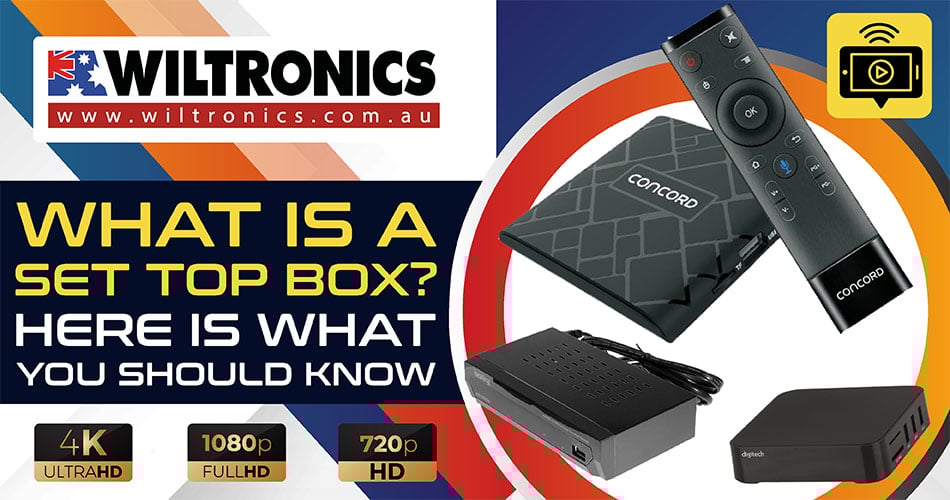
At its most fundamental, a set-top box is an electronic device that connects to a television or other display medium and an external source of signal, converting that signal into content that can be viewed on the screen. This signal can originate from various sources, including cable lines, satellite dishes, terrestrial antennas, or the internet. The STB’s primary role is to act as a receiver, tuner, and decoder, making complex digital streams accessible and user-friendly.
Bridging the Digital Divide
The initial widespread adoption of set-top boxes was driven by the transition from analog to digital television broadcasting. Analog signals were inherently limited in quality and the number of channels they could carry. Digital television (DTV) offered superior picture and sound quality, more efficient use of broadcast spectrum, and the potential for interactive services. However, early televisions were designed for analog signals. The set-top box emerged as the solution, allowing consumers to continue using their existing analog TVs while benefiting from digital broadcasts without needing to replace their entire entertainment system. This “digital converter box” made the transition smoother and more accessible for millions.
Early Iterations and Analog-to-Digital Transition
The very first set-top boxes, dating back to the late 1980s and early 1990s, were relatively simple devices, primarily designed for descrambling premium cable channels. With the advent of digital television, their complexity grew. These digital STBs housed MPEG decoders (usually MPEG-2 for standard definition and later MPEG-4 for high definition) to decompress the digitally broadcast video and audio streams. They also contained tuners specific to the broadcast standard (e.g., DVB-T for terrestrial, DVB-S for satellite, DVB-C for cable) and an output for connection to the TV, typically via RCA composite or S-Video initially, then SCART in Europe, and eventually HDMI for high-definition content.
Diverse Types of Set-Top Boxes
The term “set-top box” encompasses a wide array of devices, each tailored to a specific content delivery mechanism and consumer need. While their core function is similar, their internal architecture and external connectivity vary significantly.
Cable and Satellite Boxes
These are perhaps the most recognizable forms of STBs. Cable boxes connect to a coaxial cable line provided by a cable television operator, while satellite boxes connect to a satellite dish. Both types are designed to receive encrypted digital signals, which they then decrypt and convert for display. Modern versions often include advanced features like electronic program guides (EPGs), on-demand content access, and sophisticated user interfaces provided by the service provider. They are typically proprietary devices, leased or sold by the cable or satellite company, and are essential for accessing their specific programming packages.
Digital Terrestrial Television (DTT) Boxes
Also known as Freeview boxes in the UK or ATSC tuners in North America, DTT boxes receive broadcast signals over the air via an antenna. Unlike cable and satellite boxes, these generally receive unencrypted, free-to-air channels, though some regions offer pay-TV DTT services. They played a crucial role during the digital switchover by enabling older analog TVs to receive digital terrestrial broadcasts. These boxes tend to be simpler, with fewer advanced features compared to their cable and satellite counterparts, but offer an affordable way to access local and national channels.
IPTV Boxes and Media Streamers
With the rise of broadband internet, the concept of delivering television content over IP networks (Internet Protocol Television, or IPTV) emerged. IPTV boxes are essentially specialized computers designed to stream video and audio content from the internet. They connect to a home network, typically via Ethernet or Wi-Fi, and decode streams from IPTV service providers or popular streaming platforms like Netflix, Hulu, and Amazon Prime Video. Devices like Apple TV, Roku, Amazon Fire TV, and Google Chromecast, while often referred to as “streaming devices” or “media streamers,” are functionally modern iterations of the IPTV STB, offering a platform for accessing a vast library of internet-based content and applications. They often run on advanced operating systems and boast powerful processors, blurring the lines between a traditional STB and a smart home media hub.
Hybrid Set-Top Boxes
Recognizing the shift in consumer preferences towards both traditional linear television and on-demand internet content, hybrid set-top boxes were developed. These devices combine the capabilities of a traditional DVB (Digital Video Broadcasting) tuner (for cable, satellite, or terrestrial signals) with IP streaming capabilities. A hybrid STB allows users to seamlessly switch between live broadcast channels and internet-based streaming services, often within a unified user interface. This type of box is increasingly common as traditional broadcasters and pay-TV operators integrate OTT (Over-The-Top) streaming services into their offerings to provide a more comprehensive entertainment experience.
Key Features and Technologies
Modern set-top boxes, regardless of their specific type, are sophisticated pieces of computing hardware, integrating various technologies to deliver a rich media experience.

Tuners and Demodulators
At the heart of any STB are its tuners, which are responsible for selecting a specific frequency band from the incoming signal, and demodulators, which extract the digital information from that modulated signal. The type and number of tuners dictate the box’s capabilities—for instance, a dual-tuner DVR can record one channel while the user watches another.
Digital Video Recorders (DVRs)
Many advanced set-top boxes incorporate Digital Video Recorder (DVR) functionality. These devices include an internal hard drive (or increasingly, cloud-based storage) that allows users to record live television programs, pause and rewind live TV, and schedule future recordings. DVR capabilities revolutionized TV viewing by giving consumers unprecedented control over their content consumption schedule, moving away from rigid broadcast timetables.
Connectivity Options
Connectivity is paramount for an STB. Standard outputs include HDMI for high-definition video and audio, and often optical audio (S/PDIF) for connecting to sound systems. Legacy outputs like composite video and analog audio may still be present on older or more basic models. For network connectivity, Ethernet ports and Wi-Fi capabilities are standard, enabling internet access for streaming, software updates, and interactive services. USB ports are common for connecting external storage or accessories, while some advanced boxes may include Bluetooth for pairing with remote controls, headphones, or other peripherals.
User Interfaces and Operating Systems
The user experience of an STB is largely defined by its interface and underlying operating system. Early STBs had rudimentary menus, but modern devices boast sophisticated graphical user interfaces (GUIs) that are intuitive and feature-rich. Many contemporary streaming boxes run on full-fledged operating systems like Android TV, tvOS (Apple TV), or proprietary Linux-based systems. These operating systems support app stores, advanced search functions, voice control, and seamless navigation across various content sources.
Content Security and DRM
Given the value of the content they deliver, STBs incorporate robust content security measures. Conditional Access Systems (CAS) are used by pay-TV providers to encrypt their signals, ensuring that only authorized subscribers with the correct decryption keys (often stored on a smart card within the box) can access premium channels. Digital Rights Management (DRM) technologies protect copyrighted content from unauthorized copying and distribution, particularly prevalent in streaming services and on-demand platforms. These security layers are crucial for maintaining the revenue models of content creators and distributors.
The Modern STB Ecosystem and Future Trends
The landscape of media consumption is continuously shifting, and with it, the role and form of the set-top box. While traditional STBs remain vital for many households, new technologies are constantly redefining what it means to “receive” and “watch” content.
The Rise of Streaming Devices and Smart TVs
The proliferation of smart TVs, which integrate streaming capabilities directly into the television set, and standalone streaming sticks/boxes (like Roku, Fire TV, Apple TV) has presented both challenges and opportunities for the traditional set-top box. Many consumers are cutting the cord, opting for internet-only content subscriptions, making a dedicated cable or satellite box less essential. These streaming devices, essentially highly specialized IPTV boxes, offer vast libraries of on-demand content and diverse app ecosystems, often at a lower cost or as part of existing internet subscriptions.
Cloud-Based Services and Virtual STBs
An emerging trend is the virtualization of STB functions. Instead of a physical box in every home, some service providers are moving towards cloud-based solutions. Here, much of the processing, recording (cloud DVR), and even the user interface generation happens on remote servers. The end-user device might be a much simpler “thin client” or even just an app on a smart TV or mobile device, connecting to the cloud infrastructure to access their content. This reduces hardware costs and simplifies maintenance for both consumers and providers.
Integration with Smart Home Ecosystems
As the smart home trend continues to grow, set-top boxes are increasingly expected to integrate with broader home automation systems. This could involve voice control via smart assistants (like Alexa or Google Assistant), seamless content playback across multiple devices, or even using the STB as a hub for other smart devices. The convergence of entertainment and home control positions the STB as a central media gateway within the connected home.
Enhanced User Experience and Personalization
Future STBs will likely leverage advanced analytics and AI to offer more personalized content recommendations, adaptive user interfaces, and proactive content delivery. Machine learning algorithms can analyze viewing habits to suggest new shows, optimize ad placements, and even tailor the EPG layout to individual preferences. The goal is an even more intuitive and engaging viewing experience that anticipates user needs.
In conclusion, while the physical form factor of the set-top box may evolve—perhaps becoming fully integrated into TVs, virtualized in the cloud, or shrunk into tiny dongles—its core function as the intelligent interface between content and viewer remains indispensable. It is a chameleon of technology, constantly adapting to new broadcast standards, internet capabilities, and consumer demands, ensuring that the wealth of digital media is always just a few clicks or voice commands away.
aViewFromTheCave is a participant in the Amazon Services LLC Associates Program, an affiliate advertising program designed to provide a means for sites to earn advertising fees by advertising and linking to Amazon.com. Amazon, the Amazon logo, AmazonSupply, and the AmazonSupply logo are trademarks of Amazon.com, Inc. or its affiliates. As an Amazon Associate we earn affiliate commissions from qualifying purchases.