
In an era defined by rapid technological advancement, from artificial intelligence that learns autonomously to quantum computing on the horizon, the bedrock upon which all innovation stands remains remarkably constant: scientific knowledge. Far from being an abstract academic pursuit, scientific knowledge is the systematic, evidence-based understanding of the natural and physical world, meticulously gathered and rigorously tested. For the tech industry, this isn’t merely background information; it is the very operating system of progress, dictating how we design, develop, deploy, and even ethicalize the digital tools and systems that shape our modern existence. Without a profound appreciation and consistent application of scientific knowledge, technology devolves into mere guesswork, lacking reliability, predictability, and ultimately, genuine utility.
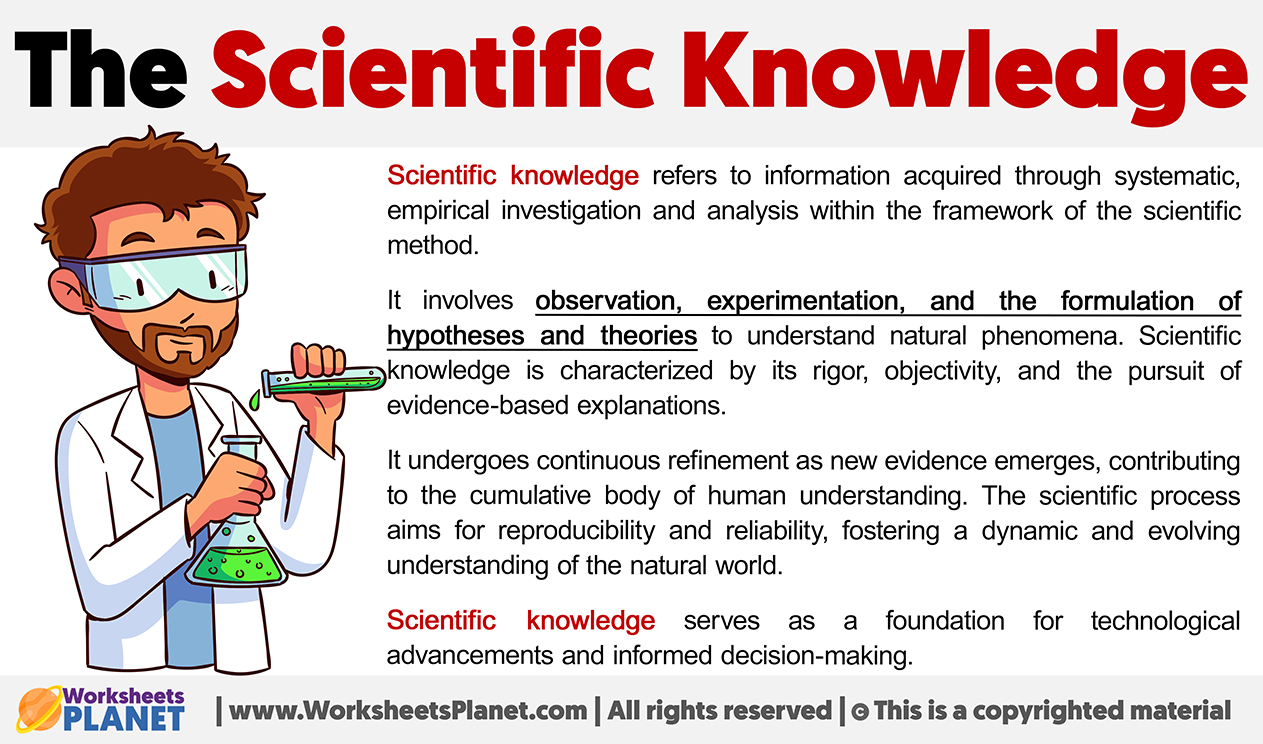
Technology, at its core, is applied science. Every circuit board, line of code, and algorithmic decision trace their lineage back to fundamental scientific principles – physics, mathematics, computer science, materials science, and increasingly, cognitive science and biology. Understanding “what is scientific knowledge” within the tech sphere is therefore not an academic exercise but a critical necessity for every engineer, developer, researcher, and entrepreneur. It’s about recognizing the frameworks, methodologies, and epistemic standards that enable us to solve complex problems, build resilient systems, and push the boundaries of what’s possible with integrity and foresight.
The Foundation of Technological Innovation
The genesis of any impactful technology can almost always be traced back to a scientific discovery or a deeper understanding of a natural phenomenon. From the semiconductor physics that enable microchips to the complex mathematical theories underpinning data encryption, scientific knowledge provides the raw material and the blueprint for technological creation. It’s the structured understanding that transforms raw observations into actionable insights and hypothetical concepts into tangible solutions.
From Hypothesis to Hardware: The Scientific Method in Tech
The scientific method – a systematic approach involving observation, hypothesis formulation, experimentation, data analysis, and conclusion – is not confined to laboratories with test tubes and microscopes. It is deeply embedded in the everyday processes of the tech industry. When a software engineer identifies a bug, they form a hypothesis about its cause, devise tests (experiments) to isolate the problem, analyze the results, and implement a solution. This iterative process mirrors scientific inquiry, ensuring that solutions are not only effective but also robust and reproducible.
Similarly, in hardware development, the design cycle for a new processor or a novel sensor array involves countless iterations of prototyping, testing, and refinement, all guided by scientific principles. Engineers hypothesize optimal material compositions, architectural designs, and performance characteristics based on physical laws. They then build prototypes, meticulously collect data on their performance under various conditions, and adjust their designs based on empirical evidence. This commitment to an evidence-based approach, derived directly from scientific methodology, is what differentiates reliable technology from speculative prototypes. It ensures that the devices we depend on function as expected, under specified parameters, and deliver consistent results.
Empirical Evidence and Data-Driven Decisions
In an increasingly data-rich world, especially within tech, empirical evidence has become the lifeblood of decision-making. Scientific knowledge provides the critical lens through which this vast ocean of data is understood, validated, and utilized. Data science, machine learning, and artificial intelligence, for instance, are fundamentally rooted in statistical inference and mathematical modeling – core components of scientific methodology.
Consider the development of an AI model: it begins with a hypothesis about how certain inputs correlate with desired outputs. Extensive datasets are used for training, essentially serving as experiments, where the model’s performance is meticulously measured against ground truth. The insights gained from these “experiments” (e.g., accuracy metrics, error rates, bias detection) are empirical evidence that guides further refinement of the algorithms and architectures. Scientific knowledge dictates the statistical rigor required for such analysis, ensuring that observed correlations are not merely coincidental but statistically significant, and that predictions are robust and generalizable. Without this scientific understanding, data can be misinterpreted, leading to flawed models, biased systems, and ultimately, unreliable technology. The scientific approach champions transparency, reproducibility, and rigorous validation, transforming raw data into actionable intelligence and reliable technological solutions.
Scientific Rigor in Software and AI Development
The complexity of modern software systems and the emergent properties of artificial intelligence demand a level of rigor that transcends mere coding proficiency. It requires a deep understanding of scientific principles to build systems that are not only functional but also secure, reliable, and ethically sound.
Building Reliable Systems: Engineering Principles Rooted in Science
Software engineering, despite its relatively young age, has evolved into a disciplined field heavily informed by scientific rigor. Concepts like algorithm efficiency (rooted in computational complexity theory), data structure optimization (drawing from discrete mathematics), and system architecture (applying principles of modularity and abstraction from various scientific and engineering disciplines) are all direct applications of scientific knowledge. When developers write code, they are not just typing commands; they are implementing solutions based on established logical and mathematical frameworks that have been scientifically proven to work under specific conditions.
For critical systems – think medical devices, aerospace software, or financial trading platforms – the demand for scientific rigor is even higher. Techniques like formal verification, which uses mathematical proof to ensure software correctness, are direct descendants of logic and computer science theory. Cybersecurity, too, relies heavily on cryptography, a field built on advanced mathematical and computational science, ensuring data integrity and privacy through scientifically validated algorithms. The entire lifecycle of software development, from requirements gathering and design to testing and deployment, is permeated by a scientific quest for predictability, robustness, and provable reliability.
The Epistemology of AI: Validating Machine Intelligence
Perhaps nowhere is the interplay between scientific knowledge and technology more critical than in the realm of Artificial Intelligence. AI systems, especially those based on machine learning, challenge our traditional notions of knowledge and understanding. They often arrive at conclusions through opaque processes, raising fundamental questions about their reliability, fairness, and safety. This is where the epistemology of AI—the study of knowledge within AI—becomes crucial.

Scientific knowledge provides the frameworks for validating machine intelligence. How do we know if an AI model is truly intelligent, or merely mimicking patterns? How do we quantify its uncertainty, identify its biases, and ensure its decisions are fair and transparent? These questions require a scientific approach. Researchers employ statistical methods to measure model accuracy and precision, develop techniques for explainable AI (XAI) to unravel black-box decision-making, and use adversarial testing to probe for vulnerabilities. The scientific understanding of cognitive biases, logical fallacies, and ethical frameworks from fields like psychology, philosophy, and social sciences are now being integrated into AI development to build more responsible and human-centric systems. Without this scientific lens, AI risks becoming a powerful but unpredictable force, devoid of accountability and trust.
Navigating the Knowledge Frontier in Emerging Technologies
The tech industry is in a constant state of flux, with new technologies emerging at an unprecedented pace. From quantum computing to synthetic biology, these frontiers are defined by the unknown, requiring a continuous pursuit and integration of scientific knowledge to be effectively explored and exploited.
Rapid Iteration and Peer Review in a Digital Age
The traditional scientific process of peer review, where research findings are scrutinized by experts before publication, has found a parallel, albeit often accelerated, manifestation within the tech community. Open-source software development, for instance, thrives on community collaboration and rigorous review. Code is openly shared, tested, and critiqued by a global network of developers, effectively acting as a distributed peer-review system. Bugs are identified, improvements are suggested, and patches are implemented with a speed and scale that mirrors scientific progress in a digital age.
Similarly, in rapidly evolving fields like AI research, pre-print servers and online forums facilitate the rapid dissemination and early peer feedback on new algorithms and models. While not always as formal as academic peer review, this culture of open sharing, constructive criticism, and rapid iteration is a direct application of scientific principles aimed at accelerating knowledge discovery and validation within the tech sphere. It recognizes that shared knowledge, subjected to broad scrutiny, is more robust and leads to faster, more reliable advancements.
Bridging Disciplines: The Interplay of Science and Engineering
Modern technological breakthroughs rarely happen in isolated silos. They are increasingly the result of interdisciplinary efforts, where scientific knowledge from diverse fields converges with engineering prowess. Biotechnology, for example, melds biology, chemistry, and computer science to create novel solutions for medicine and agriculture. Human-computer interaction (HCI) draws heavily from cognitive psychology, sociology, and neuroscience to design intuitive and effective user experiences.
Consider the development of neural interfaces or advanced prosthetics. These innovations require a deep understanding of neuroscience, electrical engineering, materials science, and software development. The scientific knowledge of how the brain processes information guides the engineering of brain-computer interfaces, while advancements in material science enable biocompatible implants, and software engineers develop algorithms to translate neural signals into control commands. This seamless integration of scientific disciplines underscores that the pursuit of technological progress is inherently a pursuit of broader scientific understanding, necessitating a holistic approach to knowledge acquisition and application.
The Ethical Imperative: Scientific Knowledge for Responsible Tech
As technology gains pervasive influence over every aspect of human life, the ethical implications of its development become paramount. Scientific knowledge is not just about what we can build, but crucially, what we should build and how its impact can be understood and managed.
Understanding Impacts Through Scientific Inquiry
The potential societal impacts of technology—from algorithmic bias in hiring systems to the psychological effects of social media, or the environmental footprint of data centers—cannot be fully grasped or mitigated without a scientific approach. Researchers employ social science methodologies, statistical analysis, and empirical studies to understand these complex interactions. For example, understanding how misinformation spreads online requires insights from network theory, psychology, and communication science. Developing solutions for data privacy involves an understanding of cryptography, law, and human behavior.
Tech companies are increasingly investing in research that goes beyond product development, delving into the broader societal implications of their innovations. This reflects a growing recognition that responsible technology requires a scientific inquiry into its effects, allowing for proactive measures and informed policy-making. Without this scientific lens, the industry risks creating powerful tools with unforeseen and potentially detrimental consequences, highlighting the ethical imperative of grounding technological advancement in comprehensive scientific understanding.

Fostering a Culture of Scientific Literacy in Tech
For the tech industry to continue its trajectory of beneficial innovation, it needs a workforce that is not only skilled in coding and design but also deeply rooted in scientific literacy. This means equipping engineers, product managers, and leaders with the critical thinking skills, the empirical mindset, and the ethical awareness that scientific training instills. It’s about understanding the limits of current knowledge, acknowledging uncertainty, and having the intellectual humility to seek out and integrate diverse perspectives.
A scientifically literate tech culture fosters curiosity, encourages experimentation, and promotes an evidence-based approach to problem-solving. It cultivates a workforce that doesn’t just ask “how does it work?” but also “why does it work that way?”, “what are its unintended consequences?”, and “how can we ensure it benefits humanity?” By embedding scientific knowledge and its associated methodologies throughout the organization, the tech industry can ensure that its innovations are not only groundbreaking but also robust, responsible, and truly serve the collective good.
In conclusion, scientific knowledge is not merely a precursor to technology; it is its ongoing companion, its internal compass, and its ultimate guarantor of relevance and responsibility. From the fundamental principles that enable a microchip to function, to the complex algorithms that power artificial intelligence, and the ethical considerations that guide their deployment, scientific knowledge underpins every facet of technological advancement. For the tech industry, a profound understanding and continuous engagement with scientific knowledge is not just an advantage—it is an absolute necessity for sustainable innovation, reliability, and ultimately, for shaping a better future.
aViewFromTheCave is a participant in the Amazon Services LLC Associates Program, an affiliate advertising program designed to provide a means for sites to earn advertising fees by advertising and linking to Amazon.com. Amazon, the Amazon logo, AmazonSupply, and the AmazonSupply logo are trademarks of Amazon.com, Inc. or its affiliates. As an Amazon Associate we earn affiliate commissions from qualifying purchases.