
The term “saturated solution” often conjures images from chemistry labs, a concept rooted in understanding the limits of solubility. However, for professionals and innovators in the technology sector, a nuanced understanding of saturation extends far beyond basic stoichiometry. It informs critical aspects of material design, manufacturing processes, advanced analytics, and even the development of sophisticated sensor technologies. This article will explore the concept of a saturated solution, not just as a chemical equilibrium, but as a pivotal principle with significant technological ramifications. We will delve into how controlling and understanding saturation points unlocks new possibilities in material science, manufacturing efficiency, and the creation of novel technological applications.

The Fundamental Principle: Understanding Saturation in Dissolution
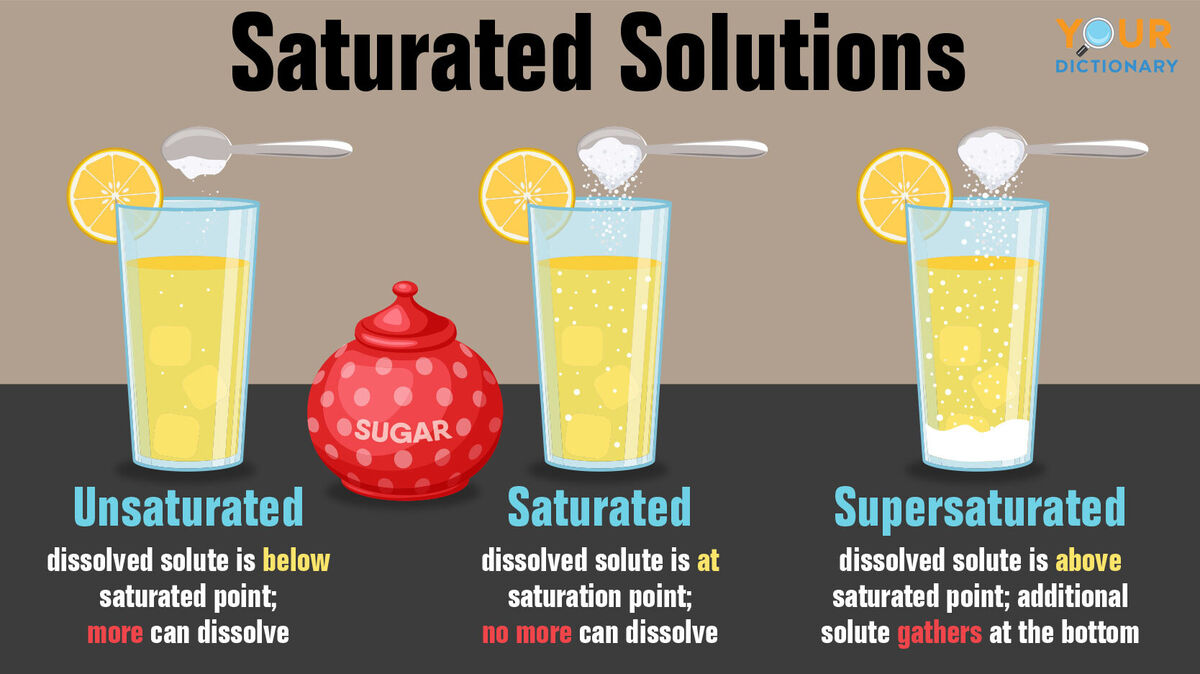
At its core, a saturated solution represents a delicate balance point in the interaction between a solute and a solvent. It is a state where the solvent has dissolved the maximum possible amount of solute at a given temperature and pressure. This equilibrium is not static; it’s a dynamic process where solute particles are continuously dissolving and crystallizing out of the solution at the same rate. Understanding this fundamental principle is the bedrock upon which technological applications are built.
Dissolution: The Process of Solute Entry
When a solute is introduced into a solvent, the process of dissolution begins. Solvent molecules surround and separate the solute particles, a process driven by intermolecular forces. This continues until a critical concentration is reached. The rate of dissolution is influenced by several factors, including the nature of the solute and solvent, temperature, and surface area of the solute. For instance, a finely powdered solute will dissolve faster than a large crystal due to its increased surface area, facilitating more frequent interactions with the solvent molecules. In technological contexts, optimizing dissolution rates can be crucial for rapid material processing or for ensuring complete incorporation of additives.
Equilibrium: The Point of Maximum Dissolution
A saturated solution is achieved when the rate of dissolution equals the rate of crystallization. At this point, the solution is said to be in equilibrium. Any further addition of solute will not dissolve and will typically settle at the bottom of the container. This equilibrium is temperature-dependent; generally, the solubility of most solids in liquids increases with temperature. Conversely, the solubility of gases in liquids often decreases with increasing temperature. Understanding these temperature dependencies is vital for process control in many technological applications, from chemical vapor deposition to controlled crystallization for material synthesis.
Supersaturated Solutions: A Transient State
While a saturated solution is at its equilibrium limit, a supersaturated solution momentarily holds more dissolved solute than it normally could at a given temperature. This state is achieved by carefully dissolving a solute at a higher temperature and then slowly cooling the solution without any disturbance. Supersaturated solutions are inherently unstable. The slightest perturbation, such as introducing a seed crystal or agitating the solution, can trigger rapid crystallization, causing the excess solute to precipitate out. This phenomenon, though seemingly a chemical curiosity, has direct parallels in technological processes where controlled precipitation is desired for material formation or purification.
Technological Applications of Saturation Principles
The understanding and manipulation of saturated and supersaturated solutions are not confined to theoretical chemistry; they are instrumental in driving innovation across various technological domains. From the microscopic precision required in semiconductor fabrication to the large-scale production of advanced materials, the principles of saturation play a crucial role.
Material Science and Nanotechnology: Precise Control of Crystal Growth
In material science, particularly in the realm of nanotechnology, controlling the size, shape, and crystalline structure of materials is paramount. Techniques like chemical bath deposition (CBD) and solvothermal synthesis rely heavily on managing the saturation levels of precursor solutions to achieve desired outcomes.
Seeded Growth and Controlled Crystallization
The process of seeded growth, where pre-formed nanocrystals are used to initiate the growth of new ones, is often controlled by carefully adjusting the concentration of precursors to be slightly above saturation. This ensures that new material preferentially deposits onto the existing seeds, leading to uniform particle growth. In CBD, for instance, a supersaturated solution of metal ions and ligands is prepared. When a substrate is introduced, it acts as a nucleation site, triggering controlled precipitation and film formation. The rate of deposition, and thus the thickness and morphology of the film, is directly influenced by the degree of supersaturation and the rate at which the solution approaches saturation. This allows for the creation of ultra-thin films with specific electronic or optical properties.
Doping and Alloying at the Nanoscale
Incorporating dopants or creating alloys at the nanoscale requires precise control over the concentration of constituent elements. In some synthesis methods, dopant elements are introduced as solutes into a precursor solution. The saturation point of these dopants dictates how effectively they can be incorporated into the growing material matrix. Exceeding the saturation point can lead to the formation of undesirable secondary phases or clusters, impacting the material’s overall performance. Therefore, precise control over saturation levels is critical for achieving desired doping concentrations and uniform alloying in nanomaterials used in advanced electronics, catalysts, and energy storage devices.

Advanced Manufacturing and Chemical Processing: Optimizing Efficiency and Purity
The principles of saturation are fundamental to numerous large-scale manufacturing processes, where efficiency, product purity, and cost-effectiveness are paramount. Understanding saturation limits allows engineers to optimize reaction conditions, minimize waste, and ensure product quality.
Crystallization for Purification
Crystallization is a widely used technique for purifying chemical compounds. By dissolving an impure solid in a solvent at an elevated temperature (creating a potentially supersaturated solution upon cooling) and then allowing it to crystallize, impurities that remain dissolved in the mother liquor are separated from the purified solid. The efficiency of this purification depends on the relative solubilities of the desired compound and the impurities. The point at which the desired compound reaches saturation and begins to crystallize while impurities remain soluble is the key to achieving high purity. This is applied in the pharmaceutical industry for drug purification, in the food industry for sugar refining, and in the production of various industrial chemicals.
Electroplating and Surface Finishing
Electroplating, a process used to deposit a thin layer of metal onto a substrate, relies on maintaining a specific concentration of metal ions in an electrolytic bath. This concentration is often maintained near saturation to ensure efficient and uniform deposition. If the concentration of metal ions is too low, deposition will be slow and uneven. If it is too high, unwanted byproducts or a rough surface finish can occur. The electrolyte’s composition is carefully controlled to ensure that the metal ions remain within their solubility limits, allowing for a stable and efficient electroplating process. This is crucial for creating corrosion-resistant coatings, decorative finishes, and conductive layers in electronics.
Extraction and Separation Processes
In liquid-liquid extraction, understanding the saturation points of various components in immiscible solvent phases is critical for efficient separation. For instance, in the extraction of valuable compounds from natural sources or industrial byproducts, solvents are chosen based on their ability to dissolve the target compound while leaving behind unwanted materials. The maximum amount of a substance that can be transferred from one phase to another is governed by its solubility and the saturation limits of both phases. Optimizing these extraction processes to maximize yield and purity involves carefully managing the concentrations of the solutes in relation to their saturation points.
The Role of Saturation in Sensor Technology and Diagnostics
Beyond material synthesis and manufacturing, the dynamic nature of saturation and supersaturation has profound implications for the development of advanced sensor technologies and diagnostic tools, particularly in the medical and environmental monitoring fields.
Precipitation-Based Sensors: Detecting Specific Analytes
Certain biosensors and chemical sensors operate on the principle of controlled precipitation triggered by the presence of a specific analyte. For example, in some immunoassay formats, antibodies are immobilized on a surface. When a sample containing the target antigen is introduced, the antigen binds to the antibody. This binding event can then trigger a cascade that leads to the precipitation of a detectable signal molecule, or it can alter the solubility of certain components in a carefully balanced solution, leading to a measurable change. The sensitivity and specificity of such sensors are directly related to the controlled precipitation dynamics, which are intrinsically linked to saturation phenomena.
Diagnostic Assays and Clinical Chemistry
In clinical diagnostics, many tests rely on chemical reactions that produce precipitates or involve changes in solubility. For instance, turbidity assays measure the cloudiness of a solution caused by the formation of insoluble particles, often indicating the presence or concentration of a specific substance like proteins or antigens. These assays are carefully calibrated using standards, and their performance is predicated on the predictable formation of precipitates when concentrations exceed solubility limits. Understanding the saturation kinetics of the relevant compounds is crucial for accurate quantitative measurements in blood tests, urine analysis, and other diagnostic procedures.
Environmental Monitoring: Detecting Pollutants and Contaminants
Environmental monitoring often involves detecting trace amounts of pollutants in water, soil, or air. Some methods utilize precipitation reactions to concentrate or detect these pollutants. For instance, heavy metal ions in water can be detected by adding a reagent that forms an insoluble precipitate. The amount of precipitate formed, or the point at which it begins to form, can be used to estimate the concentration of the pollutant. Maintaining controlled saturation conditions allows for the development of sensitive and selective methods for identifying and quantifying environmental contaminants. This is vital for regulatory compliance and public health.
Conclusion: Harnessing Saturation for Technological Advancement
The concept of a saturated solution, far from being a mere academic curiosity, is a cornerstone principle that underpins a vast array of technological advancements. From the precise engineering of nanomaterials to the development of sensitive diagnostic tools, understanding and manipulating the equilibrium between dissolved and undissolved substances is critical. The ability to control dissolution rates, achieve specific saturation levels, and leverage the dynamics of supersaturated states allows engineers and scientists to design more efficient manufacturing processes, create novel materials with tailored properties, and develop sophisticated technologies for sensing and diagnostics. As we continue to push the boundaries of what is technologically possible, a deep appreciation for the fundamental principles of saturation will remain an indispensable asset for innovation. The ongoing research into precise solution chemistry, coupled with advancements in analytical techniques and computational modeling, promises to unlock even more applications where the controlled behavior of saturated solutions will drive future technological breakthroughs.
aViewFromTheCave is a participant in the Amazon Services LLC Associates Program, an affiliate advertising program designed to provide a means for sites to earn advertising fees by advertising and linking to Amazon.com. Amazon, the Amazon logo, AmazonSupply, and the AmazonSupply logo are trademarks of Amazon.com, Inc. or its affiliates. As an Amazon Associate we earn affiliate commissions from qualifying purchases.