
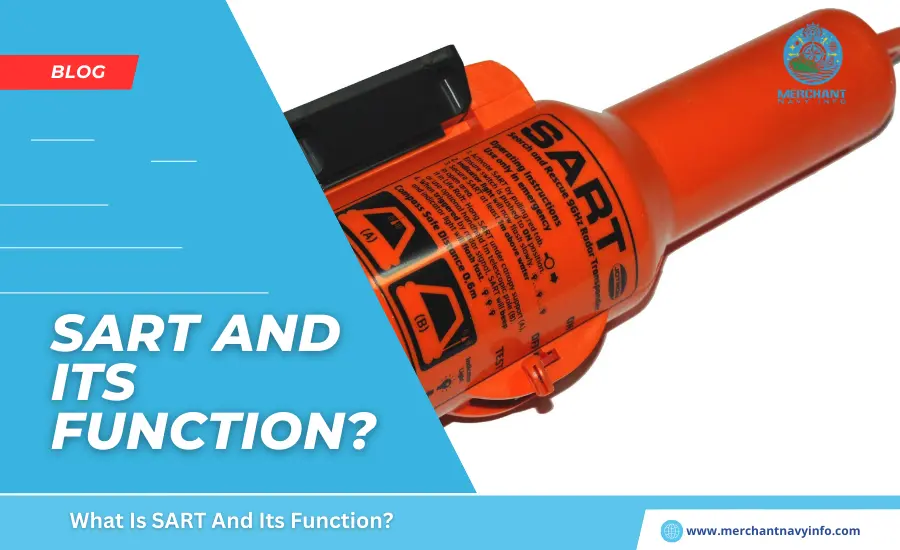
In the vast and often unforgiving expanse of the world’s oceans, maritime safety is paramount. Among the critical electronic aids designed to ensure this safety, the Search and Rescue Transponder, or SART, stands out as an indispensable piece of technology. A SART is a self-contained radar transponder that plays a pivotal role in locating survival craft and distressed vessels, particularly in situations where traditional communication methods may have failed or become unavailable. Its primary function is to enhance detectability for search and rescue (SAR) units, making it significantly easier to pinpoint the exact location of survivors.

The core principle behind a SART’s operation is its ability to respond to radar signals emitted by a searching vessel or aircraft. When a SART detects a radar pulse from an X-band radar (operating at 9 GHz), it immediately transmits a series of 12 identical sweep signals back to the radar. These signals are displayed on the searching vessel’s radar screen as a distinctive line of 12 equally spaced dots, indicating the presence and direction of the SART. As the searching vessel closes in on the SART, these dots gradually transform into arcs and then concentric circles, providing an increasingly precise indication of the survivor’s proximity. This unique radar signature ensures that a SART signal is easily distinguishable from normal radar clutter, allowing SAR teams to quickly and accurately home in on the distress location, even in challenging environmental conditions or vast search areas.
The Core Function and Importance of Search and Rescue Transponders
A SART is not merely a beacon; it’s an active responder designed to maximize the chances of detection and rescue. Its importance cannot be overstated, particularly for vessels operating in remote areas or those susceptible to rapid emergencies like capsizing, fire, or collision. The technology acts as a lifeline, bridging the gap between a distress event and the arrival of help. Without SARTs, locating small life rafts or individuals in the open sea would be like finding a needle in a haystack, significantly prolonging rescue efforts and diminishing survival rates.
How a SART Operates
The operational mechanics of a SART are ingeniously simple yet highly effective. Upon activation, typically manually or automatically when deployed into the water (depending on the model), the SART enters a standby mode. In this state, it constantly listens for incoming X-band radar signals. When it receives a pulse, it “wakes up” and transmits its unique response. This response is a series of 12 distinct “blips” that appear on the radar screen of the searching craft. The initial detection range for a SART can vary but is generally between 5 to 10 nautical miles, depending on the height of the searching radar antenna and the SART’s own mounting height. The higher the SART is mounted (e.g., on a pole on a life raft), the greater its line-of-sight range. Its omni-directional transmission capability ensures that it can be detected from any direction, a crucial feature in a dynamic maritime environment where relative positions are constantly changing.
Key Scenarios for SART Deployment
SARTs are primarily intended for use in survival craft such as life rafts, but they can also be found on the bridge of larger vessels as part of their Global Maritime Distress and Safety System (GMDSS) equipment. The most common scenario for SART deployment is following a vessel abandonment, where survivors have transferred to a life raft or dinghy. In such critical moments, the SART is activated and positioned to ensure an unobstructed line of sight to potential searching radars. This usually involves mounting it on a pole or the canopy of a life raft. Beyond abandonment, SARTs also serve as crucial location aids for vessels that may be drifting or disabled in areas where other navigation systems have failed. Their robust design, typically waterproof and buoyant, ensures they remain operational even in extreme marine conditions, making them a cornerstone of maritime safety protocols globally.
Types of SART Devices
While the fundamental principle of radar response remains consistent, SART technology has evolved, leading to different types of devices tailored to specific operational requirements and offering enhanced capabilities. The two primary categories are Radar SARTs and AIS SARTs, each with distinct advantages.
Radar SARTs
Traditional Radar SARTs, as described earlier, operate by responding to X-band radar signals. They transmit a distinctive series of dots on a conventional radar display, making them easily identifiable to SAR vessels and aircraft equipped with standard X-band radars. These devices have been the workhorse of maritime search and rescue for decades and are mandated for many commercial vessels under GMDSS regulations. They are robust, reliable, and their signal is universally understood by radar operators. The strength of Radar SARTs lies in their simplicity and widespread compatibility with existing radar systems. However, their reliance on X-band radar means that vessels or aircraft without such radar (e.g., smaller pleasure craft with only S-band radar or no radar at all) cannot detect them.
AIS SARTs (Automatic Identification System SARTs)
A significant advancement in distress locating technology came with the introduction of AIS SARTs. Unlike traditional Radar SARTs, AIS SARTs do not rely on X-band radar. Instead, they transmit their position and identification information via the Automatic Identification System (AIS) frequency (VHF marine channels). When activated, an AIS SART continuously broadcasts a specific distress message containing its unique identifier, GPS coordinates (if equipped with an internal GPS), and the nature of the emergency. This information is received by any AIS-equipped vessel or shore station within range and displayed directly on their AIS transponders or integrated navigation systems.
The advantages of AIS SARTs are numerous. Firstly, they provide precise GPS-derived location data, which is often more accurate than the bearing information from a Radar SART. Secondly, AIS receivers are becoming increasingly common on all types of vessels, from large commercial ships to small recreational boats, significantly expanding the pool of potential rescuers. Thirdly, the AIS signal can provide more contextual information, potentially including the SART’s battery status or specific distress scenario. While Radar SARTs provide a general direction, AIS SARTs provide a precise geographical point, potentially reducing search times even further.
EPIRBs vs. SARTs: A Crucial Distinction
It is important to differentiate SARTs from Emergency Position Indicating Radio Beacons (EPIRBs), as both are vital GMDSS components but serve different primary functions. An EPIRB is designed to transmit a distress signal directly to satellites (specifically, the Cospas-Sarsat system) once activated. This signal alerts international rescue coordination centers, providing the vessel’s identity and position (often GPS-derived). The EPIRB’s primary role is to alert authorities to a distress situation and provide initial global positioning.

A SART, on the other hand, is a localizing device. It does not initiate a global distress alert. Its function is to help searchers find the survival craft or distressed vessel once they are already in the vicinity and conducting a search using radar or AIS. While an EPIRB alerts the world, a SART guides the rescuer’s final approach. Both are often carried together as complementary technologies: the EPIRB for initial global alert and positioning, and the SART for accurate terminal guidance for local SAR assets.
Technical Specifications and Regulatory Compliance
The effectiveness of SARTs hinges on their adherence to strict technical specifications and international regulatory standards. These parameters ensure interoperability, reliability, and consistent performance across all devices and search scenarios.
Frequencies and Signal Characteristics
Radar SARTs operate in the X-band (9.2 GHz to 9.5 GHz), which is a specific frequency range used by many marine radars. Their unique 12-dot signal pattern, swept across the screen, is a deliberate design choice to make them instantly recognizable amidst other radar returns. This frequency band allows for excellent resolution and discrimination, crucial for pinpointing small objects at sea.
AIS SARTs, conversely, transmit on VHF marine frequencies (161.975 MHz and 162.025 MHz), which are the dedicated channels for AIS communications. They use a technique called SOTDMA (Self-Organized Time Division Multiple Access) to avoid interference with other AIS transmissions. The power output of both types of SARTs is carefully regulated to ensure sufficient range without causing undue interference to other vital electronic systems.
Battery Life and Maintenance
SARTs are required to have a minimum operational battery life once activated. For Radar SARTs, this is typically 96 hours (4 days) in standby mode, followed by at least 8 hours of continuous transmission while being interrogated by a radar. AIS SARTs often specify similar or slightly longer operational periods. This extended battery life is crucial, as rescue operations can take several days, especially in remote locations or adverse weather. Batteries are non-rechargeable and have a finite expiry date, usually between 4 to 5 years, after which they must be replaced. Regular maintenance checks, including visual inspection and verifying the expiry date, are mandatory to ensure the device is ready for use in an emergency. Testing functionality without full activation is usually done via a dedicated test mode that emits a brief, non-distress signal.
International Maritime Organization (IMO) Requirements
The International Maritime Organization (IMO), through its GMDSS regulations, mandates the carriage of SARTs on certain types of vessels. Specifically, all SOLAS (Safety of Life at Sea) compliant vessels, which include most commercial ships, passenger ships, and offshore installations, must carry at least two SARTs. Smaller vessels and non-SOLAS compliant craft are not always legally required to carry them, but it is highly recommended as a crucial safety measure. These regulations also specify performance standards, such as minimum range, battery life, environmental robustness, and the distinct radar signature for Radar SARTs, and data transmission standards for AIS SARTs. Compliance with these IMO standards ensures that any SART carried aboard a vessel will be recognized and effectively utilized by international SAR assets.
The Future of Maritime Distress Technology
The landscape of maritime distress technology is continually evolving, driven by advancements in electronics, satellite communication, and data processing. SARTs, while already highly effective, are poised for further integration and enhancement.
Integration with Satellite Systems
While current SARTs are primarily line-of-sight devices (radar or VHF), the trend in distress communication is towards greater integration with satellite systems. The ability to transmit a SART-like signal directly to low-earth orbit (LEO) or geostationary (GEO) satellites could significantly extend the effective range and reduce the initial search area even before dedicated SAR vessels are deployed. This could involve hybrid devices that combine SART functionality with miniaturized satellite transponders, offering both global alerting and local precision guidance in a single unit. Such integration would streamline the rescue process, making it faster and more efficient from the moment of distress.
Enhanced Locational Accuracy
Current AIS SARTs already provide precise GPS coordinates. Future iterations are likely to incorporate even more advanced GNSS (Global Navigation Satellite System) receivers, potentially utilizing multiple constellations (GPS, GLONASS, Galileo, BeiDou) for redundant and ultra-precise positioning, even in challenging conditions like heavy cloud cover or steep waves. Furthermore, the development of smaller, more energy-efficient antennas could improve signal strength and reliability in difficult orientations, ensuring a continuous flow of accurate location data to rescuers. The goal is to reduce the “circle of uncertainty” around a distress signal to the smallest possible radius, enabling direct and immediate recovery.
User-Friendly Interfaces and Portability
As technology becomes more miniaturized and intuitive, future SARTs are likely to feature even more user-friendly interfaces, perhaps with visual indicators or audible prompts that guide survivors through activation and deployment. Enhanced portability and lighter designs will make them easier to carry in survival suits or vests, ensuring they remain with individuals even if separated from a life raft. Integration with personal locator beacons (PLBs) for individual crew members is also a likely future direction, extending SART-like functionality to every person onboard, not just survival craft. These advancements aim to make distress technology not only more effective but also more accessible and easier to use in high-stress emergency situations.
aViewFromTheCave is a participant in the Amazon Services LLC Associates Program, an affiliate advertising program designed to provide a means for sites to earn advertising fees by advertising and linking to Amazon.com. Amazon, the Amazon logo, AmazonSupply, and the AmazonSupply logo are trademarks of Amazon.com, Inc. or its affiliates. As an Amazon Associate we earn affiliate commissions from qualifying purchases.