
In the world of business finance, the sales pipeline is often misunderstood as merely a list of names or a set of tasks for a sales team. However, from a financial management perspective, a sales pipeline is the most critical leading indicator of a company’s economic health. It is the visual representation of your future cash flow, a map of pending revenue, and the primary data source for fiscal planning. Understanding what a sales pipeline is—and how to manage it—is essential for any business owner, investor, or financial officer looking to ensure long-term stability and profitability.

1. The Financial Architecture of a Sales Pipeline
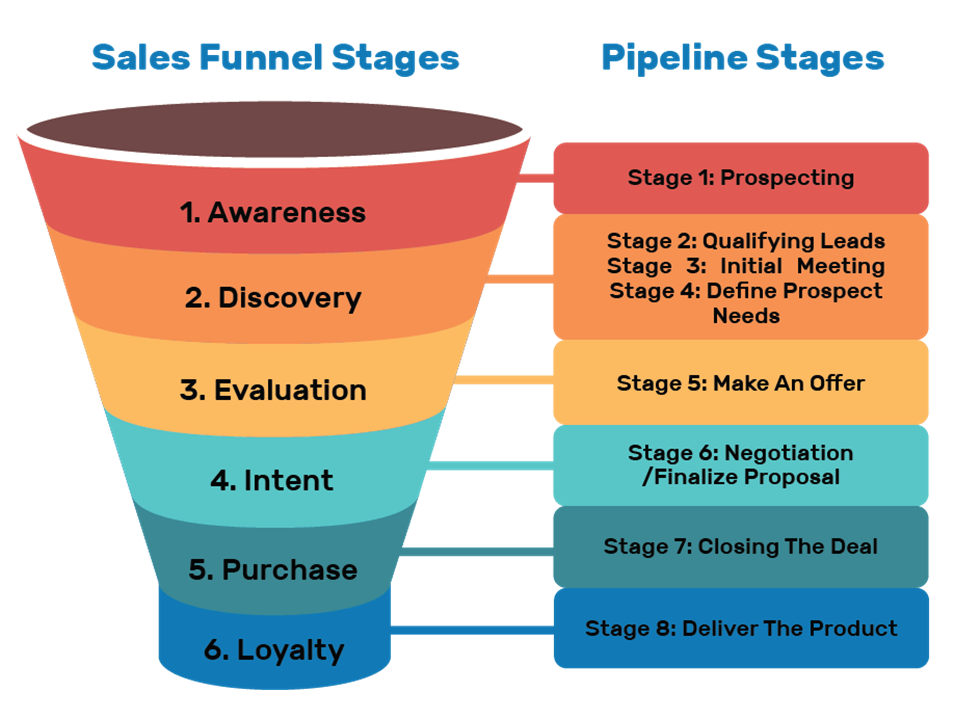
At its core, a sales pipeline is a systematic approach to tracking potential deals as they move from initial contact to a finalized transaction. While sales teams see it as a workflow, financial analysts see it as a “weighted asset” register. Each stage of the pipeline represents a different level of financial probability, allowing a business to predict exactly how much capital will be available in the coming months.
The Stages of Capital Progression
A typical pipeline is divided into stages that reflect the buyer’s journey, but each stage carries a specific financial weight.
-
Prospecting/Lead Generation: This is the “investment” phase where capital is spent on marketing and outreach to find potential revenue sources.
-
Qualification: Here, the business determines if the lead has the budget and the need. From a financial standpoint, this is the first filter for Return on Investment (ROI).
-
Proposal/Negotiation: This is where the specific contract value is defined. The financial data becomes more concrete as terms, discounts, and payment schedules are discussed.
-
Closing: The point of revenue realization. The deal moves from the pipeline into accounts receivable.
Pipeline vs. Sales Forecast: A Financial Distinction
It is common to confuse a sales pipeline with a sales forecast, but they serve different roles in business finance. The pipeline includes every opportunity currently being pursued, regardless of how long it has been there. The forecast, however, is a subset of the pipeline; it is an estimate of which deals will specifically close within a given period (e.g., this quarter). Financial health depends on a high-functioning pipeline to provide the raw data for accurate forecasting.
2. Revenue Forecasting and the Mathematics of the Pipeline
For a Chief Financial Officer (CFO) or a business owner, the pipeline is a mathematical equation. By applying historical data to the current pipeline, a business can calculate its “weighted pipeline value.” This is the sum of all deal values multiplied by the probability of those deals closing at their current stage.
Calculating Weighted Pipeline Value
If a company has $1,000,000 in total deals in the “Negotiation” stage, and historical data shows that 70% of deals in this stage eventually close, the weighted value is $700,000. Conversely, if there is $1,000,000 in the “Prospecting” stage with only a 10% close rate, that revenue is only worth $100,000 in a financial forecast. This prevents businesses from overestimating their liquid capital and helps in making informed decisions about expenditures and hiring.
Sales Velocity and Cash Flow Timing
The speed at which a deal moves through the pipeline—known as sales velocity—is a vital financial metric. It is calculated by multiplying the number of opportunities by the average deal value and the win rate, then dividing that by the length of the sales cycle.
- Equation: (Opportunities x Deal Value x Win Rate) / Length of Sales Cycle.
Increasing sales velocity directly improves cash flow. For a business, a faster pipeline means capital is tied up for less time in “limbo,” allowing for more frequent reinvestment of profits into growth initiatives.
3. Financial Risk Management through Pipeline Health
A stagnant or “clogged” pipeline is a significant financial risk. If leads enter the pipeline but never progress, the business is effectively burning capital on lead acquisition without a corresponding return. Managing the health of the pipeline is a form of risk mitigation that ensures the company’s financial resources are being used efficiently.
Identifying Revenue Leakage
Revenue leakage occurs when potential income disappears due to inefficiencies. In a pipeline context, this often happens at the transition points between stages. By analyzing “conversion rates” (the percentage of deals that move from one stage to the next), financial managers can identify exactly where the business is losing money. If 90% of leads are qualified but only 10% receive proposals, there is a bottleneck that is devaluing the initial marketing investment.
Dealing with Stagnant Capital and “Zombie” Deals
“Zombie deals” are opportunities that have sat in the pipeline far longer than the average sales cycle. From a financial perspective, these are dangerous because they inflate the perceived value of the company’s future revenue. Clean financial reporting requires “pipeline scrubbing”—removing deals that are unlikely to close to ensure that the balance sheet and revenue projections remain realistic and honest.
4. Optimizing the Pipeline for Maximum ROI and Profitability
Every lead in a sales pipeline has a cost associated with it, known as the Cost Per Acquisition (CPA). To maximize profitability, a business must ensure that the lifetime value (LTV) of the customers in the pipeline significantly exceeds the cost of moving them through it.
Evaluating Lead Quality through a Financial Lens
Not all revenue is “good” revenue. A pipeline might be full of low-value deals that require high amounts of sales labor (expense) to close. By analyzing the “Profit Margin per Pipeline Stage,” businesses can pivot their strategy to focus on high-margin prospects. This shift ensures that the sales team’s time—a major operational expense—is being allocated to the deals that will most significantly impact the bottom line.
Balancing the Cost of Sales
The cost of sales includes salaries, commissions, software tools, and marketing spend. If the total cost of maintaining the pipeline exceeds the projected gross profit of the deals within it, the business model is unsustainable. Monitoring the “Pipeline-to-Quota Ratio” helps financial planners determine if the current sales activities are sufficient to cover the company’s operating expenses (OPEX). Generally, a 3x or 4x pipeline-to-quota ratio is considered a healthy buffer for financial stability.
5. Integrating Pipeline Data into Corporate Financial Strategy
The ultimate value of a sales pipeline lies in its ability to inform high-level corporate strategy. When a company has a clear, data-backed view of its future revenue, it can make bold financial moves with confidence.
Capital Expenditure (CAPEX) and Expansion
Should a company invest in a new warehouse, upgrade its tech stack, or expand into a new territory? The answer lies in the pipeline. A robust pipeline with high conversion rates provides the financial justification for taking on debt or spending cash reserves on capital expenditures. Investors and lenders often look at the strength and consistency of a sales pipeline as collateral for credit or as a reason to increase a company’s valuation during a funding round.

Attracting Investment and Ensuring Solvency
For startups and middle-market companies seeking venture capital or private equity, the sales pipeline is a primary focus of due diligence. Investors want to see a repeatable, predictable revenue engine. A well-documented pipeline demonstrates that the business has a “formula” for generating money. It proves that the company isn’t just getting lucky with occasional sales, but has a structured financial process for converting market interest into bankable assets.
In conclusion, a sales pipeline is far more than a tool for the sales department; it is the heartbeat of a company’s financial existence. By treating the pipeline as a financial instrument—calculating its weighted value, monitoring sales velocity, and minimizing leakage—businesses can move away from reactive “survival” mode and into a state of proactive, strategic growth. In the world of money, predictability is power, and a well-managed sales pipeline is the ultimate source of financial predictability.
aViewFromTheCave is a participant in the Amazon Services LLC Associates Program, an affiliate advertising program designed to provide a means for sites to earn advertising fees by advertising and linking to Amazon.com. Amazon, the Amazon logo, AmazonSupply, and the AmazonSupply logo are trademarks of Amazon.com, Inc. or its affiliates. As an Amazon Associate we earn affiliate commissions from qualifying purchases.