
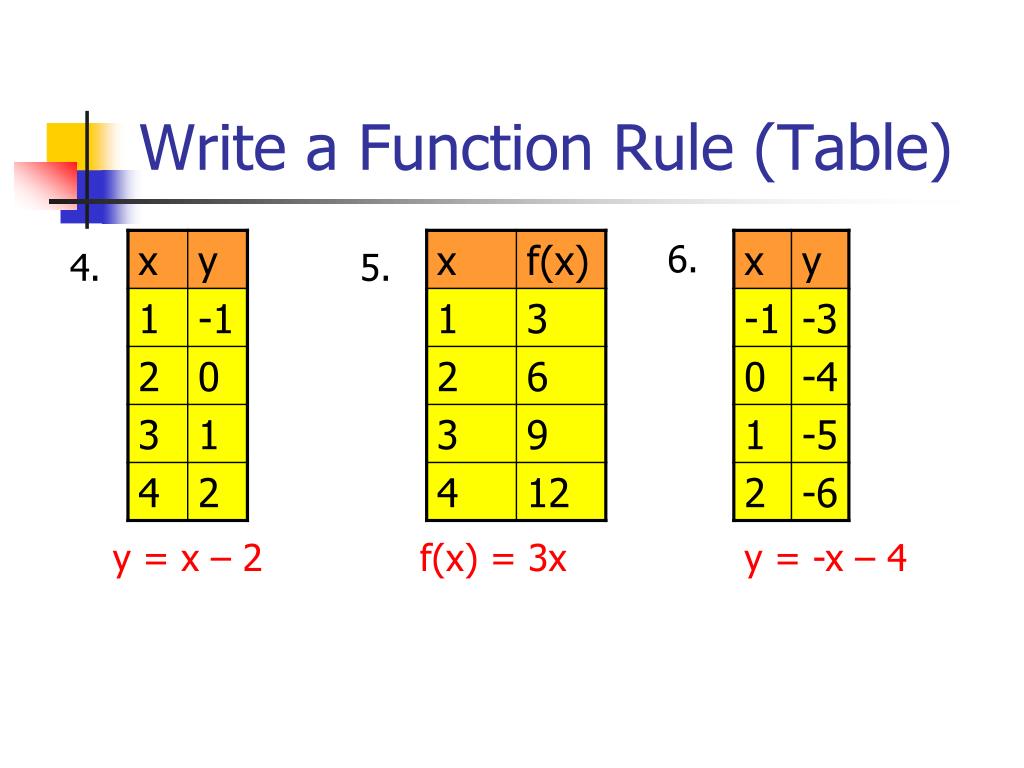
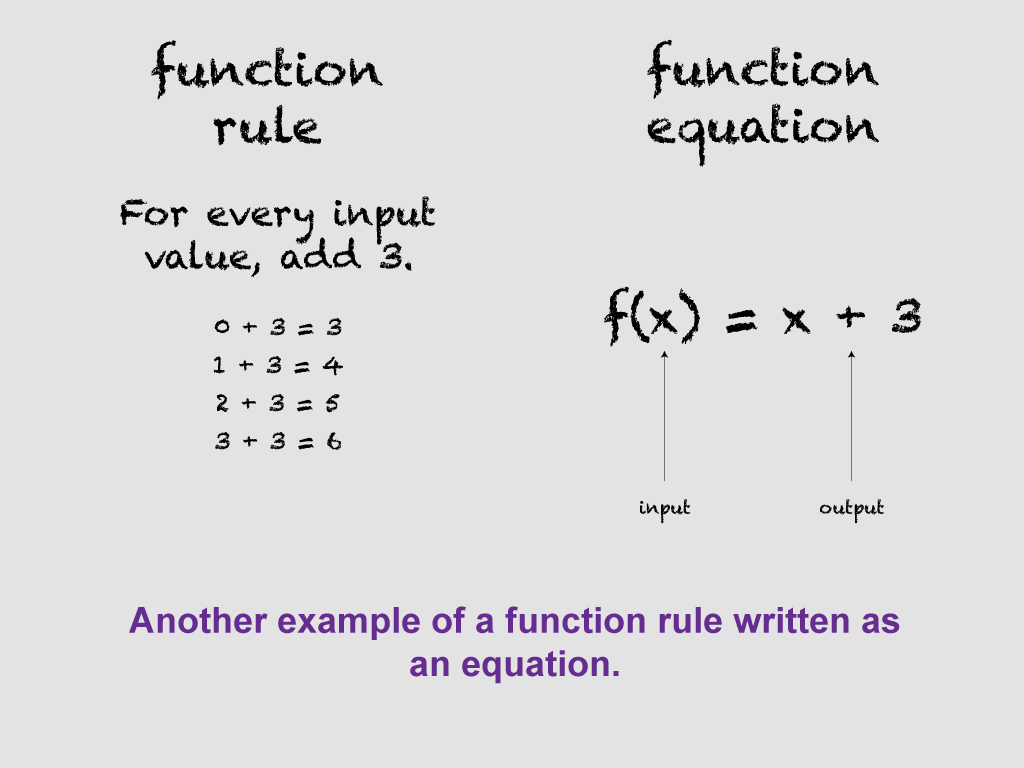
In the vast and intricate landscape of technology, the concept of a “function” is as fundamental as the byte itself. At its heart, every piece of software, every algorithm, and every automated process relies on functions to perform specific tasks. But what precisely defines a function in this digital realm? The answer lies in its “rule”—a precise, unambiguous set of instructions that dictates how an input is transformed into a predictable output. This rule is the very essence of a function, providing the logic, consistency, and reusability that underpins all modern technological achievements.
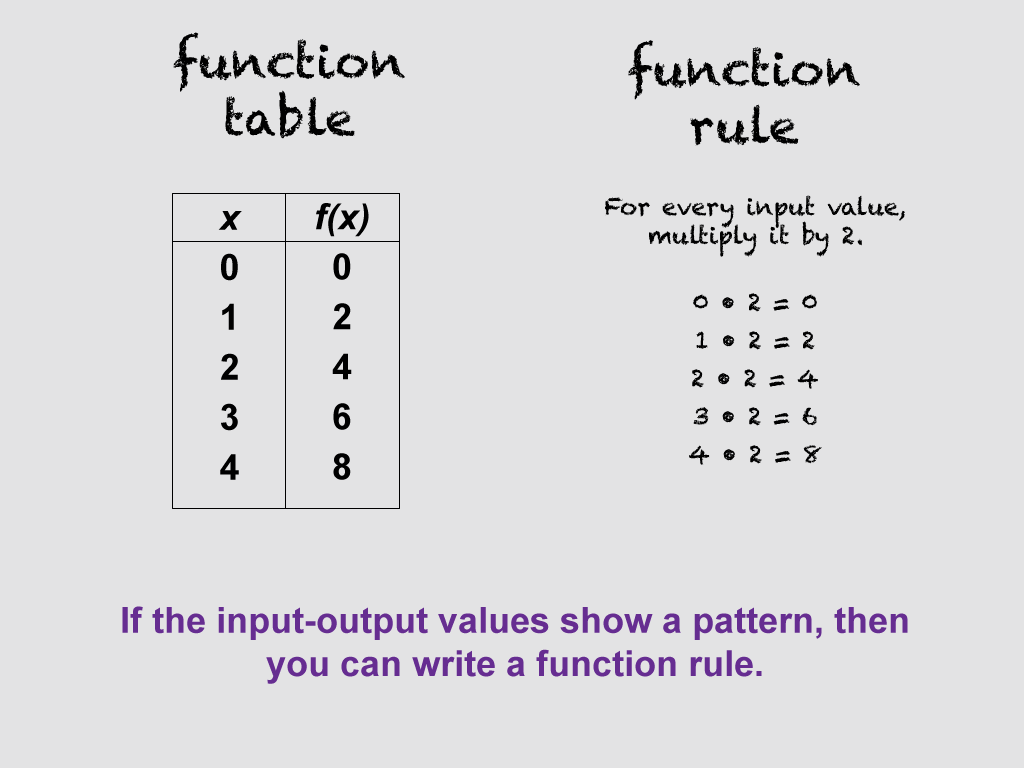
From the simplest calculator operation to the most complex artificial intelligence model, functions serve as the workhorses of computation. They encapsulate a specific piece of logic, allowing developers to break down large problems into manageable, testable, and reusable units. Understanding the nature and significance of a function’s rule is not merely an academic exercise; it is crucial for anyone involved in building, understanding, or even simply appreciating the technology that shapes our world. This article delves into the core definition, structural components, and far-reaching implications of the rule for a function within the technological sphere.
The Foundational Concept of Functions in Technology
The journey of the function, and its governing rule, from abstract mathematical concept to indispensable technological tool, is a testament to its power and versatility. It is the bridge between pure logic and practical application, enabling machines to perform complex operations with unwavering precision.
From Mathematics to Computation
At its most abstract, a function in mathematics is a relation between a set of inputs (the domain) and a set of possible outputs (the codomain) such that each input is related to exactly one output. This principle of a one-to-one or many-to-one mapping, where a given input always yields the same output, is called determinism. This mathematical purity translates directly into the computational world.
In programming, a function similarly takes zero or more inputs (often called arguments or parameters), performs a defined sequence of operations based on its rule, and then produces a specific output (a return value). Crucially, this process must be deterministic: if you provide the same inputs to a function, its rule guarantees that it will always produce the identical output, assuming no external side effects or randomness not explicitly part of its rule. This determinism is vital for creating reliable and predictable software systems. Without it, debugging would be impossible, and consistent behavior unattainable.
Functions as Building Blocks of Software
In the realm of software development, functions are the ultimate modular units. They serve as self-contained blocks of code designed to perform a particular task. This modularity offers several critical advantages:
- Reusability: Once a function’s rule is defined, it can be called and executed multiple times from various parts of a program without needing to rewrite the code. For example, a
calculate_tax()function can be used whenever tax needs to be computed, regardless of the user or transaction. - Abstraction: Functions allow developers to abstract away complex implementation details. When calling a
sort_list()function, one doesn’t need to know the specific sorting algorithm (bubble sort, quicksort, mergesort) used internally; they only need to know what input it expects and what output it produces. This simplifies larger systems and improves readability. - Maintainability: By compartmentalizing code into functions, it becomes easier to understand, debug, and modify specific parts of a program. If there’s an issue with how dates are formatted, a developer can go directly to the
format_date()function, rather than searching through thousands of lines of monolithic code. - Collaboration: In team environments, functions enable multiple developers to work on different parts of a system concurrently, as long as they agree on the function interfaces (what inputs are required and what outputs are expected).
Consider simple examples like add(a, b) that returns a + b, validate_email(email_string) that returns True or False, or fetch_user_data(user_id) that retrieves information from a database. Each of these encapsulates a specific task with a clear rule.
Deconstructing the “Rule”: Syntax, Semantics, and Logic
The “rule” for a function is not a monolithic entity but a composite of several interconnected elements: its syntactic definition, its semantic meaning, and the underlying logical problem it solves. Each plays a critical role in how functions are understood, written, and executed within technological systems.
The Syntax of Function Rules
Syntax refers to the formal structure and grammar of a programming language, dictating how a function must be written to be understood by the compiler or interpreter. While syntax varies across languages, common elements include:
- Keyword: A specific keyword (e.g.,
defin Python,functionin JavaScript,funcin Go,public staticfor methods in Java/C#) signals the start of a function definition. - Name: A unique identifier chosen by the programmer that describes the function’s purpose (e.g.,
calculate_area,send_notification). - Parameters/Arguments: A list of variables enclosed in parentheses that the function expects as input. These act as placeholders for the actual values that will be passed into the function when it’s called.
- Body: The block of code, often enclosed in braces or delimited by indentation, that contains the actual instructions defining the function’s operations. This is where the core “rule” is expressed.
- Return Type (Optional/Explicit): Many languages require or allow explicit declaration of the data type that the function will output (e.g.,
intfor an integer,stringfor text).
For instance, in Python:
def calculate_area(length, width):
    # This is the function body, defining the rule
    area = length * width
    return area
Here, def is the keyword, calculate_area is the name, length and width are parameters, and area = length * width; return area is the body containing the rule.
The Semantic Meaning: What the Rule Does
While syntax dictates how a function is written, semantics describes what the function’s rule actually does. This is the operational definition, the sequence of computations, conditional checks, loops, and data manipulations performed within the function body. The semantic meaning is the precise algorithm or logic that transforms the input parameters into the specified output.
For example, the semantic meaning of our calculate_area function is “multiply the two provided numerical inputs (length and width) together and return the result.” This might seem straightforward, but for complex functions, the semantic meaning can involve intricate data structures, external API calls, database interactions, or complex mathematical formulas. Understanding the semantics of a function’s rule is crucial for predicting its behavior and ensuring it fulfills its intended purpose. It’s where the actual “work” of the function happens.
The Underlying Logic: Problem Solving
Ultimately, every function’s rule is a solution to a specific problem. Whether it’s to validate user input, process a payment, retrieve data, or render a graphical element, the logic embedded within the function’s rule is a codified approach to addressing that problem. Good function design often involves:
- Clear Objectives: The function should have a single, well-defined responsibility (the “Single Responsibility Principle”).
- Robustness: The rule should account for various scenarios, including edge cases and potential errors (e.g., handling invalid inputs gracefully).
- Efficiency: For performance-critical applications, the logic within the rule must be optimized to execute quickly and use resources effectively.
The underlying logic is the ‘why’ behind the function’s existence, the practical goal it aims to achieve within the larger software system. The combination of syntactic correctness, clear semantic definition, and sound problem-solving logic makes a function’s rule truly effective.
Functions in Modern Tech Paradigms
The concept of a function, defined by its rule, has not remained static. It has evolved and adapted to various programming paradigms and architectural styles, shaping how we build sophisticated technological systems today.
Object-Oriented Programming (OOP) and Methods
In Object-Oriented Programming (OOP), functions that belong to a class or an object are called “methods.” The rule for a method operates on the internal state (data) of the object it belongs to, in addition to any explicit parameters it receives. For example, a Car object might have a start_engine() method, whose rule involves changing the car’s is_running state to True.
Methods embody encapsulation, where data and the functions that operate on that data are bundled together. This makes code more organized, allows for easier management of complex systems, and promotes data integrity by controlling access to an object’s internal state through its methods. The rule for a method often dictates how an object behaves and interacts with other objects.
Functional Programming Paradigms
Functional programming is a paradigm that treats computation as the evaluation of mathematical functions, avoiding changing-state and mutable data. In this style, the “rule for a function” takes on an even stricter definition:
- Pure Functions: A pure function’s rule guarantees that, given the same inputs, it will always return the same output, and it has no “side effects” (i.e., it doesn’t modify any external state or perform I/O operations). This makes functions incredibly predictable and easy to test.
- Immutability: Data is typically immutable, meaning once created, it cannot be changed. Functions always return new data rather than modifying existing data.
- Higher-Order Functions: Functions can accept other functions as arguments or return functions as outputs. This powerful concept allows for incredibly flexible and concise code, enabling developers to abstract control flow and behavior.
Functional programming, with its emphasis on pure, deterministic function rules, offers advantages in concurrency, parallelism, and formal verification, making it increasingly popular for complex, data-intensive applications.
Serverless Computing and Microservices
The rise of cloud computing and distributed systems has led to architectures where functions are deployed as independent, scalable units.
- Serverless Computing (Functions as a Service – FaaS): Platforms like AWS Lambda, Azure Functions, and Google Cloud Functions allow developers to deploy individual functions (each with its specific rule) that are triggered by events (e.g., an HTTP request, a new file upload, a database change). The cloud provider handles the underlying infrastructure, scaling the function up or down as demand fluctuates. Here, the “rule for a function” defines a specific, often small, piece of business logic that executes on demand.
- Microservices: This architectural style structures an application as a collection of small, independent, loosely coupled services. Each microservice typically encapsulates a specific business capability, which is often implemented by one or more functions. For instance, an e-commerce platform might have a “product catalog service,” an “order processing service,” and a “payment service,” each with its own set of functions and their rules. This modularity improves scalability, resilience, and independent deployability.
In these modern paradigms, the clarity and isolation of a function’s rule are paramount for building robust, scalable, and resilient distributed systems.
The Impact of Well-Defined Function Rules
The meticulous definition and implementation of a function’s rule have profound implications across the entire software development lifecycle, influencing everything from maintainability to security.
Code Quality and Maintainability
A well-defined function rule is the cornerstone of high-quality, maintainable code. When functions are clearly named, have a single responsibility, and their rules are concise and understandable:
- Readability: Other developers (or your future self) can quickly grasp what a function does without diving into its internal details.
- Debugging: Pinpointing errors becomes significantly easier because issues can often be localized to a specific function and its rule. If
calculate_discount()is returning incorrect values, you know exactly where to look. - Ease of Modification: Changes and enhancements can be made to a function’s rule without affecting unrelated parts of the codebase, reducing the risk of introducing new bugs.
- Testability: Pure functions, in particular, are inherently easy to test. Given specific inputs, the expected output is known, allowing for automated unit tests that verify the correctness of the function’s rule.
Conversely, poorly defined or overly complex function rules lead to “spaghetti code” that is difficult to understand, prone to errors, and a nightmare to maintain.
Performance and Scalability
The effectiveness of a function’s rule directly impacts the performance and scalability of an application. An optimized algorithm embedded within a function can significantly reduce execution time and resource consumption.
- Efficient Algorithms: The choice of algorithm to implement a function’s rule (e.g., using a hash map for quick lookups versus linear search for large datasets) can be the difference between an application that performs well and one that grinds to a halt.
- Resource Utilization: Efficient function rules minimize CPU cycles, memory usage, and network calls, which translates to faster execution and lower operational costs, especially in cloud environments where you pay for resource consumption.
- Scalability: In distributed systems, well-defined, independent function rules (as seen in serverless and microservices) allow for individual components to be scaled up or down based on demand, without affecting other parts of the system. A bottleneck in one function doesn’t necessarily bring down the entire application.
Security and Reliability
A function’s rule is also a critical component of building secure and reliable software.
- Controlled Access: Functions can be designed to control access to sensitive data or operations, ensuring that only authorized parts of the system can invoke them or modify specific states. Input validation functions are vital for preventing security vulnerabilities like injection attacks.
- Reduced Side Effects: Functions with clear, pure rules that minimize side effects reduce the likelihood of unintended consequences or unexpected behavior, which can often be exploited in security breaches.
- Robust Error Handling: A well-defined rule includes provisions for handling exceptional conditions and errors gracefully. This might involve returning specific error codes, throwing exceptions, or logging issues, ensuring that the system can recover or inform the user appropriately without crashing or exposing vulnerabilities.
- Predictable Behavior: The deterministic nature of well-defined function rules makes systems more reliable. Developers and users can trust that a given input will always yield the expected outcome, fostering confidence in the software’s operation.
The Future of Function Rules: AI and Beyond
As technology relentlessly advances, the nature and creation of “rules for functions” are also evolving, particularly with the advent of artificial intelligence.
Functions in Machine Learning Models
In the realm of Artificial Intelligence and Machine Learning, the concept of a “function” is deeply embedded, though its “rule” takes on a different character.
- Activation Functions: These are critical components within neural networks, applying a rule to the weighted sum of inputs to determine a neuron’s output. Their rules, like ReLU or sigmoid, are mathematical functions that introduce non-linearity, enabling models to learn complex patterns.
- Loss Functions: These functions quantify the error of a model’s predictions, providing a rule to measure how “wrong” the model is. Optimizers then use this rule to adjust the model’s internal parameters (weights and biases) to minimize the loss.
- Optimization Algorithms: The “rule” of an optimizer (e.g., stochastic gradient descent) dictates how the model’s parameters are updated based on the loss function, guiding the learning process.
Crucially, in machine learning, the overarching “rule” of the model itself is not explicitly programmed by a human line-by-line. Instead, it is learned from vast datasets through iterative training. The model discovers the complex function that maps inputs to outputs, effectively generating its own “rule” based on patterns and relationships in the data.
Automated Function Generation
The future points towards a world where the creation of function rules can be increasingly automated:
- AI-Assisted Code Generation: Tools powered by large language models (like GitHub Copilot) can suggest or even generate entire function bodies based on natural language descriptions or existing code context. Developers provide the intent, and the AI helps craft the rule. This accelerates development and democratizes coding.
- Low-Code/No-Code Platforms: These platforms empower non-programmers to build applications by visually dragging and dropping components and configuring their behavior. Behind the scenes, these components encapsulate pre-defined function rules, allowing users to combine them to create complex logic without writing a single line of traditional code. The user defines the high-level desired behavior, and the platform translates it into executable function rules.
The “rule for a function” remains the immutable core of computational logic. Its definition has expanded from simple mathematical operations to complex algorithms and, now, to rules that are learned and even generated by intelligent systems. This evolution underscores the enduring importance of this concept. Whether explicitly coded, implicitly learned, or automatically generated, the precise, deterministic rule governing how inputs are transformed into outputs will continue to be the bedrock upon which all technological innovation is built. Its clarity, efficiency, and reliability are, and will remain, paramount to the digital future.
aViewFromTheCave is a participant in the Amazon Services LLC Associates Program, an affiliate advertising program designed to provide a means for sites to earn advertising fees by advertising and linking to Amazon.com. Amazon, the Amazon logo, AmazonSupply, and the AmazonSupply logo are trademarks of Amazon.com, Inc. or its affiliates. As an Amazon Associate we earn affiliate commissions from qualifying purchases.