
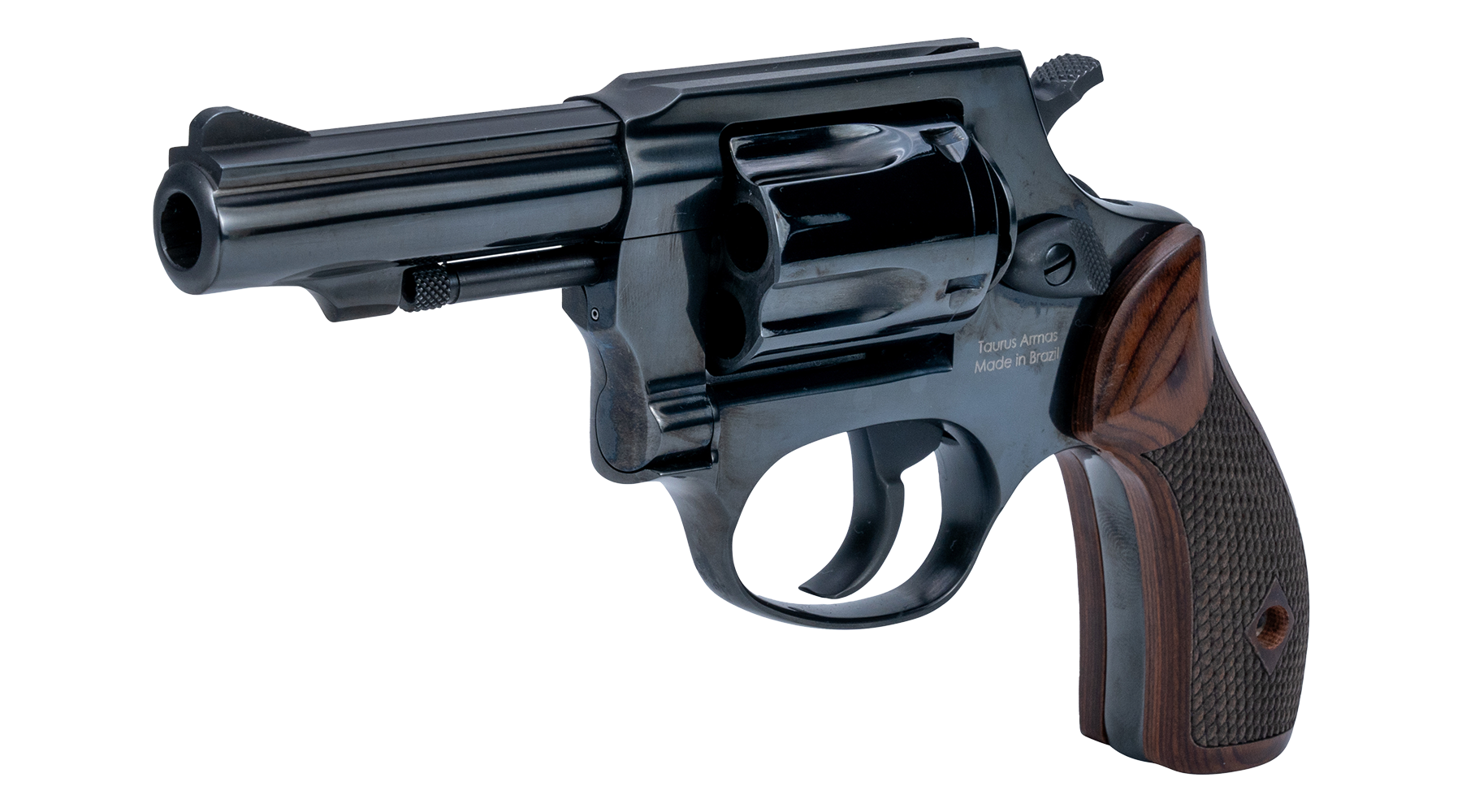
The term “roscoe gun” is a colorful piece of American slang, predominantly associated with the Prohibition era and early 20th-century crime fiction. It serves as a colloquialism for a firearm, typically a handgun. While the nomenclature itself carries a vintage, almost romanticized, criminal undertone, the underlying object – the gun – represents a profound evolution of technology, engineering, and material science. To understand “what is a roscoe gun” in a contemporary context is to look beyond the slang and delve into the intricate technological advancements that define modern firearms, their digital integrations, and their future trajectory.

Deconstructing the “Roscoe”: From Slang to Engineering Fundamentals
At its heart, a “roscoe gun” is a firearm, and all firearms, regardless of their era or specific design, rely on a fundamental set of engineering principles and components. The original “roscoes” of the 1920s might have been revolvers or early semi-automatic pistols, but their core operation aligns with the same ballistic and mechanical principles governing today’s sophisticated weapons.
A firearm operates by using the rapid combustion of a propellant (gunpowder) to generate high-pressure gases, which in turn propel a projectile (bullet) down a barrel at high velocity. The critical technological components include:
- The Barrel: A precision-machined tube, often rifled (containing helical grooves), designed to impart spin to the bullet for stability and accuracy. The metallurgy and machining tolerances are crucial for performance and safety.
- The Action: The mechanism that loads, fires, and extracts spent cartridges. This varies widely, from the simple single-action of a revolver to the complex gas-operated systems of modern semi-automatic rifles.
- The Firing Mechanism: Comprising a firing pin, hammer (or striker), and spring, this system initiates the primer’s detonation, which ignites the propellant.
- The Trigger Assembly: A mechanical linkage that, when manipulated, releases the firing mechanism. Its design influences pull weight, reset, and overall ergonomics.
Even a vintage “roscoe” represented a significant technological achievement in metallurgy, precision machining, and chemical engineering (for the propellant and primer). The progression from simple matchlock mechanisms to repeating firearms involved centuries of iterative technological innovation.
The Engineering Marvel: From Simple Mechanics to Precision Instruments
The journey of the firearm, from its crude beginnings to the highly precise instruments of today, is a testament to continuous technological advancement across multiple engineering disciplines.
Early Metallurgical Advances and Ballistics
The earliest firearms, primitive cannons and hand cannons, were limited by the metallurgy of their time. Forged iron and bronze were common, but lacked the tensile strength for high-pressure loads, making them prone to catastrophic failure. The development of stronger, more consistent steel alloys in the late Middle Ages and Renaissance paved the way for more reliable barrels. Concurrently, the burgeoning science of ballistics began to inform barrel length, bore diameter, and projectile shape, striving for greater range and accuracy. The understanding of black powder combustion and its energetic properties was also critical, requiring careful formulation to achieve predictable and powerful propulsion.
The Industrial Revolution’s Impact
The 18th and 19th centuries marked a revolutionary period for firearm technology, driven largely by the Industrial Revolution. The concept of interchangeable parts, pioneered by figures like Eli Whitney, transformed gun manufacturing. This innovation allowed for the rapid assembly of standardized components, drastically improving efficiency, reducing costs, and facilitating repair. The advent of fixed cartridges, combining bullet, propellant, and primer into a single unit, simplified loading and enabled the development of repeating firearms such as lever-action rifles and revolvers. These advancements were fundamentally dependent on breakthroughs in precision machining, tooling, and mass production techniques, transforming firearms from artisan-crafted items into factory-produced technological instruments.
Modern Manufacturing and Material Science
Today’s firearms benefit immensely from advanced manufacturing techniques and cutting-edge material science. Computer-aided design (CAD) and computer-aided manufacturing (CAM), coupled with Computer Numerical Control (CNC) machining, allow for the production of components with incredibly tight tolerances and complex geometries that were previously impossible. This precision is vital for reliability, accuracy, and longevity.
Materials have also seen a revolution. High-strength aerospace-grade aluminum alloys (e.g., 7075-T6), stainless steel, and various polymers (like nylon and fiberglass-reinforced plastics) have largely replaced traditional blued steel and wood. These materials offer superior strength-to-weight ratios, corrosion resistance, and often lower manufacturing costs. The result is firearms that are lighter, more durable, more reliable, and capable of higher performance than any “roscoe” from a bygone era.
Smart Firearms: Integrating Digital Technology and Enhanced Security
The 21st century has introduced a new dimension to firearm technology: the integration of digital systems. Driven by safety and security concerns, “smart gun” technology aims to prevent unauthorized use, adding a layer of digital security to mechanical devices.
Biometric Access and User Authentication
The most prominent feature of smart guns is their ability to restrict firing to authorized users. This is achieved through various biometric and digital authentication methods:
- Fingerprint Recognition: Similar to smartphone technology, an embedded fingerprint scanner reads the user’s print, and if it matches a stored profile, the gun unlocks. This involves miniaturized optical or capacitive sensors, dedicated microprocessors for biometric matching, and secure digital storage for user data.
- RFID (Radio-Frequency Identification) Technology: Some systems use RFID chips embedded in a special ring or wristband worn by the authorized user. When the gun is within close proximity to the RFID tag, it deactivates an internal safety mechanism. This requires low-power transceivers and secure communication protocols to prevent interference or spoofing.
- PIN Codes/Keypads: Less common for direct firing activation, but sometimes used for unlocking storage devices or specific modes of operation. This relies on basic embedded systems for input and authentication.
These technologies integrate sensors, microcontrollers, secure memory, and electromechanical actuators (e.g., solenoids) to control the firing pin or trigger mechanism. The underlying digital security challenge lies in creating robust, tamper-proof systems that are reliable in extreme conditions and resistant to hacking or circumvention.
Digital Traceability and Forensics
Beyond user authentication, digital technology also plays a role in tracking firearms. Microstamping, for example, is a technology that imprints unique microscopic codes onto spent casings via the firing pin or breech face. This provides a digital-like signature that can link a spent shell casing to a specific firearm, aiding forensic investigations. While not fully digital in operation, it leverages advanced manufacturing to create unique digital identifiers in a physical medium. Furthermore, comprehensive digital databases of serial numbers, ownership records, and ballistic data are critical tools for law enforcement, relying on secure data management and robust network infrastructure.
The Cybersecurity Frontier in Weapon Systems
As weapons become more integrated with electronics and potentially network capabilities, the realm of cybersecurity becomes increasingly relevant. While current civilian firearms largely remain analog in their core firing mechanism, the military sector is exploring highly advanced, integrated weapon systems. These systems could feature networked targeting, remote operation, or even semi-autonomous functions. For such systems, cybersecurity is paramount, ensuring that weapon control systems are impervious to hacking, denial-of-service attacks, or malicious data injection. This requires robust encryption, secure boot processes, intrusion detection systems, and secure software development lifecycles to protect against sophisticated cyber threats. The discussion moves from preventing unauthorized physical use to preventing unauthorized digital control or manipulation.
Future Innovations: Material Science, Energy, and Automation
The future of firearm technology, moving far beyond the mechanical “roscoe gun,” is being shaped by cutting-edge research in materials, energy systems, and artificial intelligence.
Advanced Composites and Additive Manufacturing
The drive for lighter, stronger, and more customizable firearms continues. Advanced composites like carbon fiber reinforced polymers are being explored for structural components, offering unprecedented strength-to-weight ratios. Additive manufacturing (3D printing) is poised to revolutionize the industry, allowing for the creation of complex internal geometries previously impossible with traditional machining. This enables rapid prototyping, on-demand parts manufacturing, and the potential for highly customized weapons tailored to individual specifications, using materials ranging from high-strength plastics to exotic metal alloys.
Directed Energy and Non-Kinetic Systems
Looking further into the future, the concept of a “gun” may expand beyond kinetic energy projectiles. Directed energy weapons (DEWs), such as high-energy lasers or microwave systems, are under active development. These systems don’t fire physical bullets but instead project concentrated energy to disable targets. While primarily a military focus, the underlying technological advancements in energy generation, beam focusing, and thermal management represent a radical departure from traditional firearm mechanisms, offering capabilities that dwarf any conventional “roscoe.”

Artificial Intelligence and Autonomous Capabilities
The application of artificial intelligence (AI) in weapon systems represents another frontier. AI could enhance target acquisition systems, improve ballistic calculations in real-time for extreme precision, or even manage recoil mitigation systems more effectively than human operators. The integration of AI for advanced sensing, decision support, and potentially autonomous operation (in controlled military contexts) would transform the functionality of a “gun” from a simple trigger-and-fire device into a highly intelligent, adaptive system. This involves complex algorithms, machine learning models, and powerful onboard processing units, pushing the boundaries of what a “roscoe” could ever represent.
In essence, while “what is a roscoe gun” starts with a historical piece of slang, its modern interpretation invariably leads to a deep dive into the fascinating and ever-evolving world of engineering, materials science, and digital technology.
aViewFromTheCave is a participant in the Amazon Services LLC Associates Program, an affiliate advertising program designed to provide a means for sites to earn advertising fees by advertising and linking to Amazon.com. Amazon, the Amazon logo, AmazonSupply, and the AmazonSupply logo are trademarks of Amazon.com, Inc. or its affiliates. As an Amazon Associate we earn affiliate commissions from qualifying purchases.