
In the competitive landscape of club-level and recreational tennis, few archetypes are as polarizing or as strategically significant as the “pusher.” To the uninitiated, the term might sound derogatory, but in the context of sports psychology and tactical game theory, it represents a highly effective, albeit defensive, approach to winning matches. Understanding the pusher is not just about identifying a specific playstyle; it is about recognizing a deliberate brand of tennis that weaponizes consistency over raw power.
The Definition and Philosophy of the Pusher
At its core, a pusher is a player whose primary objective is to keep the ball in play until their opponent makes an error. Unlike aggressive baseliners or serve-and-volleyers who seek to dictate points through winners, the pusher thrives on the vacuum of pace. They operate under the assumption that the vast majority of points in amateur and intermediate tennis are lost, not won.

The Psychology of Defensive Consistency
The pusher’s philosophy is rooted in risk management. By removing high-stakes decision-making from their own game—avoiding low-percentage shots like down-the-line winners or high-velocity approach shots—they shift the entire psychological burden onto their opponent. The pusher creates a “wall” effect. Every ball that comes back over the net is a psychological test for the opponent, who often feels compelled to hit a “better” shot to end the rally. This compulsion leads to impatience, which in turn leads to the unforced errors that form the bedrock of the pusher’s win rate.
Weaponizing the Absence of Pace
One of the most frustrating aspects of playing against a pusher is the lack of rhythm. Because they often employ high-arching, medium-pace shots, they deny the opponent the ability to use the ball’s incoming energy to generate their own power. For a player who loves to rip big forehands, the pusher is a nightmare. They force the opponent to provide all the pace, which requires incredible physical discipline and mental stability. When the opponent eventually tries to over-hit to compensate for the lack of rhythm, the pusher simply stands by, watching the ball sail long or crash into the net.
Tactical Mechanics of the Pusher Style
While the pusher is often dismissed as someone who “cannot hit the ball hard,” this is a fundamental misunderstanding of their tactical proficiency. Being a successful pusher requires a distinct set of skills that are often harder to master than raw power.
Depth and Ball Placement
The hallmark of a proficient pusher is depth. By consistently landing the ball deep in the opponent’s court, they pin the opponent behind the baseline. A deep, looping shot is notoriously difficult to attack. If a pusher can combine this depth with a high level of predictability in their own movement, they effectively neutralize any offensive weapon the opponent might possess. It is not about hitting the lines; it is about hitting the “safe” zone that makes the opponent’s life miserable.
Extraordinary Lateral Movement and Recovery
Pushers are rarely stationary. They possess a high “motor” and an uncanny ability to read their opponent’s body language. Because they anticipate where the ball is going, they are often already moving before the opponent has fully committed to their shot. Their movement is characterized by efficient, small steps and a relentless commitment to recovering to the center of the court. While the power player is recovering from a massive, unstable swing, the pusher is already set and ready for the next ball.

The Art of the “Moonball” and High Margin
The “moonball”—a high-arcing shot designed to land deep in the backcourt—is the pusher’s signature tool. From a physics perspective, the moonball is genius: it allows for a massive margin of error over the net. While an aggressive player might aim for a two-foot window over the net to hit a winner, the pusher hits a twenty-foot window, ensuring the ball lands in play nine times out of ten. This shift in margin of error is the mathematical key to their success.
The Psychological Warfare of the Grind
Tennis is a game of patience, and nowhere is that more evident than in a match against a dedicated pusher. The pusher intentionally slows the game down, turning a fast-paced sport into a grueling mental marathon.
Exploiting the Opponent’s Ego
The biggest weakness the pusher exploits is the opponent’s ego. Many tennis players carry a subconscious belief that they should be hitting winners. When faced with a pusher, they feel ashamed if they do not hit a spectacular shot to end the point. The pusher feeds off this. By playing “boring” tennis, they bait the opponent into trying shots they have no business hitting. The pusher essentially says, “I am going to bet that you will miss before I do.” In the amateur game, that is a winning bet nine times out of ten.
Managing the “Ugly” Victory
For the player who prides themselves on “pretty” tennis—big serves, crisp volleys, and heavy topspin—losing to a pusher can be soul-crushing. There is a sense of indignation in losing to someone who doesn’t look like a traditional “player.” However, the pusher is playing the game as it exists, not as they wish it to be. They understand that a point won by a soft, loping ball that lands in is worth exactly the same as a 120-mph ace. The pusher’s detachment from the “aesthetic” of tennis is their greatest psychological shield.
How to Beat the Pusher: Tactical Adjustments
If you find yourself frustrated by a pusher, the solution is not to hit harder. It is to change the way you approach the game. To defeat the pusher, you must dismantle their “wall” through structure rather than force.
Incorporate the Short Ball and Net Approach
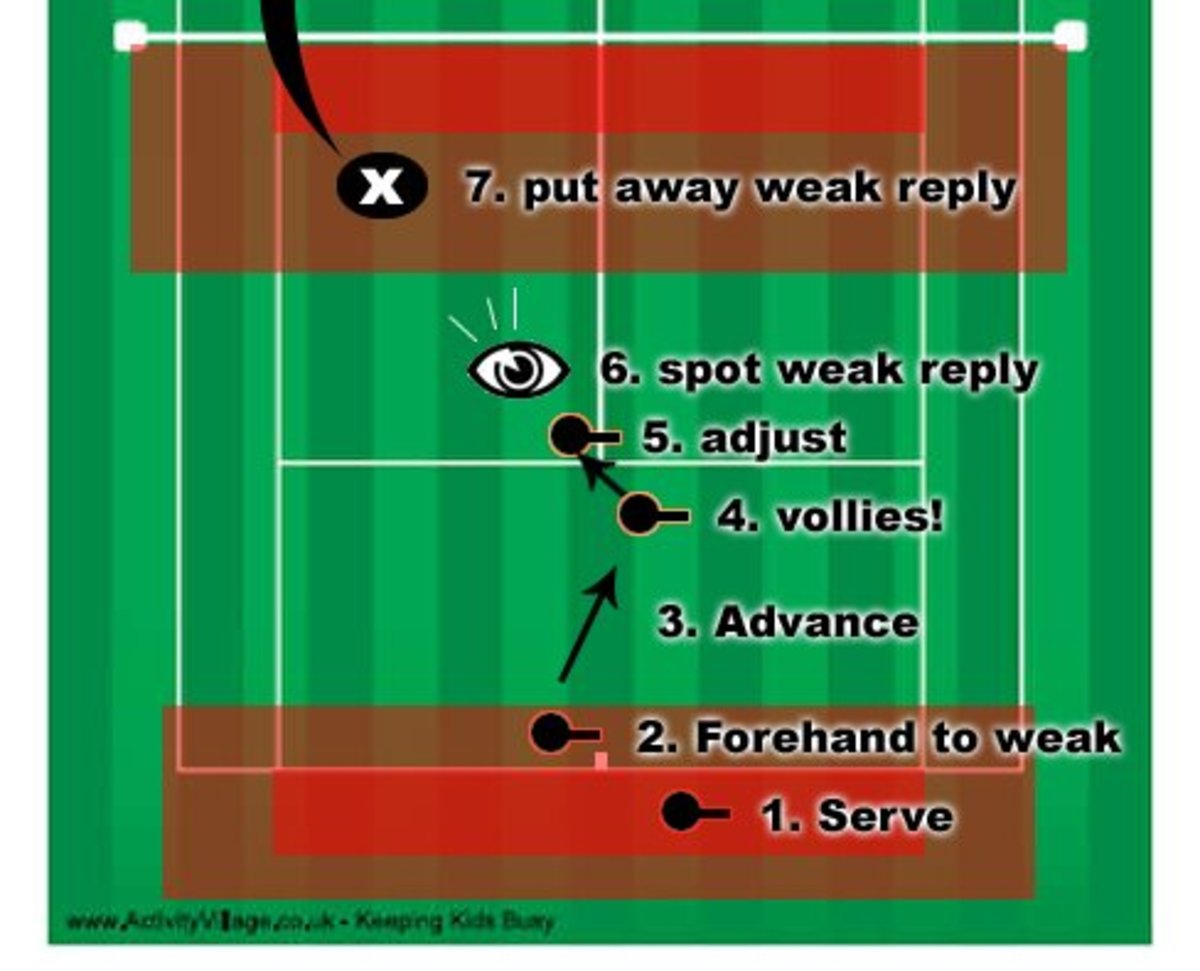
Pushers love the baseline. They are comfortable running side-to-side behind the backline, but they are often significantly less comfortable when forced to hit passing shots or when pulled into the net. By hitting a well-disguised drop shot or a short, angled slice, you force the pusher to leave their comfort zone. Once they are forced to come forward, their lack of a finishing game often becomes apparent. A transition game, followed by a crisp volley, is the antidote to the pusher’s deep-ball strategy.
Patience Through Pattern Play
Instead of trying to end the point on the third shot, focus on building a point. Use high-percentage shots to move the pusher around, but do so with patience. If you hit a wide ball, follow it up with a deep ball to the opposite corner. Do not look for the winner; look for the “plus-one”—the shot that forces the pusher into a defensive, low-quality reply that you can eventually attack. You must out-discipline the pusher. If you can stay mentally calm and match their patience, the pusher will eventually be forced to provide a shorter ball that you can put away.
Embrace the “Slice and Dice”
When the pusher sends a high, looping ball that is difficult to time, do not try to take the ball at its peak where it might be above your shoulder. Instead, use a slice backhand to take the pace off the ball and keep it low. A low-skidding slice is very difficult for a pusher to return with their typical looping style, as it forces them to hit the ball up, giving you a chance to dictate the next shot.
The pusher is a staple of tennis, a testament to the fact that tennis is a game of errors as much as it is a game of winners. Recognizing their strategy is the first step toward overcoming it, but it also provides a valuable lesson in the importance of consistency, mental fortitude, and the high-percentage play. Whether you choose to adopt some of these traits or simply learn how to dismantle them, the pusher remains one of the most important benchmarks for any player looking to climb the ranks of competitive tennis.
aViewFromTheCave is a participant in the Amazon Services LLC Associates Program, an affiliate advertising program designed to provide a means for sites to earn advertising fees by advertising and linking to Amazon.com. Amazon, the Amazon logo, AmazonSupply, and the AmazonSupply logo are trademarks of Amazon.com, Inc. or its affiliates. As an Amazon Associate we earn affiliate commissions from qualifying purchases.