
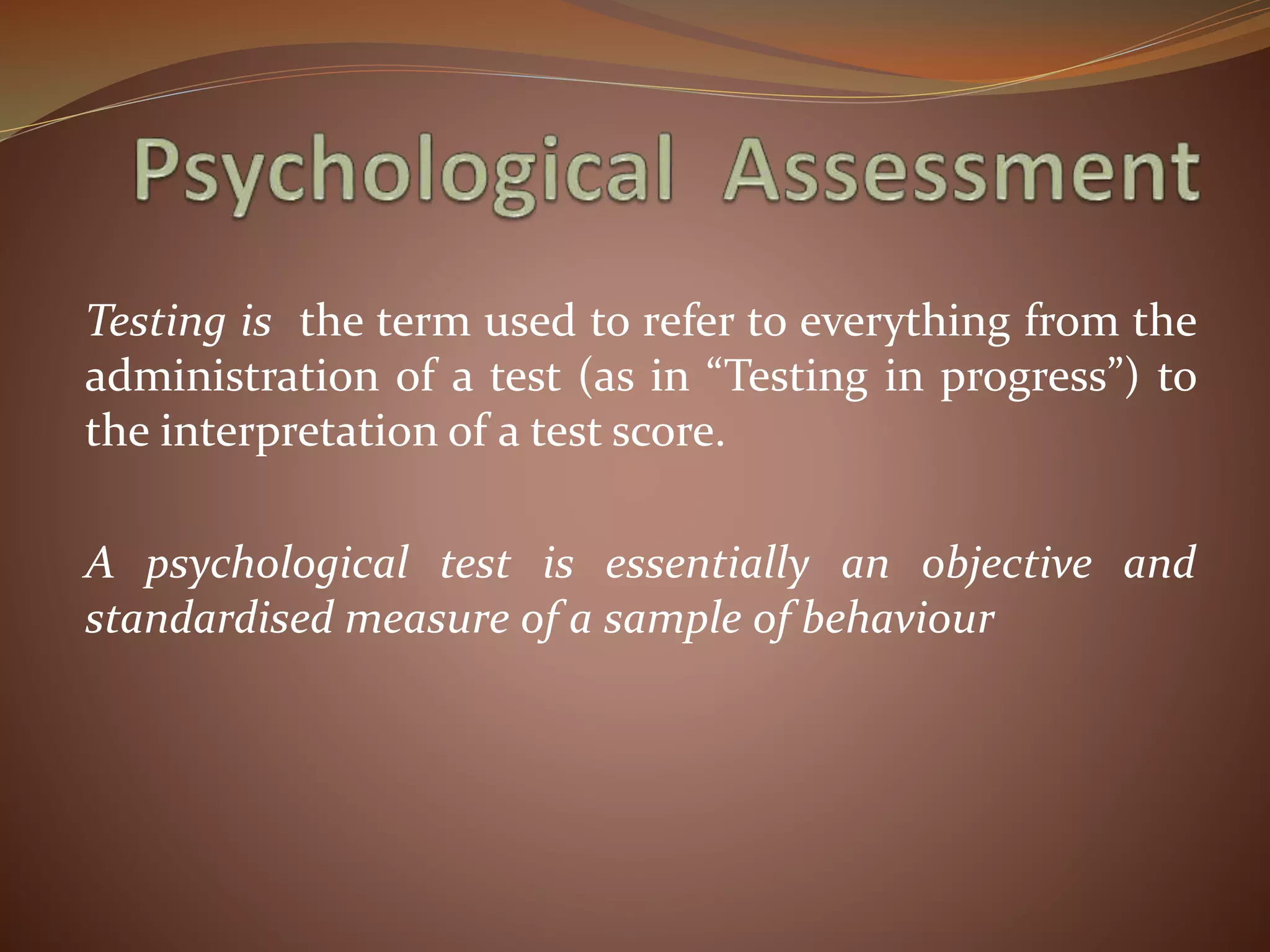
A psychological assessment is a systematic process of gathering information about an individual’s psychological functioning, mental health, cognitive abilities, personality traits, and behavioral patterns. Traditionally, this process relied heavily on interviews, observation, and paper-and-pencil tests administered by trained professionals. However, in the 21st century, the very fabric of psychological assessment has been profoundly rewoven by technology, transforming not only how assessments are conducted but also their scope, accuracy, and accessibility. Today, understanding “what is a psychological assessment” is inextricably linked to appreciating its digital evolution, leveraging everything from sophisticated software to artificial intelligence (AI) and emerging digital tools.

The Digital Transformation of Psychological Assessment
The journey from ink and paper to pixels and algorithms marks a significant paradigm shift in psychological assessment. This digital transformation has introduced efficiencies and capabilities previously unimaginable, fundamentally altering the landscape for clinicians, researchers, and individuals seeking insights into their mental well-being.
From Paper-and-Pencil to Pixels
The most immediate and widespread impact of technology on psychological assessment has been the migration from manual, paper-based methods to digital platforms. Online questionnaires, computerized adaptive tests, and specialized assessment software have become standard. This shift offers numerous advantages:
- Efficiency and Speed: Digital assessments can be administered simultaneously to large groups, and scoring, which once took hours or days, is now often instantaneous. This drastically reduces administrative overhead and provides quicker feedback.
- Accuracy and Reduced Error: Automated scoring eliminates human errors inherent in manual calculations and data entry, ensuring greater reliability of results.
- Standardization and Consistency: Digital platforms ensure that assessment conditions and instructions are uniform across all administrations, enhancing the standardization critical for valid psychological measurement.
- Data Management and Analysis: Digital results are easily stored, retrieved, and integrated into databases, facilitating complex statistical analysis, longitudinal tracking, and research efforts that would be cumbersome with physical records.
Enhancing Accessibility and Reach
Technology has democratized access to psychological assessment, breaking down geographical barriers and reaching populations that might otherwise be underserved.
- Telehealth and Remote Assessment: The advent of secure video conferencing and remote assessment platforms has made it possible for individuals in rural areas, those with mobility issues, or those facing time constraints to undergo assessments without needing to visit a physical clinic. This has been particularly crucial in expanding mental health services globally.
- Global Reach and Scalability: Digital tools allow for the deployment of assessments across diverse populations and cultures, fostering cross-cultural research and the development of more culturally sensitive assessment instruments.
- Self-Administration and Monitoring: Many digital tools enable individuals to complete assessments at their convenience, often through mobile apps, which can also be used for ongoing self-monitoring of symptoms or progress over time. This empowers individuals with greater agency in their mental health journey.
AI and Machine Learning in Assessment Methodologies
Beyond mere digitization, the integration of Artificial Intelligence (AI) and Machine Learning (ML) marks the next frontier in psychological assessment, moving from simple automation to sophisticated analytical capabilities that augment human expertise.
Predictive Analytics and Diagnostic Support
AI algorithms can process vast amounts of assessment data, identifying subtle patterns and correlations that might escape human detection.
- Enhanced Diagnostic Accuracy: AI can assist clinicians in diagnosis by cross-referencing an individual’s assessment profile with extensive databases of known conditions, offering probabilistic insights and flagging potential issues for further investigation. It acts as a powerful decision-support tool, not a replacement for clinical judgment.
- Risk Prediction: ML models can analyze historical data to predict future outcomes, such as the likelihood of relapse in mental health conditions, academic difficulties, or occupational burnout. This enables proactive intervention and personalized support strategies.
- Phenotype Discovery: AI can help researchers identify novel clusters of symptoms or behavioral patterns (phenotypes) that may represent previously unrecognized psychological conditions or subtypes of existing ones, leading to a more nuanced understanding of mental health.
Adaptive Testing and Personalization
AI powers Computer Adaptive Testing (CAT), a revolutionary approach to assessment design.
- Optimized Assessment Length: CAT algorithms dynamically select subsequent questions based on an individual’s previous responses. This allows for highly precise measurement using fewer items, reducing assessment fatigue and completion time while maintaining or even improving accuracy.
- Personalized Assessment Paths: By tailoring the assessment experience to each individual, CAT can focus on areas most relevant to their profile, providing a more engaging and effective evaluation.
- Dynamic Feedback: AI-driven platforms can provide immediate, personalized feedback based on assessment results, guiding individuals towards relevant resources, self-help strategies, or professional support.
Natural Language Processing (NLP) in Qualitative Assessment
Psychological assessment often involves qualitative data, such as open-ended interview responses, written narratives, or free-form text. NLP, a branch of AI, is transforming the analysis of this complex data.
- Sentiment Analysis and Emotional State Detection: NLP algorithms can analyze text or speech to identify emotional tones, semantic content, and underlying psychological states, offering insights into an individual’s mood, anxieties, or cognitive distortions.
- Identification of Key Themes and Patterns: NLP can automatically extract recurring themes, key concepts, and linguistic markers from large volumes of qualitative data, helping clinicians and researchers to uncover important insights from interviews or journaling entries.
- Automated Scoring of Essay Responses: In educational or vocational assessments, NLP can even score free-text responses for coherence, complexity, and specific content, providing objective feedback that complements traditional scoring methods.
Innovative Technologies and Future Frontiers
The integration of technology into psychological assessment continues to evolve rapidly, with emerging innovations promising even more profound shifts in how we understand and evaluate human psychology.
Wearable Technology and Passive Data Collection
The proliferation of wearable devices (smartwatches, fitness trackers, smart rings) opens new avenues for passive, continuous data collection relevant to psychological assessment.
- Objective Behavioral and Physiological Data: Wearables can track physiological markers like heart rate variability, sleep patterns, activity levels, skin conductance, and even subtle changes in speech or movement. This provides objective, real-time data that can correlate with stress levels, emotional states, sleep disorders, or behavioral patterns related to psychological conditions.
- Contextual Assessment: By collecting data throughout daily life, wearables enable “in-the-moment” assessment, moving beyond retrospective self-reports and offering a more ecologically valid view of an individual’s psychological functioning within their natural environment.
- Early Warning Systems: Continuous monitoring can help identify subtle shifts or early indicators of mental health challenges, allowing for timely intervention and preventative care.
Virtual Reality (VR) and Augmented Reality (AR) for Immersive Assessment
VR and AR technologies are creating immersive environments that offer unique opportunities for psychological assessment, particularly in areas where direct observation is challenging or impractical.
- Simulated Real-World Scenarios: VR can simulate specific social interactions, phobic stimuli (e.g., heights, public speaking), or high-stress situations (e.g., job interviews, emergency scenarios). This allows clinicians to assess behavioral responses, coping mechanisms, and cognitive biases in a controlled yet realistic environment.
- Performance-Based Assessment: Unlike self-report measures, VR/AR assessments can objectively measure performance in specific tasks, such as executive functioning tests within a simulated office environment or social skills in a virtual party setting.
- Exposure Therapy and Rehabilitation: Beyond assessment, VR is also a powerful tool for exposure therapy in anxiety disorders and for cognitive rehabilitation, demonstrating the close link between assessment and intervention in these technological frontiers.
Blockchain for Secure Data Management
The sensitive nature of psychological assessment data necessitates robust security and privacy protocols. Blockchain technology offers a decentralized and immutable ledger system that holds significant promise.
- Enhanced Data Security and Privacy: By distributing data across a network and encrypting it, blockchain can significantly reduce the risk of data breaches and unauthorized access. Individuals can have greater control over who accesses their assessment data.
- Data Integrity and Verifiability: The immutable nature of blockchain ensures that assessment results, timestamps, and professional endorsements cannot be tampered with, providing a verifiable record for research, clinical, and legal purposes.
- Facilitating Longitudinal Research: Blockchain can securely track and link assessment data over extended periods and across different providers, enabling comprehensive longitudinal studies while maintaining patient anonymity and data integrity.
Challenges and Ethical Considerations in Digital Assessment
While technology has brought immense benefits to psychological assessment, it also introduces a complex array of challenges and ethical considerations that must be carefully navigated.
Data Privacy and Security
The digitization of sensitive psychological data amplifies concerns about privacy and security.
- Compliance and Regulation: Adhering to strict data protection regulations (e.g., HIPAA in the US, GDPR in Europe) is paramount. Developers and practitioners must implement robust encryption, secure storage, and access controls to protect highly personal information.
- Vulnerability to Cyberattacks: Digital platforms are susceptible to hacking and data breaches. Continuous investment in cybersecurity measures and vigilance is essential to safeguard patient confidentiality and trust.
- Consent and Data Ownership: Clear communication regarding data collection, storage, and usage is crucial. Individuals must provide informed consent, understanding who has access to their data and for what purpose.
Algorithmic Bias and Fairness
The reliance on AI and ML in assessment introduces the risk of algorithmic bias, which can perpetuate or even amplify existing societal inequalities.
- Bias in Training Data: If AI models are trained on datasets that are not representative of diverse populations, they may perform poorly or inaccurately for certain demographic groups (e.g., different ethnicities, socioeconomic backgrounds). This can lead to unfair or discriminatory assessment outcomes.
- Transparency and Explainability: The “black box” nature of some complex AI algorithms makes it difficult to understand how they arrive at their conclusions. This lack of transparency can hinder trust and make it challenging to identify and correct biases.
- Validation and Oversight: Rigorous validation studies are necessary to ensure that AI-driven assessments are fair, unbiased, and valid across all intended user groups. Continuous monitoring and human oversight are critical to mitigate these risks.
The Human Element and Digital Divide
Despite technological advancements, the human element remains irreplaceable in psychological assessment, and the digital divide presents an ongoing challenge.
- Maintaining Clinical Judgment: While AI can augment assessment, it cannot replace the nuanced understanding, empathy, and clinical judgment of a trained human professional. Human interpretation is essential for integrating diverse data points, understanding individual context, and building therapeutic rapport.
- Digital Literacy and Access: Not everyone has equal access to technology or the digital literacy required to comfortably engage with online assessments. This can create disparities, excluding vulnerable populations from accessing necessary services.
- Over-reliance on Automation: There is a risk of becoming overly reliant on automated systems, potentially overlooking the rich, qualitative aspects of human experience that are best captured through direct interaction and clinical expertise.
In conclusion, “what is a psychological assessment” today encompasses a dynamic interplay between established psychological principles and cutting-edge technology. While technology has exponentially enhanced the precision, efficiency, and reach of assessment, navigating its ethical implications and ensuring its responsible application remains a critical ongoing endeavor. The future of psychological assessment lies in harnessing these technological capabilities to foster deeper insights into the human mind, while always prioritizing accuracy, fairness, and the individual’s well-being.
aViewFromTheCave is a participant in the Amazon Services LLC Associates Program, an affiliate advertising program designed to provide a means for sites to earn advertising fees by advertising and linking to Amazon.com. Amazon, the Amazon logo, AmazonSupply, and the AmazonSupply logo are trademarks of Amazon.com, Inc. or its affiliates. As an Amazon Associate we earn affiliate commissions from qualifying purchases.