
In an era of shifting economic tides and the democratization of digital tools, the question of which business to start has evolved. It is no longer merely a question of what product to sell, but rather which financial model offers the highest probability of long-term solvency and wealth generation. Profitability is the lifeblood of any venture, yet it is often misunderstood. Many entrepreneurs chase high revenue figures while ignoring the eroding effects of high overhead, customer acquisition costs, and thinning margins.
To identify a truly profitable business to start today, one must look at the intersection of low operational complexity, high demand, and scalable financial structures. Whether you are looking for a side hustle to supplement your primary income or a full-scale enterprise to build generational wealth, the following frameworks and business models represent the most viable paths to profitability in the current financial landscape.
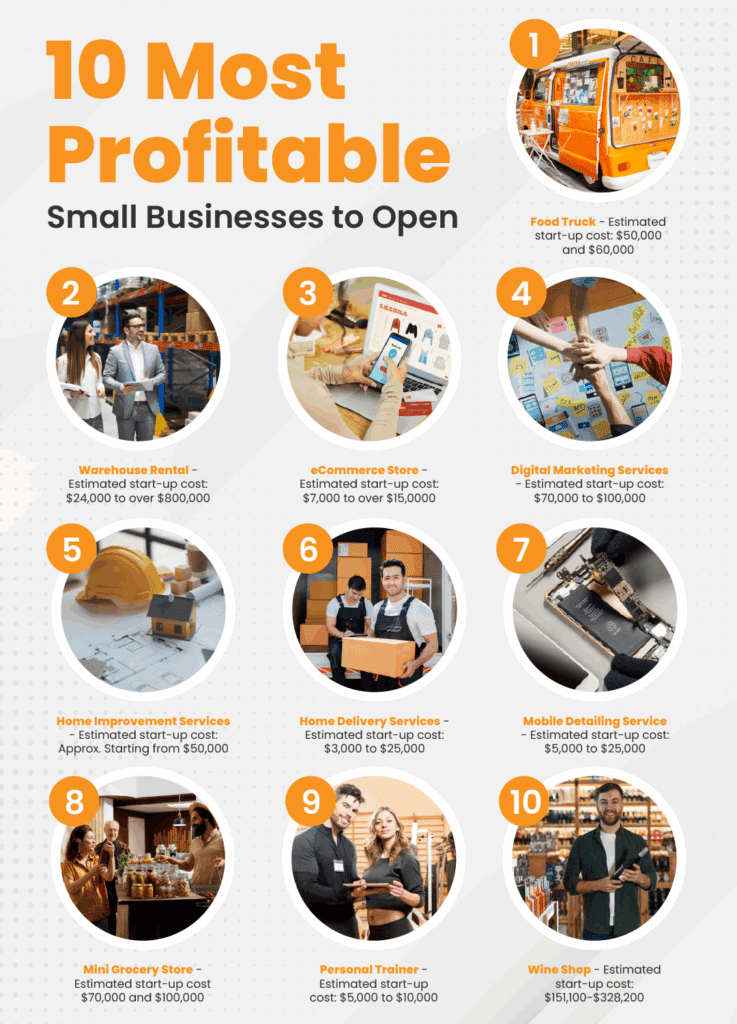
Foundations of High-Margin Business Models
Before selecting a specific niche, it is essential to understand the underlying mechanics of a profitable business. A profitable venture is characterized by its ability to generate significant “free cash flow”—the cash left over after all operating expenses and capital expenditures have been paid.
Low Overhead and Asset-Light Operations
The most profitable businesses to start in the modern economy are often “asset-light.” Traditional businesses, such as manufacturing or physical retail, require heavy upfront investment in inventory, real estate, and equipment. This creates a “debt drag” that can take years to clear. In contrast, service-based and digital businesses allow for high margins because their primary cost is time or intellectual property. By minimizing fixed costs—such as long-term leases and large payrolls—you increase your “margin of safety,” allowing the business to remain profitable even during fluctuating market conditions.
The Power of Recurring Revenue
Profitability is not just about the size of a single sale; it is about the “Lifetime Value” (LTV) of a customer. Business models that rely on one-off transactions require constant, expensive marketing efforts to find new leads. Conversely, subscription-based models or businesses with high retention rates create a predictable “revenue floor.” When you start a business with a recurring revenue component, each new customer adds to a compounding total, drastically reducing the pressure to make new sales every month just to break even.
Top Profitable Ventures to Launch in the Current Economy
When evaluating specific opportunities, the focus should remain on sectors with high barriers to entry (based on skill, not necessarily capital) and high perceived value.
The Knowledge Economy: Digital Products and Education
The global e-learning market is projected to reach hundreds of billions of dollars in the coming years. This is perhaps the most profitable business model for an individual creator or expert. Once a digital product—such as an intensive online course, a specialized ebook, or a proprietary database—is created, the cost of selling it to the 1,000th customer is virtually zero.
The profitability here lies in the “infinite leverage” of the internet. By solving a specific, high-stakes problem for a niche audience (e.g., “Financial Planning for Specialized Medical Professionals” or “Advanced Tax Strategies for E-commerce Sellers”), you can command premium pricing while maintaining a profit margin that often exceeds 90%.
Specialized B2B Service Agencies
Businesses are always willing to pay for two things: making more money or saving time. Specialized agencies that focus on high-ROI services for other businesses are incredibly profitable. Examples include specialized ad management, conversion rate optimization, or outsourced fractional CFO services.
Unlike a generalist freelancer, a specialized agency builds a “productized service.” This means you have a standardized process for delivering a specific result. As you refine this process, your efficiency increases, meaning your cost of delivery goes down while your price remains high. This gap between the value provided and the cost of the labor required is where significant profit is captured.
The Rise of Micro-SaaS and Specialized Software
You do not need to build the next social media giant to have a profitable tech-adjacent business. “Micro-SaaS” (Software as a Service) companies solve small, specific problems for a dedicated user base. These might be Shopify apps that help merchants manage returns or Chrome extensions that help recruiters organize LinkedIn profiles.
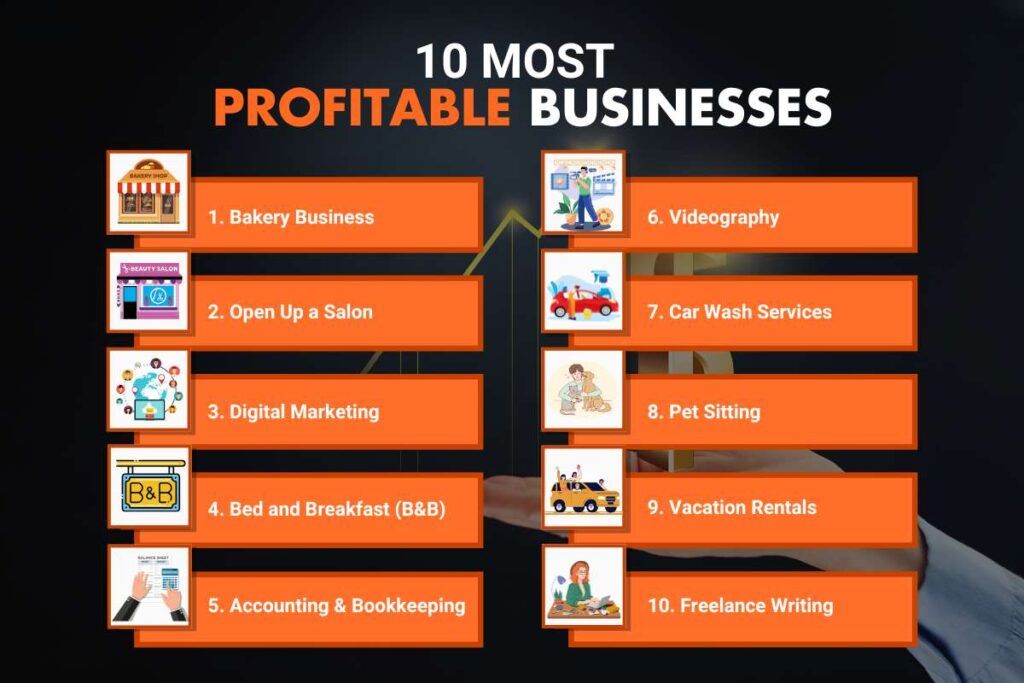
The financial appeal of Micro-SaaS is the combination of recurring subscription revenue and high scalability. While there is an upfront investment in software development, the ongoing maintenance costs are relatively low compared to the potential for steady, monthly recurring revenue (MRR).
Analyzing Financial Viability and Risk Management
Starting a business is a financial risk, but that risk can be calculated and mitigated. Profitable entrepreneurs do not gamble; they look for “asymmetric bets”—opportunities where the downside is limited and known, but the upside is potentially massive.
Calculating Unit Economics
To determine if a business is worth starting, you must master its unit economics. This involves understanding the relationship between the “Customer Acquisition Cost” (CAC) and the “Lifetime Value” (LTV). A healthy, profitable business typically maintains an LTV to CAC ratio of at least 3:1. If it costs you $100 in marketing to acquire a customer who only spends $120 over their lifetime, your business is on a fast track to insolvency once you factor in labor and overhead.
Bootstrapping vs. Seeking Capital
Profitability is often reached faster through “bootstrapping”—the process of starting a business with little to no outside investment. While seeking venture capital or bank loans can provide a quick cash infusion, it also introduces debt obligations or equity dilution. Bootstrapped businesses are forced to be profitable from day one because there is no “runway” provided by investors. This discipline often leads to a leaner, more resilient company structure that prioritizes cash flow over vanity metrics like “user growth” or “market share.”
Scaling Profitability Through Automation and Delegation
A business that requires your constant presence is not a business; it is a high-paying job. To achieve true profitability and financial freedom, the business must eventually be decoupled from your personal time.
Building Systems to Protect Your Time
The most profitable business owners focus on “High-Value Tasks.” If you are spending your time on $20-per-hour administrative work, you are effectively stealing profit from your own company. By implementing automated workflows—using tools for CRM, automated billing, and AI-driven customer support—you can handle a higher volume of business without a linear increase in costs.
Strategic Reinvestment of Profits
The path to significant wealth involves knowing how to treat your business’s profits. Instead of immediately increasing your personal lifestyle spending, a profitable business serves as an engine for further investment. This might mean reinvesting in more aggressive marketing, hiring a key manager to take over operations, or moving profits into diversified financial assets like index funds or real estate. This creates a secondary layer of passive income, fueled by the primary business engine.
Long-Term Wealth and the Exit Strategy
A profitable business is an asset, and the ultimate financial win for many entrepreneurs is the “exit”—selling the business to a larger competitor or a private equity firm.
Building a Business to Sell
Even if you have no immediate intention of selling, you should build your business as if you were. This means maintaining meticulous financial records, having clear operating procedures, and ensuring the business can operate without you. Businesses are typically valued as a multiple of their “Sellers Discretionary Earnings” (SDE) or EBITDA (Earnings Before Interest, Taxes, Depreciation, and Amortization). A business that shows consistent, growing profit margins and a clean balance sheet will command a much higher multiple on the open market.

Diversifying Income Streams
Finally, the most profitable business owners understand that “concentration creates wealth, but diversification preserves it.” Once a business becomes profitable, the goal is to create multiple streams of income within that business. For example, a successful consulting firm might add a software tool or a paid community. This not only increases the total profit but also protects the business from shifts in any single market or platform.
Starting a profitable business is a journey of financial discipline and strategic positioning. By focusing on high-margin models, maintaining lean operations, and relentlessly optimizing for cash flow, you can build a venture that does more than just pay the bills—it serves as a powerful vehicle for long-term financial independence. The most profitable business to start is the one that solves a high-value problem with a repeatable, scalable, and capital-efficient process.
aViewFromTheCave is a participant in the Amazon Services LLC Associates Program, an affiliate advertising program designed to provide a means for sites to earn advertising fees by advertising and linking to Amazon.com. Amazon, the Amazon logo, AmazonSupply, and the AmazonSupply logo are trademarks of Amazon.com, Inc. or its affiliates. As an Amazon Associate we earn affiliate commissions from qualifying purchases.