
In the world of empirical discovery, a procedure is the backbone of the scientific method. It is a defined, step-by-step set of instructions designed to execute an experiment, test a hypothesis, and ensure that results are reproducible. Without a strict procedure, science would be little more than a collection of anecdotes. However, as we transition into an era dominated by silicon and software, the concept of the “scientific procedure” has undergone a digital transformation.
In the technology sector, procedures are known by different names—algorithms, protocols, standard operating procedures (SOPs), and deployment pipelines—but their DNA remains the same. They are the structured frameworks that allow complex systems to function reliably, securely, and at scale. Understanding the nature of a procedure in science is essential for any technologist, as it provides the blueprint for building robust software, managing cybersecurity risks, and engineering the next generation of artificial intelligence.

The Foundation: From Laboratory Workflows to Algorithmic Logic
At its core, a procedure in science is about the elimination of ambiguity. When a researcher documents a procedure, they are creating a manual that allows any other researcher, anywhere in the world, to achieve the exact same result. In the tech industry, this is the foundational principle of algorithmic logic and software documentation.
The Anatomy of a Scientific Protocol
A scientific procedure typically includes a list of materials, a specific sequence of actions, and a set of controlled variables. In technology, this mirrors the “Input-Process-Output” model. Just as a scientist must calibrate their instruments before an experiment, a developer must configure their environment before writing code. The rigor of the scientific procedure ensures that if a failure occurs, the “debug” process is possible because every step was documented and controlled.
Reproducibility and the “Code as Law” Philosophy
One of the biggest challenges in modern tech is the “it works on my machine” syndrome. This is a direct violation of scientific procedural integrity. To combat this, the tech industry has adopted “Infrastructure as Code” (IaC) and containerization (like Docker). These tools are essentially digitized scientific procedures. They ensure that the environment, the dependencies, and the execution steps remain identical across different hardware, mirroring the reproducibility required in a chemistry lab or a physics trial.
Logic Gates and Procedural Determinism
In science, a procedure must be deterministic—given the same inputs, it must yield the same outputs. This is the bedrock of computer science. When we design a procedure for a software application, we are creating a logical flow of “If-Then-Else” statements. The precision required in a scientific lab is the same precision required in a codebase; a single misplaced semicolon or an unhandled exception is the digital equivalent of a contaminated sample in a laboratory.
Standard Operating Procedures (SOPs) in the Software Development Life Cycle (SDLC)
In the tech niche, the application of scientific procedures is most visible in the Software Development Life Cycle (SDLC). Developing a high-end application is not a creative free-for-all; it is a highly proceduralized endeavor that relies on methodologies like Agile, Scrum, and DevOps to maintain quality and speed.
The Scientific Method in Agile Sprints
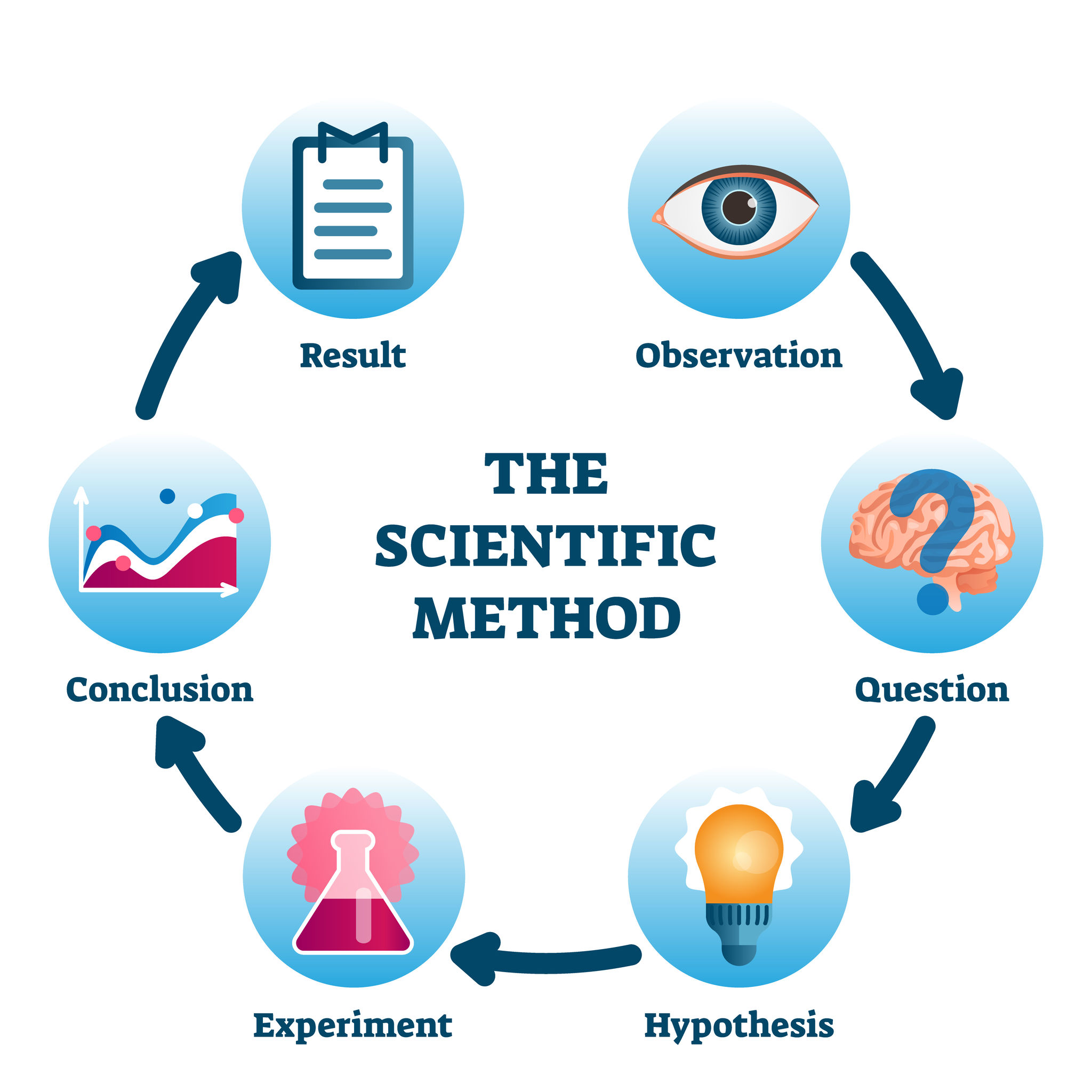
Agile methodology is, in many ways, the scientific method applied to product development. Each “Sprint” is an experiment. The team forms a hypothesis (e.g., “Adding this feature will increase user engagement”), follows a procedure (the development sprint), and analyzes the results (Sprint Review and Analytics). By treating development as a series of procedural experiments, tech companies can pivot quickly based on empirical data rather than intuition.
Quality Assurance (QA) as Experimental Validation
In science, the “Results” section is where the procedure is validated. In technology, this is the role of Quality Assurance (QA) and Automated Testing. Unit tests, integration tests, and regression tests are the procedural checks that ensure the software “experiment” is still yielding the correct results. A robust QA procedure is what prevents a minor update from cascading into a system-wide outage, maintaining the integrity of the digital ecosystem.
Continuous Integration and Deployment (CI/CD) Pipelines
The pinnacle of procedural excellence in tech is the CI/CD pipeline. This is an automated procedure that takes code from a developer’s keyboard, runs it through a gauntlet of tests, and deploys it to a live environment. It is the industrialization of the scientific procedure. By removing human error from the deployment process, organizations ensure that every update follows a rigorous, pre-defined path, much like a robotic arm in a high-tech laboratory performing titrations with perfect accuracy.
The Role of Procedures in Cybersecurity and Digital Defense
If software development is about building, cybersecurity is about protecting. In this sub-sector, the “procedure” is the primary weapon against chaos. Cybersecurity professionals rely on incident response plans and security protocols—which are essentially scientific procedures—to defend against evolving threats.
Incident Response: The Procedure of Containment
When a data breach occurs, there is no time for guesswork. A scientific approach to incident response involves a multi-step procedure: Identification, Containment, Eradication, Recovery, and Lessons Learned. Each step must be followed with clinical precision. In this context, a procedure is a high-stakes script that prevents a localized “infection” from becoming a systemic catastrophe.
Cryptographic Protocols and Formal Verification
At the heart of digital security lie cryptographic protocols. These are mathematical procedures that govern how data is encrypted and decrypted. The “science” here is literal; these procedures are based on hard mathematical proofs. Tech companies use “Formal Verification” to prove that a security procedure is foolproof, using the same level of rigor one would find in a peer-reviewed theoretical physics paper.
Threat Modeling and Empirical Analysis
Security teams use procedures to “think like a hacker.” Threat modeling is a procedural way of identifying vulnerabilities in a system. By systematically analyzing every entry point and data flow, tech professionals can predict where a system might fail. This proactive procedural thinking is what separates a resilient tech stack from one that is constantly reacting to the latest exploit.
Data Science and AI: Scientific Procedures in the Age of Machine Learning
The term “Data Science” itself highlights the marriage of scientific procedure and technology. In the realm of Artificial Intelligence (AI) and Big Data, the procedure is the engine that converts raw information into actionable intelligence.
The Data Pipeline as a Scientific Instrument
Before an AI can “learn,” data must be cleaned, transformed, and normalized. This is known as the ETL (Extract, Transform, Load) procedure. Just as a scientist must purify a chemical before an experiment, a data engineer must ensure the “purity” of the data. A flaw in the data cleaning procedure will lead to “Bias in, Bias out,” a phenomenon that mirrors the “Experimental Error” in traditional science.
Hyperparameter Tuning and the Experimental Loop
Training a Machine Learning model is an iterative procedural process. Data scientists adjust “hyperparameters”—the internal settings of an algorithm—and observe the effect on the model’s accuracy. This is a classic scientific experiment. The procedure involves isolating variables, running a “trial” (training run), and recording the results. Without a structured procedure, it would be impossible to know which change led to a better-performing AI.
Algorithmic Governance and Ethical Procedures
As AI becomes more integrated into society, the procedures governing its use become critical. Ethical AI requires procedures for auditing algorithms to ensure they aren’t perpetuating bias. These “Audit Procedures” are the tech world’s version of an Institutional Review Board (IRB) in medical science. They ensure that the digital experiments we run on society are safe, fair, and transparent.
Scaling Innovation: The Future of Procedural Automation
As we look toward the future of technology, the definition of a “procedure” is shifting from something humans do to something machines manage. We are entering the era of hyper-automation, where the scientific procedure is being encoded into the fabric of our digital world.
Robotic Process Automation (RPA)
RPA is the direct application of procedural logic to business and technical workflows. It involves using “bots” to execute repetitive, rule-based tasks that were previously handled by humans. By automating these procedures, tech companies can achieve a level of speed and precision that far exceeds human capability, much like how automated sensors in a space telescope can capture data that no human eye could ever see.
Self-Healing Systems and Autonomous Protocols
The next frontier in tech is the “self-healing” system. These are cloud environments that use AI-driven procedures to detect a failure and fix it automatically. If a server goes down, an autonomous procedure detects the outage, spins up a new instance, and reroutes traffic. This is the ultimate evolution of the scientific procedure: a system that monitors its own “experiments” and corrects its course in real-time.
The Convergence of Science and Software
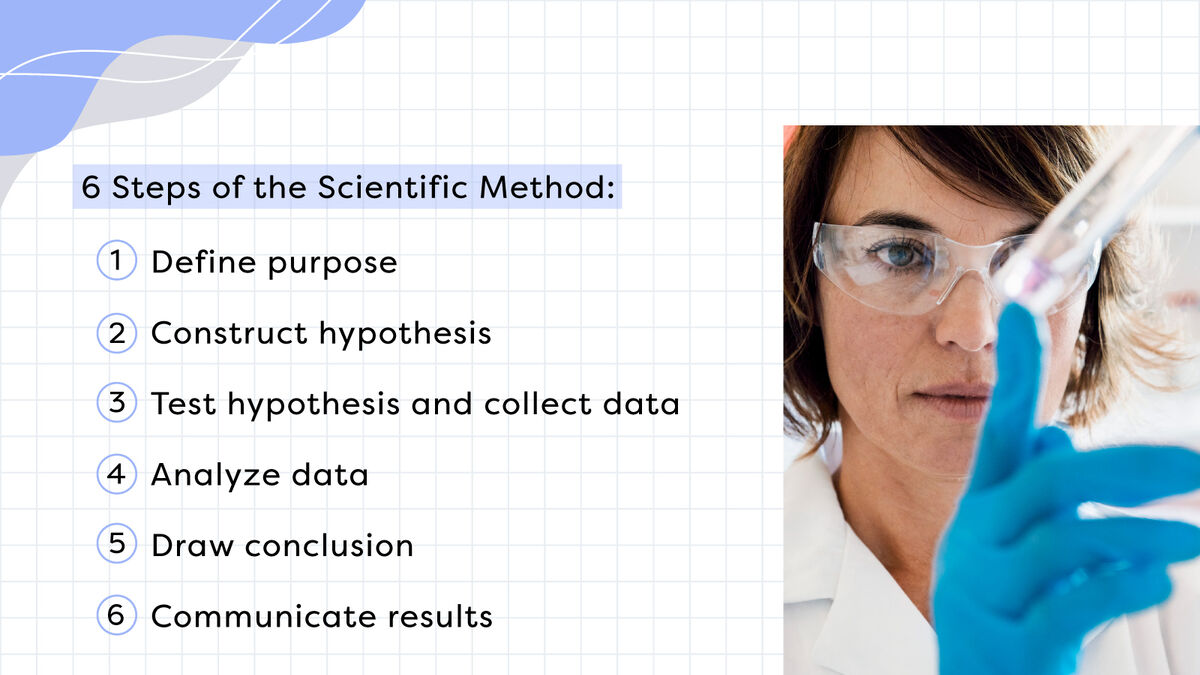
Ultimately, what is a procedure in science? It is a commitment to truth through structure. In the tech niche, this commitment is what allows us to build global networks, protect sensitive data, and create intelligence from silicon. As technology continues to advance, the line between a “scientific experiment” and a “software deployment” will continue to blur. Both rely on the same fundamental truth: that progress is built on a foundation of rigorous, repeatable, and transparent procedures. By mastering these procedures, we don’t just build better gadgets—we build a more predictable and powerful future.
aViewFromTheCave is a participant in the Amazon Services LLC Associates Program, an affiliate advertising program designed to provide a means for sites to earn advertising fees by advertising and linking to Amazon.com. Amazon, the Amazon logo, AmazonSupply, and the AmazonSupply logo are trademarks of Amazon.com, Inc. or its affiliates. As an Amazon Associate we earn affiliate commissions from qualifying purchases.