
The term “prevailing wind” might evoke images of sailing ships or perhaps the steady rustle of leaves in a forest. While these are certainly influenced by prevailing winds, the concept extends far beyond simple atmospheric movement. In the realm of Tech, understanding prevailing winds is crucial for a surprising array of applications, from optimizing renewable energy generation to designing efficient agricultural systems and even influencing the development of sophisticated climate modeling software. This article will delve into the technical nuances of prevailing winds, exploring their formation, impact, and their critical role in various technological advancements.
The Science Behind Persistent Air Currents
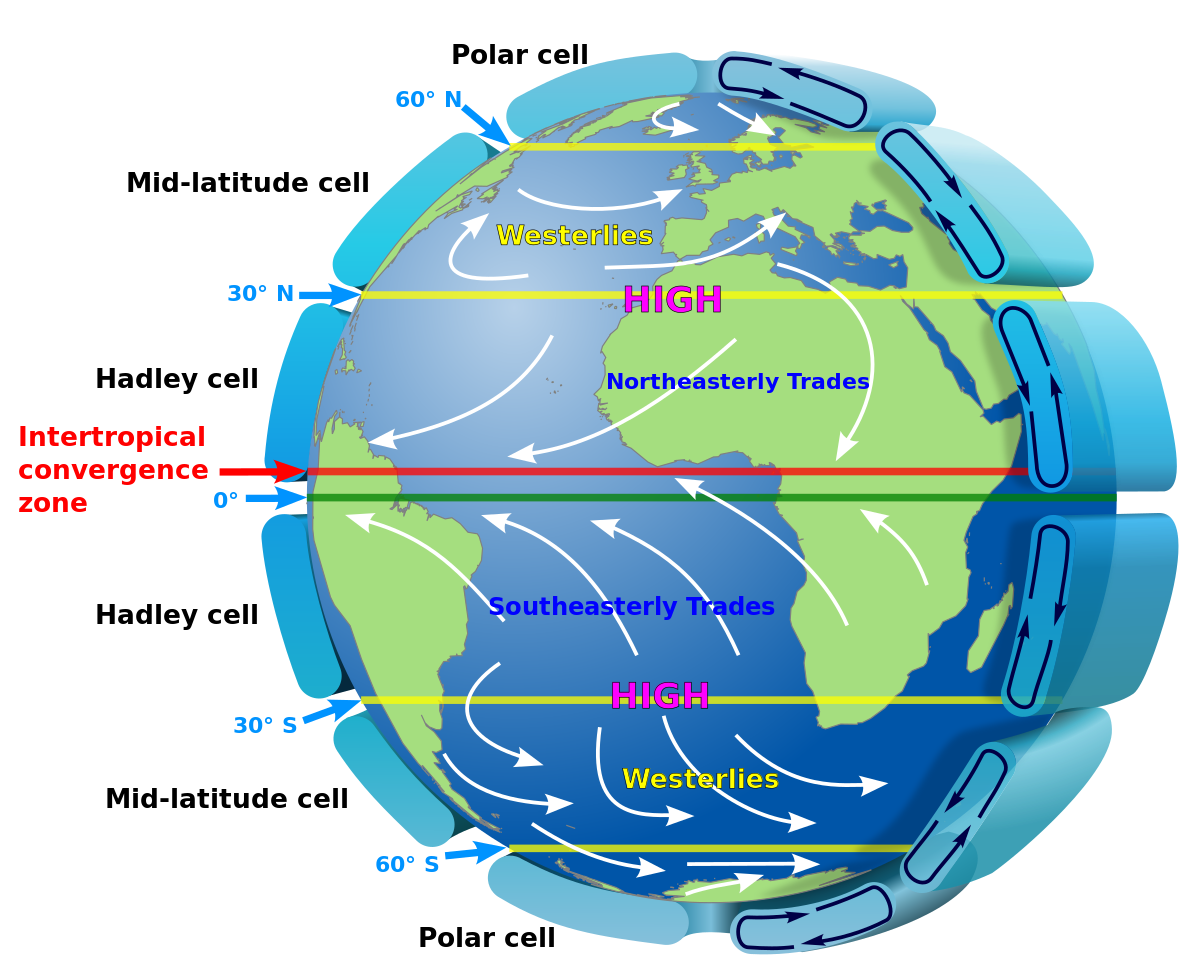
At its core, a prevailing wind is a wind that blows more often from one direction than from any other. This consistent directional bias is not a random phenomenon; it is a product of fundamental atmospheric physics, driven by global energy imbalances and the Earth’s rotation. Understanding these underlying scientific principles is the bedrock upon which technological applications are built.
Global Heat Distribution and the Coriolis Effect
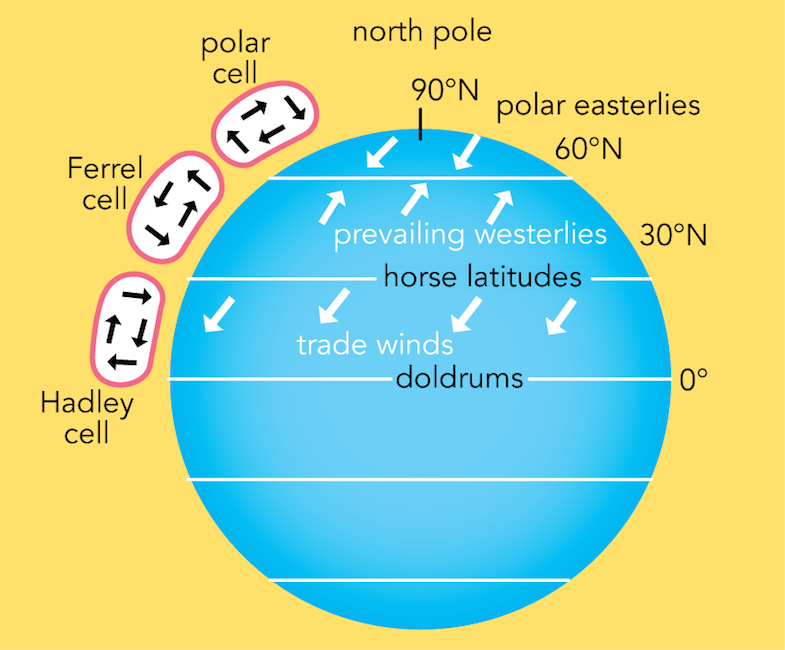
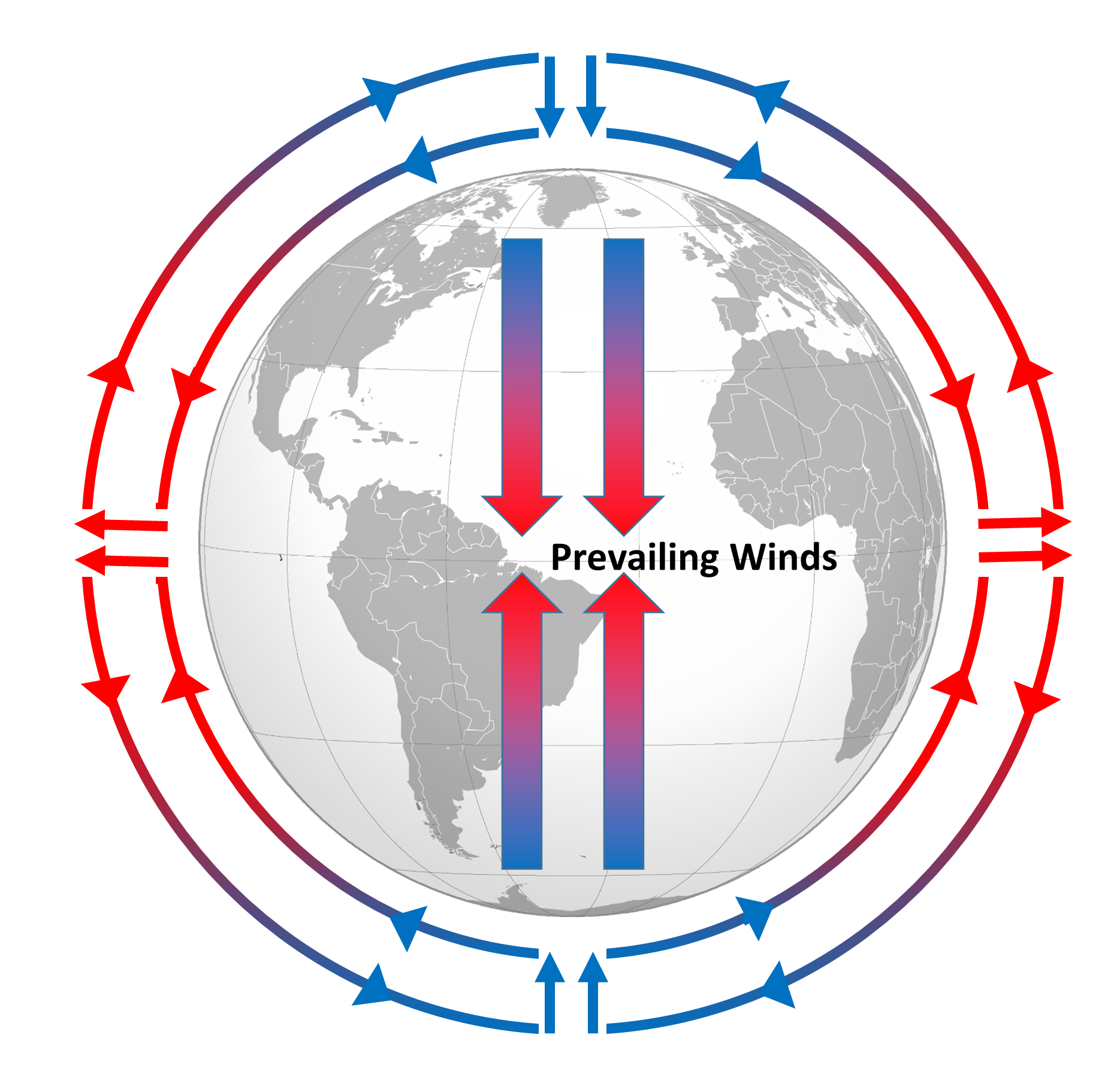
The primary driver of atmospheric circulation, and thus prevailing winds, is the uneven heating of the Earth’s surface by the sun. The equator receives more direct sunlight than the poles, creating a temperature gradient. This temperature difference drives the movement of air from warmer regions to cooler regions. Hot air at the equator rises, creating low-pressure zones, while cold air at the poles sinks, creating high-pressure zones. These pressure differences initiate air movement, attempting to equalize the atmospheric pressure.
However, this simple north-south movement is significantly altered by the Earth’s rotation. This phenomenon, known as the Coriolis Effect, deflects moving air currents. In the Northern Hemisphere, the Coriolis Effect deflects winds to the right, and in the Southern Hemisphere, it deflects them to the left. This deflection is what sculpts the large-scale atmospheric circulation patterns, forming distinct wind belts across the globe, such as the trade winds, westerlies, and polar easterlies. These global wind belts are the most prominent examples of prevailing winds.
Local Topography and Microclimates
While global patterns dictate the broad strokes of prevailing winds, local geographical features can significantly modify these patterns, creating unique microclimates. Mountains, valleys, large bodies of water, and even extensive urban areas can alter wind direction and speed. For instance, the phenomenon of sea breezes and land breezes is a direct result of differential heating between land and water. During the day, land heats up faster than water, causing air above the land to rise and drawing cooler air from the sea inland (sea breeze). At night, the land cools faster, reversing the process (land breeze).
Similarly, mountain and valley winds are influenced by diurnal temperature variations. During the day, slopes facing the sun heat up, causing air to rise upslope (valley breeze). At night, slopes cool, leading to downslope winds (mountain breeze). These localized variations in prevailing winds are of immense importance for technologies that interact with the environment on a smaller scale.
Technological Applications of Prevailing Winds
The predictable nature of prevailing winds, whether at a global or local scale, has been harnessed by humans for centuries. However, modern technology has amplified and refined our ability to utilize this natural resource, leading to innovations across diverse sectors.
Renewable Energy: Wind Turbine Optimization
Perhaps the most direct and significant technological application of prevailing winds lies in the field of renewable energy, specifically in the design and deployment of wind turbines. The efficiency and energy output of a wind turbine are directly proportional to the strength and consistency of the wind it experiences. Identifying areas with strong and consistent prevailing winds is paramount for selecting optimal sites for wind farms.
Sophisticated wind resource assessment technologies employ advanced meteorological modeling, satellite data, and ground-based anemometers to map wind patterns over long periods. This data allows engineers to predict the average wind speed, turbulence, and directional consistency of a location. This information is then used to:
- Turbine Siting: Precisely position turbines within a wind farm to minimize wake effects (turbulence generated by upwind turbines) and maximize energy capture. Understanding prevailing wind direction helps orient turbines to face the most frequent wind flow.
- Turbine Design: Influence the aerodynamic design of turbine blades, shaft length, and tower height to best suit the expected wind conditions. For example, turbines designed for areas with high average wind speeds might have shorter blades and a more robust structure, while those for lower wind speeds might feature longer blades to capture more energy.
- Grid Integration: Forecast energy generation from wind farms, which is crucial for integrating this variable renewable source into national power grids. Accurate prevailing wind data helps grid operators balance supply and demand, ensuring grid stability.
The development of advanced computational fluid dynamics (CFD) software has revolutionized wind energy assessment. These simulations can model airflow over complex terrain, incorporating the effects of prevailing winds, to predict energy yields with unprecedented accuracy. This technological advancement has significantly de-risked wind farm investments and accelerated the transition to a clean energy future.
Precision Agriculture and Environmental Monitoring
Prevailing winds also play a critical role in the development and deployment of technologies used in precision agriculture and broader environmental monitoring. The dispersal of seeds, pollen, and agricultural sprays is heavily influenced by wind patterns.
- Spray Drift Management: In agriculture, the application of pesticides and fertilizers requires careful consideration of prevailing winds to prevent spray drift. This is the unintentional movement of spray particles away from the target area, which can lead to crop damage, environmental contamination, and health risks. Advanced agricultural machinery now incorporates real-time wind monitoring and GPS-guided systems to adjust spray application based on prevailing wind direction and speed, ensuring targeted delivery and minimizing off-target deposition.
- Pollination Enhancement: For certain crops that rely on wind pollination, understanding prevailing wind patterns can inform optimal planting strategies. Denser planting in the direction of prevailing winds can enhance pollen transfer and improve crop yields.
- Air Quality Monitoring and Dispersion Modeling: Prevailing winds are a fundamental input for air quality modeling software. These systems predict how pollutants, such as those emitted from industrial sources or wildfires, will disperse in the atmosphere. By factoring in prevailing wind direction and speed, these models can forecast downwind concentrations of pollutants, enabling authorities to issue timely warnings and implement mitigation strategies. This is critical for public health and environmental protection.
- Climate Research and Weather Forecasting: At a macro level, understanding global prevailing wind patterns is essential for developing accurate climate models and improving weather forecasting. These models simulate the complex interactions within the Earth’s atmosphere, and prevailing winds are a key component in predicting large-scale weather systems and long-term climate trends. Advances in sensor technology and data processing power have allowed for more detailed and accurate incorporation of these wind dynamics into forecasting algorithms.
Industrial Design and Urban Planning
Beyond direct energy generation and environmental applications, the influence of prevailing winds extends to the design of various structures and urban environments, often facilitated by technological tools.
- Building Ventilation and HVAC Systems: Architects and engineers utilize prevailing wind data to design more energy-efficient heating, ventilation, and air conditioning (HVAC) systems. By understanding the dominant wind directions, buildings can be designed to naturally ventilate certain spaces, reducing reliance on mechanical systems and thus lowering energy consumption. This might involve strategically placed windows, vents, and building orientations.
- Urban Airflow and Pollution Management: Urban planners use sophisticated microclimate modeling software to analyze how prevailing winds interact with buildings and street layouts. This helps in designing cities that promote better air circulation, disperse pollutants more effectively, and reduce the formation of urban heat islands. Understanding how wind flows through urban canyons is critical for creating healthier and more comfortable living environments.
- Aerodynamic Structures: The design of various aerodynamic structures, from bridges to stadiums, often takes prevailing winds into account to ensure structural integrity and minimize wind-induced vibrations. Advanced wind tunnel testing and CFD simulations, which heavily rely on accurate prevailing wind data, are integral to this process.
Data Acquisition and Analysis: The Technological Backbone
The ability to effectively leverage prevailing winds for technological applications hinges on the sophisticated technologies used for data acquisition and analysis. Without accurate and comprehensive wind data, any application designed to harness or mitigate wind’s effects would be fundamentally flawed.
Meteorological Instruments and Sensor Networks
The collection of wind data relies on a diverse array of instruments:
- Anemometers: These devices measure wind speed. Various types exist, including cup anemometers (most common), sonic anemometers (which use sound waves), and hot-wire anemometers (for precise measurements of small-scale turbulence).
- Wind Vanes: These instruments indicate wind direction.
- Sodar (Sonic Detection and Ranging) and Lidar (Light Detection and Ranging): These remote sensing technologies use sound or light waves, respectively, to measure wind speed and direction at various altitudes without physical contact. They are invaluable for mapping wind profiles over large areas and at heights relevant to wind turbines.
- Weather Balloons and Radiosondes: These provide vertical profiles of atmospheric conditions, including wind speed and direction at different altitudes, crucial for understanding the three-dimensional wind structure.
- Satellite Imagery: Satellites equipped with sensors can detect cloud movement and other atmospheric patterns, providing large-scale wind flow information, especially over oceans where ground-based measurements are scarce.
These instruments are often deployed in dense sensor networks, providing continuous streams of data. The sheer volume of data generated necessitates powerful data processing capabilities.
Big Data Analytics and Machine Learning
The era of “big data” has transformed how wind information is processed and utilized.
- Data Preprocessing and Quality Control: Raw data from sensors requires rigorous cleaning, validation, and processing to remove errors and anomalies. Algorithms are employed to ensure data integrity.
- Statistical Analysis: Sophisticated statistical methods are used to identify patterns, calculate averages, and determine the frequency distribution of wind directions and speeds, thereby characterizing the prevailing winds.
- Machine Learning and AI: Machine learning algorithms are increasingly employed for advanced wind forecasting, anomaly detection, and predictive maintenance of wind turbines. These algorithms can learn complex relationships within vast datasets, improving the accuracy of predictions beyond traditional statistical methods. For example, AI can predict short-term wind speed fluctuations with greater precision, crucial for grid stability.
- Geographic Information Systems (GIS): GIS platforms are used to visualize, analyze, and manage spatial wind data. They enable the overlay of wind patterns with topographical data, land use, and other environmental factors to inform decision-making for siting renewable energy projects, planning urban development, or assessing environmental risks.
The Future of Prevailing Wind Technologies
As our understanding of atmospheric dynamics deepens and our technological capabilities advance, the utilization of prevailing winds is set to become even more sophisticated and pervasive.
Enhanced Predictability and Integration
Future advancements will likely focus on further improving the predictability of wind patterns, both in the short-term for grid management and in the long-term for climate modeling. This will involve more integrated sensor networks, enhanced computational power for complex simulations, and the continued refinement of AI algorithms. The seamless integration of wind energy into the power grid, alongside other renewable sources, will rely heavily on these advancements.
Novel Applications and Materials
We can anticipate the emergence of novel technological applications that leverage prevailing winds. This might include advanced sail designs for autonomous shipping, wind-assisted propulsion systems for large vessels, and even innovative architectural designs that actively harness wind for power generation or natural cooling. The development of new, lighter, and more durable materials will also play a role in enabling these future innovations.
Climate Change Mitigation and Adaptation
Ultimately, the accurate understanding and technological application of prevailing winds are integral to addressing the challenges of climate change. By optimizing renewable energy generation and improving environmental monitoring and modeling, we can better mitigate greenhouse gas emissions. Furthermore, understanding how prevailing winds might shift or intensify due to climate change is crucial for adapting our infrastructure and planning for future environmental conditions. The prevailing winds, once a simple force of nature, are now a cornerstone of our technological response to the planet’s most pressing issues.
aViewFromTheCave is a participant in the Amazon Services LLC Associates Program, an affiliate advertising program designed to provide a means for sites to earn advertising fees by advertising and linking to Amazon.com. Amazon, the Amazon logo, AmazonSupply, and the AmazonSupply logo are trademarks of Amazon.com, Inc. or its affiliates. As an Amazon Associate we earn affiliate commissions from qualifying purchases.