
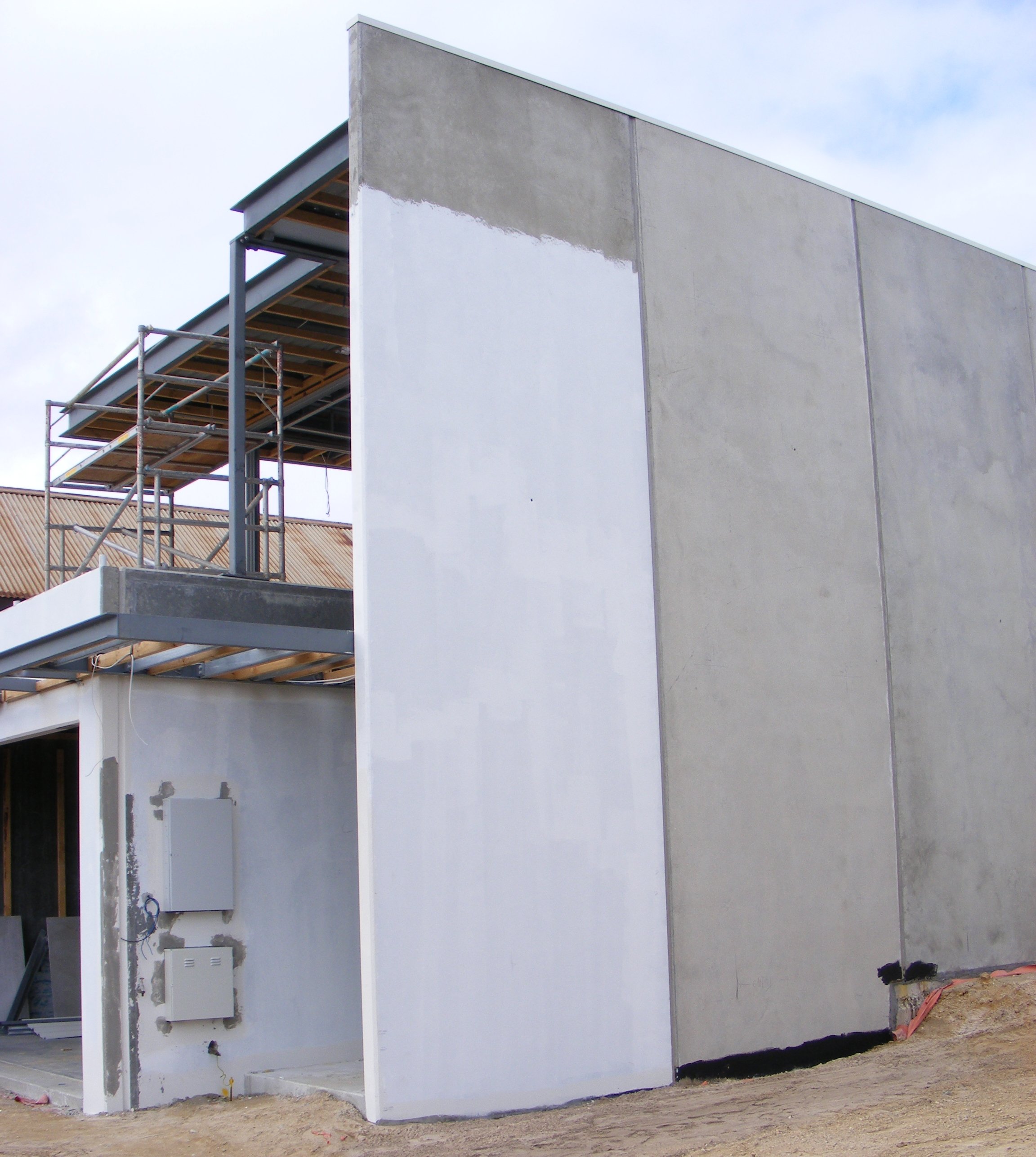
In the contemporary landscape of architecture, engineering, and construction (AEC), the term “precast” has evolved far beyond its traditional roots in civil engineering. While it fundamentally refers to a construction product produced by casting concrete in a reusable mold or “form,” which is then cured in a controlled environment and transported to the structural site, its modern iteration is a high-tech marvel. Today, a precast system is not just a block of stone; it is the physical manifestation of sophisticated software, automated manufacturing, and data-driven material science.
The transition from “on-site” pouring to “precast” manufacturing represents a fundamental shift in the industry’s tech stack. By moving the construction process into a factory setting, the industry has successfully integrated Industry 4.0 principles—ranging from Building Information Modeling (BIM) to robotic automation—into the very fabric of our built environment.
The Digital Backbone: Software and BIM Integration
At the heart of modern precast technology lies Building Information Modeling (BIM). In the past, precasting was limited by the manual labor involved in creating wooden forms and the difficulty of communicating complex geometries from paper to the factory floor. The digital revolution has changed this entirely.
Building Information Modeling (BIM) and Tekla Structures
Precast components are now designed within a multi-dimensional digital space. Software like Tekla Structures and Autodesk Revit allow engineers to create high-fidelity 3D models that contain more than just geometric data. These models include “smart” metadata regarding reinforcement bars (rebar), lifting inserts, embedments, and material specifications.
The integration of BIM allows for “clash detection” long before a single ounce of concrete is poured. By simulating the assembly of precast elements in a virtual environment, software can identify if a plumbing pipe will intersect with a structural beam or if a bolt hole is misaligned by a fraction of a millimeter. This level of digital precision is what allows massive skyscrapers to be assembled like LEGO sets with unprecedented speed.
Computational Design and Generative Algorithms
The “Tech” in precast also extends to how these shapes are conceived. Generative design tools use algorithms to optimize the weight and strength of precast elements. By inputting structural requirements into a software engine, designers can create organic, topologically optimized shapes that use the minimum amount of material for maximum structural integrity. This reduces the carbon footprint of the building and allows for architectural forms that were previously impossible to manufacture through traditional on-site methods.
Manufacturing 4.0: Robotics and the Smart Factory
The production phase of a precast element is where hardware and software converge. Modern precast plants are increasingly resembling semiconductor cleanrooms or automotive assembly lines rather than traditional construction sites.
Automated Formwork and CNC Machining
The creation of molds, or formwork, is now frequently handled by Computer Numerical Control (CNC) machines. For complex architectural facades, a digital file is sent directly to a CNC router that carves out high-precision molds from foam, wood, or steel. This ensures that every panel produced is an exact replica of the digital twin created by the architect.
Furthermore, automated shuttering robots are now used to position side-forms on vibrating tables. Guided by CAD data, these robots can place magnetic shutters with sub-millimeter accuracy, eliminating the human error associated with manual measurement and significantly accelerating the production cycle.
The Role of IoT and Real-Time Curing Telemetry
The curing process—the chemical reaction that gives concrete its strength—has also gone digital. Internet of Things (IoT) sensors are now frequently embedded within the precast elements during the pour. These sensors monitor internal temperature and humidity levels in real-time, transmitting the data to a central cloud platform.
Using predictive analytics, engineers can determine exactly when a precast piece has reached its optimal strength for stripping from the mold or for structural loading. This “smart curing” technology removes the guesswork from the timeline, allowing for a leaner supply chain and ensuring that every component meets rigorous safety standards before it even leaves the factory.
The ConTech Revolution: Supply Chain and Logistics Tech
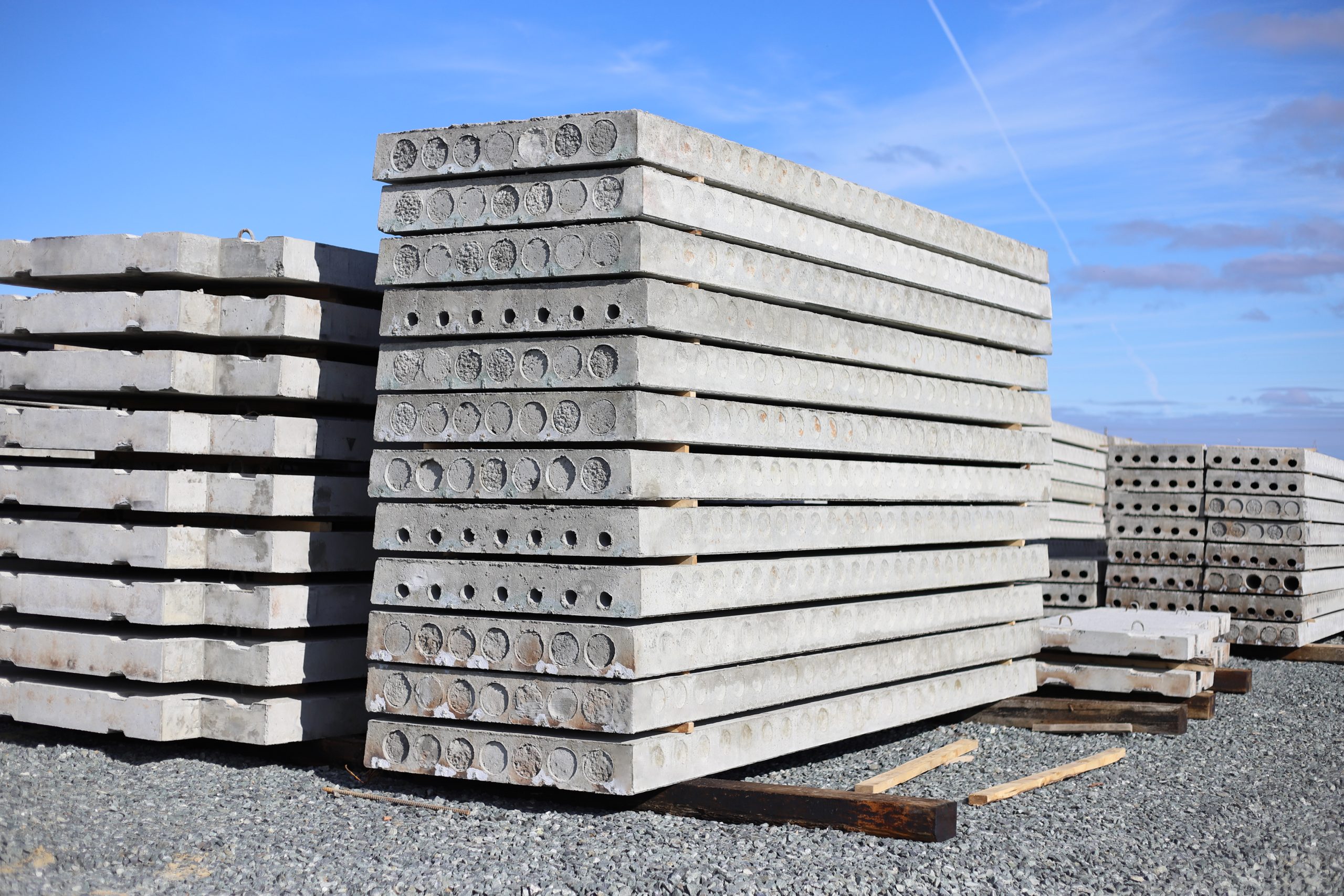
A precast element is a data-heavy asset. From the moment it is cast to the moment it is bolted into place on a job site, its journey is managed by sophisticated logistics software and tracking technologies.
RFID and GPS Tracking
Each precast unit is often assigned a unique digital identity via Radio Frequency Identification (RFID) tags or QR codes. When scanned, these tags provide the contractor with a full history of the part: who manufactured it, the exact batch of concrete used, the date of its quality inspection, and its precise location in the storage yard.
This “Internet of Pieces” approach is vital for just-in-time (JIT) delivery. In dense urban environments where there is no room to store materials on-site, precast elements must arrive in a specific sequence. Logistics algorithms coordinate the movement of trucks from the factory to the site, ensuring that the crane is never idle and that the building rises floor-by-floor without bottlenecking.
Augmented Reality (AR) in Assembly
On the construction site, the tech-integrated precast process continues with Augmented Reality. Using AR headsets or mobile devices, site supervisors can overlay the digital BIM model onto the physical job site. This allows them to see exactly where each precast column or slab should be placed and helps them verify that the connections are being installed according to the digital specifications. This visual verification layer significantly reduces the risk of structural errors and enhances site safety.
Sustainability through High-Tech Material Science
The technical definition of precast also includes the advanced material science used to create specialized concrete mixes. The push for “Green Tech” has led to the development of Ultra-High-Performance Concrete (UHPC) and carbon-capture technologies within the precast industry.
Carbon Capture and Storage (CCS)
Innovative tech startups are now integrating Carbon Capture and Storage (CCS) directly into the precast manufacturing process. By injecting CO2 into the concrete mix during the batching phase, the CO2 reacts with calcium ions to form calcium carbonate, effectively mineralizing the gas and locking it into the stone forever. This not only makes the concrete stronger but turns the building itself into a carbon sink.
3D Concrete Printing (3DCP)
As we look toward the future of precast, the line between “casting” and “printing” is blurring. 3D Concrete Printing (3DCP) is essentially a formless precasting method. Robotic arms guided by G-code (the same language used by 3D printers) extrude layers of specialized concrete to create complex structural components. This technology allows for internal voids and lattice structures that reduce weight while maintaining strength—a feat that is difficult or impossible to achieve with traditional molds.
The Integration of the “Internet of Buildings”
The final phase of the precast tech journey is the transition of the physical component into a data point within the “Internet of Buildings.” Because precast elements are manufactured in a controlled setting, they are the ideal candidates for “smart” integrations.
Modern precast slabs are often manufactured with integrated “smart loops”—conduits for fiber optics, HVAC sensors, and electrical wiring already embedded within the concrete. This “Plug-and-Play” infrastructure means that as soon as the structural shell is complete, the building’s digital nervous system is already in place.
Furthermore, the data collected during the manufacturing and installation phase remains attached to the building’s Digital Twin throughout its lifecycle. Facilities managers can access the original BIM data to understand the structural load limits of a specific slab or to locate embedded utilities for maintenance. This digital thread ensures that the building is not a static object, but a dynamic, manageable asset.
Conclusion: Precast as a Software-Defined Structure
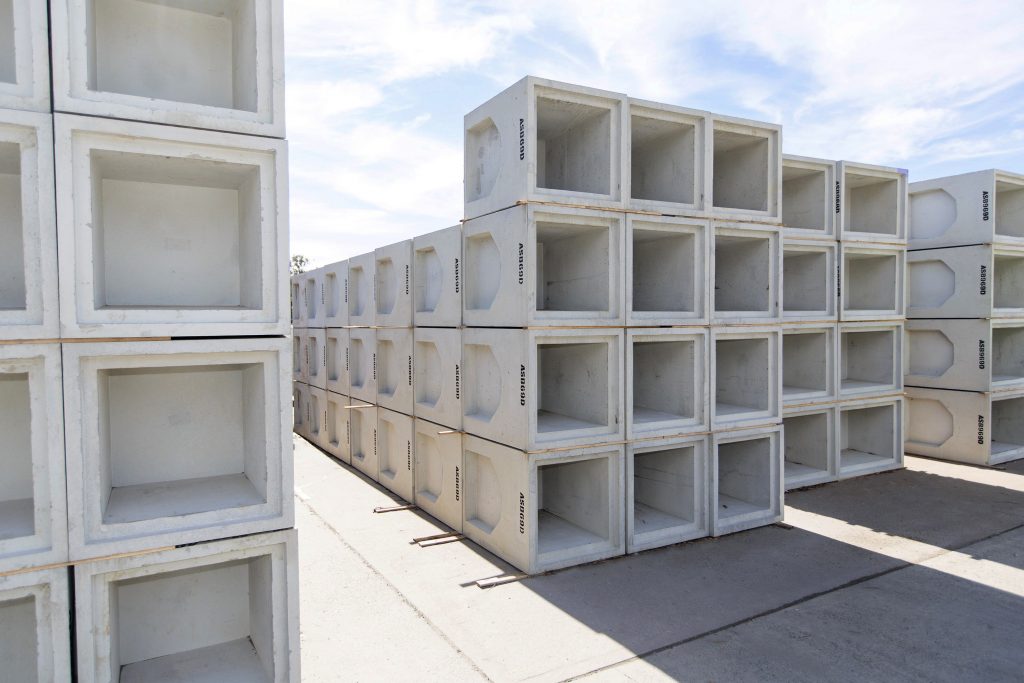
To ask “what is a precast” in the modern era is to ask how software becomes a city. It is no longer a simple matter of sand, water, and cement. Instead, a precast element is a sophisticated technological product characterized by digital precision, robotic manufacturing, and intelligent logistics.
By shifting construction from the chaotic environment of a job site to the controlled, data-driven environment of a factory, the AEC industry has paved the way for a more efficient, sustainable, and technologically advanced future. As AI-driven design and robotic assembly continue to mature, the precast industry will remain at the forefront of the ConTech revolution, turning digital blueprints into the high-performance infrastructure of tomorrow.
aViewFromTheCave is a participant in the Amazon Services LLC Associates Program, an affiliate advertising program designed to provide a means for sites to earn advertising fees by advertising and linking to Amazon.com. Amazon, the Amazon logo, AmazonSupply, and the AmazonSupply logo are trademarks of Amazon.com, Inc. or its affiliates. As an Amazon Associate we earn affiliate commissions from qualifying purchases.