
Fantasy football, at its core, is a sophisticated digital game that leverages real-world sports data to create an engaging, interactive experience for millions. Among its various scoring formats, the “Points Per Reception” (PPR) league stands out as one of the most popular and strategically nuanced. Far from a mere rule variation, understanding what a PPR league entails requires a deep dive into the technological infrastructure that underpins modern fantasy sports, from data acquisition and algorithm design to user interface and predictive analytics. This article will explore the technical definition of a PPR league, its operational mechanisms within fantasy platforms, and the strategic implications driven by its unique scoring methodology, all through the lens of the digital technologies that make it possible.

The Digital Backbone of Fantasy Football Scoring
The ability to play fantasy football, regardless of the scoring system, is entirely predicated on a robust technological framework. From archaic newspaper score checks to real-time mobile updates, the evolution of fantasy sports is a testament to progress in data processing, software engineering, and digital connectivity.
Evolution of Scoring Systems and Digitalization
Early fantasy football was a manual affair, requiring painstaking calculation of points from newspaper box scores. The advent of personal computers and the internet revolutionized this process. Dedicated software applications emerged, first desktop-based and later web-based, that could automate score tabulation. This digital leap was monumental, transforming a laborious hobby into an accessible mass-market phenomenon. The concept of “PPR” itself, which assigns points for every reception a player makes, could only become widely popular once technology could reliably and instantly track every single catch across multiple NFL games simultaneously.
Current fantasy platforms—like ESPN Fantasy, Yahoo Fantasy Sports, Sleeper, and NFL.com Fantasy—represent the pinnacle of this digitalization. They are complex web and mobile applications, built on powerful databases and server architectures, designed to handle massive amounts of real-time sports data. These platforms are not just scorekeepers; they are comprehensive ecosystems that manage everything from draft mechanics and player transactions to league communications and statistical analysis, all configured according to specific scoring rules like PPR.
Defining PPR: Points Per Reception in the Digital Age
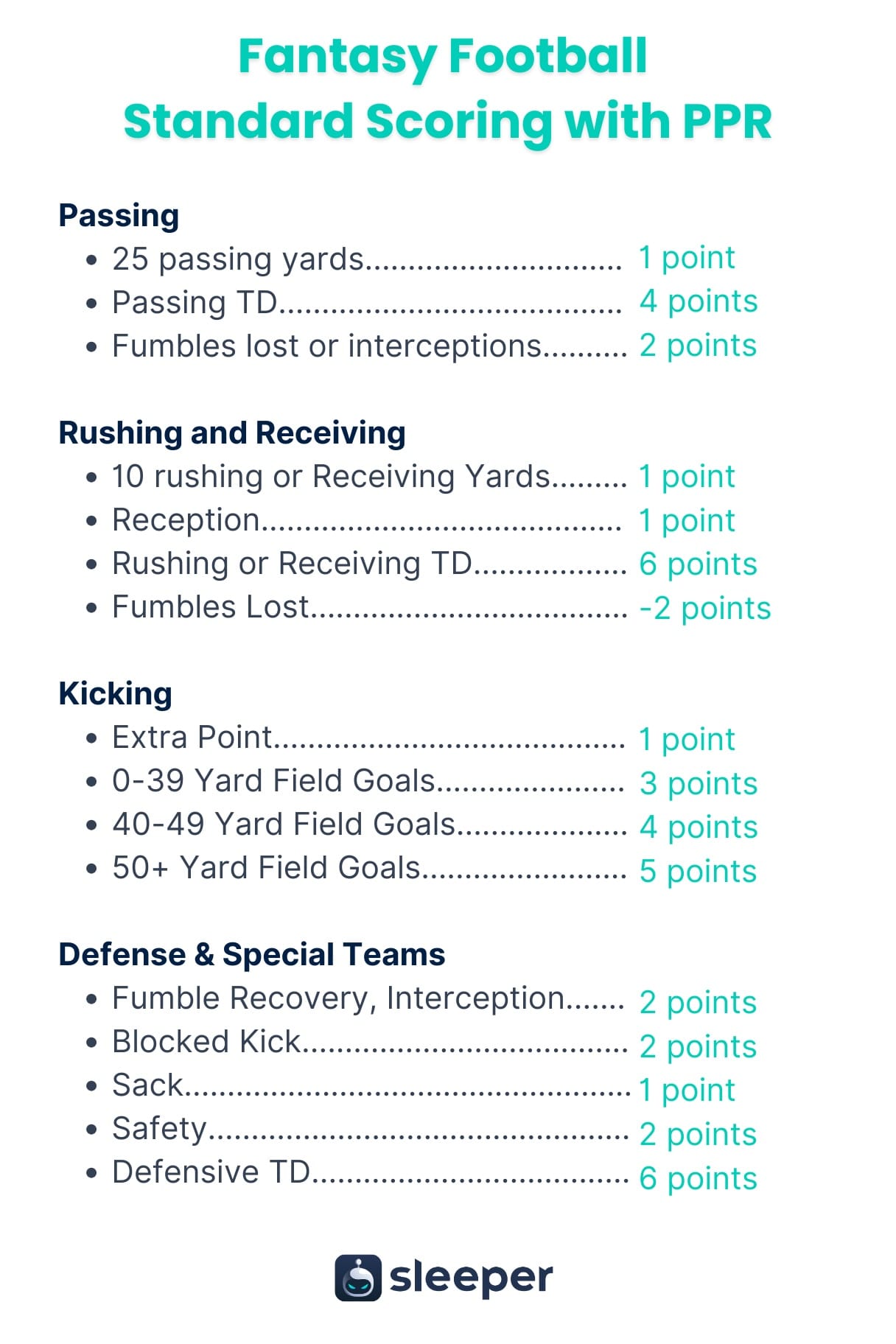
At its heart, PPR is a scoring multiplier applied to a specific statistical event: a reception. In a standard PPR league, a player receives one full point for every pass they catch, in addition to points for yardage, touchdowns, and other statistical categories. For example, if a player catches a pass for 5 yards, in a standard non-PPR league, they might get 0.5 points (0.1 points per yard). In a PPR league, they would get 1.5 points (1 point for the reception + 0.5 points for the yards). Some leagues adopt “half-PPR,” awarding 0.5 points per reception, demonstrating the flexibility enabled by configurable digital scoring engines.
The technical implementation of PPR is fascinating. It relies on real-time data feeds from official NFL sources and sports analytics companies. These feeds provide granular event data for every play in every game. When a pass is caught, this event is logged, timestamped, and associated with the specific player. The fantasy platform’s scoring algorithms then parse this data, identify receptions, and instantly add the designated PPR points to the player’s cumulative score for that week. This process happens asynchronously and continuously across hundreds of players and multiple games, showcasing the robustness of modern distributed computing systems.
The Technology Behind Real-time Data Integration
The seamless, near-instantaneous update of scores on fantasy apps is a marvel of real-time data processing. It hinges on several critical technological components:
-
APIs (Application Programming Interfaces): Sports data providers offer APIs that allow fantasy platforms to programmatically request and receive live game data. These APIs are optimized for low latency and high throughput, ensuring that data—like a reception event—is transmitted immediately after it occurs.
-
Data Streaming Services: Technologies like Apache Kafka or Amazon Kinesis are often used to stream vast quantities of live sports data. This enables platforms to consume events as they happen, rather than polling for updates, which is crucial for real-time scoring.
-
Event-Driven Architectures: Fantasy scoring engines are typically built using event-driven architectures. Each reception, tackle, yard gained, or touchdown is treated as an event. These events trigger specific functions within the scoring application that update player statistics and league standings.
-
Cloud Infrastructure: The scalability and reliability required to handle millions of users accessing real-time data during peak game times necessitate powerful cloud computing resources. Platforms leverage services from AWS, Google Cloud, or Azure to dynamically scale their infrastructure to meet demand.
This intricate web of technology ensures that when a wide receiver snags a crucial pass, fantasy managers worldwide see their scores tick up within seconds, directly reflecting the PPR rule set.
Navigating PPR Leagues Through Fantasy Platforms
The technical implementation of PPR isn’t just about scoring; it profoundly influences how users interact with the fantasy platforms themselves, from drafting to in-season management.
Platform-Specific Implementations
While the core concept of PPR is consistent, its exact configuration and presentation can vary subtly across different fantasy platforms. Each platform’s software engineers design user interfaces (UIs) and backend settings to allow commissioners to activate and customize PPR scoring. For instance, some platforms might offer granular control over fractional PPR (e.g., 0.25 points per reception), while others stick to full or half-PPR.
The user experience (UX) design for displaying PPR-specific stats is also crucial. Apps often highlight receptions in player stat lines, sometimes even providing a separate column for “PPR Points.” During drafts, platforms may incorporate “PPR rankings” or “PPR projections” directly into their draft boards, helping users make informed decisions based on this scoring format. These UI/UX considerations are engineered to make the complex scoring simple and intuitive for the end-user.
Drafting and Player Valuation in a PPR Environment
PPR fundamentally alters player valuation. Players who consistently catch a high volume of passes—such as slot receivers, pass-catching running backs, and tight ends—gain significant value compared to non-PPR formats. Fantasy platforms assist users in this recalibration through various integrated analytical tools:
-
PPR-Adjusted Rankings: Most platforms provide default player rankings that are pre-calculated for PPR leagues. These rankings are generated by sophisticated algorithms that factor in historical reception data, projected targets, and overall offensive scheme.
-
Projection Engines: Advanced algorithms within the apps forecast future player performance, including projected receptions. These projections are constantly updated throughout the offseason and regular season, leveraging machine learning models that analyze player talent, team dynamics, matchups, and injury reports.
-
ADP (Average Draft Position) in PPR: Platforms track ADP data specifically for PPR leagues, indicating where players are typically drafted. This real-time, crowd-sourced data helps users identify value and avoid reaching for players too early or letting valuable PPR assets slip.
These technological aids are indispensable for managers navigating the unique strategic landscape of a PPR draft.
In-Season Management: Waivers, Trades, and Lineups
The technological support extends far beyond the draft. Managing a PPR team week-to-week relies heavily on platform functionalities:
-
Waiver Wire and Free Agency: Apps provide searchable databases of available players, often sortable by PPR projections. Algorithms process waiver claims based on league rules (e.g., bid amounts, waiver priority), automatically adding players to rosters and deducting virtual funds if applicable.
-
Trade Block Systems: Platforms facilitate trades by allowing managers to offer and accept deals. These systems often include features like “trade analyzers” which use proprietary algorithms to evaluate the fairness of a proposed trade based on current and projected PPR scoring, helping to ensure competitive balance.
-
Lineup Optimization Tools: Many apps offer tools to help managers set their weekly lineups. These tools often integrate PPR projections to suggest optimal player combinations, weighing potential points against player matchups and injury statuses. Some even use predictive models to recommend start/sit decisions.
-
Injury Reporting and News Feeds: Real-time news feeds, often integrated directly into player profiles, alert managers to injuries or other breaking news that could impact PPR production, allowing for rapid adjustments to lineups and waiver claims.
Every aspect of in-season management is optimized by the underlying technology to reflect the specific scoring dynamics of a PPR league.
Technical Implications and Strategic Depth of PPR
PPR scoring is not just a statistical tweak; it’s a fundamental shift that influences the very algorithms that drive player evaluation and impacts how users engage with the game.
Algorithm Adjustments and Player Archetypes
The core difference in PPR leagues manifests in the weighting of different player statistics within the platform’s algorithms. In non-PPR leagues, rushing yards and receiving yards might be weighted more heavily relative to receptions. In PPR, the “reception” event itself becomes a high-value data point. This algorithmic adjustment has several consequences:
-
Prioritization of Volume: Algorithms will identify and rank higher players who receive a large number of targets and convert them into receptions, even if their yardage totals are modest.
-
Enhanced Value for Certain Positions: Pass-catching running backs (e.g., Christian McCaffrey, Austin Ekeler), who traditionally accumulate fewer rushing yards but excel in the passing game, are algorithmically elevated. Similarly, slot receivers and tight ends who consistently catch 70+ passes but may not have elite yardage or touchdown numbers become significantly more valuable.
-
Predictive Model Calibration: Machine learning models that predict player performance must be specifically calibrated for PPR. They emphasize different input features (like targets, air yards, catch rate) when generating PPR projections compared to standard scoring projections.
Understanding these algorithmic shifts is key for any manager leveraging the data provided by fantasy platforms.
Data Analysis for Competitive Edge
The digital nature of fantasy football, especially with granular scoring like PPR, lends itself perfectly to advanced data analysis. Fantasy apps and third-party tools provide a wealth of statistics:
-
Target Share and Route Participation: Beyond just receptions, managers delve into advanced metrics like target share (percentage of team targets) and route participation (how often a player runs a pass route) to predict future reception volume. These data points are increasingly integrated into platforms or readily available via APIs from sports analytics services.
-
Air Yards and YAC (Yards After Catch): For receivers, analysts might look at “air yards” (how far the ball travels through the air before being caught) to gauge downfield usage, and “Yards After Catch” (YAC) to measure a player’s open-field ability. While not directly PPR points, these metrics correlate strongly with high-volume, impactful receptions.
-
Consistency Metrics: In PPR, consistency in receptions can be more valuable than boom-or-bust games. Data visualization tools within platforms or external sites help managers identify players with high “floor” projections due to reliable reception totals.
-
Matchup Analysis: Advanced analytics within apps help managers evaluate defensive matchups, identifying teams that are vulnerable to specific player types (e.g., teams that struggle against pass-catching running backs).
These data-driven insights, facilitated by sophisticated analytics software, give managers a significant edge in PPR leagues.
The User Experience and Engagement with PPR
The immediate feedback loop provided by PPR scoring enhances user engagement significantly. Every reception generates points, meaning virtually every drive in every game offers potential scoring opportunities. This continuous flow of minor point updates (e.g., a 1-point reception, followed by 0.7 points for 7 yards) keeps users glued to their apps:
-
Live Scoring Updates: The real-time scoring ticker, often accompanied by push notifications for key plays, is a hallmark of the fantasy experience. In PPR, these notifications are more frequent, as even minor plays trigger score changes.
-
Dynamic Leaderboards: League standings and individual player scores are constantly shifting. This dynamic environment encourages managers to follow games closely and makes the experience more interactive and suspenseful.
-
Strategic Depth: The additional layer of scoring complexity encourages deeper strategic thought, prompting managers to research, analyze data, and engage with the platform’s tools more intensely.
The seamless, real-time nature of PPR scoring, made possible by advanced digital technology, transforms passive sports viewing into an active, competitive, and highly engaging game.
Future Trends in PPR Fantasy Football Technology
The technological evolution of fantasy football is far from over. Future innovations will continue to refine the PPR experience, making it even more insightful and immersive.
AI and Machine Learning for Predictive Analytics
The role of AI and machine learning (ML) in fantasy football will only expand. Expect more sophisticated algorithms that can:
-
Hyper-Personalized Projections: AI models could learn a manager’s specific league rules, roster tendencies, and even risk tolerance to offer hyper-personalized start/sit recommendations and waiver wire suggestions for PPR.
-
Injury Prediction: Advanced ML could analyze player biometrics, historical injury data, and game intensity to predict injury risk, allowing managers to proactively adjust their PPR lineups.
-
Micro-Matchup Analysis: AI could delve into individual player vs. player matchups (e.g., a specific receiver against a particular cornerback) to offer extremely granular PPR projections for specific plays or drives.
These advancements will make the data available for PPR leagues even more powerful and actionable.
Enhanced Data Visualization and User Interfaces
As data becomes more complex, the need for intuitive data visualization grows. Future fantasy apps could offer:
-
Interactive Player Cards: Dynamic player profiles that allow managers to customize views, overlay PPR trends, and instantly compare players based on various metrics.
-
Predictive Scenarios: Tools that simulate various game outcomes or roster changes (e.g., “What if I traded Player A for Player B, how would my PPR score change over the next 3 weeks?”) using advanced computational models.
-
Augmented Reality (AR) Overlays: Potentially, AR could allow users to overlay fantasy stats directly onto live game broadcasts, providing an immersive, real-time analytics experience tailored for PPR.

Blockchain and NFTs in Fantasy Sports
While speculative, decentralized technologies like blockchain and NFTs could also play a role. Imagine:
-
Verifiable Ownership of Player “Shares”: NFTs could represent shares in real-world players, with ownership recorded on a blockchain, potentially enhancing transparency and security in league trades and player acquisition.
-
Decentralized Scoring Audits: Blockchain could provide an immutable, transparent ledger of all game events and scoring calculations, ensuring complete fairness and trust in PPR point tabulation.
In conclusion, a PPR fantasy football league is much more than a simple scoring rule; it is a testament to the power of modern technology. From real-time data integration and complex algorithms to intuitive user interfaces and advanced predictive analytics, every aspect of the PPR experience is meticulously engineered to provide an engaging, strategic, and dynamic digital game for millions of football enthusiasts. As technology continues to evolve, so too will the depth and immersion of the PPR fantasy football experience.
aViewFromTheCave is a participant in the Amazon Services LLC Associates Program, an affiliate advertising program designed to provide a means for sites to earn advertising fees by advertising and linking to Amazon.com. Amazon, the Amazon logo, AmazonSupply, and the AmazonSupply logo are trademarks of Amazon.com, Inc. or its affiliates. As an Amazon Associate we earn affiliate commissions from qualifying purchases.