
The landscape of outdoor power equipment has undergone a significant transformation over the last decade. As homeowners seek more efficient ways to maintain their properties, the intersection of mechanical engineering and user-centric design has become the primary focus for manufacturers. Among the prominent names in this sector is PowerSmart, a brand that has carved out a niche by offering high-performance gas-powered mowers that prioritize technological reliability and ease of use.
A PowerSmart gas mower is a combustion-engine-driven landscaping tool designed for residential turf management. Unlike its electric counterparts, these machines rely on internal combustion technology to deliver high torque and extended runtimes, making them a preferred choice for larger lots and dense grass types. To understand what makes a PowerSmart gas mower a significant piece of modern hardware, we must examine the technical components, engineering innovations, and performance metrics that define the brand’s lineup.

The Mechanical Foundation: PowerSmart Engine Technology
At the heart of every PowerSmart gas mower lies its engine. The brand primarily utilizes 4-stroke Overhead Valve (OHV) engines, which represent a significant technological leap over older side-valve designs. The engineering philosophy behind these engines focuses on thermal efficiency and mechanical longevity.
The Efficiency of OHV (Overhead Valve) Engines
PowerSmart engines are designed with valves positioned above the combustion chamber. This configuration allows for a more direct intake of the air-fuel mixture and a smoother exhaust flow. From a technical standpoint, this results in a more complete burn of the fuel, which translates to higher power output relative to the engine’s displacement. Furthermore, OHV engines are known for their reduced carbon buildup, which extends the service life of the cylinder head and valves.
Forced Air-Cooling Systems and Heat Management
Operating a gas mower generates immense thermal energy. PowerSmart integrates advanced forced-air cooling systems that utilize a flywheel-mounted fan to circulate air across the cooling fins of the engine block. This thermal management system is critical for maintaining consistent performance during prolonged use in high-ambient temperatures. By preventing engine overheating, the hardware maintains its structural integrity and avoids the “power fade” often associated with lesser-cooled mechanical systems.
Smart Features and User-Centric Hardware Design
Beyond the raw power of the engine, PowerSmart integrates several “smart” mechanical features designed to reduce the physical toll on the user while increasing the precision of the machine. These features bridge the gap between traditional heavy machinery and modern, intuitive gadgets.
The Mechanics of the Pull-Start and Easy-Start Systems
One of the historical pain points of gas-powered hardware is the difficulty of ignition. PowerSmart utilizes a high-tension recoil start system coupled with an automatic choke or a primer bulb system, depending on the specific model. The technical refinement of the ignition timing allows the engine to fire with minimal resistance. In many models, this is enhanced by a “Start on First Pull” guarantee, which is achieved through precise carburetor tuning and optimized spark plug positioning.
Self-Propelled vs. Push Systems: A Drive Train Analysis
PowerSmart offers two primary drive configurations: manual push and rear-wheel drive (RWD) self-propelled systems. The self-propelled models utilize a transmission-belt drive system that diverts a portion of the engine’s torque to the wheels. This allows the mower to maintain a constant velocity regardless of the terrain’s incline. For users managing hilly landscapes, this mechanical assistance is not just a luxury but a critical functional requirement that utilizes gear-reduction technology to provide steady, controllable movement.
Cutting Deck Engineering and Aerodynamics
A mower is only as good as its cut, and the technology behind the cutting deck involves complex fluid dynamics and material science. PowerSmart engineers their decks to maximize airflow, which is essential for both the quality of the cut and the efficiency of the clippings management.
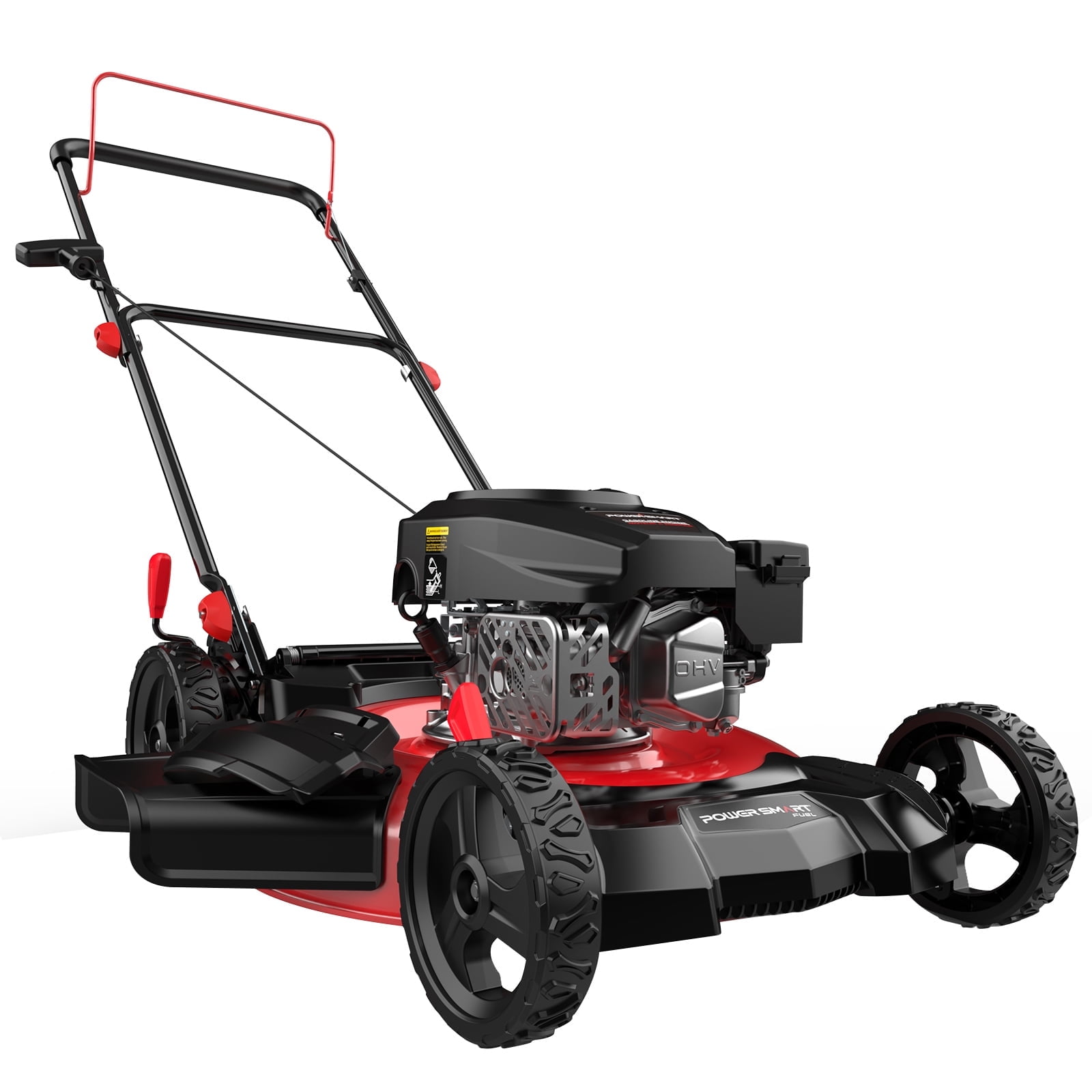
3-in-1 Versatility: Mulching, Bagging, and Side Discharge
The technical versatility of PowerSmart mowers is often highlighted by their “3-in-1” capability. This is achieved through a multi-functional deck design:
- Mulching: The deck is shaped to circulate clippings back into the blade path multiple times, shredding them into fine particles.
- Bagging: High-lift blades create a vacuum effect, drawing clippings into a rear-mounted collection bag.
- Side Discharge: A specialized chute allows for the rapid expulsion of heavy or wet grass.
The switch between these modes is facilitated by a series of baffles and plugs that alter the internal aerodynamics of the mower.
Material Science: Steel vs. Composite Decks
PowerSmart predominantly uses heavy-duty alloy steel for its cutting decks. From an engineering perspective, steel provides the necessary rigidity to withstand high-speed impacts from debris without deforming. The decks are typically coated with a corrosion-resistant powder finish, which uses electrostatic technology to bond the protective layer to the metal, ensuring the hardware survives exposure to moisture and acidic grass juices.
Performance Analysis: Specs and Field Capabilities
When reviewing the technical specifications of PowerSmart gas mowers, several metrics stand out as indicators of their operational capacity. These specifications are what define the machine’s “gadgetry” profile in the context of hardware performance.
Torque and Displacement: Understanding the Numbers
PowerSmart mowers typically range from 144cc to 170cc or more in engine displacement. In the world of small engines, displacement is a direct indicator of the engine’s ability to handle high-resistance loads. More importantly, the torque rating (often measured in foot-pounds) determines how well the mower can maintain its blade RPM when encountering thick, overgrown patches of grass. A high-torque engine ensures that the blade doesn’t stall, maintaining the mechanical momentum required for a clean cut.
Fuel Efficiency and Emission Standards
As environmental regulations become more stringent, PowerSmart has adapted its engine technology to meet EPA (Environmental Protection Agency) and CARB (California Air Resources Board) standards. This involves the use of precision-jetted carburetors and optimized combustion chambers that reduce the emission of hydrocarbons and carbon monoxide. This makes the modern gas mower a far cleaner machine than the models manufactured just a decade ago, representing a significant technological evolution in small-engine hardware.
Technical Maintenance and Longevity: A Tutorial Perspective
To keep these high-tech machines running at peak performance, a certain level of technical upkeep is required. PowerSmart mowers are designed with “accessible engineering,” meaning the components that require regular maintenance are easily reachable.
Spark Plug and Filter Optimization
The health of a PowerSmart mower depends on its “breathing” and “spark.” The air filter, usually a pleated paper or foam element, must be kept clear to ensure the correct air-fuel ratio. A fouled filter leads to “rich” running conditions, which can carbonize the spark plug. Technicians recommend checking the spark plug gap—the distance between the center and ground electrodes—to ensure the ignition system delivers a consistent arc. This small technical detail is the difference between a smooth-running engine and one that misfires.
Sharpening the Tech: Blade Balance and Rotation Speed
The cutting blade is a precision instrument. PowerSmart blades are engineered with specific lift angles to facilitate grass discharge. However, over time, impacts with stones can dull the edge and, more importantly, throw the blade out of balance. An unbalanced blade rotating at 3,000 RPM creates significant vibration, which can lead to premature wear on the engine’s crankshaft and mounting bolts. Balancing the blade involves using a static balancer to ensure weight is distributed evenly across the center hole—a simple but vital technical procedure.

Conclusion: The Role of PowerSmart in Modern Landscaping Tech
The PowerSmart gas mower is more than just a lawn tool; it is a compilation of mechanical innovations designed to solve the challenges of residential property maintenance. By focusing on OHV engine efficiency, ergonomic drive systems, and aerodynamic cutting decks, the brand provides a high-tech solution for those who require the power and reliability of gas-fueled hardware.
Whether you are analyzing the torque-to-displacement ratio or the fluid dynamics of the mulching deck, it is clear that these mowers represent a sophisticated branch of outdoor power equipment. As we continue to see advancements in material science and engine tuning, the technology within these mowers will likely continue to evolve, offering even more precision and power to the modern homeowner. For those who value hardware that performs under pressure, the PowerSmart gas mower stands as a testament to the enduring relevance of well-engineered internal combustion technology.
aViewFromTheCave is a participant in the Amazon Services LLC Associates Program, an affiliate advertising program designed to provide a means for sites to earn advertising fees by advertising and linking to Amazon.com. Amazon, the Amazon logo, AmazonSupply, and the AmazonSupply logo are trademarks of Amazon.com, Inc. or its affiliates. As an Amazon Associate we earn affiliate commissions from qualifying purchases.