
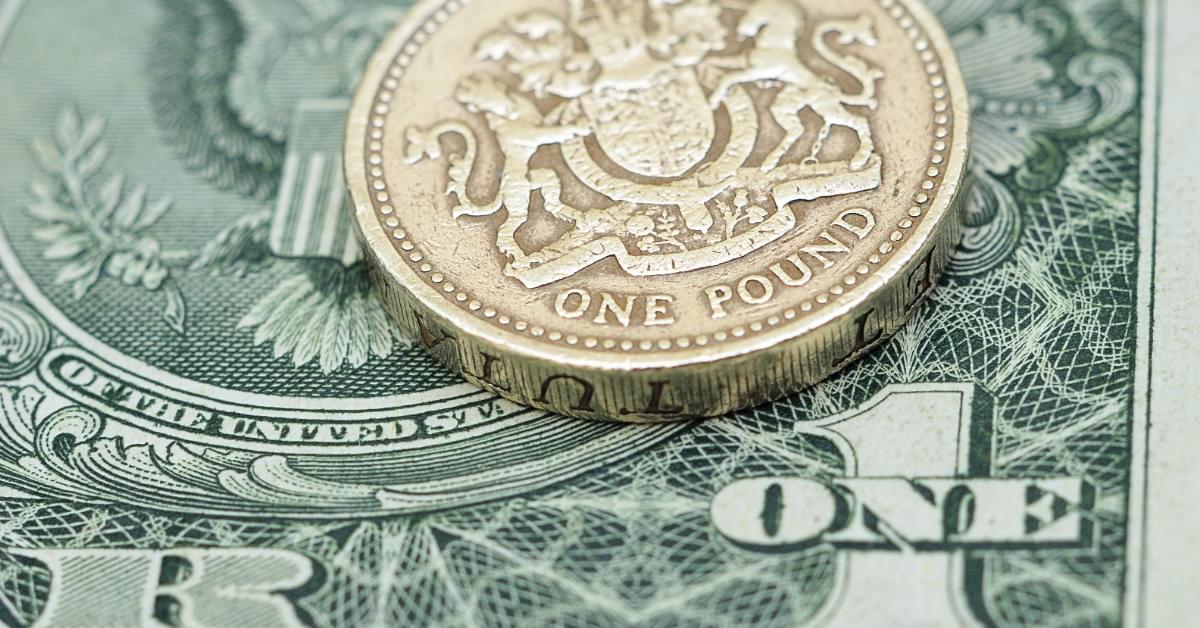
The value of one currency against another is a fundamental concept in global finance, impacting everything from international trade to individual travel budgets. The British Pound Sterling (GBP) and the United States Dollar (USD) represent two of the world’s most prominent reserve currencies, and their exchange rate is a daily indicator of economic health and market sentiment. Understanding “what a pound is worth in US dollars” is not merely about a single numerical figure; it’s about grasping the intricate dynamics that shape this relationship and its far-reaching implications for personal finance, investment, and business.

The Dynamics of Exchange Rates
The exchange rate between the GBP and USD, often quoted as GBP/USD, is a floating rate, meaning it constantly fluctuates based on supply and demand in the global foreign exchange (forex) market. This rate is the price of one pound expressed in terms of US dollars. For instance, if the rate is 1.25, it means £1 can be exchanged for $1.25. However, this number is a moving target, influenced by a complex interplay of economic, political, and psychological factors.
Understanding Currency Pairs
In the forex market, currencies are always traded in pairs. The first currency in the pair is called the base currency (in GBP/USD, it’s the GBP), and the second is the quote or counter currency (USD). The exchange rate indicates how much of the quote currency is needed to buy one unit of the base currency. When you see GBP/USD 1.25, it tells you how many US dollars you get for one British Pound. Conversely, if you were to convert USD to GBP, you would use the inverse calculation, or simply look up the USD/GBP rate. Banks and financial institutions often present these rates differently, sometimes factoring in their own spreads and fees, making the “interbank rate” (the rate at which banks trade with each other) a key reference point for transparency.
Factors Influencing Exchange Rates
Several critical factors contribute to the constant flux of the GBP/USD exchange rate:
- Interest Rates: Central banks, such as the Bank of England (BoE) and the US Federal Reserve (Fed), play a pivotal role. Higher interest rates in a country tend to attract foreign investment, increasing demand for that country’s currency and strengthening its value. If the BoE raises rates more aggressively than the Fed, the pound might strengthen against the dollar.
- Economic Performance: Robust economic growth, low unemployment, and stable inflation figures typically bolster a currency’s value. Positive economic data from either the UK or the US can lead to an appreciation of its respective currency. Gross Domestic Product (GDP), inflation reports (Consumer Price Index – CPI), and employment data are closely watched indicators.
- Political Stability and Geopolitical Events: Political stability fosters investor confidence, while uncertainty or geopolitical tensions (e.g., elections, trade wars, international conflicts) can lead to capital flight and currency depreciation. Major policy shifts or unexpected political outcomes in either the UK or the US can cause significant swings in the GBP/USD rate.
- Trade Balances: A country’s balance of trade (the difference between its exports and imports) can influence its currency. A trade surplus (exports exceed imports) often indicates strong demand for a country’s goods and services, and thus its currency, while a trade deficit can weaken it.
- Market Sentiment and Speculation: Perception and speculative trading can sometimes override fundamental economic data in the short term. Traders and investors react to news, rumors, and technical analysis, leading to herd mentality that can rapidly move exchange rates.
Practical Applications for Individuals
For individuals, understanding the GBP/USD exchange rate extends beyond academic interest; it has tangible financial implications for daily life, travel, and international transactions.
Travel and Tourism
Travelers moving between the UK and the US are directly affected by the exchange rate. A stronger pound relative to the dollar means British tourists get more dollars for their money, making trips to the US more affordable. Conversely, a weaker pound makes travel to the US more expensive. When planning a trip, it’s advisable to monitor the exchange rate.
- Budgeting: Understanding the current rate helps in setting a realistic budget for expenses like accommodation, dining, and activities.
- ATM Withdrawals and Credit Card Use: While convenient, using foreign ATMs or credit cards often involves conversion fees and dynamic currency conversion, where merchants offer to charge you in your home currency, sometimes at unfavorable rates. It’s generally better to pay in the local currency and let your bank or card network handle the conversion, often at a more competitive rate.
- Pre-purchasing Currency: Some travelers opt to exchange a portion of their funds before traveling, hoping to lock in a favorable rate. However, exchange bureaus often have less competitive rates than major banks or online services.
International Transfers and Remittances
Individuals sending money between the UK and the US, whether for family support, educational expenses, or property purchases, need to consider the exchange rate and associated fees.
- Understanding the True Cost: The “cost” of a transfer isn’t just the flat fee; it’s also embedded in the exchange rate offered. Banks and dedicated money transfer services often apply a “spread” – the difference between the interbank rate and the rate they offer to customers.
- Comparing Services: Online money transfer platforms (e.g., Wise, Remitly, Xoom) often offer more competitive exchange rates and lower fees than traditional banks, making it crucial to compare options before initiating a transfer.
- Timing the Transfer: For large sums, even small fluctuations in the exchange rate can significantly impact the final amount received. Monitoring trends and transferring when the rate is favorable can save a considerable amount of money.
Online Shopping
Cross-border e-commerce has made it easier for consumers to purchase goods from abroad. When a UK resident buys from a US-based website or vice versa, the exchange rate dictates the final price.
- Currency Conversion at Checkout: Many international retailers offer to convert the price to your home currency at checkout. While convenient, these rates might not always be the most favorable. Paying in the merchant’s local currency using a credit card with low or no foreign transaction fees often yields a better rate.
- Impact on Returns: If you return an item, the refund will be processed at the prevailing exchange rate at the time of the refund, which might be different from the purchase rate, potentially resulting in a small loss or gain.
Implications for Businesses and Investors
For businesses and investors, currency exchange rates are not just a nuisance; they are a critical variable impacting profitability, risk management, and strategic decision-making.
Importing and Exporting
Businesses engaged in international trade are directly exposed to currency fluctuations.
- Exporters: A weaker home currency (e.g., a weaker pound) makes UK exports cheaper for US buyers, potentially boosting demand and profitability. Conversely, a stronger pound makes UK exports more expensive.
- Importers: A stronger home currency makes imports cheaper. For a UK importer, a stronger pound means they can buy more US goods for the same amount of GBP, reducing costs. A weaker pound, however, increases import costs.
- Hedging Strategies: To mitigate exchange rate risk, businesses often employ hedging strategies using financial instruments like forward contracts or options. These allow them to lock in an exchange rate for a future transaction, providing certainty in their financial planning.
Foreign Direct Investment (FDI)
Companies investing directly in foreign markets, such as building factories or acquiring businesses, face currency risk. The value of their overseas assets and repatriated profits can be significantly affected by exchange rate movements.
- Repatriation of Profits: When a UK company earns profits in USD and converts them back to GBP, a stronger pound at the time of conversion reduces the GBP value of those profits.
- Asset Valuation: The GBP value of a US-based asset held by a UK company will fluctuate with the GBP/USD exchange rate.
Forex Trading
For investors and speculators, the GBP/USD pair is one of the most liquid and actively traded currency pairs in the forex market. Traders attempt to profit from its fluctuations by analyzing economic data, technical patterns, and geopolitical developments.
- Leverage: Forex trading often involves significant leverage, amplifying both potential gains and losses.
- Risk Management: Due to its volatility, robust risk management strategies are essential for forex traders.
- Fundamental vs. Technical Analysis: Traders use both fundamental analysis (economic indicators, interest rates) and technical analysis (chart patterns, indicators) to predict future price movements.
Tools and Strategies for Conversion
Navigating the world of currency conversion efficiently requires awareness of available tools and strategic approaches.
Real-Time Converters and Tools
Numerous online platforms and mobile apps offer real-time currency conversion rates. Websites like XE.com, OANDA, and Google’s built-in converter provide up-to-the-minute interbank rates. Many banks and financial institutions also offer their own converters, though these typically reflect their customer rates, which include a spread.
- Stay Informed: Regularly checking these tools keeps you informed of the current market rate, providing a benchmark against which to compare rates offered by various services.
- Set Alerts: Some platforms allow you to set alerts to notify you when the exchange rate reaches a desired level, which can be particularly useful for large transactions or investments.
Understanding Spreads and Fees
It is crucial to differentiate between the interbank rate and the “retail” rate offered to consumers or businesses. Financial institutions rarely offer the exact interbank rate; they add a spread, which is their profit margin. Additionally, transaction fees for transfers or cash exchanges are common.
- Transparency is Key: Always ask for the total cost, including both the exchange rate spread and any explicit fees, before completing a transaction.
- Hidden Costs: Be wary of “0% commission” claims, as the cost is often embedded in a less favorable exchange rate.

Timing Your Exchange
While predicting short-term currency movements is challenging, understanding long-term trends and major economic announcements can help in timing larger conversions.
- Monitor Economic Calendars: Keep an eye on economic calendars for the UK and US, which highlight upcoming data releases (e.g., inflation figures, employment reports, central bank meetings) that could impact the GBP/USD rate.
- Average Down/Up: For very large transfers, some individuals and businesses consider breaking the transfer into smaller chunks over time to average out the exchange rate, reducing the risk of converting all funds at an unfavorable peak or trough.
In conclusion, the question “what is a pound worth in US dollars” is answered by a constantly shifting number, reflecting the complex interplay of global economic forces. For individuals, this translates into daily financial impacts on travel and international transactions. For businesses and investors, it represents a critical factor in profitability, risk, and strategic planning. By understanding these dynamics and utilizing available tools, both individuals and organizations can navigate the GBP/USD exchange rate more effectively, optimizing their financial outcomes in an increasingly interconnected global economy.
aViewFromTheCave is a participant in the Amazon Services LLC Associates Program, an affiliate advertising program designed to provide a means for sites to earn advertising fees by advertising and linking to Amazon.com. Amazon, the Amazon logo, AmazonSupply, and the AmazonSupply logo are trademarks of Amazon.com, Inc. or its affiliates. As an Amazon Associate we earn affiliate commissions from qualifying purchases.