
For investors, property developers, and commercial lenders, a property is rarely just a physical asset; it is a ledger of historical usage that carries significant financial risk. A Phase One Environmental Site Assessment (ESA) serves as the primary financial safeguard in the real estate acquisition process. It is the rigorous due diligence mechanism designed to identify “Recognized Environmental Conditions” (RECs)—the presence or likely presence of hazardous substances or petroleum products in, on, or at a property. Understanding this process is critical to protecting your capital and ensuring your investment does not become a multi-million-dollar liability.
The Financial Necessity of Phase One ESAs
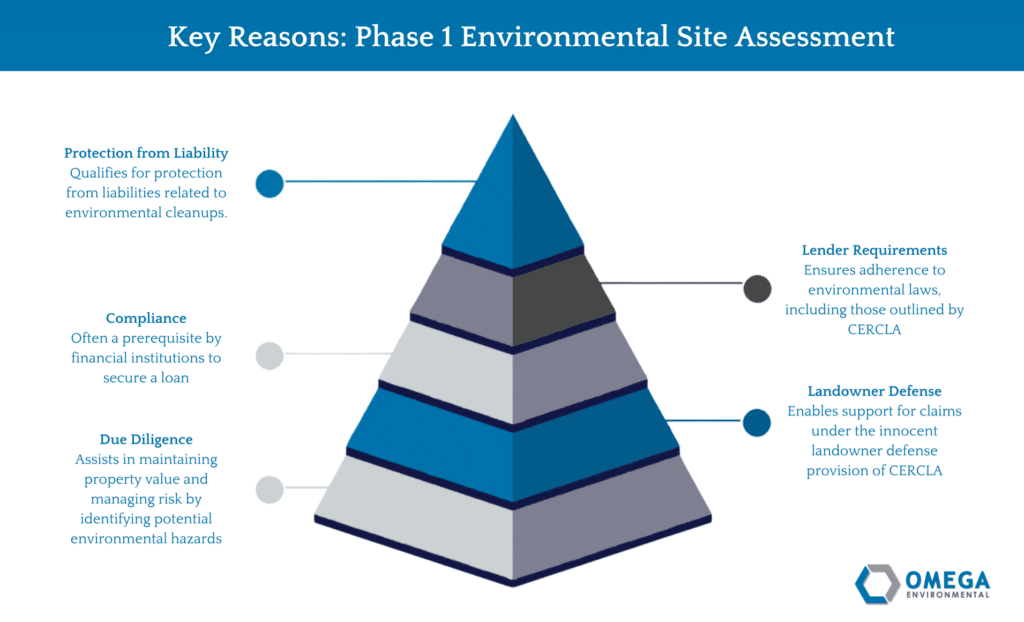
In the world of commercial real estate and business finance, the “polluter pays” principle is a harsh reality. Under the Comprehensive Environmental Response, Compensation, and Liability Act (CERCLA), property owners can be held strictly liable for the cleanup of hazardous contamination, even if they did not cause the pollution themselves. This is where the Phase One ESA becomes a cornerstone of prudent investment.
Mitigation of Liability and CERCLA Protection
The primary financial motivation for conducting a Phase One ESA is to establish “All Appropriate Inquiries” (AAI). By following the protocols established by the American Society for Testing and Materials (ASTM E1527-21), an investor can qualify for the Innocent Landowner Defense, the Bona Fide Prospective Purchaser defense, or the Contiguous Property Owner defense. Without a documented Phase One ESA, an investor essentially leaves the door wide open to unlimited financial liability for historical contamination.
Influencing Acquisition and Financing
Lenders almost universally require a Phase One ESA before approving commercial mortgages. Because environmental contamination drastically impacts property value, lenders view an unassessed site as a high-risk gamble. A Phase One ESA provides the objective data required for risk committees to underwrite a loan. If the report uncovers environmental concerns, it often leads to a renegotiation of the purchase price, the creation of an escrow fund for remediation, or in severe cases, the termination of the deal, thereby saving the investor from a catastrophic financial loss.
The Anatomy of the Assessment Process
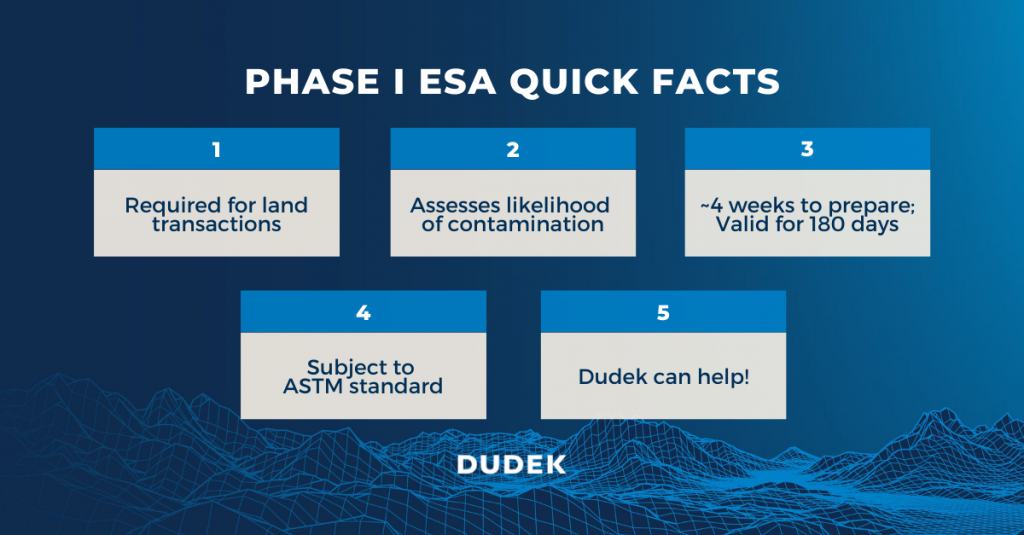
A Phase One ESA is not a physical audit of the soil or groundwater; rather, it is a detailed investigation of the “environmental story” of the site. The goal is to gather enough documentation to determine if there is a potential for contamination.
Records Review and Historical Investigation
The assessor begins by examining the property’s history through a “chain of title” and historical documentation. They investigate:
- Historical Aerial Photography: Analyzing images dating back decades to spot former storage tanks, chemical disposal areas, or industrial activities.
- Fire Insurance Maps (Sanborn Maps): These historical maps are invaluable for identifying past uses, such as dry cleaners, gas stations, or manufacturing plants, which are high-risk indicators.
- Regulatory Agency Databases: The assessor cross-references the property and its immediate surroundings against federal, state, and local databases to see if there have been past leaks, spills, or active investigations on file.
The Site Reconnaissance
The second core component is a physical visit to the property. The environmental professional performs a walkthrough to identify current usage. They look for tell-tale signs of environmental distress, such as stressed vegetation (which could indicate a subsurface leak), unidentified pipes, chemical containers, staining on concrete, or the presence of electrical transformers that might contain PCBs. This stage bridges the gap between historical records and current reality.
Interviews and Regulatory Communication
The assessor interviews current and past property owners, operators, and occupants. These interviews often reveal “hidden” information not found in public records, such as the location of old underground storage tanks that were removed without proper documentation or the secret disposal of waste in a remote corner of the site.
Interpreting Results and Financial Implications
Once the investigation concludes, the professional delivers a final report. This document is the ultimate arbiter of whether the property is a sound financial asset or a toxic liability.
Categorizing Recognized Environmental Conditions (RECs)
The report will categorize findings into RECs, Controlled RECs (CRECs), or Historical RECs (HRECs).
- REC: An actual or potential release of hazardous substances that warrants further investigation.
- CREC: A release that has been addressed but requires engineering controls (like a cap) or institutional controls (like land use restrictions) to manage.
- HREC: A previous release that has been cleaned up to regulatory standards and does not currently present a risk.
For an investor, an REC is a red flag that directly impacts the bottom line. It effectively creates a contingent liability. If the Phase One ESA identifies an REC, the investor must decide whether to walk away, negotiate a price reduction to cover estimated remediation costs, or request that the seller perform a Phase Two ESA.
The “Phase Two” Trigger
A Phase Two ESA is fundamentally different from a Phase One. While the Phase One is a records-based assessment, the Phase Two is invasive. It involves drilling, sampling soil, and testing groundwater. This is a significant capital expenditure, often costing thousands of dollars. Therefore, the Phase One ESA serves as the essential gatekeeper—if the Phase One identifies no potential for contamination, the investor avoids the unnecessary cost and time delay of intrusive testing. If it does identify an REC, it provides the necessary justification to perform the testing before the transaction closes.
Strategic Asset Management
Incorporating environmental due diligence into your broader investment strategy is a hallmark of sophisticated financial management. Environmental risk is just as significant as market risk or credit risk.
Protecting Long-Term Capital Appreciation
Real estate is a long-term play. An environmental issue discovered years after purchase can severely impair your ability to refinance the property, obtain insurance, or eventually sell the asset. A Phase One ESA provides a baseline of information that stays with the asset. When you eventually look to exit the investment, having a clean record—or a transparent history of how known issues were managed—dramatically increases the liquidity of your property.
Integrating ESG and Institutional Standards
As Environmental, Social, and Governance (ESG) criteria become increasingly central to institutional investment, the Phase One ESA is no longer just a legal hurdle; it is a vital metric of asset quality. Institutional lenders and equity partners now look beyond the balance sheet to the environmental health of the assets in a portfolio. Investors who proactively perform rigorous environmental assessments position themselves to access better interest rates, more favorable terms, and a wider pool of capital, as they demonstrate a commitment to risk-adjusted return and responsible asset stewardship.
Ultimately, the Phase One ESA is a tool of clarity. It strips away the uncertainty of the past, allowing investors to move forward with the confidence that their capital is shielded from the hidden, long-term costs of environmental contamination. Whether you are dealing with a vacant lot, a retail strip, or a major industrial facility, the report is your primary insurance policy against the unpredictable. By viewing the Phase One not as an expense, but as a critical component of your investment risk management, you ensure that your portfolio remains focused on growth rather than remediation.
aViewFromTheCave is a participant in the Amazon Services LLC Associates Program, an affiliate advertising program designed to provide a means for sites to earn advertising fees by advertising and linking to Amazon.com. Amazon, the Amazon logo, AmazonSupply, and the AmazonSupply logo are trademarks of Amazon.com, Inc. or its affiliates. As an Amazon Associate we earn affiliate commissions from qualifying purchases.