
Mathematics, the bedrock of all technological advancement, is replete with concepts that describe repeating patterns and cycles. Among these, “period” stands out as a fundamental descriptor of recurrence, whether in continuous functions, discrete number sequences, or the behavior of complex systems. Understanding mathematical periodicity is not merely an academic exercise; it offers critical insights for software development, algorithm design, data analysis, and the very architecture of digital systems. In the context of technology, grasping the intricacies of “period math” equips engineers, data scientists, and developers with tools to model, predict, and optimize processes that inherently involve repetition.
The Fundamental Nature of Periodicity in Mathematics
At its core, periodicity describes anything that repeats in a regular, predictable cycle. This concept permeates various branches of mathematics, manifesting in distinct yet related forms. From the perpetual oscillations of waves to the recurring digits in a decimal expansion, periodicity provides a framework for understanding and manipulating predictable sequences.
Periodic Functions: The Continuous Cycle
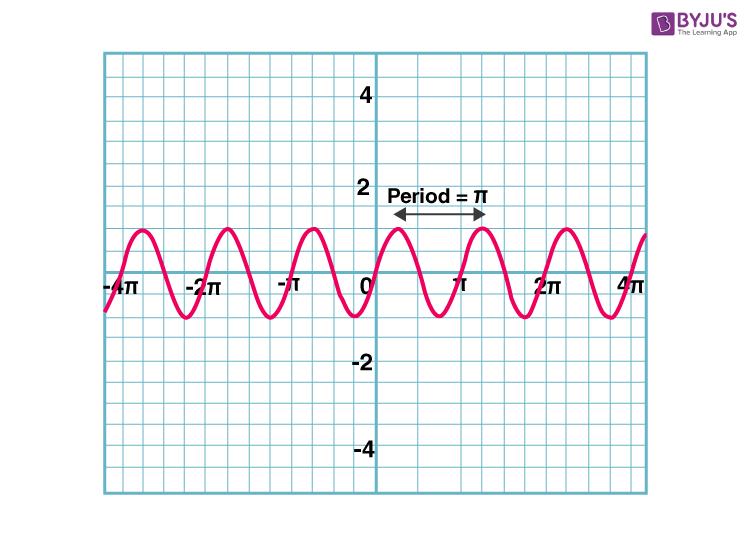
Perhaps the most intuitive example of periodicity comes from functions that repeat their values over a regular interval. A function $f(x)$ is called periodic if there exists a non-zero constant $P$ such that $f(x + P) = f(x)$ for all $x$ in the domain of $f$. The smallest such positive constant $P$ is known as the period of the function.
The most famous examples are the trigonometric functions: sine, cosine, and tangent.
- Sine and Cosine: Both $sin(x)$ and $cos(x)$ have a period of $2pi$ radians (or 360 degrees). This means their graphs repeat every $2pi$ units along the x-axis. This continuous, wave-like repetition is foundational to describing oscillations, vibrations, and wave phenomena in physics, engineering, and computer graphics. For instance, simulating sound waves, light waves, or even pendulum swings in a game engine relies heavily on understanding and implementing these periodic functions. Their predictable nature makes them indispensable for generating smooth, repeating animations or simulating natural phenomena.
- Other Periodic Functions: Beyond trigonometry, many other functions exhibit periodicity. Square waves, saw-tooth waves, and triangular waves, often seen in electrical engineering and signal processing, are also periodic. These functions can often be approximated or constructed using Fourier series, which decompose complex periodic signals into a sum of simpler sine and cosine waves—a critical technique in digital signal processing.
The mathematical properties of periodic functions—their amplitude, frequency (which is the reciprocal of the period), and phase shift—are crucial for manipulating and synthesizing repeating signals digitally.
Repeating Decimals: Discrete Periodicity
Periodicity isn’t confined to continuous functions; it also appears in discrete number systems, particularly when rational numbers are expressed in decimal form. A rational number is any number that can be expressed as a fraction $p/q$, where $p$ and $q$ are integers and $q neq 0$. When you convert a rational number to its decimal representation, one of two things will happen:
- The decimal terminates (e.g., $1/4 = 0.25$).
- The decimal repeats a sequence of digits indefinitely (e.g., $1/3 = 0.333…$, $1/7 = 0.142857142857…$).
The repeating sequence of digits is called the repeating block or repetend, and its length is the period of the decimal expansion. For example, the period of $1/3$ is 1 (the digit ‘3’ repeats), and the period of $1/7$ is 6 (the block ‘142857’ repeats).
This discrete periodicity arises from the long division process. Because there are a finite number of possible remainders when dividing by $q$, the remainders must eventually repeat, leading to a repeating sequence of quotients (digits). Understanding this phenomenon is vital in computing, especially concerning floating-point arithmetic and the representation of numbers. While computers typically use binary or other bases, the concept of a repeating representation for certain fractions remains, leading to potential precision issues if not handled carefully.
Computational Significance of Repeating Patterns
The presence of periodicity in mathematics has profound implications for how we design, implement, and analyze computational systems. From numerical precision to algorithmic efficiency, understanding repeating patterns is key to robust software.
Precision and Representation in Digital Systems
In computer science, numbers are stored with finite precision. While integers are typically exact within their allocated bit size, real numbers (floating-point numbers) are often approximations. Repeating decimals, like $1/3$, cannot be perfectly represented in binary floating-point systems. For instance, $1/3$ in binary is $0.010101…_2$, an infinitely repeating sequence. A computer truncates this, leading to a slight error.
This truncation can accumulate in calculations, affecting accuracy. Developers must be aware of these limitations, especially in applications requiring high precision, such as financial calculations, scientific simulations, or graphics rendering. Techniques like arbitrary-precision arithmetic libraries or working with fractions directly (keeping numerator and denominator separate) are sometimes employed to mitigate these issues, demonstrating a direct engineering response to the mathematical reality of repeating decimals.

Algorithmic Cycles and State Machines
Beyond number representation, periodicity is central to the design and analysis of algorithms and state machines. Many algorithms inherently involve cycles or repeating operations.
- Loop Invariants and Termination: Proving the correctness of algorithms often involves identifying loop invariants, which are conditions that remain true after each iteration of a loop. The “period” here isn’t a fixed numerical value but a logical cycle of operations. Understanding when and how loops repeat is crucial for ensuring algorithms terminate correctly and produce the desired output.
- Pseudo-random Number Generators (PRNGs): PRNGs are algorithms that generate sequences of numbers that approximate true randomness. However, by their deterministic nature, these sequences must eventually repeat. The period of a PRNG is the length of the sequence before it starts repeating. A good PRNG has a very long period to avoid obvious repetition and ensure statistical randomness over typical usage. Understanding and choosing PRNGs with sufficiently long periods is critical in simulations, cryptography, and statistical sampling.
- Hash Functions: While ideal hash functions aim to distribute data evenly and uniquely, collisions (different inputs mapping to the same output) are inevitable given a finite output space. Cycles can emerge in hashing algorithms, influencing performance and security. Detecting and mitigating these cyclic behaviors is an advanced topic in algorithm design and security.
- Finite State Machines (FSMs): FSMs model systems that can be in one of a finite number of states, transitioning between them based on inputs. Many FSMs exhibit periodic behavior, returning to previous states after a certain sequence of inputs. Analyzing these cycles is fundamental to verifying system behavior, designing protocols, and understanding hardware logic.
Leveraging Periodicity in Technology Development
The principles of period math are not just abstract concepts but powerful tools applied across various technological domains.
Signal Processing and Telecommunications
One of the most prominent applications of periodicity is in digital signal processing (DSP). Audio, video, and radio signals are inherently periodic or can be approximated as combinations of periodic functions.
- Fourier Analysis: The Fourier transform is a cornerstone of DSP, allowing us to decompose a signal into its constituent frequencies (periods). This enables filtering (removing unwanted frequencies), compression (representing signals more compactly), and analysis (understanding signal characteristics). From MP3 compression to Wi-Fi communication, Fourier analysis, deeply rooted in periodic functions, is indispensable.
- Waveform Generation: Synthesizers for music, function generators in electronics, and modulated carriers in telecommunications all rely on generating precise periodic waveforms. Understanding the period, frequency, and phase of these waves is crucial for their accurate generation and manipulation.
- Error Correction Codes: Some error correction techniques involve periodic patterns in data transmission to detect and correct errors, enhancing the reliability of digital communication.
Cryptography and Security
Periodicity plays a subtle but critical role in digital security.
- Stream Ciphers: Many stream ciphers rely on PRNGs to generate a keystream that is combined with plaintext. The security of such ciphers heavily depends on the keystream having an extremely long and unpredictable period. If the period is too short or easily detectable, attackers can exploit the repetition to break the encryption.
- Block Cipher Modes: While block ciphers encrypt fixed-size blocks of data, their operational modes often introduce feedback mechanisms that, if not carefully designed, could lead to periodic patterns in the ciphertext, making them vulnerable. Understanding and avoiding such periodicity is vital for robust encryption.
- Cryptographic Hashes: While designed to be non-periodic and avalanche-effect-prone, the theoretical underpinnings of avoiding cyclic behavior in hash functions is critical to their collision resistance and security properties.
Data Analysis and Machine Learning
In data science, identifying periodic patterns can unlock significant insights and improve model performance.
- Time Series Analysis: Financial data, sensor readings, weather patterns, and website traffic often exhibit seasonality or cyclical trends. Identifying the period of these cycles (e.g., daily, weekly, monthly, yearly) is fundamental for accurate forecasting models (like ARIMA, SARIMA) and anomaly detection. Machine learning models can leverage these periodic features to make more informed predictions.
- Pattern Recognition: Algorithms designed to detect recurring motifs in genetic sequences, network traffic, or sensor data effectively look for periodicity or repeating patterns. This is crucial for bioinformatics, intrusion detection, and predictive maintenance.
- Dimensionality Reduction: In some cases, high-dimensional data might have underlying periodic structures that can be exploited for dimensionality reduction techniques, simplifying the data while retaining essential information.
Mathematical Periodicity and Software Engineering
For software engineers, an awareness of “period math” translates into better code, more robust systems, and efficient problem-solving.
Optimization and Efficiency
Recognizing and exploiting periodicity can lead to significant optimizations. If a computation yields a result that repeats periodically, developers can cache these results or design algorithms that restart from a known state instead of recomputing from scratch. This is common in simulations, graphics, and performance-critical loops. For example, pre-calculating values for a periodic function over one period and then simply looking up or indexing into that pre-calculated array can be much faster than re-evaluating the function repeatedly.

Debugging and Predicting Behavior
When a system behaves unexpectedly, especially with recurring errors or crashes, an understanding of periodicity can be invaluable for debugging. Are there specific input patterns that trigger a cycle of errors? Is a buffer overflowing periodically? Is a resource being exhausted cyclically? Identifying these periodic behaviors can pinpoint memory leaks, race conditions, or logic errors that manifest as repeating symptoms. Furthermore, in stateful systems, understanding the periodicity of state transitions allows engineers to predict future states and design more resilient systems.
In essence, “period math” is more than a collection of mathematical definitions; it’s a conceptual lens through which technological problems can be analyzed, understood, and ultimately solved. From the lowest levels of number representation to the highest levels of algorithmic design and application development, the cyclical nature of phenomena described by mathematical periodicity is an indispensable tool for every tech professional.
aViewFromTheCave is a participant in the Amazon Services LLC Associates Program, an affiliate advertising program designed to provide a means for sites to earn advertising fees by advertising and linking to Amazon.com. Amazon, the Amazon logo, AmazonSupply, and the AmazonSupply logo are trademarks of Amazon.com, Inc. or its affiliates. As an Amazon Associate we earn affiliate commissions from qualifying purchases.