
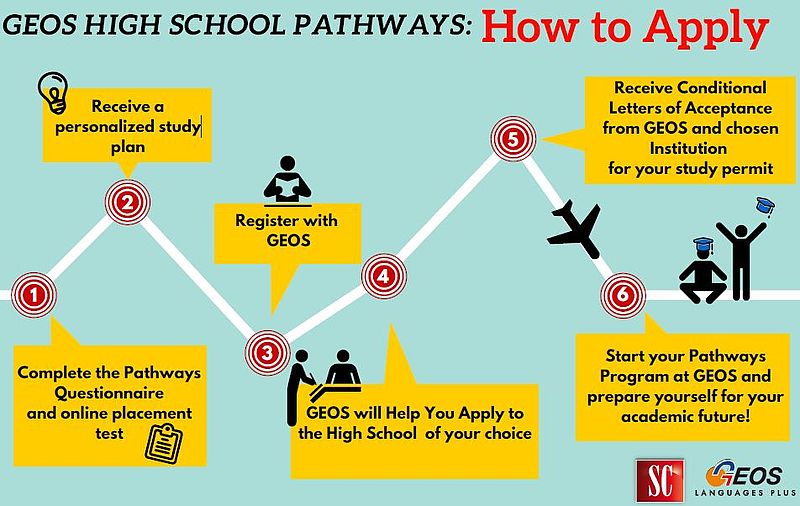
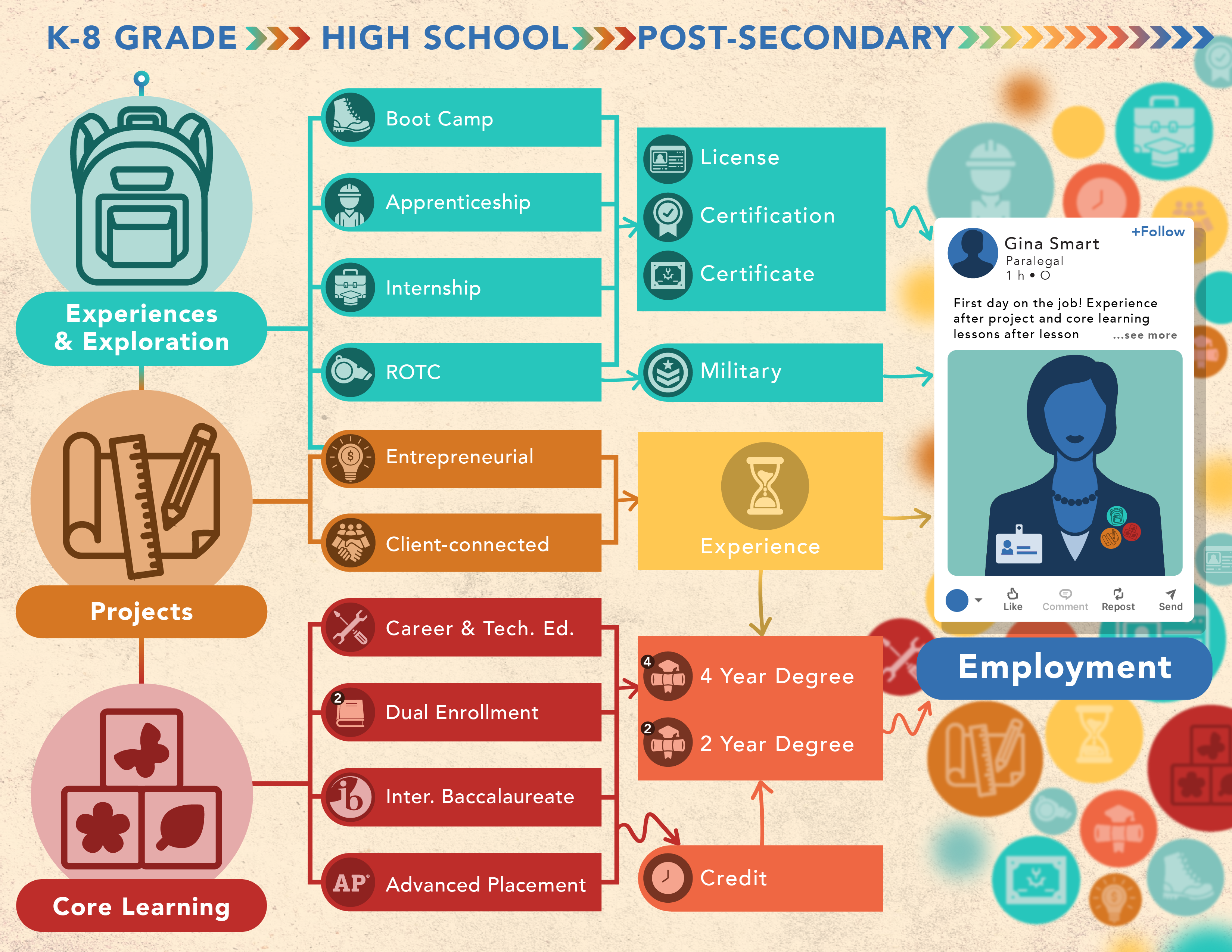
The traditional high school experience, often characterized by a generalized curriculum, is undergoing a significant evolution. In its place, a more tailored and future-focused model is emerging: the high school pathway. Far from being a mere elective track, a pathway represents a curated sequence of courses, experiences, and resources designed to equip students with specific skills and knowledge, preparing them for post-secondary education, career opportunities, or both. While the concept itself isn’t new, the advent and integration of advanced technologies are revolutionizing how these pathways are designed, delivered, and experienced. This article delves into the multifaceted nature of high school pathways, examining them through the lens of technological innovation and its profound impact on student learning, engagement, and future success.
The Technological Foundation of Modern Pathways
The effectiveness and accessibility of contemporary high school pathways are inextricably linked to the technological infrastructure that underpins them. From sophisticated learning management systems to cutting-edge virtual reality simulations, technology acts as the engine driving personalized learning, skill development, and industry-relevant exposure. Without these digital tools, pathways would struggle to offer the depth, breadth, and adaptability required in today’s rapidly changing world.
Learning Management Systems (LMS) and Centralized Hubs
At the core of any effective technological pathway lies a robust Learning Management System (LMS). These digital platforms serve as the central nervous system for pathway programs, housing course materials, assignments, assessments, and communication channels. For students, an LMS provides a single point of access to all pathway-related content, allowing them to track their progress, submit work, and engage with instructors and peers at their own pace. Educators leverage LMS functionalities to deliver differentiated instruction, monitor student performance data, and provide targeted feedback.
Beyond basic course delivery, advanced LMS platforms are increasingly integrating features that support personalized learning. Algorithms can analyze student engagement patterns and performance data to recommend supplementary resources, identify areas where additional support is needed, and even suggest alternative learning activities. This data-driven approach allows pathways to adapt to individual learning styles and paces, ensuring that each student can maximize their potential within the program. Furthermore, LMS platforms facilitate seamless integration with other educational technologies, creating a cohesive and interconnected learning ecosystem.
Digital Content and Online Learning Resources
The expansion of high school pathways is directly fueled by the proliferation of high-quality digital content and online learning resources. These resources go far beyond static textbooks, offering dynamic and interactive learning experiences that cater to diverse learning preferences.
Interactive Simulations and Virtual Labs
For pathways focused on STEM fields, the ability to conduct experiments and engage with complex concepts in a safe, controlled environment is paramount. Virtual labs and interactive simulations powered by advanced software allow students to manipulate variables, observe outcomes, and gain hands-on experience without the limitations or costs associated with physical equipment. For instance, a biotechnology pathway might utilize virtual labs to teach genetic sequencing techniques, or an engineering pathway could employ simulations to model structural integrity under various loads. These tools not only enhance comprehension but also foster critical thinking and problem-solving skills by allowing for trial and error in a consequence-free digital space.
Multimedia-Rich Educational Platforms
Beyond specialized simulations, a vast array of multimedia-rich educational platforms now offer comprehensive content for pathway courses. These platforms often incorporate video lectures from industry experts, interactive quizzes, gamified learning modules, and virtual field trips to real-world workplaces. For career-focused pathways, platforms like Coursera, edX, or specialized vocational training sites can provide access to college-level material or industry certifications that might not be available within the traditional high school curriculum. This allows pathways to offer a depth and breadth of content that mirrors university-level study or professional development.
Data Analytics and Personalized Learning Paths
The true power of technology in high school pathways lies in its ability to collect, analyze, and act upon student data. This data analytics capability enables the creation of truly personalized learning paths, moving away from a one-size-fits-all approach.
Predictive Analytics for Student Support
Sophisticated analytical tools can identify students who may be struggling or at risk of disengaging from a pathway. By monitoring metrics such as assignment completion rates, quiz scores, forum participation, and time spent on specific learning modules, predictive algorithms can flag students for early intervention. This allows educators and counselors to proactively offer support, such as one-on-one tutoring, additional resources, or motivational check-ins, before a student falls significantly behind. This preventative approach is crucial for ensuring that all students can successfully navigate and complete their chosen pathways.
Adaptive Learning Technologies
Adaptive learning technologies take personalization a step further. These systems continuously assess a student’s understanding and dynamically adjust the difficulty, pace, and type of content presented. If a student demonstrates mastery of a concept, the system moves them ahead. If they struggle, it provides more foundational material or alternative explanations. This ensures that students are always challenged appropriately, preventing boredom for those who grasp concepts quickly and reducing frustration for those who need more time and support. This dynamic adaptation is a hallmark of truly modern, technology-enabled pathways.
Bridging the Gap: Technology and Real-World Connections
High school pathways are not solely about academic learning; they are fundamentally about preparing students for the future. Technology plays a critical role in bridging the gap between the classroom and the professional world, offering students authentic experiences and insights into potential career trajectories.
Virtual Internships and Experiential Learning
Traditionally, internships and hands-on experience were limited by geographical location and the availability of physical opportunities. Technology has shattered these barriers. Virtual internships allow students to collaborate with professionals remotely on real projects, gain exposure to industry workflows, and develop crucial soft skills like virtual communication and project management. Online platforms can connect students with mentors from leading companies, providing invaluable guidance and networking opportunities.
Augmented Reality (AR) and Virtual Reality (VR) for Immersive Experiences
AR and VR technologies offer unparalleled opportunities for immersive experiential learning. Students in a healthcare pathway might use VR to practice surgical procedures or patient diagnosis. Those in a design pathway could use AR to visualize and manipulate 3D models of buildings or products in real-world settings. These technologies provide a level of engagement and practical application that traditional methods simply cannot replicate, fostering deeper understanding and skill development.
Digital Portfolios and Skill Showcase
As students progress through their pathways, they accumulate a wealth of projects, assignments, and achievements. Digital portfolios, powered by cloud storage and user-friendly interface design, allow students to curate and showcase their work in a professional and accessible format. These portfolios serve as tangible evidence of their skills, knowledge, and accomplishments, making them invaluable tools for college applications, scholarship submissions, and job interviews.
AI-Powered Resume Builders and Career Matching Tools
The transition from high school to the next stage can be daunting. AI-powered tools are emerging to assist students in this process. AI-driven resume builders can analyze a student’s digital portfolio and academic record to suggest tailored content and formatting, ensuring their resume effectively highlights their pathway-acquired skills. Furthermore, AI-powered career matching platforms can analyze student interests, skills, and pathway focus to suggest potential college majors or career paths that align with their profile, providing data-driven guidance for future planning.
The Future of Pathways: AI, Blockchain, and Beyond
The integration of technology into high school pathways is a continuously evolving landscape. As new innovations emerge, they promise to further enhance the effectiveness, personalization, and accessibility of these future-focused educational models.
Artificial Intelligence (AI) in Personalized Instruction and Assessment
AI’s role is set to expand significantly. Beyond predictive analytics and adaptive learning, AI tutors could provide on-demand, personalized academic support, answering student questions in real-time and explaining complex concepts in multiple ways. AI could also revolutionize assessment by offering more nuanced and objective evaluations of student work, particularly in areas like writing or complex problem-solving. Furthermore, AI-powered chatbots can act as virtual advisors, guiding students through pathway options, course selections, and post-secondary planning.
Blockchain for Verifiable Credentials and Skill Badges
The integrity and verifiability of student achievements are crucial. Blockchain technology offers a secure and decentralized way to store and manage educational credentials, such as course completion certificates, skill badges, and even project portfolios. This creates immutable records that students can confidently share with future educational institutions or employers, ensuring the authenticity of their qualifications. This is particularly relevant for pathways that offer industry-recognized certifications or specialized skill development.

Extended Reality (XR) and Immersive Learning Environments
The convergence of AR and VR into Extended Reality (XR) promises even more immersive and interactive learning experiences. Imagine students participating in virtual field trips to historical sites, dissecting virtual organisms in lifelike detail, or collaborating on complex engineering projects in shared virtual spaces. XR has the potential to transform abstract concepts into tangible, memorable learning experiences, deepening student engagement and retention.
In conclusion, the concept of a high school pathway, when viewed through a technological lens, represents a dynamic and powerful shift in educational paradigms. By leveraging advanced digital tools, from learning management systems and interactive simulations to AI and XR, educators can create personalized, engaging, and future-ready learning experiences. These tech-driven pathways are not merely about acquiring knowledge; they are about cultivating the skills, competencies, and adaptability that students will need to thrive in an increasingly complex and technologically advanced world. The ongoing evolution of technology ensures that high school pathways will continue to be a vital engine for student success, preparing them not just for their next step, but for a lifetime of learning and contribution.
aViewFromTheCave is a participant in the Amazon Services LLC Associates Program, an affiliate advertising program designed to provide a means for sites to earn advertising fees by advertising and linking to Amazon.com. Amazon, the Amazon logo, AmazonSupply, and the AmazonSupply logo are trademarks of Amazon.com, Inc. or its affiliates. As an Amazon Associate we earn affiliate commissions from qualifying purchases.