
The pursuit of precision is paramount in various fields, from competitive shooting and hunting to astronomical observation and scientific measurement. At the heart of achieving this precision, particularly when using magnified optics like rifle scopes, telescopes, or spotting scopes, lies a critical optical phenomenon known as parallax. Often misunderstood or overlooked, parallax can introduce significant error, rendering even the most expensive optics less effective if not properly managed. Understanding what parallax is, why it occurs, and how to mitigate its effects is fundamental for anyone relying on a scope for accuracy.
Understanding Parallax: The Optical Illusion
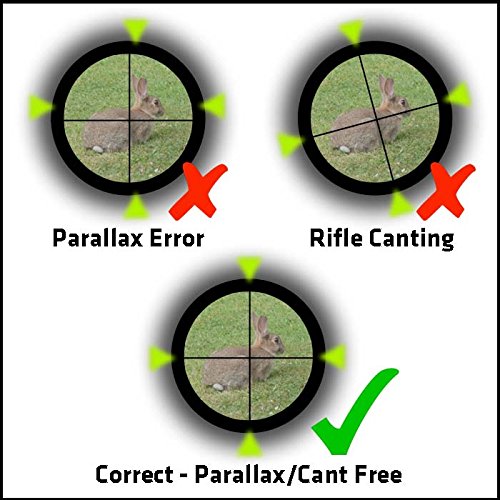
At its core, parallax is an optical illusion that arises when the reticle (the crosshairs or aiming point) within a scope appears to shift its position relative to the target image as the user’s eye moves. This apparent movement is not a fault of the scope itself, but rather a consequence of an inherent design challenge in optical systems. When a scope is “out of parallax,” the reticle and the target image are not situated on the same focal plane, leading to a discrepancy that manifests as an aiming error.
The Root Cause: Focal Plane Discrepancy
To grasp the mechanics of parallax, it’s essential to understand the basic function of a magnified optical system. Light from the target enters the objective lens, forming an image within the scope. The reticle is physically etched or placed at a specific point inside the scope. The eyepiece then magnifies both this target image and the reticle, presenting them to the user’s eye.
Parallax occurs when the optical system fails to project the image of the target precisely onto the same focal plane as the reticle. Imagine two transparent sheets, one with your target and one with your aiming point. If these sheets are perfectly aligned and stacked, your aiming point will always appear fixed on the target, regardless of how you shift your head slightly. However, if there’s a gap between the sheets, even a minor head movement will cause the aiming point to “float” or “swim” across the target. This “gap” in a scope is the focal plane discrepancy. The light rays from the target and the reticle converge at slightly different points, and your eye, acting as the final lens, processes this misalignment, creating the illusion of movement.
Visual Manifestations of Parallax Error
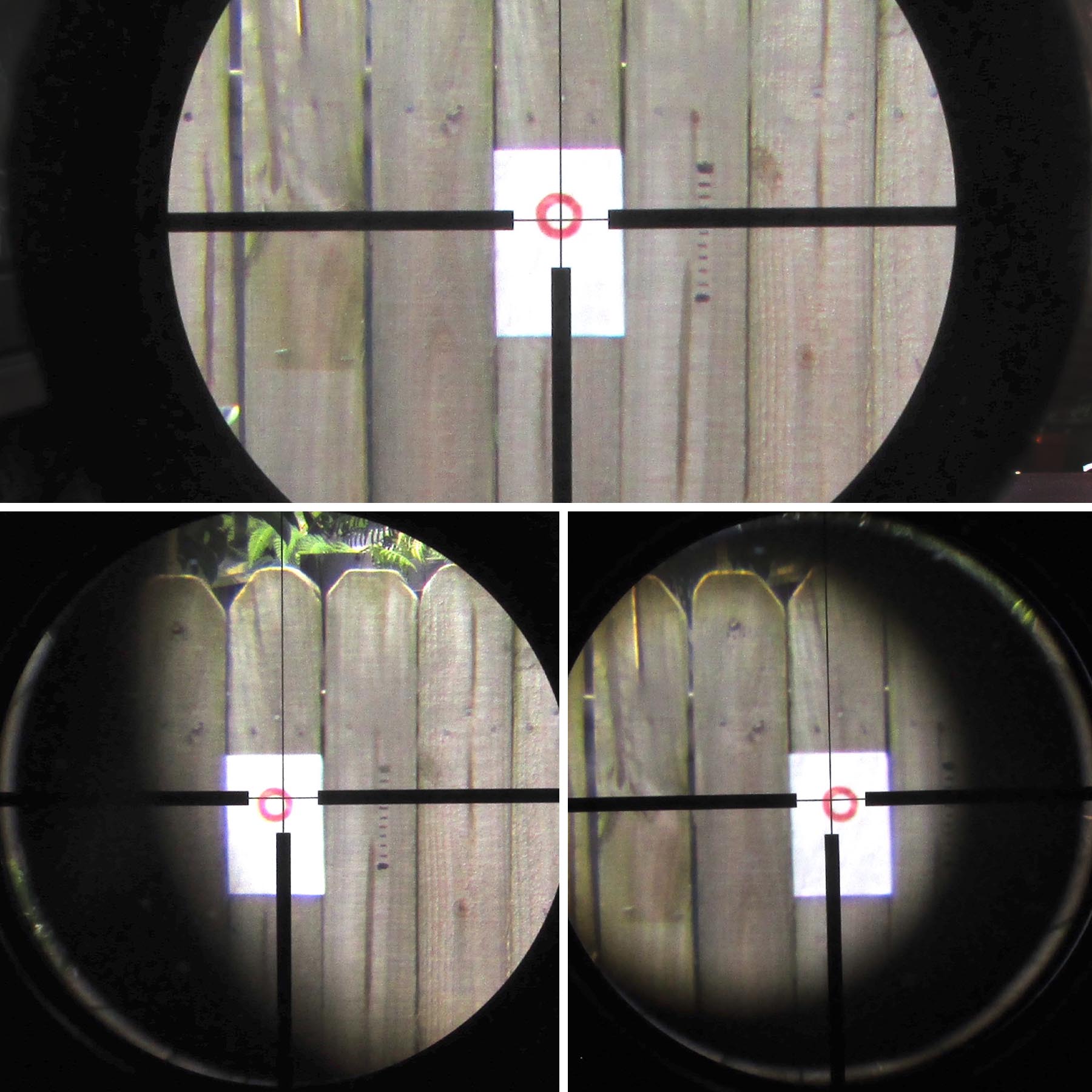
The most direct way to observe parallax error is by looking through a scope and intentionally shifting your head slightly from side to side or up and down, without moving the scope itself. If parallax is present, you will notice the reticle appearing to move across the target. For instance, if you aim at the center of a target and then shift your head slightly to the left, the reticle might appear to move to the right relative to the target. This apparent shift is the parallax error.
The magnitude of this shift is directly proportional to the amount of parallax error, the distance to the target, and the scope’s magnification. Higher magnification scopes and longer ranges exacerbate the visual effect and, consequently, the potential for aiming error. While a slight head shift might seem negligible, it translates into a significant point-of-impact deviation downrange, making precise shots extremely challenging or impossible.
Why Parallax Matters for Precision
The presence of parallax error is a critical impediment to accuracy, regardless of the shooter’s skill or the quality of the firearm. It introduces an external variable that can dramatically alter the point of impact, especially in scenarios demanding extreme precision.
Impact on Accuracy and Point of Aim
When a scope exhibits parallax, the point of aim (where the reticle appears to be) can differ from the true point of impact (where the bullet actually strikes). This divergence occurs because the reticle is not consistently superimposed on the target image from different eye positions. If your eye is not perfectly centered behind the eyepiece, the reticle’s apparent position shifts, leading you to inadvertently aim off-target.
Consider a scenario where a scope is perfectly zeroed at 100 yards with no parallax at that range. If the target is then moved to 300 yards, and the parallax is not adjusted, a slight inconsistency in cheek weld (how your head rests on the stock) could cause the reticle to appear shifted by, say, half an inch at the scope’s focal plane. While half an inch might seem small, at 300 yards, this translates to a much larger error downrange, potentially causing a complete miss on a small target or a poor shot placement on game. The higher the magnification, the more pronounced this effect becomes, making parallax adjustment even more critical for long-range shooting.
Different Scopes, Different Parallax Needs
Not all scopes are designed with the same parallax considerations. Different applications dictate different approaches to managing parallax:
- Hunting Scopes: Many traditional hunting scopes feature a “fixed parallax” setting, typically set by the factory at 100 or 150 yards. This range is considered suitable for the majority of common hunting distances, as the error introduced by minor parallax at closer or slightly farther ranges is deemed acceptable for ethical shot placement on game.
- Rimfire and Air Rifle Scopes: These often have fixed parallax set at much closer ranges, such as 50 yards or even 25 yards, reflecting the typical engagement distances for these platforms.
- Precision and Long-Range Scopes: For competitive shooting, tactical applications, or extreme long-range hunting, adjustable parallax is a non-negotiable feature. These scopes often operate at higher magnifications and over vastly varying distances, necessitating the ability to precisely dial out parallax at each specific range.
- Telescopes and Spotting Scopes: While not for shooting, these optics also suffer from parallax error. For astronomical observation, parallax correction ensures that the star or planet is perfectly in focus with the reticle for accurate tracking or measurement. For spotting scopes, it ensures clear, precise observation without the frustration of the image appearing to “swim.”
Adjusting for Parallax: Mechanics and Methods
The good news is that for many scopes, parallax can be adjusted to precisely match the distance to the target, effectively eliminating the aiming error it causes. This capability significantly enhances the scope’s utility and the shooter’s accuracy.
Fixed Parallax vs. Adjustable Parallax Scopes
As mentioned, scopes broadly fall into two categories regarding parallax:
- Fixed Parallax Scopes: These scopes have their parallax set at a specific, non-adjustable distance by the manufacturer. While convenient for simplicity and often lower cost, they offer optimal performance only at or very near their factory-set distance. Outside of this range, some degree of parallax error will inevitably be present. They are common in entry-level hunting scopes or optics where extreme precision over varying distances is not the primary requirement.
- Adjustable Parallax Scopes: These scopes provide a mechanism for the user to manually adjust the parallax setting to match the exact distance to the target. This allows the reticle and target image to be brought into the same focal plane, eliminating the optical illusion of movement. They are essential for applications demanding high precision, especially at varying ranges and high magnifications.

Side Focus vs. Adjustable Objective (AO)
Adjustable parallax scopes typically employ one of two mechanical designs:
- Adjustable Objective (AO): With an AO scope, the parallax adjustment ring is located on the objective (front) end of the scope. The user rotates this ring to adjust the parallax. While effective, adjusting an AO often requires the user to reach forward, potentially breaking their shooting position, which can be less ergonomic. The yardage markings on an AO ring are approximations and should always be verified by the “head wiggle” test.
- Side Focus (SF): Side focus scopes feature a parallax adjustment knob conveniently located on the side of the scope’s turret housing, typically opposite the windage knob. This design allows for easier and quicker adjustments without having to significantly alter the shooting position. Side focus is generally preferred for tactical and precision shooting due to its ergonomic advantages. Like AO, the yardage markings are a guide, and the head wiggle test is crucial for fine-tuning.
Both AO and SF mechanisms work by subtly shifting an internal lens element to move the target image focal plane forward or backward until it perfectly coincides with the reticle’s plane.
The Adjustment Process: Best Practices
To properly adjust for parallax, follow these steps:
- Mount the scope: Ensure the scope is correctly mounted and eye relief is set.
- Estimate or range the target: Determine the precise distance to your target.
- Set the parallax knob: Turn the adjustable parallax knob (AO or SF) to the estimated range.
- Perform the “head wiggle” test: Look through the scope at your target. While maintaining a steady aiming point, shift your head slightly up and down and side to side (without moving the rifle).
- Refine the adjustment: If the reticle appears to move relative to the target, continue adjusting the parallax knob until the reticle remains absolutely stationary regardless of minor head movement. This is the point where parallax is eliminated for that specific distance.
- Re-verify: For critical shots or significant range changes, repeat the test.
It’s important to note that the yardage markings on parallax knobs are often approximations. The “head wiggle” test is the definitive method for precise parallax adjustment.
Eliminating Parallax for Optimal Performance
While the mechanical adjustment of a scope’s parallax knob is crucial, achieving optimal performance also relies on user technique and situational awareness. True parallax elimination is a combination of effective equipment use and disciplined shooting fundamentals.
Situational Awareness and Range Estimation
Accurate parallax adjustment is entirely dependent on knowing the exact distance to your target. If you set your parallax for 100 yards, but the target is actually at 120 yards, a residual parallax error will persist. This underscores the importance of:
- Rangefinders: Laser rangefinders are indispensable tools for precision shooting, providing instant and accurate distance measurements. Integrating a rangefinder into your shooting routine ensures that your parallax setting matches the actual conditions.
- Mil-dot or MRAD Ranging: For those proficient in reticle-based range estimation, these methods can also provide the necessary distance for parallax adjustment, though perhaps with less precision than a laser rangefinder.
- Environmental Factors: Atmospheric conditions like temperature and humidity can subtly affect light refraction, potentially influencing optimal parallax settings over extreme distances. While minor, professionals account for these variables.
The Importance of Consistent Head Position
Even with parallax perfectly adjusted, maintaining a consistent and repeatable head position (often referred to as “cheek weld” in shooting) behind the scope is a fundamental principle of accuracy. While a correctly adjusted parallax minimizes error from minor head shifts, a solid, consistent cheek weld:
- Reduces User Error: It helps ensure that your eye is centered behind the scope, minimizing any potential for parallax-induced error, even if the adjustment isn’t absolutely perfect.
- Promotes Natural Point of Aim: A consistent cheek weld contributes to a natural and relaxed aiming position, which is crucial for overall shot consistency.
- Facilitates Rapid Target Acquisition: When your head naturally falls into the correct position, your eye quickly finds the sight picture and reticle, reducing acquisition time.
Parallax adjustment is a technical solution to an optical problem, but it complements, rather than replaces, sound shooting fundamentals.
When to Re-evaluate Parallax Settings
Parallax is range-dependent, so re-evaluation is necessary whenever the target distance changes significantly. Beyond range, consider these scenarios for re-adjusting:
- Change in Target Size: While not directly affecting parallax, engaging smaller targets demands higher precision, making a re-check of parallax even more critical.
- Extreme Magnification Changes: When operating at the highest magnifications, even slight parallax errors become more pronounced.
- Different Users: If multiple individuals use the same scope, each person’s unique eye position and optical perception may necessitate minor parallax adjustments.
- Environmental Shifts: While usually minor, significant changes in light conditions or extreme temperature variations can sometimes warrant a quick check.
Modern Innovations and Future Trends
The field of optics continues to evolve, bringing new solutions to challenges like parallax. While traditional mechanical adjustments remain the standard, technological advancements are paving the way for more sophisticated systems:
- Digital Scopes: Some advanced digital scopes may integrate electronic parallax compensation, leveraging internal sensors and image processing to automatically adjust for optimal clarity and reticle-to-target alignment.
- Integrated Rangefinders: Scopes with built-in laser rangefinders can automatically suggest or even initiate parallax adjustments based on the measured distance, streamlining the process.
- Smart Reticles and Augmented Reality: Future optics might project dynamic reticles that compensate for parallax in real-time, or use augmented reality overlays to guide the user to the optimal eye position.
- Advanced Optical Designs: Continuous research into lens coatings, exotic glass types, and complex optical pathways aims to minimize inherent optical aberrations, including parallax, even in fixed-parallax designs.
In conclusion, parallax is a critical optical consideration for any precision scope user. It is not a flaw, but an intrinsic aspect of optical physics that must be understood and managed. By correctly identifying, adjusting for, and eliminating parallax, users can unlock the full potential of their optics, ensuring that their point of aim consistently matches their point of impact, and enabling truly precise performance across various applications.
aViewFromTheCave is a participant in the Amazon Services LLC Associates Program, an affiliate advertising program designed to provide a means for sites to earn advertising fees by advertising and linking to Amazon.com. Amazon, the Amazon logo, AmazonSupply, and the AmazonSupply logo are trademarks of Amazon.com, Inc. or its affiliates. As an Amazon Associate we earn affiliate commissions from qualifying purchases.