
In the lexicon of modern technology, the name “Palantir” evokes a sense of both powerful capability and deep mystery. While the word itself harks back to J.R.R. Tolkien’s legendarium, referring to magical seeing-stones that allowed for distant communication and scrying, its contemporary incarnation is an entirely different beast: Palantir Technologies. This American software company has become a pivotal, albeit often enigmatic, player in the realms of data integration, analytics, and artificial intelligence. At its core, Palantir aims to solve some of the world’s most challenging data problems, transforming chaotic, disparate datasets into actionable intelligence for governments and large enterprises alike.

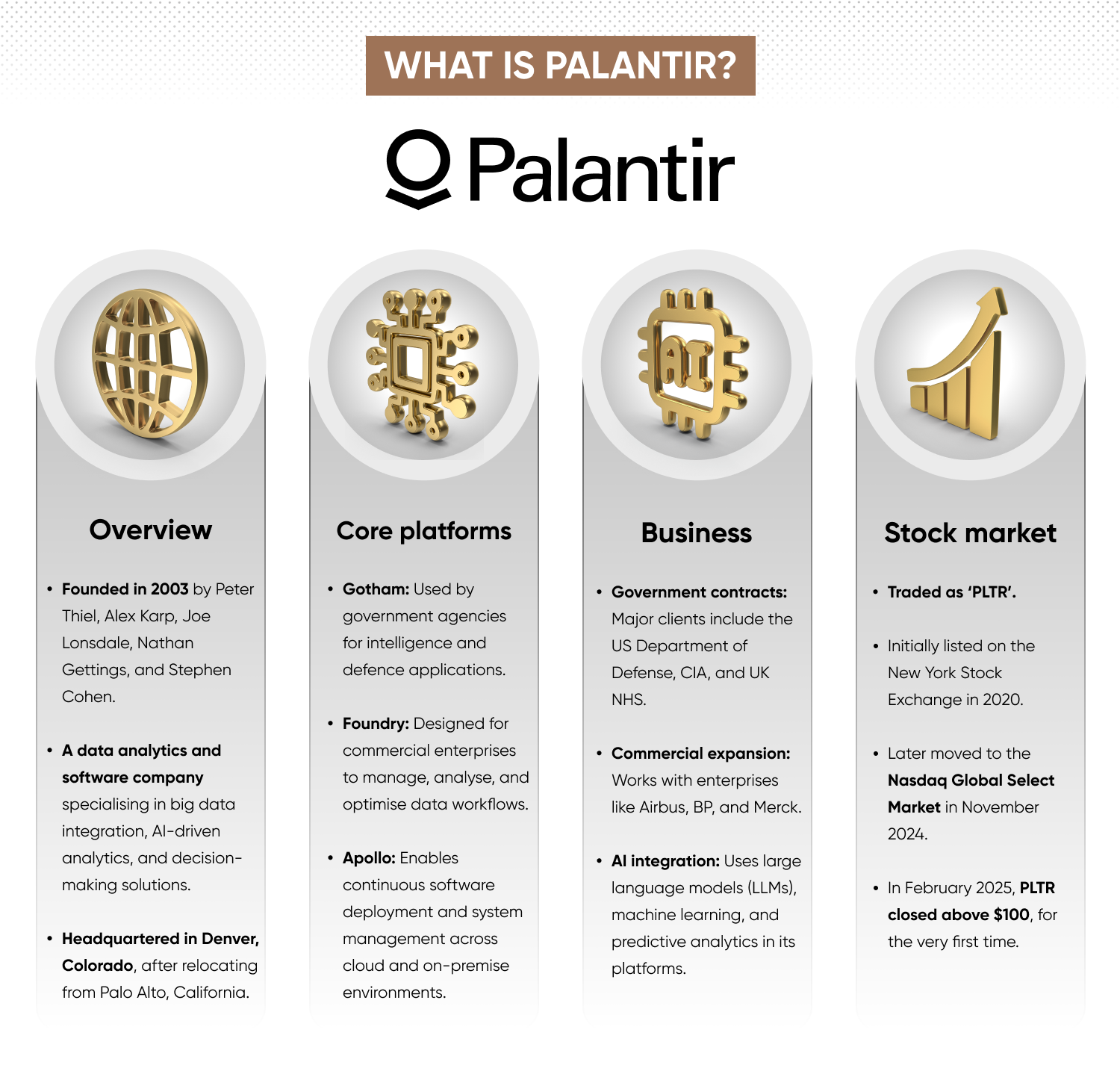
Founded in 2003 by Peter Thiel, Nathan Gettings, Joe Lonsdale, Stephen Cohen, and Alex Karp, Palantir emerged from the crucible of post-9/11 national security concerns. Its initial mission was to leverage Silicon Valley’s innovative spirit to assist intelligence agencies in combating terrorism, particularly by identifying patterns and connections within vast, seemingly unrelated data points. Over the past two decades, Palantir has expanded its reach far beyond intelligence, establishing itself as a purveyor of sophisticated data operating systems that empower organizations to make data-driven decisions at unprecedented scales and speeds. Understanding “what is a Palantir” today requires delving into its foundational platforms, its operational philosophy, and its profound impact on both public sector operations and commercial enterprise.
The Genesis and Philosophy of Data Integration
Palantir’s inception was driven by a fundamental challenge: despite the explosion of digital data, organizations struggled to integrate and analyze it effectively across different silos. Traditional databases and analytical tools often proved inadequate for handling the volume, variety, and velocity of information required for complex investigations or strategic decision-making. Palantir sought to bridge this gap by creating platforms that could unify diverse datasets, allowing human analysts to explore, interpret, and act upon the insights derived.
Origins in Intelligence and Counter-Terrorism
The company’s early years were characterized by a close relationship with U.S. government agencies, particularly within the intelligence community. This foundational experience shaped much of Palantir’s architectural philosophy: the need for robust security, the ability to handle highly sensitive information, and the capacity to combine structured data (like databases) with unstructured data (like documents, images, and communications) into a single, explorable fabric. The success in these early deployments, often credited with aiding critical counter-terrorism efforts, solidified Palantir’s reputation as a developer of cutting-edge technology for mission-critical applications.
The Human-in-the-Loop Paradigm
A distinguishing feature of Palantir’s approach is its emphasis on the “human-in-the-loop” model. Unlike fully automated AI systems, Palantir’s platforms are designed to augment human intelligence rather than replace it. They provide powerful tools for data aggregation, visualization, and algorithmic analysis, but critical decisions and interpretations are ultimately left to the human operator. This philosophy stems from the belief that while algorithms excel at pattern recognition and processing scale, human intuition, contextual understanding, and ethical judgment remain indispensable, especially in sensitive domains like national security, law enforcement, and healthcare. This collaborative approach allows for iterative analysis, where humans guide the exploration and algorithms surface relevant information, leading to more robust and explainable outcomes.
Palantir’s Core Platforms: Gotham, Foundry, and AIP
At the heart of Palantir’s technological offering are its powerful software platforms, each tailored to specific operational needs but sharing a common underlying architecture for data integration and analysis. These platforms represent a significant leap in how organizations interact with and derive value from their data ecosystems.
Palantir Gotham: Empowering Government and Defense
Palantir Gotham was the company’s inaugural platform, primarily designed for the intelligence community, military, and law enforcement agencies. Gotham excels at integrating disparate, often classified, datasets to uncover hidden connections and patterns relevant to national security, criminal investigations, and counter-terrorism operations. It provides a comprehensive suite of tools for link analysis, geospatial intelligence, time-series analysis, and predictive modeling.
- Key Capabilities: Gotham allows analysts to combine data from various sources – phone records, financial transactions, travel manifests, satellite imagery, and more – into a single, interactive environment. Its robust query language and visualization tools enable users to map relationships, track movements, and identify anomalies that might otherwise remain hidden.
- Use Cases: From identifying terrorist networks to tracking illegal financial flows and supporting military intelligence operations, Gotham has been instrumental in providing critical insights to government clients worldwide. Its strength lies in its ability to handle complex, sensitive investigations where data often exists in fractured and highly secure environments.
Palantir Foundry: Transforming Commercial and Public Sectors
Building on the lessons learned from Gotham, Palantir developed Foundry, a platform engineered for commercial enterprises and broader public sector applications. Foundry extends Palantir’s data integration capabilities to help organizations build a unified “digital twin” of their operations, allowing for real-time decision-making, scenario planning, and operational optimization.
- Key Capabilities: Foundry serves as an operating system for data, enabling users to integrate, transform, and analyze data from various enterprise systems (e.g., ERP, CRM, IoT devices, supply chain data). It offers a full spectrum of data management tools, from data ingress and transformation to advanced analytics, machine learning model deployment, and operational applications. Users can build custom applications on top of Foundry to address specific business challenges, such as optimizing supply chains, predicting equipment failures, managing regulatory compliance, or improving customer engagement.
- Use Cases: Foundry is deployed across a vast array of industries, including aerospace, automotive, healthcare, finance, energy, and manufacturing. Companies use it to streamline production processes, manage complex logistics, accelerate drug discovery, forecast market trends, and enhance operational resilience. For instance, an airline might use Foundry to predict maintenance needs for its fleet, optimize flight schedules, and manage fuel consumption, leading to significant cost savings and improved safety.
Palantir AIP (Artificial Intelligence Platform): The Future of Operational AI
The latest evolution in Palantir’s platform ecosystem is the Artificial Intelligence Platform (AIP). AIP is designed to integrate large language models (LLMs) and other advanced AI capabilities directly into operational workflows, allowing organizations to deploy and manage AI effectively and responsibly.
- Key Capabilities: AIP acts as a connective tissue, allowing organizations to connect their proprietary data to various AI models, including both open-source and proprietary LLMs. It provides tools for prompt engineering, model governance, and the integration of AI-generated insights back into human-centric decision-making processes. AIP aims to solve the “last mile” problem of AI: moving from theoretical model development to practical, impactful deployment within an organization’s existing data and operational infrastructure.
- Use Cases: AIP allows a supply chain manager to query their entire supply chain data using natural language, asking questions like “Which suppliers are at risk of disruption in the next quarter?” and receiving AI-generated insights based on real-time data. It enables military strategists to synthesize intelligence reports and predict adversary movements, or healthcare providers to sift through patient data to identify treatment pathways. The platform’s emphasis on control and auditability addresses critical concerns around AI ethics, bias, and explainability.
How Palantir Works: Unifying and Analyzing the Data Fabric
Regardless of the specific platform, Palantir’s core mechanism revolves around creating a comprehensive, semantic data layer that makes diverse information accessible and interoperable. This involves several key technological steps and conceptual frameworks.
Data Ingress and Ontological Modeling
The first step is ingesting vast quantities of raw data from myriad sources – structured databases, unstructured documents, streaming data, sensor feeds, social media, and more. This data is often siloed, disparate, and in different formats. Palantir’s platforms include sophisticated data integration tools that allow for the ingestion and normalization of this data.
Crucially, Palantir then builds an “ontology” – a semantic model that defines the entities, relationships, and events within the data. For example, in an intelligence context, entities might include “Person,” “Organization,” “Location,” and “Event.” Relationships could be “Works For,” “Communicates With,” or “Attended.” This ontology creates a unified, queryable schema that transcends the original source formats, making complex data immediately understandable and explorable for human analysts.
Collaborative Analysis and Operationalization
Once the data is integrated and modeled, Palantir provides a rich environment for collaborative analysis. Multiple users can work on the same datasets, build shared hypotheses, and develop analytical workflows. The platforms offer advanced visualization tools that transform raw data into intuitive graphs, maps, timelines, and dashboards, making it easier to spot patterns, outliers, and critical connections.
Beyond analysis, Palantir focuses on “operationalization.” This means taking the insights derived from data and integrating them directly into an organization’s daily operations and decision-making processes. Whether it’s triggering an alert for a potential fraud, optimizing a logistics route, or identifying a critical intelligence target, Palantir aims to shorten the loop between data insight and real-world action.
Impact, Challenges, and the Evolving Landscape
Palantir’s profound impact on data-driven decision-making is undeniable, particularly in areas requiring complex data synthesis and real-time responsiveness. However, its operations have also frequently sparked debate and raised significant ethical and privacy concerns.
Transformative Impact Across Sectors
Palantir has been credited with providing critical support in various high-stakes scenarios. In defense, its platforms help manage complex logistics, predict equipment failures, and enhance situational awareness. In healthcare, it aids in disease tracking, resource allocation, and accelerating drug discovery. For commercial clients, it unlocks efficiencies in supply chains, optimizes manufacturing processes, and enhances cybersecurity defenses. The ability to unify disparate data and empower analysts with powerful tools has demonstrably improved operational effectiveness and strategic insight for its clients.
Ethical Considerations and Privacy Debates
The very power of Palantir’s technology—its ability to connect vast amounts of data about individuals and organizations—is also the source of its most significant controversies. Critics have raised concerns about:
- Privacy: The potential for broad data collection and surveillance, particularly when working with government and law enforcement agencies, raises questions about individual privacy rights and civil liberties.
- Bias: Like any AI and data analytics system, Palantir’s platforms are susceptible to inheriting and amplifying biases present in the underlying data, potentially leading to discriminatory outcomes.
- Transparency: The secretive nature of many of its contracts, especially with intelligence agencies, and the complexity of its proprietary algorithms have led to calls for greater transparency and accountability regarding how the technology is used and its societal impact.
- Dual-Use Dilemma: The technology’s capacity for both benevolent and malevolent applications (e.g., catching criminals vs. aiding authoritarian regimes) presents a classic dual-use dilemma inherent in powerful technological advancements.

The Future of Data Operating Systems
Despite the challenges, Palantir continues to innovate, particularly with its focus on AIP and the integration of advanced AI. The company positions itself not merely as a software vendor but as a provider of a “data operating system” – a foundational layer for any organization looking to become truly data-driven and leverage AI at scale. As the volume and complexity of data continue to grow, and as AI moves from research labs to frontline operations, the need for robust platforms that can integrate, govern, and operationalize these technologies will only intensify.
The future of “a Palantir” lies in its ability to navigate these technological advancements and ethical complexities, demonstrating how powerful data integration and AI tools can be deployed responsibly to solve some of humanity’s most pressing challenges, while upholding democratic values and individual rights. Its evolution will be a testament to the ongoing dialogue between technological innovation and societal responsibility in the age of big data and artificial intelligence.
aViewFromTheCave is a participant in the Amazon Services LLC Associates Program, an affiliate advertising program designed to provide a means for sites to earn advertising fees by advertising and linking to Amazon.com. Amazon, the Amazon logo, AmazonSupply, and the AmazonSupply logo are trademarks of Amazon.com, Inc. or its affiliates. As an Amazon Associate we earn affiliate commissions from qualifying purchases.