
Foundational Literacy in the Digital Age
Mastering the building blocks of language is paramount for effective communication, a skill increasingly crucial in our digitally interconnected world. One of the most fundamental concepts in early literacy, particularly in phonics instruction, involves understanding syllables: the single, unbroken sounds of a spoken or written word. Among these, distinguishing between open and closed syllables provides a critical framework for decoding words, enhancing reading fluency, and improving spelling accuracy. While these are traditional linguistic concepts, their contemporary application and teaching are profoundly shaped by advancements in educational technology.

The Core Concepts Digitally Enhanced
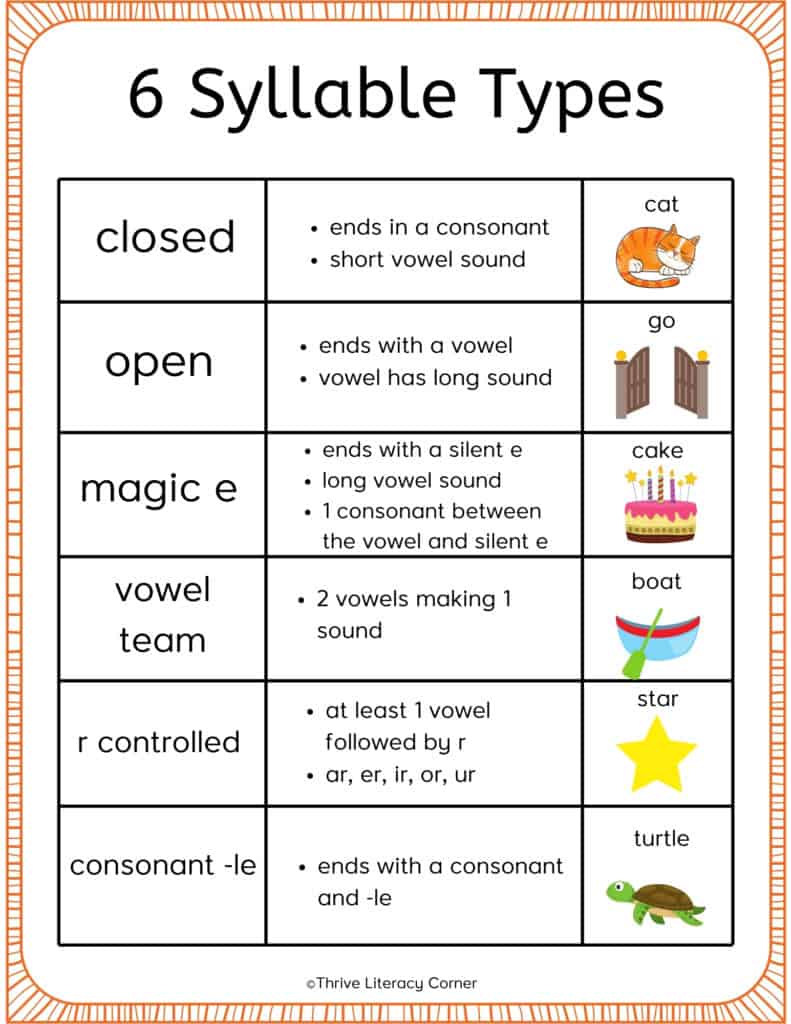
At its heart, an open syllable is a syllable that ends with a vowel sound, and that vowel sound is typically long. Consider words like “go,” “me,” and “hi.” In these instances, the vowel is left “open” at the end of the syllable, allowing it to produce its natural, long sound. Contrast this with a closed syllable, which ends with a consonant sound. The vowel in a closed syllable is typically short, as the consonant “closes in” and restricts the vowel sound. Classic examples include “cat,” “dog,” and “sit.” The ‘a’ in ‘cat’ is short because the ‘t’ acts as a boundary, effectively ‘closing’ the syllable. Understanding these two types forms the bedrock of phonics instruction, enabling learners to predict vowel sounds and tackle unfamiliar words systematically. In the modern educational landscape, digital tools now offer dynamic, interactive ways to illustrate these distinctions, moving beyond static textbook examples to engaging multimedia experiences. Educational software can highlight syllables, provide immediate audio pronunciations, and offer visual cues that make abstract phonetic rules tangible for learners.
Bridging Traditional Phonics with Modern Tools
The integration of technology into phonics education is not merely about digitizing old methods; it’s about fundamentally enhancing comprehension and engagement. Modern educational platforms leverage interactive modules to help students identify open and closed syllables within words. These tools often employ drag-and-drop exercises where students sort words or word parts into open or closed categories, interactive word-building games that visually demonstrate the impact of adding a consonant, and animated explanations that vividly show the “opening” or “closing” effect of consonants on vowel sounds. For instance, an app might visually represent a vowel sound expanding in an open syllable and then visually contracting when a consonant is added to form a closed syllable. This multi-sensory approach, powered by sophisticated software, caters to diverse learning styles, making complex phonics rules more accessible and enjoyable for students, whether they are learning in a traditional classroom, via remote instruction, or through self-paced modules. The inherent scalability of digital resources also means that these foundational concepts can be delivered to a vast audience, transcending geographical and socio-economic barriers.
AI-Driven Learning Platforms for Syllabication
Artificial intelligence (AI) is revolutionizing how foundational literacy skills, including syllabication, are taught and mastered. AI-driven platforms move beyond one-size-fits-all instruction, providing highly personalized learning experiences that adapt to each student’s unique pace and needs. By analyzing student performance in real-time, these intelligent systems can identify specific areas of difficulty related to open and closed syllables and then deploy targeted interventions.
Personalized Pathways for Phonics Mastery
AI algorithms excel at creating adaptive learning paths. When a student interacts with a phonics application, the AI monitors their responses to exercises involving open and closed syllables. If a student consistently misidentifies open syllables or struggles with words containing specific vowel sounds in closed syllables, the AI system will automatically adjust the curriculum. It might introduce more foundational lessons, offer additional practice with relevant word families, or present the concept in a different format (e.g., visual instead of auditory). This dynamic personalization ensures that advanced learners are challenged, while those needing more support receive it without feeling overwhelmed or bored. The goal is to optimize learning efficiency, ensuring every student achieves mastery of syllable types before moving on to more complex reading skills, all orchestrated by intelligent software.
Real-time Feedback and Adaptive Syllable Exercises
One of the most powerful features of AI in learning is its capacity for providing immediate, actionable feedback. Traditional phonics instruction often requires a teacher to manually review student work, which can be time-consuming and delay learning correction. AI-powered applications, however, can instantly evaluate a student’s answer to a syllable identification task, explain why an answer was incorrect, and guide them towards the right solution. For example, if a student incorrectly identifies “ti” in “tiger” as a closed syllable, the AI might highlight the ‘i’ and prompt them to remember what happens to a vowel sound at the end of a syllable, or provide a sound clip contrasting the long ‘i’ in “tiger” with the short ‘i’ in “tin.” Furthermore, these platforms often generate adaptive exercises, meaning the difficulty and type of syllable practice automatically adjust based on the student’s ongoing performance. This ensures continuous engagement and optimal challenge, preventing frustration and promoting steady progress towards mastering open and closed syllables.
Educational Apps and Software for Phonics Instruction
The proliferation of educational apps and specialized software has created a rich ecosystem for phonics instruction, making the complexities of open and closed syllables accessible through engaging digital interfaces. These tools cater to a wide range of ages and learning styles, offering dynamic alternatives to traditional workbooks and flashcards.

Interactive Syllable Games and Simulations
Many successful educational apps transform the learning of open and closed syllables into interactive games and simulations. Instead of rote memorization, students might engage in virtual word-building activities where they add or remove consonants to see the immediate effect on a vowel’s sound, thus visually and audibly reinforcing the concept of open versus closed syllables. Games could involve sorting words into correct syllable categories, solving puzzles that require syllabication skills, or even creating animated characters whose actions depend on correct syllable identification. These gamified approaches leverage principles of positive reinforcement and intrinsic motivation, making the often challenging task of phonics acquisition enjoyable. The instant visual and auditory feedback inherent in these apps allows children to learn from mistakes immediately and internalize the rules more effectively than they might through passive learning methods.
Tools for Teachers: Streamlining Syllable Assessment
Beyond direct student interaction, educational software also provides invaluable resources for educators. Teachers can utilize specialized platforms to create customized lessons, assign digital syllable exercises, and track student progress in real-time. These tools often include robust analytics dashboards that provide granular data on student performance, highlighting common errors in open and closed syllable identification across the class or for individual students. This data-driven insight allows teachers to quickly identify learning gaps and tailor their instruction more effectively, saving significant time on manual grading and assessment. Furthermore, many software solutions offer built-in resources like printable worksheets generated from a library of words, customizable quizzes, and interactive whiteboards that can project syllable lessons directly into the classroom, enhancing both efficiency and instructional quality in foundational literacy.
The Role of Digital Security in Learning Environments
As educational technology becomes increasingly integral to teaching foundational concepts like open and closed syllables, the importance of digital security cannot be overstated. Safeguarding student data, ensuring the integrity of learning content, and maintaining equitable access are critical considerations for any educational software or platform.
Protecting Student Data in Phonics Apps
Educational apps and software that track student progress in phonics, including their mastery of open and closed syllables, often collect sensitive personal and academic data. This can include names, ages, performance metrics, and even voice recordings for pronunciation exercises. Robust digital security protocols are essential to protect this information from unauthorized access, breaches, or misuse. Developers and educational institutions must adhere to stringent data privacy regulations (e.g., GDPR, COPPA, FERPA) through encryption, secure data storage, and strict access controls. Furthermore, clear privacy policies must inform users about what data is collected, how it is used, and with whom it is shared. Without these safeguards, the benefits of personalized, data-driven learning could be undermined by privacy risks, eroding trust in essential educational technologies.
Ensuring Content Integrity and Accessibility
Digital security extends beyond data privacy to encompass the integrity and accessibility of the learning content itself. Phonics curricula delivered through software must be protected from tampering or unauthorized modifications to ensure accuracy and educational effectiveness. This requires secure content management systems and verification processes. Additionally, digital security considerations include ensuring that these learning tools are robust against cyber threats that could disrupt access. Denial-of-service attacks or malware could render educational platforms unusable, thereby cutting off students from vital learning resources. Finally, true digital security in education also means ensuring equitable access. While not strictly a cybersecurity issue, ensuring that all students, regardless of their socio-economic background or physical location, can securely access the technology needed to learn concepts like open and closed syllables is a critical component of a responsible digital learning environment. This involves designing accessible interfaces and providing secure, stable access mechanisms.
Future Trends in Digital Literacy Education
The evolution of technology promises even more immersive and effective ways to teach foundational literacy, particularly complex phonics concepts like open and closed syllables. Emerging technologies are set to transform learning experiences, making them more engaging, adaptive, and universally accessible.
Augmented Reality for Immersive Syllable Learning
Augmented Reality (AR) holds significant potential for transforming how students learn about syllables. Imagine an AR app where a student points their device at a printed word, and the app overlays an interactive visualization that separates the word into its constituent syllables, highlighting whether each is open or closed, and playing the corresponding vowel sound. Students could interact with virtual 3D representations of words, manipulating them to understand how adding or removing letters changes syllable structure and vowel pronunciation. For example, a virtual ‘magic e’ might visually fly into a closed syllable to make it open, demonstrating the long vowel sound change. This level of immersive, interactive learning moves beyond screen-based interactions, bringing phonetic rules to life in the physical environment and providing a powerful tool for conceptual understanding and retention.
Wearable Tech and Voice Recognition for Pronunciation
Wearable technology, such as smartwatches or specialized educational devices, combined with advanced voice recognition software, represents another frontier for phonics instruction. These technologies could provide instant, personalized feedback on pronunciation related to open and closed syllables. A student practicing a word could speak it into a wearable device, which then analyzes the vowel sounds and syllabication based on voice patterns. If the pronunciation of a long ‘a’ in an open syllable like “fa-ther” is incorrect, the system could immediately pinpoint the error and offer corrective guidance. This capability moves beyond simple identification exercises, addressing the auditory and articulatory aspects of phonics. It offers continuous, private practice opportunities that build confidence and accuracy in both reading and speaking, making the mastery of open and closed syllables a truly comprehensive phonetic experience aided by cutting-edge digital tools.
aViewFromTheCave is a participant in the Amazon Services LLC Associates Program, an affiliate advertising program designed to provide a means for sites to earn advertising fees by advertising and linking to Amazon.com. Amazon, the Amazon logo, AmazonSupply, and the AmazonSupply logo are trademarks of Amazon.com, Inc. or its affiliates. As an Amazon Associate we earn affiliate commissions from qualifying purchases.