
For many Americans, the paper currency in their wallets is a simple tool for daily transactions—a means to an end. However, tucked away in attics, estate sales, and coin shops is a specific type of legal tender that represents a fascinating era of American financial history: the One Dollar Silver Certificate. Unlike the Federal Reserve Notes we use today, which are backed by the full faith and credit of the government, silver certificates were once directly “payable to the bearer on demand” in actual silver bullion or coin.
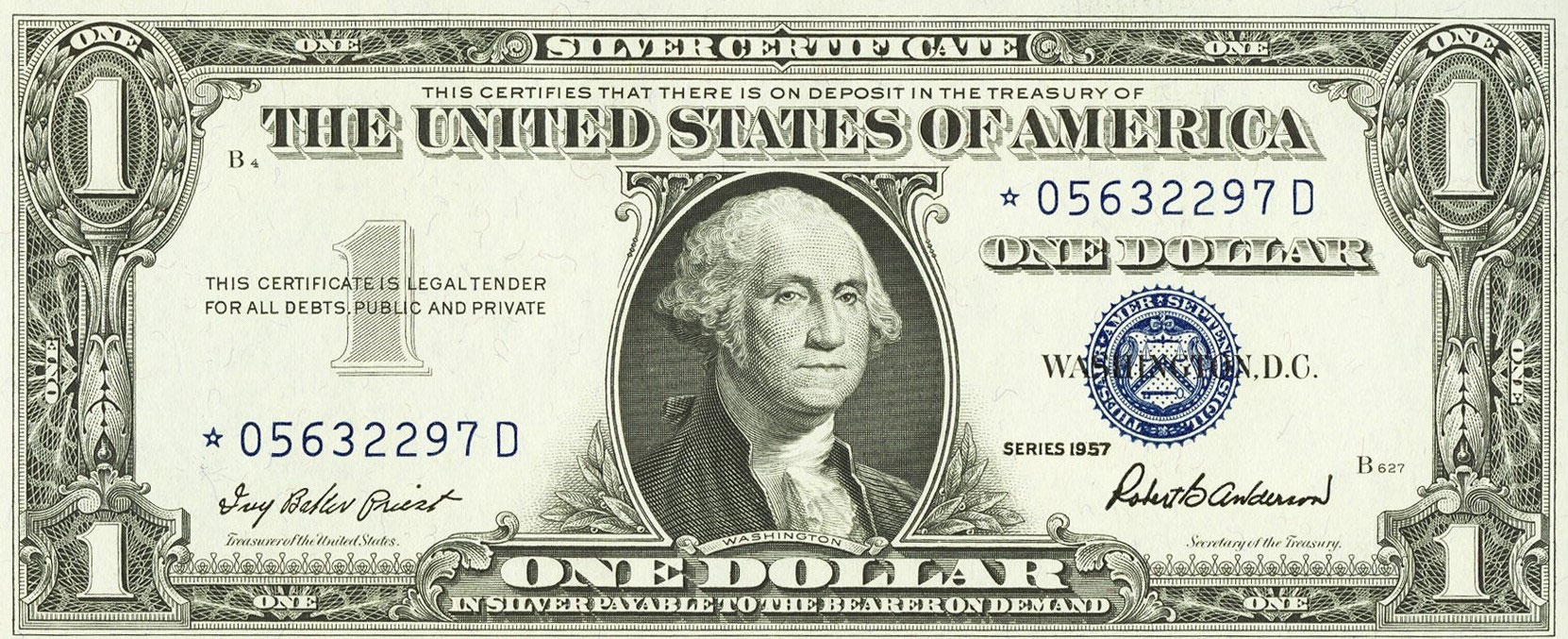
In the modern landscape of personal finance and alternative investments, these blue-sealed notes have transitioned from everyday currency to a sought-after asset class for numismatists and investors alike. Understanding what a one dollar silver certificate is requires a deep dive into the evolution of the U.S. monetary system and an analysis of how these historical artifacts hold their value in today’s market.
The Origins and Evolution of the One Dollar Silver Certificate
The story of the silver certificate is inextricably linked to the volatile politics of 19th-century American finance. In the late 1800s, the United States was embroiled in a “battle of the standards” between those who supported a gold standard and those who advocated for “free silver.” The silver certificate was born out of this tension as a compromise to satisfy silver miners and western interests who wanted to see silver used as a primary monetary base.
From the Silver Purchase Act to the General Public
The legal foundation for silver certificates began with the Bland-Allison Act of 1878. This legislation required the U.S. Treasury to purchase massive amounts of silver and mint it into silver dollars. However, silver dollars were heavy and cumbersome for daily use. To make the currency more practical, the government issued silver certificates—paper receipts that represented silver dollars held in the Treasury vaults.
Initially, these certificates were issued in large denominations, but by 1886, the one dollar silver certificate was introduced to the general public. For the average citizen, this was a revolutionary financial tool. It provided the convenience of paper money with the tangible security of precious metal backing. Every time a person held a one dollar silver certificate, they held a legal claim to one ounce of silver.
The Distinction Between Large-Size and Small-Size Notes
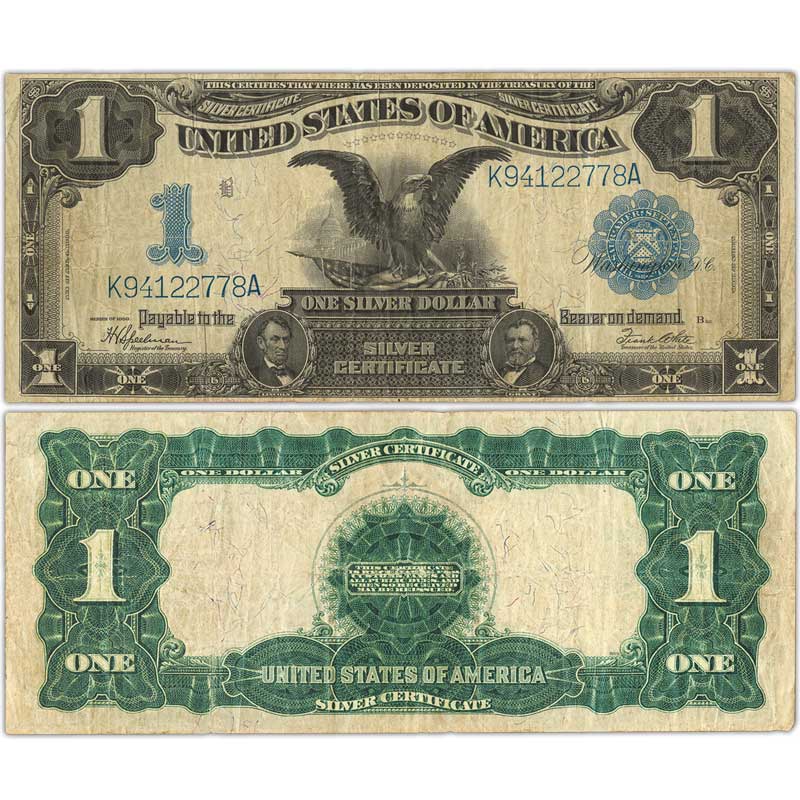
If you are evaluating a silver certificate as a financial asset, the first thing you will notice is the physical size. Prior to 1928, U.S. currency was significantly larger than it is today. Often referred to by collectors as “horse blankets,” these large-size one dollar silver certificates are highly prized. They feature intricate artwork and historical symbolism that reflected the nation’s growing economic power.
In 1928, the Treasury switched to the “small-size” format we recognize today to reduce printing costs and standardize production. While these smaller notes are more common, they remain a vital part of numismatic history. For an investor, the distinction is crucial: large-size notes generally command a significantly higher premium due to their age, scarcity, and aesthetic appeal.
How to Identify a One Dollar Silver Certificate
To the untrained eye, a silver certificate might look like a standard dollar bill that has simply aged. However, there are specific markers that distinguish these notes from modern Federal Reserve Notes. Identifying these features is the first step in assessing the potential return on investment for any piece of paper currency.
Key Visual Markers: The Blue Seal and Serial Numbers
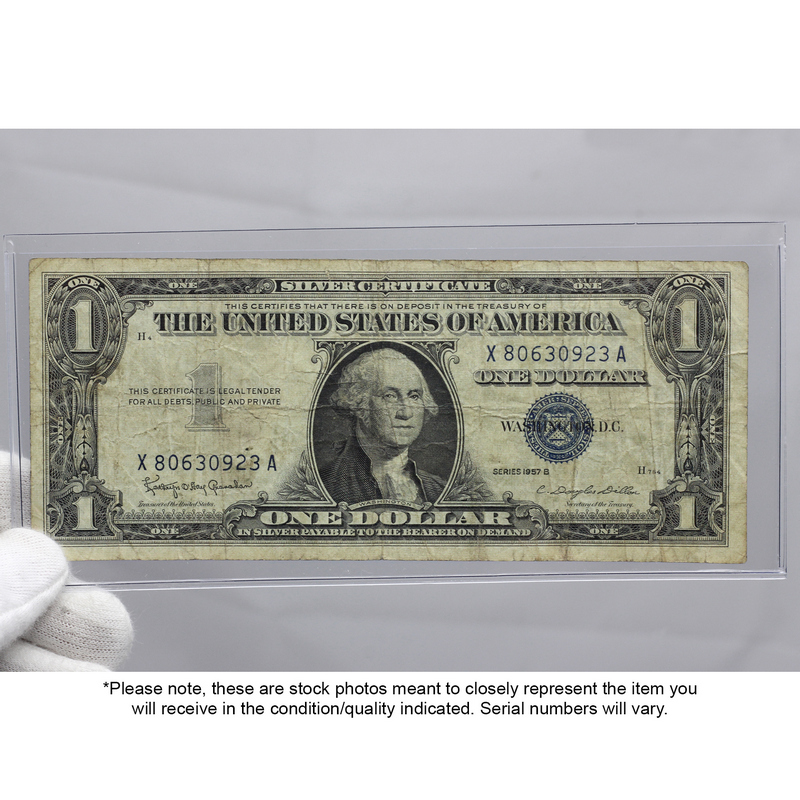
The most immediate way to identify a silver certificate is the color of the treasury seal and the serial numbers. On modern currency, these elements are printed in green. On a silver certificate, they are almost always printed in a distinct blue ink.
Furthermore, the text at the top of the bill will explicitly state “SILVER CERTIFICATE” rather than “FEDERAL RESERVE NOTE.” At the bottom of the bill, older versions will state “One Silver Dollar Payable to the Bearer on Demand.” These textual cues are essential for verification. In the world of personal finance, being able to quickly identify these markers can help you spot undervalued assets at estate sales or in “junk” bins at coin shops.
Notable Series and Variations (1928, 1935, 1957)
Not all silver certificates are created equal. The Treasury issued several different “series” over the years. The 1928 series is famous for the “Funnyback” design, so named because the reverse side looked somewhat like play money compared to previous iterations.
The 1935 and 1957 series are the most common ones found today. The 1957 series is particularly notable because it was the first piece of U.S. paper currency to include the motto “In God We Trust.” While these common series are often worth only a small premium over their face value, they serve as an excellent entry point for new collectors and investors looking to diversify into historical currency without a massive capital outlay.
The Transition Away from Silver: Why They Stopped Printing
The demise of the silver certificate was a result of the same economic pressures that created it: the fluctuating value of silver. As the industrial demand for silver grew in the mid-20th century, the market price of the metal began to approach and eventually exceed the face value of the currency.
The 1960s Phase-Out and the End of Redemption
By the early 1960s, the U.S. government faced a dilemma. People were beginning to hoard silver certificates to exchange them for silver bullion, which they could then sell for a profit on the open market. This created a drain on the Treasury’s silver reserves. In response, President John F. Kennedy signed Executive Order 11110 in 1963, which began the process of phasing out silver certificates in favor of Federal Reserve Notes.
The most critical date for any holder of these notes was June 24, 1968. This was the final deadline set by Congress for the redemption of silver certificates for silver bullion. After this date, the “promise” printed on the bill became a relic of the past. While the notes remained legal tender—meaning you could still spend them for $1 at a grocery store—they could no longer be swapped for physical precious metal at the Treasury.
Silver Certificates vs. Modern Federal Reserve Notes
The primary difference between a silver certificate and a modern Federal Reserve Note is the backing. Modern notes are “fiat” currency; they have value because the government decrees it and because of the economic stability of the United States. Silver certificates represented a “commodity-backed” system.
From an investment perspective, this transition marks the point where the silver certificate moved from being a financial derivative of silver to a “numismatic” asset. Its value is no longer tied to the spot price of an ounce of silver, but rather to its rarity, condition, and historical significance.
Determining the Value of Your Silver Certificate
If you find a one dollar silver certificate in an old drawer, your first question will likely be: “What is it worth?” The answer ranges from exactly one dollar to several thousands of dollars, depending on a variety of factors that any savvy financial observer should understand.
The Role of Condition and Professional Grading
In the world of currency investing, condition is everything. A 1957 silver certificate that has been folded, soiled, and circulated through thousands of hands is typically worth only $1.25 to $2.00. However, the same note in “Crisp Uncirculated” (CU) condition—meaning it looks like it just came off the printing press—can fetch significantly more.
Serious investors often use third-party grading services like PMG (Paper Money Guaranty) or PCGS (Professional Coin Grading Service). These organizations grade notes on a 70-point scale. A note graded 65 or higher is considered “Gem” and will command a premium price. Understanding the grading scale is essential for anyone looking to use silver certificates as a store of value or a medium-term investment.
Rarity Factors: Star Notes and Errors
Beyond condition, rarity is the primary driver of value. One of the most common ways to find a “rare” version of a common bill is to look for a “Star Note.” A Star Note has a small star symbol at the end of the serial number, indicating it was a replacement bill for one that was damaged during the printing process. Because fewer of these were printed, they are inherently more valuable.
Printing errors also create massive value. If a bill was printed off-center, has a “double print,” or features mismatched serial numbers, its value can skyrocket. In the niche of alternative investments, these “error notes” are blue-chip assets that often appreciate at a rate far outstripping traditional inflation hedges.
Investing in Numismatics: Are Silver Certificates a Good Side Hustle?
For those looking to build wealth through side hustles or non-traditional portfolios, the world of paper money (notaphily) offers a unique opportunity. Unlike the stock market, which can be volatile and impersonal, collecting historical currency allows for a tangible connection to history while building equity.
Market Trends and Historical Appreciation
While a common 1957 silver certificate isn’t a get-rich-quick scheme, high-quality, rare series (like the 1896 “Educational Series”) have shown consistent appreciation over decades. These notes are often seen as a “defensive” part of a portfolio. When the stock market is down, tangible assets like rare currency often hold their value or even increase as investors seek “hard assets.”
The key to success in this niche is education. Successful currency flippers spend time learning about “print runs” and “plate numbers.” By identifying a rare variety that a general antique dealer has mispriced, a knowledgeable investor can realize significant immediate gains.
Building a Portfolio: Where to Start
If you are interested in one dollar silver certificates as a financial tool, the best way to start is by focusing on quality over quantity. Instead of buying fifty common, circulated bills, consider investing in one high-grade “Black Eagle” (1899 series) or a “Funnyback” (1928 series) in an authenticated holder.
By treating silver certificates as a legitimate asset class—subject to the same rules of supply, demand, and quality control as any other investment—you can turn a hobby into a sophisticated component of your personal finance strategy. Whether you view them as a hedge against inflation or a piece of American history, the one dollar silver certificate remains one of the most accessible and intriguing entry points into the world of alternative investments.
aViewFromTheCave is a participant in the Amazon Services LLC Associates Program, an affiliate advertising program designed to provide a means for sites to earn advertising fees by advertising and linking to Amazon.com. Amazon, the Amazon logo, AmazonSupply, and the AmazonSupply logo are trademarks of Amazon.com, Inc. or its affiliates. As an Amazon Associate we earn affiliate commissions from qualifying purchases.