
In the realm of digital music and audio technology, a “note in music” transcends its traditional definition as a singular sound with a specific pitch and duration. Instead, it transforms into a discrete, quantifiable unit of data, an atom of musical information that software and hardware interpret, process, and synthesize. Understanding a note from a technological perspective involves delving into its digital abstraction, representation, manipulation, and the algorithms that give it life within various musical applications, from digital audio workstations (DAWs) to advanced AI composition tools.
The Digital Abstraction of Pitch and Duration
At its core, a musical note in a technological context is a set of parameters that define a specific sonic event. These parameters, traditionally encompassing pitch and duration, are meticulously quantified and encoded, allowing machines to store, transmit, and reproduce musical ideas with precision.
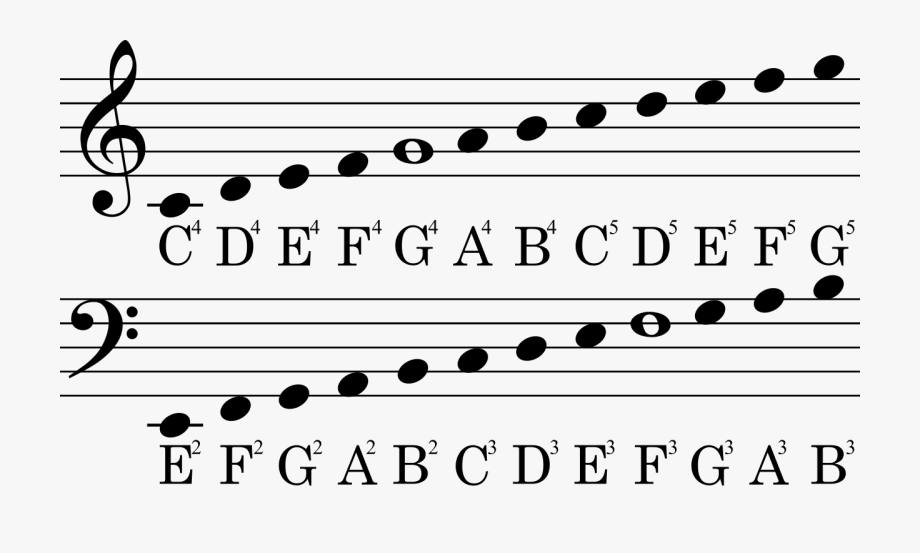
From Acoustic Phenomenon to Binary Data
An acoustic musical note originates from vibrations that produce sound waves. The frequency of these vibrations determines the pitch (e.g., 440 Hz for A4), while the sustained period of the vibration defines its duration. For technology to interface with this, these analog characteristics must be converted into digital data. Analog-to-digital converters (ADCs) sample sound waves, translating continuous waveforms into discrete numerical values. However, for structured musical data like notes, a more abstract, symbolic representation is often preferred, particularly when the sound’s timbre is to be applied later or changed. This symbolic representation separates the “what” (the note itself) from the “how” (the sound that produces it).
The Role of MIDI in Standardizing Notes
The Musical Instrument Digital Interface (MIDI) standard, introduced in the early 1980s, revolutionized how electronic musical instruments and computers communicate. MIDI doesn’t transmit audio; instead, it sends data messages about musical events. A “note” in MIDI is not an audio waveform but a command-line instruction. Key messages related to notes include:
- Note On: Indicates that a specific note (defined by a MIDI note number, e.g., 60 for Middle C) has been pressed.
- Velocity: A numerical value (0-127) accompanying the Note On message, indicating how forcefully the note was played. This directly impacts the loudness and often the timbre of the synthesized sound, adding crucial expressive detail.
- Note Off: Signals that the note has been released, effectively ending its duration.
- Duration: Implicitly determined by the time elapsed between the Note On and Note Off messages.
Beyond these fundamental messages, MIDI notes can also be modified by control change messages (e.g., modulation wheel, sustain pedal), pitch bend data, and aftertouch, further enriching their expressive potential within a digital environment. This standardized protocol allows notes to be exchanged seamlessly between different hardware and software, forming the backbone of modern music production.
Representing Notes in Digital Audio Workstations (DAWs)
Digital Audio Workstations are the central hubs for creating, editing, and mixing music. Within a DAW, notes are visualized and manipulated through specialized interfaces, providing composers and producers with powerful tools for arrangement and performance.
Piano Roll Editors and Notation Software
The most common visual representation of MIDI notes in a DAW is the piano roll editor. This grid-based interface displays notes as rectangular blocks on a timeline. The vertical axis represents pitch (like keys on a piano keyboard), and the horizontal axis represents time. The length of a block corresponds to the note’s duration, and its vertical position indicates its pitch. Velocity is often visualized by the color or height of the note block, offering immediate visual feedback on the dynamic intensity. This intuitive interface allows for precise editing of individual notes, enabling users to adjust pitch, timing, and velocity with granular control.
Alternatively, music notation software within or alongside DAWs translates MIDI note data into traditional musical notation (staff, clefs, time signatures, etc.). This is crucial for composers who prefer reading and writing music in standard notation, or for preparing scores for live musicians. The software automatically transcribes the MIDI events into symbols, handling rhythmic grouping, beaming, and other notational conventions, bridging the gap between digital input and conventional musical literacy.
Parameters Beyond Pitch: Velocity, Articulation, and Expression
While pitch and duration are fundamental, the richness of a musical note in a digital context comes from its associated parameters. Technology allows for the manipulation of aspects that were once solely the domain of a performer’s skill:
- Velocity: As mentioned, this controls the intensity. In synthesizers, higher velocity can trigger different samples or synthesis parameters, emulating the nuanced response of acoustic instruments.
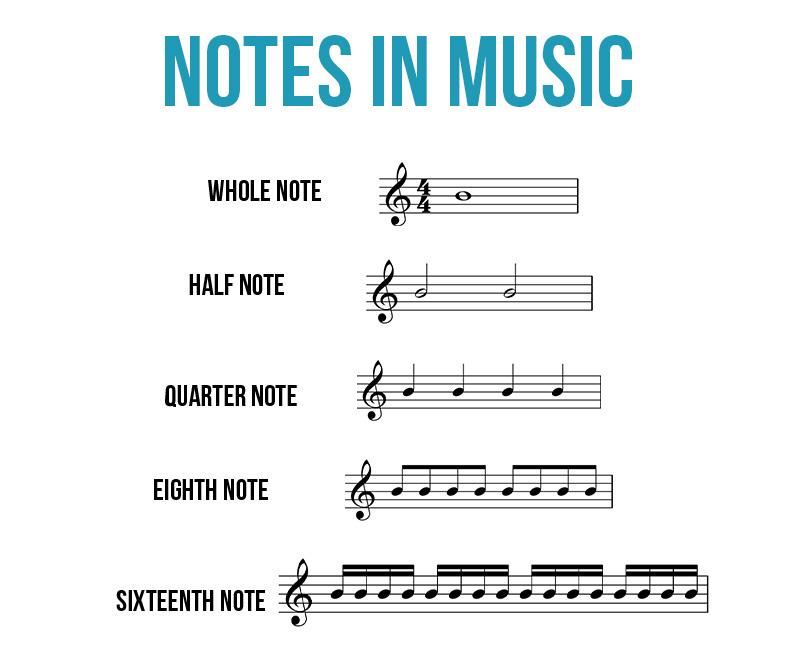
- Quantization: A crucial feature in DAWs, quantization automatically aligns notes to a specific rhythmic grid (e.g., quarter notes, eighth notes). This corrects timing inaccuracies, ensuring rhythmic precision, though it can also be used creatively to create robotic or perfectly aligned grooves.
- Articulation: Digital instruments can employ various techniques to mimic articulations like legato, staccato, sustained, or pizzicato through key switches or expression maps. These are often MIDI commands that switch between different samples or synthesis modes for a single note, dramatically altering its character.
- Expression Controls: MIDI CC (Control Change) messages allow for real-time manipulation of parameters like vibrato, tremolo, portamento, and dynamics. A note isn’t just “on” or “off”; its entire trajectory can be shaped over its duration, offering a level of control that rivals or even surpasses that of acoustic performance when carefully programmed.
The Algorithmic Interpretation of Notes in AI and Music Generation
Artificial intelligence is rapidly transforming music creation, and at the heart of this revolution is the ability of algorithms to understand, learn from, and generate musical notes.
Neural Networks and Note Sequence Prediction
Machine learning models, particularly recurrent neural networks (RNNs) and transformer models, are adept at processing sequential data, making them ideal for handling musical notes. These AI systems can be trained on vast datasets of existing musical compositions, learning the complex patterns, harmonies, rhythms, and structures of note sequences.
- Note Prediction: Given an initial sequence of notes, an AI model can predict the most probable subsequent notes, effectively “composing” a melody or a harmony line. This involves understanding musical grammar and stylistic nuances learned from its training data.
- Style Transfer: AI can analyze the note patterns and characteristics of one musical style and apply them to another, or even generate new compositions in a hybrid style.
- Harmonization and Counterpoint: Algorithms can generate accompanying note sequences that adhere to established rules of harmony and counterpoint, creating rich textures around a given melody. The “note” becomes an element in a complex mathematical and statistical puzzle the AI solves.
Synthesizing Notes: From Waveforms to Instruments
Beyond generating abstract note data, AI and advanced synthesis techniques are crucial for rendering these notes into audible sound. Digital synthesizers create sounds from scratch using various synthesis methods (subtractive, additive, FM, wavetable, granular, etc.). Each method generates complex waveforms that, when played at specific frequencies, produce distinct pitches—the audible manifestation of a “note.”
Physical modeling synthesis uses mathematical models to simulate the physical properties of acoustic instruments, producing highly realistic sounds from note inputs. AI can also be used to design new synthesis algorithms, creating novel timbres and textures that respond dynamically to note parameters. The journey from a conceptual note to a rich, expressive sound is a testament to the intricate interplay between algorithms, digital signal processing, and human creativity.
Notes in Audio Analysis and Digital Signal Processing
Digital Signal Processing (DSP) is the backbone for identifying, manipulating, and enhancing notes within audio signals. From simple pitch detection to advanced remixing, DSP techniques make it possible to work with notes embedded in complex soundscapes.
Pitch Detection Algorithms and Frequencies
Extracting individual notes from a raw audio recording is a significant challenge. DSP algorithms employ various techniques to identify the fundamental frequency (F0) of a sound, which corresponds to its perceived pitch.
- Fast Fourier Transform (FFT): This mathematical algorithm transforms a time-domain audio signal into its frequency components. By analyzing the resulting spectrum, dominant frequencies (and their harmonics) can be identified, allowing the system to infer the presence of specific musical notes.
- Autocorrelation: This method compares a signal with a delayed copy of itself to find repeating patterns. The delay at which the signal best matches itself indicates the fundamental period of the waveform, from which the fundamental frequency (and thus the note) can be derived.
- Machine Learning for Polyphonic Pitch Detection: For audio containing multiple simultaneous notes (polyphony), traditional DSP methods struggle. Machine learning models, trained on vast datasets of polyphonic music, can learn to disentangle individual pitches from complex audio signals, mapping specific frequency bands and timbral characteristics to discrete notes.
Quantization and Timing Correction in Live Audio
Beyond detecting notes, DSP allows for their real-time manipulation. Live audio quantization, for instance, can correct timing inaccuracies in a live performance, snapping detected notes to a precise rhythmic grid. This is commonly used in electronic music performance and production to ensure tight synchronization. Similarly, pitch correction algorithms (like Auto-Tune) analyze the detected pitch of a note and automatically adjust its frequency to conform to a desired scale or specific target pitch, effectively “correcting” or stylizing the note’s intonation.
The Future of Notes: Advanced Digital Interactions
The technological evolution of the musical note is far from over. Emerging technologies promise even more immersive and intuitive ways to interact with, create, and experience notes.
Haptic Feedback and Virtual Instruments
The tactile experience of playing a physical instrument is integral to musical expression. Haptic technology aims to bridge this gap in digital environments. Imagine virtual reality instruments that provide realistic haptic feedback, allowing users to “feel” the strings of a guitar or the keys of a piano in a virtual space. This integration could make interacting with digital notes more intuitive and expressive, enhancing the learning experience and creative potential for musicians using virtual reality or augmented reality platforms. Notes would not just be visual or auditory data, but also tactile sensations.

Real-time Collaborative Composition
The internet has enabled collaborative music-making, but future advancements in network synchronization and cloud computing will allow for truly seamless, real-time collaborative composition at the note level. Multiple users, potentially located anywhere in the world, could simultaneously manipulate notes within a shared DAW environment with minimal latency. AI could even act as an intelligent collaborator, suggesting note sequences, orchestrations, or rhythmic variations in real-time, adapting to the creative input of human participants. The note, in this context, becomes a shared digital object, a point of interaction in a dynamic, global creative workspace.
Ultimately, the humble “note in music” has undergone a profound transformation in the digital age. From an acoustic event to a binary command, a visual block, an algorithmic input, and potentially a haptic sensation, its technological interpretation continues to expand, pushing the boundaries of musical creation and interaction.
aViewFromTheCave is a participant in the Amazon Services LLC Associates Program, an affiliate advertising program designed to provide a means for sites to earn advertising fees by advertising and linking to Amazon.com. Amazon, the Amazon logo, AmazonSupply, and the AmazonSupply logo are trademarks of Amazon.com, Inc. or its affiliates. As an Amazon Associate we earn affiliate commissions from qualifying purchases.