
A notary certificate stands as a cornerstone of legal and financial validity, acting as an impartial verification of critical documents. Far more than just a stamp and signature, it is a formal declaration by a state-commissioned notary public attesting to the authenticity of a signature, the identity of the signer, or the fact that an oath or affirmation was taken. In the intricate world of finance—spanning personal investments, business transactions, and estate planning—the presence of a properly executed notary certificate provides an essential layer of trust, legal enforceability, and fraud deterrence. Without it, countless financial agreements and declarations would lack the necessary legal standing, exposing individuals and businesses alike to significant risk and potential dispute.

The Essential Role of Notary Certificates in Financial Transactions
In virtually every facet of personal and business finance, trust and authenticity are paramount. Notary certificates serve as an independent safeguard, ensuring that documents of financial consequence are executed with integrity and legal compliance. Their role extends beyond mere formality; they imbue documents with a presumptive validity that is crucial for legal and financial institutions.
Ensuring Trust and Preventing Fraud in Monetary Dealings
At its core, a notary certificate is an anti-fraud mechanism. When a document is notarized, the notary public acts as a neutral third party, verifying the identity of the person signing and ensuring they are signing willingly and knowingly. This process is critical for transactions involving substantial sums of money or significant assets. Imagine a real estate deed, a loan agreement, or a power of attorney for financial matters. Without a notary’s impartial verification, it would be significantly easier for forged signatures or coerced consent to go undetected, potentially leading to the fraudulent transfer of assets, unauthorized debt, or the hijacking of financial control. The notary’s certificate provides a legal assurance that the signatures on these financial instruments are indeed those of the named parties, thereby protecting all stakeholders from malicious intent and financial crime.
Legal Compliance and Financial Validity
Many financial documents are not merely enhanced by notarization; they legally require it to be considered valid and enforceable. For instance, in real estate, deeds, mortgages, and certain leases must often be notarized before they can be recorded with the county clerk, which is the act that legally transfers ownership or establishes a lien. Without notarization, such documents would be rejected, hindering transactions and delaying critical financial processes. Similarly, for business finance, articles of incorporation, partnership agreements, and significant contracts often necessitate notarization to confirm the authenticity of the signers, thus ensuring the legal standing of the business entity or agreement itself. This legal requirement underscores the notary certificate’s foundational importance in maintaining order and legitimacy within the financial system, preventing disputes that could arise from questionable document execution.
Types of Notary Certificates and Their Financial Applications
Different types of notary certificates serve distinct purposes, each critical in specific financial contexts. Understanding these variations is essential for ensuring that financial documents are properly prepared and executed to achieve their intended legal and financial effect.
Acknowledgments
An acknowledgment is perhaps the most common type of notary certificate. It certifies that the signer personally appeared before the notary, was identified by the notary, and acknowledged that they signed the document willingly. In finance, acknowledgments are vital for real estate transactions (deeds, mortgages, satisfactions of mortgage), where the transfer of property ownership or the granting of a lien requires irrefutable proof of the grantor’s or mortgagor’s consent. They are also crucial for powers of attorney relating to financial management, ensuring that the principal willingly grants significant financial authority to an agent.
Jurats
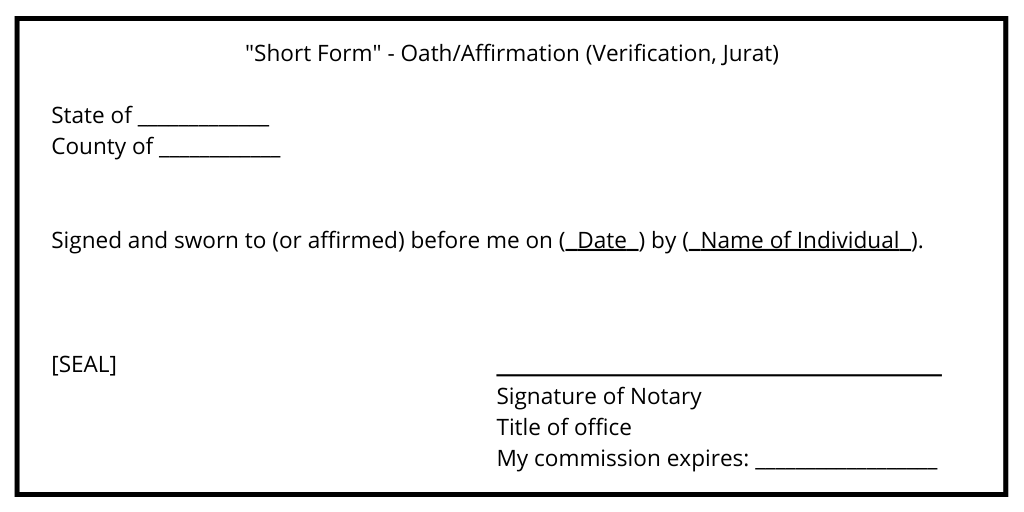
A jurat certificate attests that the signer swore or affirmed under oath (or affirmation) that the contents of the document are true, and that they signed the document in the notary’s presence. This type of certificate is indispensable for affidavits, which are written statements made under oath, frequently used in legal proceedings involving financial disputes, insurance claims, or debt collection. For example, an affidavit of financial means submitted in a court case or an affidavit detailing damages for an insurance claim would require a jurat to give it legal weight and make the signer accountable for the truthfulness of their statements.
Oaths and Affirmations
Similar to jurats, oaths and affirmations involve the signer solemnly swearing or affirming to the truthfulness of a statement. However, these are often standalone acts rather than tied to a document signature. In financial contexts, oaths may be administered during depositions concerning financial matters, during court testimonies, or for declarations of financial solvency required by certain regulatory bodies. They ensure the veracity of spoken statements related to financial facts or conditions, which can have profound implications for legal outcomes and financial obligations.
Certified Copies
While not all jurisdictions allow notaries to certify copies of all types of documents, where permitted, a certified copy certificate attests that a copy of a document is a true, accurate, and complete reproduction of the original. This is invaluable when financial institutions or government agencies require verified duplicates of financial records, such as bank statements, stock certificates, or even personal identification documents (like birth certificates for inheritance claims) that cannot be surrendered. The notary’s certification provides assurance that the copy can be relied upon as if it were the original for financial verification purposes.
Witnessing Signatures
In some cases, a notary may be asked to witness a signature, meaning they verify that a particular person signed a document. While less common as a standalone certificate for financial documents than acknowledgments or jurats, this role is often incorporated into other notarization types. Crucially, for estate planning documents like wills and trusts, especially those with significant asset holdings, the notary’s presence and certificate can confirm the identities of witnesses to the will or trust, adding another layer of security and legal standing to the eventual distribution of wealth.
The Financial Impact of Proper Notarization
The meticulous application of notary certificates translates directly into tangible financial benefits, safeguarding assets, streamlining business functions, and mitigating potential financial losses. It is an investment in security and legal clarity that pays dividends by preventing costly complications.
Protecting Assets and Investments

Properly notarized documents are paramount to protecting an individual’s or entity’s financial assets. Consider real estate: a notarized deed ensures legal transfer of property, preventing disputes over ownership that could result in significant legal fees and potential loss of the asset. For investments, notarized trusts or partnership agreements clearly define ownership and distribution rights, safeguarding beneficiaries’ interests and investors’ capital from ambiguity or fraud. Without this protective layer, financial assets are vulnerable to challenges that could erode their value or lead to their unauthorized appropriation.
Facilitating Business Operations and Contracts
In the corporate world, notary certificates are integral to the smooth and secure operation of businesses. Major contracts, loan applications, mergers and acquisitions documentation, and intellectual property transfers often require notarization. This verification ensures that all parties are properly represented and that agreements are legally sound, preventing future challenges that could halt operations, incur penalties, or dissolve lucrative deals. By reducing the risk of document-related disputes, notarization allows businesses to focus on growth and profitability rather than being bogged down by legal uncertainty.
Mitigating Financial Risk and Disputes
The clarity and legal enforceability provided by notarized documents significantly mitigate financial risk. When agreements, affidavits, or declarations are notarized, the authenticated signatures and sworn statements leave little room for doubt regarding intent or veracity. This drastically reduces the likelihood of costly litigation over misinterpreted terms, denied signatures, or contested facts. For individuals, this means peace of mind concerning personal loans, property agreements, or powers of attorney. For businesses, it translates into fewer legal battles, protecting financial resources that would otherwise be spent on dispute resolution.
Streamlining Estate Planning and Wealth Transfer
For estate planning, notarization is not just recommended but often critical for the legal validity of wills, trusts, and healthcare directives. A notarized will, for instance, provides a strong presumption of its authenticity and the testator’s sound mind, simplifying the probate process and ensuring that assets are distributed according to the deceased’s wishes. This prevents disputes among heirs, reduces legal complexities, and ensures a smoother, more efficient transfer of wealth, ultimately protecting the financial legacy for future generations.
The Cost and Value of Notary Services
While requiring a nominal fee, the true value of a notary certificate far outweighs its cost, acting as an indispensable investment in financial security and legal integrity.
Understanding Notary Fees
Notary fees are typically regulated by state law, varying from a few dollars per signature to slightly more for specialized services or travel. These fees compensate the notary for their time, expertise, and the legal liability they assume when performing their duties. While seemingly small, these charges are a negligible expense when compared to the financial implications of the documents being notarized. Many banks and credit unions also offer notary services to their account holders, sometimes free of charge, as a value-added service, further highlighting the widespread recognition of its importance in financial dealings.
The Return on Investment for Notarization
Considering the potentially devastating financial consequences of unverified or fraudulent documents—such as asset forfeiture, expensive litigation, or the invalidation of critical agreements—the cost of notarization represents an exceptional return on investment. It’s a preventative measure, a small expense that averts potentially catastrophic financial losses and provides invaluable legal certainty. For a few dollars, one secures legal standing for thousands, or even millions, in assets or contractual obligations.
Accessibility and Convenience: Traditional vs. Remote Online Notarization (RON)
The accessibility of notary services has evolved. Traditionally, notarization required in-person appearance before a notary. However, the advent of Remote Online Notarization (RON) has revolutionized this process, allowing individuals to complete notarizations via secure audio-visual technology. This innovation significantly enhances convenience for financial transactions, enabling businesses to close deals and individuals to manage personal finances from anywhere, thus integrating digital tools within the broader financial landscape. RON offers the same legal validity as traditional notarization, ensuring that geographic barriers no longer impede the authentication of crucial financial documents.
Key Considerations When Requiring a Notary Certificate
To maximize the protective benefits of a notary certificate, individuals and businesses must approach the notarization process with diligence and understanding.
Verifying Notary Credentials
Before relying on any notarized document for financial matters, it is prudent to verify the notary public’s credentials. Each state maintains a registry of its commissioned notaries, and confirming their active status ensures that the notarization is legally valid. An invalid notarization can render a financial document unenforceable, potentially leading to significant financial setbacks or legal challenges. Ensuring the notary is properly commissioned adds another layer of security to critical financial undertakings.
Presenting Proper Identification
When seeking notarization, the signer must present valid, government-issued identification to the notary. This is a fundamental step in the notary’s duty to verify the signer’s identity and prevent fraud. Acceptable forms of ID typically include a driver’s license, passport, or state-issued identification card. Failure to provide proper identification will result in the notary’s refusal to perform the service, underscoring its non-negotiable role in authenticating financial documents and protecting against identity theft related to financial transactions.
Understanding Your Document
While a notary certifies the authenticity of signatures and the voluntary nature of signing, they are generally not authorized to provide legal advice or explain the contents of a document. Therefore, it is the signer’s responsibility to fully understand the financial implications, terms, and obligations outlined in any document before signing and seeking notarization. For complex financial instruments, consulting with a legal or financial advisor prior to notarization is highly recommended to ensure full comprehension and to avoid unforeseen financial consequences. The notary’s role is procedural; the signer’s responsibility for understanding the substance of their financial commitment remains paramount.
aViewFromTheCave is a participant in the Amazon Services LLC Associates Program, an affiliate advertising program designed to provide a means for sites to earn advertising fees by advertising and linking to Amazon.com. Amazon, the Amazon logo, AmazonSupply, and the AmazonSupply logo are trademarks of Amazon.com, Inc. or its affiliates. As an Amazon Associate we earn affiliate commissions from qualifying purchases.