
Purchasing a vehicle is often the second-largest financial commitment a person makes, surpassed only by the purchase of a home. Within the realm of personal finance, the “down payment” serves as the foundational pillar of a car loan. It dictates your monthly cash flow, the total interest you will pay over the life of the loan, and your equity position in the asset. While the question of what is “normal” often yields a variety of answers depending on who you ask—a dealership, a bank, or a financial advisor—there are established benchmarks that can help you navigate this decision with fiscal precision.

In this guide, we will explore the standard benchmarks for down payments, the mathematical advantages of putting more money down, and how to calculate the ideal amount based on your unique financial profile.
The Standard Benchmarks: The 20% and 10% Rules
The most common advice cited by financial experts is the “20/4/10 rule,” which suggests a 20% down payment, a loan term of no more than four years, and total transportation costs not exceeding 10% of your gross income. However, the “normal” down payment varies significantly between new and used vehicles due to the nature of asset depreciation.
The 20% Rule for New Vehicles
For a brand-new car, 20% is considered the gold standard. The primary reason for this specific figure is immediate depreciation. The moment you drive a new car off the dealership lot, it typically loses about 10% to 20% of its value. By putting 20% down, you are essentially covering that initial “hit” to the car’s value with your own capital rather than with borrowed money. This ensures that you do not immediately fall into a “negative equity” trap, where you owe more on the loan than the car is actually worth.
The 10% Rule for Pre-Owned Cars
When purchasing a used vehicle, the “normal” down payment often shifts toward 10%. Used cars have already undergone their most significant period of depreciation, which usually occurs in the first two to three years of ownership. Because the price point is lower and the value is more stable, lenders are often more flexible with down payment requirements. However, while 10% is the industry average for used cars, contributing more can still yield significant long-term savings in interest.
Why the Amount You Put Down Matters
In personal finance, the down payment isn’t just a hurdle to clear to get the keys; it is a strategic tool used to manage risk and minimize the “cost of money.” Every dollar you pay upfront is a dollar you aren’t paying interest on for the next several years.
Reducing Interest Rates and Loan Terms
The size of your down payment directly influences your Loan-to-Value (LTV) ratio. Lenders use this ratio to assess risk. A borrower who puts 20% down is seen as much lower risk than someone who puts 0% down. High-risk loans often come with higher interest rates to compensate the lender. By providing a substantial down payment, you may qualify for lower annual percentage rates (APRs). Furthermore, a large down payment allows you to opt for shorter loan terms (e.g., 36 or 48 months instead of 72 or 84 months) without inflating your monthly payment to unmanageable levels.
Avoiding “Upside Down” Loans and Negative Equity
Being “upside down” or “underwater” on a car loan is a dangerous financial position. If your car is totaled in an accident or if you need to sell it unexpectedly, and you owe more than its market value, you must pay the difference out of pocket. A healthy down payment acts as a financial buffer. It ensures that throughout the life of the loan, your equity in the vehicle remains positive, giving you the freedom to sell or trade in the vehicle whenever necessary without being shackled by a balance deficit.
Factors Influencing Your Down Payment Decision

While 10% to 20% is the benchmark, your specific financial situation might dictate a different approach. Your credit history, available assets, and even manufacturer incentives play a role in determining what is “normal” for your specific transaction.
The Impact of Credit Scores on Upfront Requirements
Your credit score is perhaps the most significant variable in the down payment equation. Borrowers with “super-prime” credit scores (usually 740 and above) may be offered 0% down payment options by captive finance companies (the lending arms of manufacturers like Toyota Financial or Ford Credit). Conversely, if your credit is in the “subprime” range, a lender might mandate a minimum down payment of $1,000 or 10% of the purchase price, whichever is greater, to mitigate their risk. In this scenario, the down payment isn’t just a choice—it’s a requirement for loan approval.
Utilizing Trade-In Value as Cash Equivalent
One of the most effective ways to reach a “normal” down payment without depleting your liquid savings is through a trade-in. If you own your current vehicle outright or have significant equity in it, the value of that car counts toward your down payment. For example, if you are buying a $30,000 car and your trade-in is worth $6,000, you have effectively made a 20% down payment. In many states, there is also a tax advantage to this: you only pay sales tax on the “price difference” between the new car and the trade-in, which further preserves your capital.
Alternatives and Strategies for Low Down Payments
In a fluctuating economy, not everyone has $5,000 to $10,000 sitting in a bank account ready for a vehicle purchase. While a high down payment is mathematically superior, there are ways to manage a lower down payment if you understand the risks involved.
The Pros and Cons of Zero-Down Financing
Zero-down financing is enticing because it keeps your liquidity high. You can keep your cash in a high-yield savings account or invested in the market. However, the trade-off is almost always a higher monthly payment and a higher total cost of ownership. If you choose a zero-down path, you must ensure that your cash flow is robust enough to handle the larger monthly hit and that you are prepared for the reality of negative equity for the first few years of the loan.
Managing Risk with GAP Insurance
If you cannot afford a 20% down payment, “Guaranteed Asset Protection” (GAP) insurance becomes an essential financial tool. GAP insurance covers the “gap” between what you owe on your loan and the insurance company’s valuation of the car in the event of a total loss. Without a significant down payment, you are at high risk of a financial shortfall if the car is stolen or wrecked. Investing in GAP insurance—usually a small monthly fee or a one-time upfront cost—is a prudent way to hedge against the risks associated with a low down payment.
How to Save and Strategize for Your Down Payment
Approaching a car purchase with a plan is the hallmark of sound personal finance. Rather than reacting to a dealership’s demands, you should enter the negotiation knowing exactly what you can afford to put down.
Calculating Your Ideal Monthly Payment
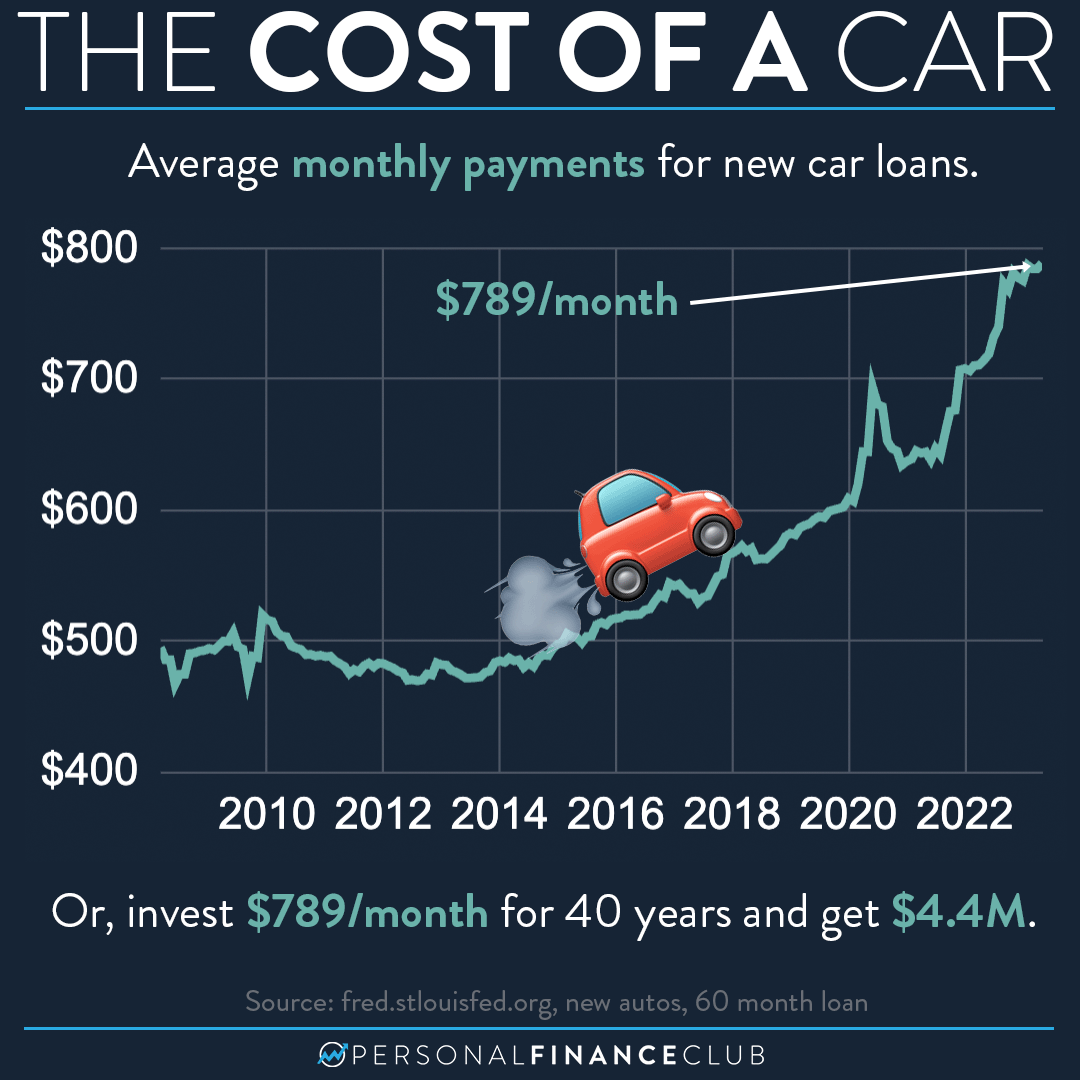
Before deciding on a down payment, work backward from your monthly budget. Financial experts generally recommend that all car-related expenses (loan payment, insurance, gas, and maintenance) should not exceed 15% to 20% of your take-home pay. Use an online auto loan calculator to see how different down payment amounts change your monthly obligation. Often, seeing that an extra $2,000 down saves you $50 a month for the next five years provides the motivation needed to save a bit longer before buying.
Timing Your Purchase for Maximum Leverage
If you are short on your target down payment, timing can be your best friend. Planning your purchase around tax refund season or year-end bonuses can provide the necessary cash infusion to hit that 20% mark. Additionally, purchasing a car at the end of the model year (typically late summer or fall) can lead to significant dealer discounts and rebates. In many cases, these manufacturer rebates can be applied directly to your down payment, allowing you to reach your equity goals faster without using as much of your personal savings.
Conclusion
A “normal” down payment on a car is generally 20% for new vehicles and 10% for used vehicles, but the “smart” down payment is the one that aligns with your broader financial goals. While it may be tempting to keep your cash and opt for a low-down-payment loan, the long-term benefits of a substantial upfront investment are undeniable. By reducing interest costs, lowering monthly payments, and protecting yourself against negative equity, a strong down payment is one of the most effective ways to maintain your financial health while enjoying the utility of a vehicle. Whether you are leveraging a trade-in, utilizing a tax refund, or diligently saving, aim for a figure that puts you in the driver’s seat of your finances—not just your car.
aViewFromTheCave is a participant in the Amazon Services LLC Associates Program, an affiliate advertising program designed to provide a means for sites to earn advertising fees by advertising and linking to Amazon.com. Amazon, the Amazon logo, AmazonSupply, and the AmazonSupply logo are trademarks of Amazon.com, Inc. or its affiliates. As an Amazon Associate we earn affiliate commissions from qualifying purchases.