
In the rapidly evolving landscape of technology, we often focus on the “macro” achievements—artificial intelligence, quantum computing, and high-speed telecommunications. However, the hardware that drives these innovations is built upon the fundamental principles of chemistry. At the very heart of the semiconductors, nanomaterials, and high-performance polymers that define the 21st century lies a specific type of chemical interaction: the non-polar covalent bond.
Understanding what a non-polar covalent bond is—and why it matters—is essential for anyone looking to grasp the future of materials science and hardware engineering. It is the atomic “handshake” that provides the structural stability and unique electrical properties required for the world’s most advanced gadgets.
Understanding the Atomic Handshake: The Science of Non-Polar Covalent Bonds
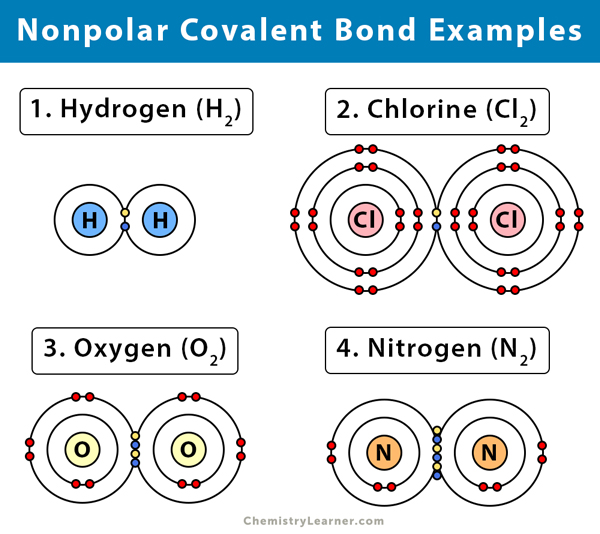
To appreciate the role of chemistry in technology, we must first define the mechanism of the non-polar covalent bond. At its simplest, a covalent bond occurs when two atoms share a pair of electrons. However, not all sharing is equal.
Defining Electron Sharing
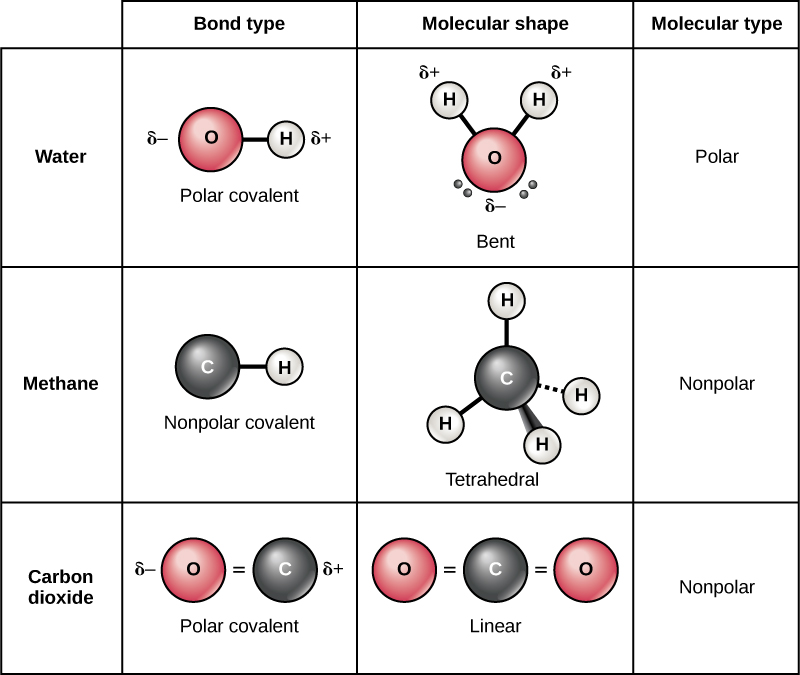
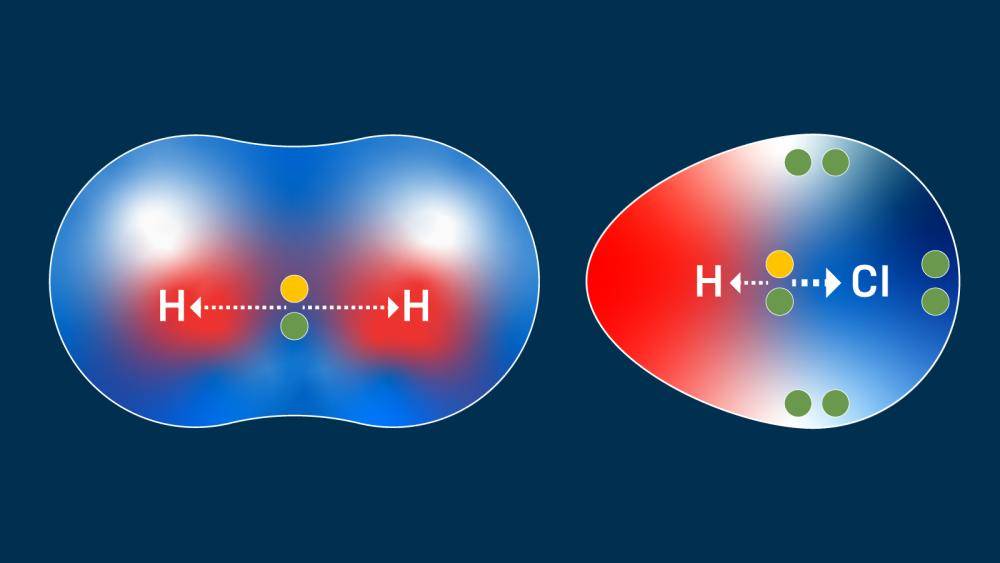
In the world of molecular tech, a non-polar covalent bond is a type of chemical bond where two atoms share a pair of electrons with perfect equality. Because the atoms have identical or very similar electronegativities, neither atom “pulls” the electrons more strongly than the other. This creates a balanced distribution of electrical charge across the molecule. In technical terms, there is no dipole moment; the molecule remains electrically neutral across its surface.
Electronegativity and the Balance of Power
The concept of electronegativity is the “software” that determines how atoms interact. When two identical atoms—such as two Silicon (Si) atoms or two Carbon (C) atoms—bond together, their electronegativity difference is zero. This symmetry is the cornerstone of structural integrity in technology. Without this balanced sharing, the materials we use for high-speed processing would be chemically reactive and unstable, making them unsuitable for the delicate environments of a CPU or a GPU.
The Backbone of the Silicon Age: Why Semiconductors Rely on Symmetric Bonding
If you are reading this on a smartphone or a computer, you are currently utilizing the power of non-polar covalent bonds. The entire semiconductor industry is built upon the unique properties of Group 14 elements, primarily Silicon.
Silicon’s Covalent Lattice
Silicon is the gold standard of the tech industry because of its crystalline structure. In a crystal of pure silicon, each atom is linked to four neighbors through non-polar covalent bonds. This creates a uniform, highly stable tetrahedral lattice. Because the bonds are non-polar, the electrons are held in a stable “middle ground.” They aren’t locked so tightly that they cannot move (like in an insulator), nor are they so loose that they flow freely (like in a conductor).
This “in-between” state, facilitated by the symmetry of non-polar bonding, allows engineers to “dope” the silicon—adding tiny amounts of other elements to precisely control the flow of electricity. This control is the fundamental basis of the transistor, the building block of all modern software and digital logic.
From Atoms to Microchips: How Stability Drives Performance
The stability of non-polar covalent bonds in silicon ensures that microprocessors can withstand the heat generated by billions of calculations per second. If the bonds were polar, the material would be more susceptible to chemical degradation and moisture interference. The non-polar nature of the Si-Si bond ensures that the physical architecture of a chip remains consistent over years of heavy computational use, providing the reliability we expect from enterprise-grade hardware.
Materials Science and the Future of Hardware Engineering
Beyond the silicon chip, the tech world is currently obsessed with “wonder materials” like graphene and carbon nanotubes. These materials represent the next frontier of hardware, and their extraordinary properties are direct results of non-polar covalent bonding.
Graphene and Carbon Nanotubes: Strength Through Uniformity
Graphene is a single layer of carbon atoms arranged in a two-dimensional honeycomb lattice. Every bond in a graphene sheet is a non-polar covalent bond between two carbon atoms. Because the sharing of electrons is so uniform and the bond energy is so high, graphene is substantially stronger than steel and incredibly conductive.
In the tech sector, graphene is being trialed for use in ultra-fast charging batteries and flexible displays. The non-polar nature of the bonds allows for a “delocalized” cloud of electrons to move across the surface with almost zero resistance. This is a prime example of how molecular-level non-polarity translates directly into high-speed tech performance.
Non-Polar Polymers in Hardware Protection and Insulation
We also see non-polar covalent bonds in the polymers (plastics) that protect our devices. High-density polyethylene (HDPE) and other specialized plastics are composed of long chains of carbon and hydrogen. Because the C-H bond is essentially non-polar, these materials do not interact with water or other polar solvents. This makes them ideal for insulating delicate circuits and creating water-resistant casings for gadgets. In digital security and ruggedized hardware, the chemical “indifference” of non-polar bonds provides a natural shield against the environment.
Thermal Management and Efficiency in High-Performance Computing
As AI models grow larger and data centers become more dense, heat is the greatest enemy of technology. Non-polar covalent bonds play a surprising but vital role in how we manage thermal energy in high-performance computing (HPC).
Heat Dissipation and Molecular Vibration
Heat in a solid is essentially the vibration of atoms. In materials with strong, uniform non-polar covalent bonds—like diamond or high-purity silicon—heat can travel through the material as “phonons” (quantized vibrations) with incredible efficiency. Synthetic diamonds, which are held together by a network of non-polar covalent carbon bonds, are used in high-end tech as heat spreaders. They can pull heat away from a laser diode or a high-frequency transistor faster than almost any other material, preventing thermal throttling and hardware failure.
Designing Sustainable Tech via Chemical Stability
Sustainability is a major trend in the tech industry today. Engineers are looking for materials that are durable and don’t require frequent replacement. The inherent stability of non-polar covalent bonds means that these materials do not easily oxidize or break down under normal operating conditions. By leveraging the strength of these bonds, tech companies can create longer-lasting hardware, reducing the “e-waste” that results from chemical degradation in inferior materials.
The Role of Non-Polar Bonding in Next-Gen Battery Technology
The transition to renewable energy and electric vehicles (EVs) is essentially a challenge of molecular engineering. The efficiency of a battery depends on how easily ions can move and how stable the housing of those ions remains over thousands of charge cycles.
Lithium-Ion Stability and Electron Flow
In the electrolytes and anodes of advanced batteries, non-polar covalent structures are used to ensure that the battery doesn’t catch fire or degrade. Researchers are currently developing solid-state batteries that replace liquid electrolytes with solid non-polar materials. These solids provide a stable pathway for lithium ions while maintaining a rigid structure that prevents “dendrites”—tiny cracks that cause batteries to short-circuit.
Looking Ahead: Molecular Engineering in Solid-State Batteries
The future of tech lies in our ability to manipulate bonds at the atomic level. By designing materials with specific non-polar covalent characteristics, we can create batteries that charge in minutes instead of hours and last for decades. This isn’t just a chemical curiosity; it is the technological requirement for a world powered by mobile devices and autonomous transport.
Conclusion: The Invisible Engine of Innovation
While the average user may never think about the electronegativity of silicon or the electron sharing in a graphene sheet, the non-polar covalent bond is the invisible engine of the tech industry. It provides the structural integrity for our devices, the semiconducting properties for our processors, and the thermal management for our data centers.
As we move deeper into the era of nanotechnology and quantum computing, the ability to engineer these non-polar interactions will be what separates the next tech giant from the rest. The “what” of the non-polar covalent bond is a simple chemical definition; the “why” is the foundation of every digital advancement that defines our modern world. Understanding this molecular balance is the first step in understanding the true potential of the technology yet to come.
aViewFromTheCave is a participant in the Amazon Services LLC Associates Program, an affiliate advertising program designed to provide a means for sites to earn advertising fees by advertising and linking to Amazon.com. Amazon, the Amazon logo, AmazonSupply, and the AmazonSupply logo are trademarks of Amazon.com, Inc. or its affiliates. As an Amazon Associate we earn affiliate commissions from qualifying purchases.