
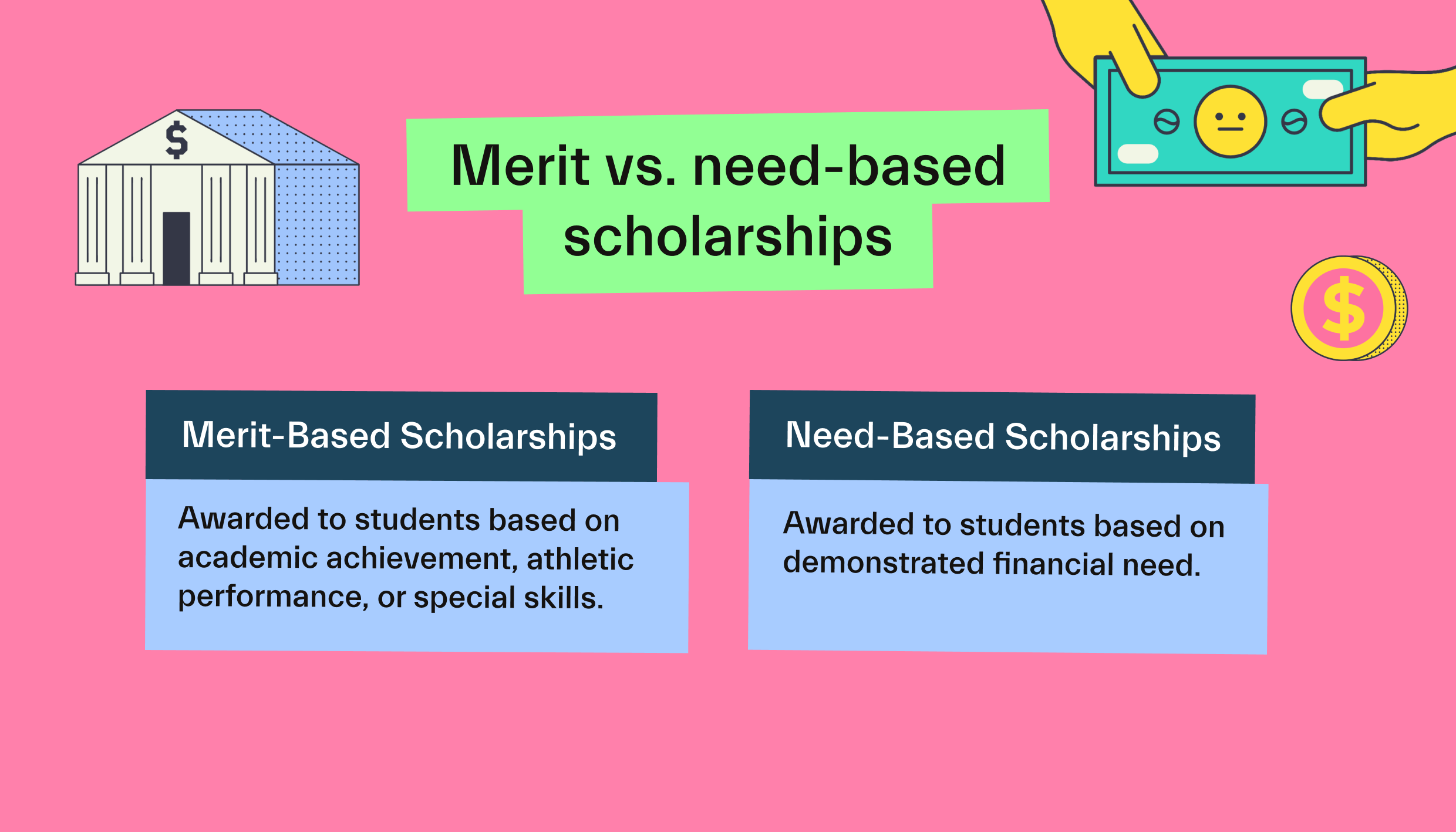
Navigating the financial labyrinth of higher education is often the most daunting aspect of pursuing a degree. As tuition costs continue to climb, families and students must look beyond simple savings accounts or high-interest student loans. This is where financial aid—specifically need-based scholarships—becomes a critical component of a student’s fiscal strategy. Unlike merit-based awards that reward athletic prowess or academic perfection, need-based scholarships are fundamentally designed to bridge the gap between a student’s family resources and the actual cost of attendance. Understanding how these programs function is the first step toward securing an affordable path to a college diploma.

Understanding the Philosophy of Financial Need
At its core, a need-based scholarship is a form of gift aid. This means it is money provided to the student that does not need to be repaid, provided the student maintains the scholarship’s specific requirements. These awards are distributed based on a calculated assessment of a family’s ability to cover educational expenses. The central philosophy is equity: ensuring that a student’s socio-economic background does not serve as a definitive barrier to accessing high-quality academic institutions.
The Role of the FAFSA and CSS Profile
To determine who qualifies for these scholarships, colleges and government entities rely on standardized documentation. The Free Application for Federal Student Aid (FAFSA) is the primary tool used in the United States. By submitting your tax information, income records, and asset details, the Department of Education calculates your Student Aid Index (SAI).
Many private universities take this a step further by requiring the CSS Profile. This document is significantly more detailed than the FAFSA, often requiring information on home equity, non-custodial parent income, and other variables that provide a more granular picture of a family’s financial landscape. The resulting “demonstrated need” is the difference between the school’s total cost of attendance and the amount the family is expected to contribute.
The “Gap” Concept
When a college calculates your financial need, it compares the total cost—tuition, room, board, books, and transportation—against your expected financial contribution. If the costs are $60,000 and your family can reasonably afford $20,000, your demonstrated need is $40,000. Need-based scholarships are the mechanism used by schools and external foundations to help fill that $40,000 gap.
The Diverse Landscape of Scholarship Providers
Need-based aid does not come from a single source. It is helpful to visualize this as a tiered system, ranging from federal grants to private philanthropic endowments. Each tier has its own eligibility criteria, and successful applicants often cobble together aid from multiple levels to minimize their debt burden.
Institutional Aid: The Largest Slice of the Pie
The most significant source of need-based funding is the university itself. Many prestigious institutions have massive endowments specifically earmarked for financial aid. These schools often practice “need-blind” admissions, meaning they evaluate a student’s application without considering their ability to pay, and then commit to meeting 100% of the calculated financial need once the student is accepted. This is the gold standard of financial aid, and it is largely composed of institutional grants and scholarships based on need.
Government Grants
While technically classified as grants, programs like the Federal Pell Grant function similarly to need-based scholarships. These are federal funds awarded to undergraduate students who display exceptional financial need. Because this is taxpayer-funded, the guidelines are rigid and strictly based on the FAFSA output. Many state governments also provide similar grant programs, which are often restricted to residents of that state attending public or private institutions within that jurisdiction.
Private Foundations and Charitable Organizations
Beyond the government and the university, a vast network of private organizations offers need-based scholarships. These are often tied to specific demographics, regional locations, or fields of study. For example, a local Rotary Club or a regional community foundation may offer a scholarship specifically for students in a certain county who demonstrate a clear inability to pay for college without outside assistance. These require more “legwork” to find but are excellent ways to supplement institutional aid.
Strategic Financial Planning and Application Tips
Securing need-based scholarships is not just about having a low income; it is about accurately reporting your financial situation and navigating the bureaucracy of the aid cycle. Because the competition for these funds is intense, students and families must approach the application process with the same level of discipline they apply to their academic studies.
Accuracy and Documentation
The most common reason for a lower-than-expected scholarship award is incomplete or inaccurate information on the FAFSA or CSS Profile. If you fail to include a significant medical expense, a recent job loss, or the costs associated with caring for an elderly relative, the formulas used by these systems will overestimate your family’s disposable income. If your financial situation has changed significantly since the tax year documented in your application, you must contact the college’s financial aid office directly to request a “professional judgment review.”
Meeting Deadlines
Financial aid is often distributed on a first-come, first-served basis. Many colleges have “priority deadlines” for financial aid applications that differ from the general admission deadline. Missing these dates can result in a student being excluded from consideration for limited need-based pools, even if they would have otherwise qualified. Mark these dates on a calendar and treat them as non-negotiable.
The Importance of “Net Price”
When comparing colleges, never look at the “sticker price.” Instead, look at the “net price.” Every college in the U.S. is required to have a “Net Price Calculator” on their website. By inputting your financial data into these tools, you can get a realistic estimate of the need-based aid you might receive. This helps families narrow their college search to schools that are not only a good academic fit but are also fiscally attainable.
Beyond the Numbers: Maintaining Your Eligibility
Receiving a need-based scholarship for your freshman year is a major victory, but it is not necessarily a permanent guarantee. Most need-based scholarships require a renewal application every year, usually tied to the filing of a new FAFSA.
Satisfactory Academic Progress (SAP)
Most scholarships, even those that are need-based, have a “string” attached regarding academic performance. You must maintain Satisfactory Academic Progress (SAP). While this is usually not as stringent as the requirements for merit scholarships, failing to maintain a certain GPA or failing to complete a specific percentage of attempted credit hours can lead to the revocation of your financial aid. Always read the fine print of your award letter to understand if your need-based aid is contingent upon your grades.
Financial Fluctuations
Remember that because the aid is “need-based,” it is subject to change if your financial circumstances shift. If a parent receives a promotion or a significant inheritance, the calculated need for the following year may decrease, resulting in a reduction of your scholarship. Conversely, if your family faces a sudden financial crisis, you are empowered to inform the financial aid office, which may lead to an increase in your support.
The Holistic View
Ultimately, need-based scholarships are a partnership between the student and the institution. By providing these funds, the school is investing in your potential, trusting that the removal of a financial barrier will allow you to succeed. By understanding the terminology, staying diligent with your documentation, and engaging proactively with financial aid officers, you can turn a prohibitively expensive degree into an accessible reality. This is not just a form of “free money”—it is a critical tool for social mobility, ensuring that talent and drive, rather than a bank balance, dictate the trajectory of a student’s future.
aViewFromTheCave is a participant in the Amazon Services LLC Associates Program, an affiliate advertising program designed to provide a means for sites to earn advertising fees by advertising and linking to Amazon.com. Amazon, the Amazon logo, AmazonSupply, and the AmazonSupply logo are trademarks of Amazon.com, Inc. or its affiliates. As an Amazon Associate we earn affiliate commissions from qualifying purchases.