
In the landscape of digital communication, the ability to transmit more than just plain text has become a fundamental expectation for users worldwide. While the Short Message Service (SMS) laid the groundwork for mobile connectivity in the 1990s, it was the advent of the Multimedia Messaging Service (MMS) that truly revolutionized how we share experiences through our devices. Despite the rise of instant messaging apps and social media platforms, MMS remains a core component of the global telecommunications infrastructure. Understanding what a multimedia message is requires a deep dive into the technology, the protocols, and the evolving standards that allow our smartphones to bridge the gap between simple text and rich media.

Understanding the Evolution and Technical Framework of MMS
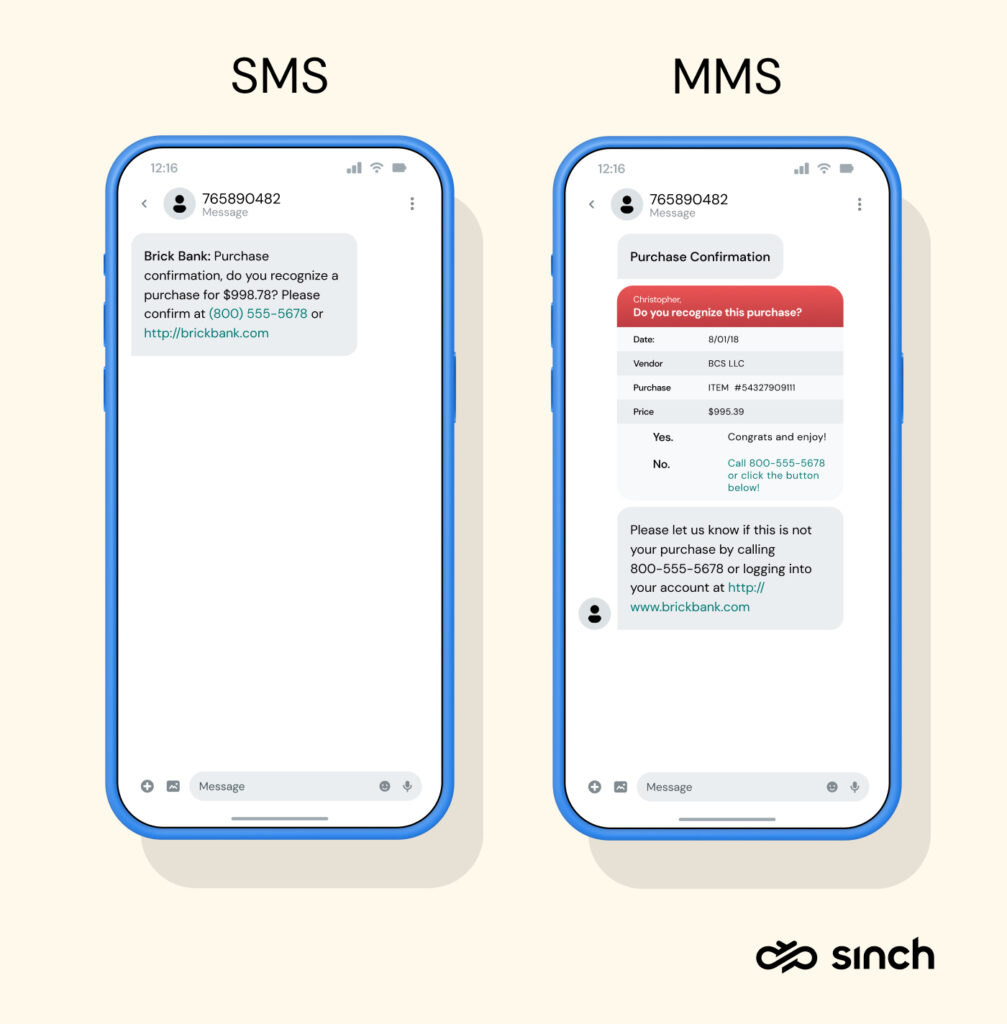
The Multimedia Messaging Service, or MMS, is a standard way to send messages that include multimedia content to and from a mobile phone over a cellular network. Unlike SMS, which is limited to 160 characters of plain text, MMS was designed to handle a variety of media types, including images, audio clips, video files, and even slideshows.
From SMS to MMS: The Shift in Protocol
To understand MMS, one must first understand its predecessor. SMS operates on the signaling path of the GSM (Global System for Mobile Communications) network. It was designed to occupy the “spaces” between voice traffic, which explains its strict character limit. MMS, however, was built on an entirely different premise. Developed by the 3GPP (3rd Generation Partnership Project), MMS utilizes the packet-switched data network.
When you send an MMS, the content is not sent directly to the recipient’s phone in the same way a text message is. Instead, the device encodes the multimedia content and uploads it to a central server known as the Multimedia Messaging Service Center (MMSC). The recipient’s carrier then sends a “control message” (via SMS) to the target device, notifying it that a multimedia message is waiting. The recipient’s phone then fetches the content via an HTTP request over the cellular data network.
The Role of the Multimedia Messaging Service Center (MMSC)
The MMSC is the heart of the multimedia messaging ecosystem. It acts as a “store-and-forward” server. This architecture is vital for several reasons. First, it allows for “transcoding”—the process where the MMSC detects the capabilities of the receiving device and automatically adjusts the file size or format to ensure compatibility. For example, if you send a high-resolution 4K image to an older feature phone, the MMSC may downsample the image so the receiving device can actually display it. This technical flexibility is what allowed MMS to become a universal standard across thousands of different hardware models.
Key Components and Supported File Formats
A multimedia message is essentially a container. While we often think of it as “just a photo,” the technical specifications allow for a complex arrangement of data types. This versatility is what makes MMS a powerful tool for both personal and professional communication.
Image and Graphics Standards
The most common use case for MMS is the sharing of visual content. MMS supports a wide array of image formats, with JPEG being the primary standard due to its balance of quality and compression. However, the protocol also supports:
- GIF (Graphics Interchange Format): Allowing for the transmission of short, looping animations.
- PNG (Portable Network Graphics): Often used for images requiring transparency.
- BMP and WBMP: Older formats used primarily by legacy devices.
The challenge with images in MMS is the “carrier ceiling.” Most cellular providers impose a file size limit on MMS messages—typically ranging from 300KB to 3.5MB. When a high-resolution photo is sent, the messaging software automatically compresses the file, which is why photos sent via MMS often appear less sharp than those sent via internet-based apps like Telegram or Signal.
Audio, Video, and Rich Media Integration
MMS extends far beyond static images. It supports audio files (such as MP3, AAC, and AMR) and video formats (typically MP4 and 3GP). Because video files are naturally large, MMS video is often heavily compressed, leading to the “pixelated” look commonly associated with carrier-sent videos.
Beyond standard media, MMS can carry:
- VCard (Virtual Contact Files): Allowing users to share contact information seamlessly.
- VCalendar: Enabling the sharing of calendar invites and event data.
- SMIL (Synchronized Multimedia Integration Language): This is a specialized XML-based language that allows an MMS to function like a slideshow, coordinating when text appears alongside specific images or audio tracks.
MMS vs. OTT Messaging: Navigating the Modern Ecosystem

In the current tech era, the line between an MMS and an “instant message” has blurred for many users. However, from a technical and infrastructure standpoint, there is a massive difference between carrier-based MMS and Over-the-Top (OTT) applications like WhatsApp, iMessage, and Messenger.
Carrier-Based Protocols vs. Internet-Based Apps
The primary distinction lies in how the data is routed. MMS is a carrier service; it requires a cellular data connection (not necessarily “the internet” in the broad sense, but an APN—Access Point Name—connection to the carrier’s private network). It is tied to your phone number and billed through your mobile plan.
OTT apps, conversely, bypass the carrier’s MMSC entirely. They use the public internet (Wi-Fi or cellular data) to send data to their own proprietary servers. Because they aren’t bound by the legacy MMS standards, OTT apps can send much larger files, offer end-to-end encryption, and provide real-time “typing” indicators.
The Emergence of iMessage and RCS
Apple’s iMessage is a unique hybrid. When an iPhone user messages another iPhone user, the “Blue Bubble” indicates the message is being sent over Apple’s proprietary OTT servers. If the recipient is on Android, the iPhone automatically reverts to the “Green Bubble,” falling back on the universal MMS/SMS protocol.
To bridge this gap, the industry is currently transitioning toward RCS (Rich Communication Services). RCS is often marketed as “MMS 2.0.” It aims to bring the features of OTT apps—high-res photos, read receipts, and group chat management—to the native messaging app of all phones, regardless of the operating system. While RCS is intended to replace MMS, the older protocol remains the essential “fail-safe” that ensures a message gets through even when modern data features are unavailable.
Troubleshooting Technical Limitations and Security
Despite its ubiquity, MMS is not without its technical hurdles. Because it relies on a complex interaction between the device, the carrier’s MMSC, and the recipient’s network, several points of failure exist.
File Size Restrictions and Compression
As mentioned, the most significant limitation of MMS is the file size cap. Tech-savvy users often find the aggressive compression frustrating. When a 12MB smartphone photo is compressed down to 600KB for an MMS, metadata is often stripped, and visual artifacts appear. This is a byproduct of the 3G-era architecture that MMS still relies on. To circumvent this, many users have moved toward cloud-link sharing, though MMS remains the standard for direct, “in-app” media viewing without external links.
Network Compatibility and APN Settings
For an MMS to work, the device must have the correct APN (Access Point Name) settings configured. These settings tell the phone how to connect to the carrier’s gateway. If these settings are incorrect—which often happens when switching SIM cards or using “unlocked” international phones—the device may be able to send texts (SMS) but fail to download multimedia (MMS). This technical “handshake” is unique to MMS and is a frequent focus of mobile IT support.
The Security Gap: Encryption in Multimedia Messaging
From a digital security perspective, MMS is notably less secure than modern alternatives. Standard MMS messages are not end-to-end encrypted. While they are encrypted during transmission between the device and the cell tower, they are stored in a readable format at the MMSC. This makes MMS susceptible to interception or legal discovery. For users requiring high levels of digital security, the tech recommendation is almost always to move away from MMS in favor of encrypted protocols like Signal or updated RCS standards that include encryption layers.
The Future of Multimedia Messaging in the 5G Era
As we move deeper into the 5G era, the role of MMS is changing. With the massive bandwidth and ultra-low latency of 5G networks, the original constraints that defined MMS—low file sizes and slow delivery—are technically obsolete.
The Impact of 5G on Rich Media Transmission
5G allows for the near-instantaneous transmission of large files, which is fueling the adoption of RCS. However, MMS will likely persist for another decade as a “legacy bridge.” Just as 2G networks stayed active to support IoT devices and basic voice, MMS remains the only multimedia standard that works across almost every mobile device on the planet, from a $1,500 flagship smartphone to a $20 feature phone in a developing market.
Conclusion: The Persistent Utility of MMS
While it may lack the bells and whistles of modern social apps, the Multimedia Messaging Service remains a cornerstone of digital technology. It transformed the mobile phone from a portable workstation into a creative tool, allowing us to share our lives through more than just characters on a screen. By understanding the technical foundations of MMS—from the MMSC architecture to the nuances of APN settings and file compression—users and tech professionals alike can better navigate the complex world of mobile communication. MMS is the “universal translator” of the media world; it may not always be the fastest or the highest quality, but it is the most reliable way to ensure that a picture truly can be worth a thousand words, regardless of the device on the other end.
aViewFromTheCave is a participant in the Amazon Services LLC Associates Program, an affiliate advertising program designed to provide a means for sites to earn advertising fees by advertising and linking to Amazon.com. Amazon, the Amazon logo, AmazonSupply, and the AmazonSupply logo are trademarks of Amazon.com, Inc. or its affiliates. As an Amazon Associate we earn affiliate commissions from qualifying purchases.