
For many, owning a home is a cornerstone of the American Dream, representing stability, security, and a significant personal investment. Yet, the journey to homeownership is often complex, with one term standing out as particularly pivotal: the mortgage rate. Far from being a mere number, a mortgage rate is the interest rate charged on the loan you take out to purchase a property. It is the fundamental factor that determines the cost of borrowing money for a home, directly impacting your monthly payments and the total amount you will ultimately pay over the life of your loan. Understanding what a mortgage rate is, how it’s determined, and the various factors that influence it, is not just helpful—it’s absolutely essential for anyone looking to navigate the housing market wisely. This article will delve into the intricacies of mortgage rates, offering a comprehensive guide to help you make informed financial decisions on your path to homeownership.
Understanding the Fundamentals of Mortgage Rates
At its core, a mortgage rate is the annual percentage rate (APR) that a borrower pays on a mortgage loan. It’s the cost of borrowing money from a lender to buy a house, expressed as a percentage of the loan amount. This percentage dictates how much interest you’ll pay on top of the principal balance over the loan term.
Definition and Core Components: Interest Rate vs. APR
It’s crucial to distinguish between the stated “interest rate” and the “Annual Percentage Rate” (APR). The interest rate is simply the percentage you pay on the principal loan amount, directly affecting your monthly payment. For example, a 5% interest rate on a $200,000 loan means you’re paying $10,000 in interest per year, initially.
The Annual Percentage Rate (APR), however, provides a more comprehensive measure of the true cost of borrowing. It includes the interest rate, but also incorporates other fees associated with the loan, such as origination fees, discount points, mortgage insurance, and other closing costs. Because it encompasses these additional charges, the APR is typically higher than the nominal interest rate and offers a more accurate picture of the total annual cost of the loan. When comparing mortgage offers, looking at the APR allows for a more “apples-to-apples” comparison between different lenders.
Fixed-Rate vs. Adjustable-Rate Mortgages (ARMs)
Mortgage rates typically come in two primary forms: fixed-rate and adjustable-rate. Each has distinct characteristics that cater to different financial situations and risk tolerances.
-
Fixed-Rate Mortgages (FRM): As the name suggests, a fixed-rate mortgage maintains the same interest rate for the entire duration of the loan. This means your principal and interest payment will remain constant throughout the loan term, providing predictability and stability. Common fixed-rate terms are 30 years and 15 years. The 30-year fixed offers lower monthly payments but typically accrues more interest over the long run, while the 15-year fixed has higher monthly payments but saves significantly on total interest paid and allows for quicker equity build-up. Fixed-rate mortgages are popular among borrowers who prioritize budget stability and want to avoid the risk of rising interest rates.
-
Adjustable-Rate Mortgages (ARM): An adjustable-rate mortgage starts with an initial fixed interest rate for a set period (e.g., 3, 5, 7, or 10 years). After this initial period, the rate adjusts periodically, typically once a year, based on a pre-selected financial index (like the Secured Overnight Financing Rate – SOFR, or the Constant Maturity Treasury – CMT) plus a margin set by the lender. ARMs usually have caps that limit how much the interest rate can increase or decrease in a single adjustment period and over the life of the loan. While ARMs often start with lower interest rates than fixed-rate mortgages, they introduce the risk of significant payment increases if interest rates rise in the future. They can be attractive to borrowers who plan to sell or refinance before the fixed-rate period ends, or those who anticipate their income increasing substantially.
The Impact of Mortgage Rates on Your Payments
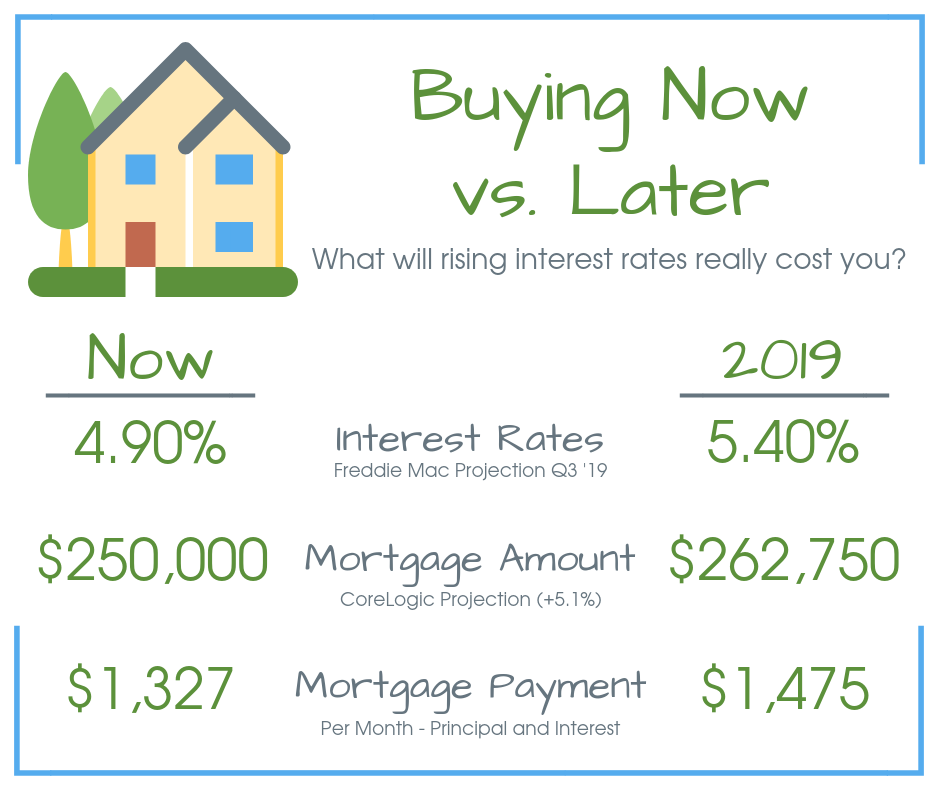
Even a seemingly small difference in a mortgage rate can have a substantial impact on your monthly mortgage payments and the total amount of interest you pay over the loan’s lifetime. For instance, on a $300,000 30-year fixed-rate mortgage, a 6.0% interest rate would result in a principal and interest payment of approximately $1,798 per month, totaling around $647,380 over 30 years. If the rate were 6.5%, that payment would jump to about $1,896 per month, totaling approximately $682,750—a difference of nearly $100 per month and over $35,000 in total interest paid. This illustrates why securing the lowest possible rate is a primary goal for most homebuyers.
Key Factors Influencing Mortgage Rates
Mortgage rates are dynamic, fluctuating daily and sometimes even multiple times within a day. These movements are driven by a complex interplay of broad economic conditions, specific lender policies, and individual borrower characteristics.
Economic Indicators and Federal Policy
The broader economy exerts the most significant influence on mortgage rates.
- Inflation: When inflation rises, the purchasing power of money decreases. Lenders demand higher interest rates to compensate for this erosion, leading to an increase in mortgage rates.
- Federal Reserve Policy: While the Federal Reserve does not directly set mortgage rates, its actions significantly impact them. The Fed influences short-term rates by adjusting the federal funds rate. Changes in this rate ripple through the financial system, affecting the cost of borrowing for banks, which in turn influences the rates they offer on mortgages.
- Bond Market (10-Year Treasury Yield): Mortgage rates are closely tied to the yield on the 10-year Treasury bond. As the yield on this benchmark bond rises, mortgage rates generally follow suit, and vice-versa. This is because mortgage-backed securities (MBS), which form the basis of most mortgages, compete with Treasuries for investor attention.
- GDP Growth and Employment Data: Strong economic growth and low unemployment typically signal a robust economy, which can lead to higher inflation expectations and, consequently, higher interest rates. Conversely, a weakening economy might prompt the Fed to lower rates to stimulate activity, which can translate to lower mortgage rates.
Lender-Specific and Market Factors
Beyond macroeconomic forces, the individual lender and the overall market environment also play a role.
- Lender’s Overhead and Profit Margins: Each lender has its own operational costs and profit targets, which are built into the rates they offer.
- Risk Assessment: Lenders assess the overall risk of the market. During periods of economic uncertainty, lenders may be more cautious and charge higher rates to mitigate potential losses.
- Market Competition: A highly competitive lending market with many lenders vying for business can lead to lower rates as institutions try to attract borrowers. Conversely, reduced competition might allow lenders to charge higher rates.
- Supply and Demand for Housing: While not directly a rate factor, a hot housing market can indirectly influence rates by creating an environment where lenders might be able to command higher prices for their loans, or by causing increased demand for loans which impacts rates.
Borrower-Specific Factors
Even when economic conditions are stable, your individual financial profile will significantly influence the mortgage rate you qualify for.
- Credit Score (FICO): A higher credit score (generally above 740-760) indicates a lower risk to lenders, allowing you to qualify for the best available rates. Lower scores typically result in higher rates to compensate the lender for increased risk.
- Debt-to-Income (DTI) Ratio: This ratio compares your total monthly debt payments to your gross monthly income. A lower DTI ratio (typically below 43%) suggests you can comfortably manage additional debt, making you a more attractive borrower for lower rates.
- Loan-to-Value (LTV) Ratio (Down Payment): The LTV ratio compares the loan amount to the appraised value of the home. A larger down payment reduces the loan amount, resulting in a lower LTV and less risk for the lender, which can translate to a better interest rate. A typical LTV goal for favorable rates is 80% or less (meaning a 20% or more down payment).
- Loan Type and Term: Different loan types (e.g., conventional, FHA, VA, USDA) carry different risk profiles and government backing, impacting their rates. Similarly, shorter loan terms (e.g., 15-year fixed) generally offer lower interest rates than longer terms (e.g., 30-year fixed) because the lender’s money is tied up for a shorter period.
- Property Type and Location: Investment properties, multi-unit dwellings, or unique property types may carry slightly higher rates due to perceived increased risk compared to a standard owner-occupied single-family home. Local market conditions can also slightly influence rates.
How Mortgage Rates Are Determined and Quoted

The process of determining and quoting a mortgage rate involves several layers, from global financial markets to very specific loan-level adjustments. Understanding these mechanics can empower borrowers to make more strategic decisions.
The Role of the Secondary Market
When you get a mortgage, your primary lender (the bank or credit union) often doesn’t keep the loan on its books for the entire 15 or 30 years. Instead, most mortgages are sold to the “secondary market,” primarily to government-sponsored enterprises (GSEs) like Fannie Mae and Freddie Mac, or to government agencies like Ginnie Mae for FHA and VA loans. These entities package thousands of individual mortgages into mortgage-backed securities (MBS) and sell them to investors worldwide.
This secondary market is critical because it provides liquidity to lenders, allowing them to lend more money for new mortgages. The rates at which these MBS are bought and sold directly influence the rates that primary lenders offer to consumers. When investors demand higher returns on MBS, rates tend to go up; when demand is lower or investors are willing to accept lower returns, rates can fall.
Discount Points and Lender Credits
Borrowers have options to influence their effective interest rate through upfront costs or credits:
- Discount Points: These are upfront fees paid to the lender at closing in exchange for a lower interest rate over the life of the loan. One “point” typically equals 1% of the loan amount. For example, paying 1 point on a $300,000 loan would cost $3,000 but could reduce your interest rate by perhaps 0.25%. This strategy is beneficial if you plan to stay in the home long enough for the savings on interest to outweigh the initial cost of the points.
- Lender Credits: Conversely, you can opt for a higher interest rate in exchange for “lender credits,” which are used to cover some of your closing costs. This can be appealing if you have limited cash for closing costs, but it means you’ll pay more in interest over the life of the loan.
Both options offer flexibility for borrowers to tailor their upfront costs versus long-term payments.
APR vs. Interest Rate – Why the Distinction Matters
As briefly touched upon, the distinction between the nominal interest rate and the Annual Percentage Rate (APR) is paramount for transparency and informed decision-making. While the interest rate is what you’ll directly use to calculate your monthly principal and interest payment, the APR provides the true overall cost of borrowing. It bundles the interest rate with other fees, such as origination fees, mortgage insurance premiums, and discount points, expressing them as an annualized percentage.
When lenders are legally required to disclose the APR, it serves as a powerful tool for comparing different loan offers. A loan with a lower nominal interest rate might actually have a higher APR if it comes with substantial upfront fees. Always compare the APR across different loan offers to get the most accurate picture of which loan is genuinely less expensive over its full term.
Strategies for Securing a Favorable Mortgage Rate
Given the significant financial implications of a mortgage rate, adopting strategic approaches to secure the best possible rate is a cornerstone of responsible homeownership.
Improving Your Financial Profile
Before even applying for a mortgage, taking steps to bolster your financial standing can dramatically improve your rate eligibility.
- Boost Your Credit Score: Pay bills on time, reduce credit card balances, avoid opening new lines of credit, and correct any errors on your credit report. A higher FICO score signals lower risk to lenders.
- Reduce Debt-to-Income (DTI) Ratio: Pay down existing debts, especially high-interest credit cards or personal loans. A lower DTI ratio demonstrates your ability to manage debt responsibly.
- Increase Your Down Payment: A larger down payment reduces the loan amount, lowers your loan-to-value (LTV) ratio, and can eliminate the need for private mortgage insurance (PMI), all of which typically lead to a more favorable interest rate.
Shopping Around for Lenders
One of the most effective strategies is to obtain quotes from multiple lenders. Don’t simply go with the first offer you receive.
- Gather Multiple Offers: Contact different banks (both large national and smaller community banks), credit unions, and independent mortgage brokers. Each lender has different pricing structures, risk assessments, and access to various loan products.
- Compare Loan Estimates: Lenders are required to provide a standardized Loan Estimate form that breaks down all the costs, fees, and the APR. Use this form to compare offers accurately, paying close attention to the interest rate, APR, origination fees, and other closing costs.
- Leverage Competition: If you receive a better offer from one lender, don’t hesitate to use it as leverage to see if another preferred lender can match or beat it.
Understanding Rate Locks
Once you’ve found a favorable rate, a “rate lock” protects you from market fluctuations while your loan is being processed.
- What is a Rate Lock?: It’s an agreement with your lender to “lock in” a specific interest rate for a set period, typically 30 to 60 days. This means your rate won’t change even if market rates increase before your closing.
- When to Lock: Timing is key. If you anticipate rates rising, locking early might be wise. If you expect them to fall, you might wait, but this involves risk. Discuss the best time to lock with your loan officer, considering the current market trends and your estimated closing date.
- Float-Down Options: Some lenders offer “float-down” options, which allow you to convert your locked rate to a lower market rate if rates drop significantly before closing, usually for an additional fee.
Refinancing Opportunities
For existing homeowners, refinancing offers a way to potentially secure a better mortgage rate or change loan terms.
- When to Consider Refinancing: If current market rates are significantly lower than your existing mortgage rate, refinancing can reduce your monthly payments and total interest paid. Even a reduction of 0.5% to 1% can yield substantial savings over time.
- Other Refinancing Goals: Beyond rate reduction, refinancing can also be used to change from an ARM to a fixed-rate mortgage, shorten your loan term (e.g., from 30 to 15 years), or even tap into your home equity (cash-out refinance).
- Cost vs. Benefit: Remember that refinancing involves closing costs, similar to your original mortgage. Calculate the “break-even point”—how long it will take for your savings to recoup the refinancing costs—to determine if it’s financially advantageous.
Conclusion
A mortgage rate is more than just a number; it’s a critical financial lever that profoundly influences the affordability and long-term cost of homeownership. From the initial monthly payments to the total interest accumulated over decades, the rate you secure can make a difference of tens or even hundreds of thousands of dollars. By understanding the core components of interest rates and APRs, recognizing the distinction between fixed and adjustable-rate mortgages, and appreciating the myriad economic, market, and personal factors that shape these rates, aspiring and current homeowners can navigate the complex lending landscape with confidence.
Empowering yourself with knowledge about improving your financial profile, diligently shopping for lenders, strategically using rate locks, and exploring refinancing opportunities are not merely good practices—they are essential steps towards achieving financial well-being and making your dream of homeownership a sustainable reality. The mortgage market is ever-changing, but an informed borrower is always better positioned to secure a favorable rate and build lasting wealth through their most significant asset.
aViewFromTheCave is a participant in the Amazon Services LLC Associates Program, an affiliate advertising program designed to provide a means for sites to earn advertising fees by advertising and linking to Amazon.com. Amazon, the Amazon logo, AmazonSupply, and the AmazonSupply logo are trademarks of Amazon.com, Inc. or its affiliates. As an Amazon Associate we earn affiliate commissions from qualifying purchases.