
The jewelry industry has undergone a seismic shift over the last decade, driven largely by the emergence of high-quality, lab-grown alternatives to traditional gemstones. Among these, moissanite stands out as the most significant challenger to the diamond’s long-standing monopoly. For the savvy consumer, understanding moissanite is not just about appreciating a pretty stone; it is about making an informed financial decision that balances aesthetic value with capital efficiency.
The Origin and Financial Profile of Moissanite
Moissanite is a naturally occurring mineral called silicon carbide. It was first discovered in 1893 by French scientist Henri Moissan at the site of a massive meteorite strike in Arizona. Initially, Moissan believed he had discovered diamonds, but further testing revealed the material was composed of silicon carbide—a substance that is remarkably rare in nature.
Because natural moissanite is so scarce, virtually all moissanite available in the jewelry market today is lab-created. This distinction is vital for those evaluating it as a financial asset or a budget-conscious purchase. The production process involves a highly controlled laboratory environment that replicates the high-pressure, high-heat conditions found deep within the earth.
A Cost-Efficient Alternative
From a personal finance perspective, moissanite offers a unique value proposition. When compared to mined diamonds or even lab-grown diamonds, moissanite is a fraction of the cost. For individuals planning significant life milestones, such as engagements or anniversaries, choosing moissanite allows for the reallocation of capital. Instead of sinking thousands of dollars into an asset that suffers from extreme retail markup and limited resale liquidity, consumers can opt for a high-durability stone at a significantly lower price point, keeping their liquid savings intact for investments with actual growth potential.
Hardness and Durability Metrics
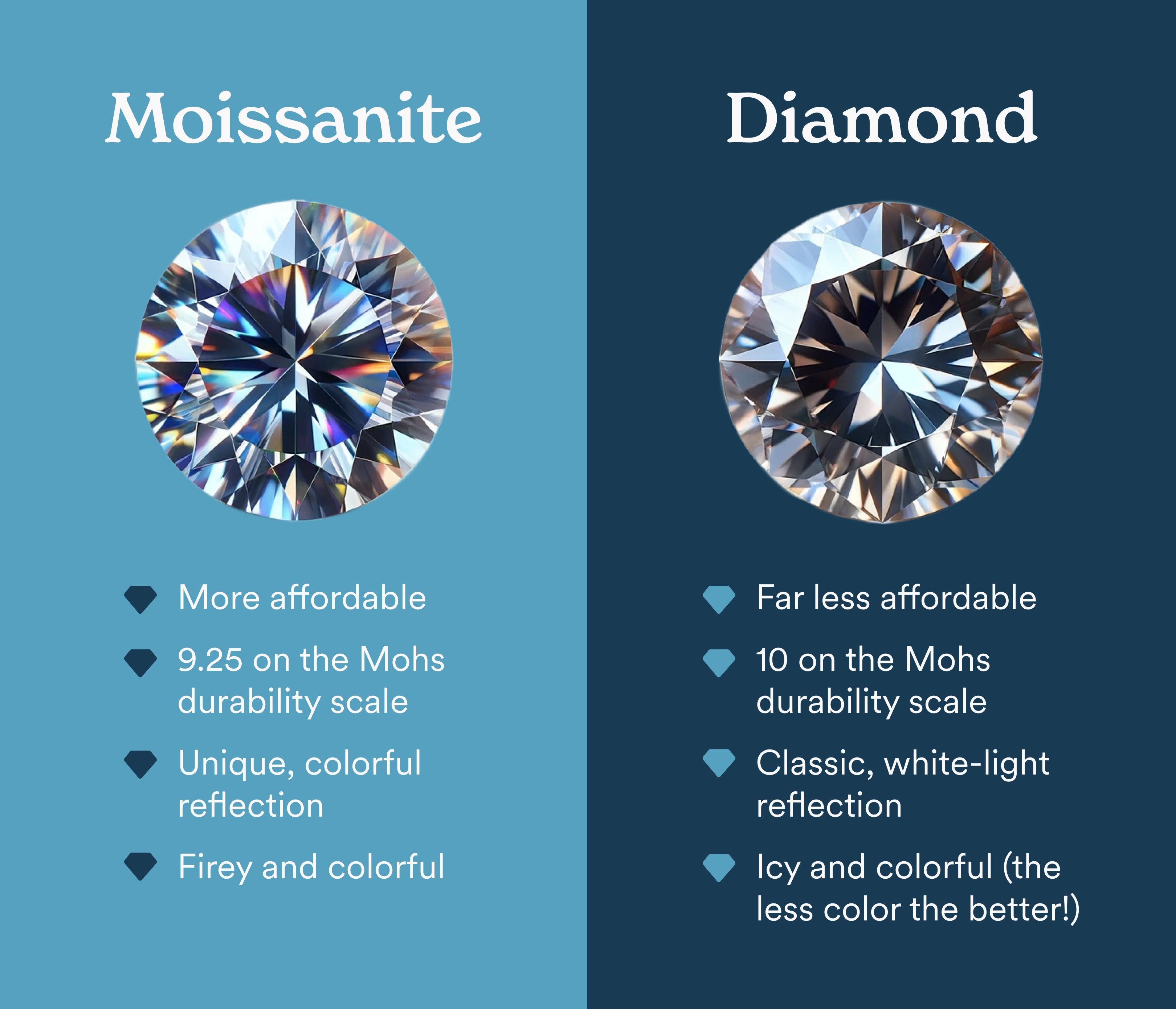
Investors and smart buyers often prioritize longevity. On the Mohs Scale of Mineral Hardness, which measures a material’s resistance to scratching, the diamond sits at a 10. Moissanite follows closely behind at a 9.25. This makes it harder than rubies, sapphires, and emeralds, ensuring that the stone is suitable for everyday wear, such as in wedding bands. Because it is highly resistant to heat and abrasion, it remains an excellent choice for those who view their jewelry as a durable good that will not require frequent replacement or specialized repair.
The Economics of Luxury Jewelry
To understand why moissanite is disrupting the market, one must analyze the traditional economics of the diamond trade. For decades, the “engagement ring” has been marketed as a mandatory financial investment—a symbol of commitment that should cost several months’ salary. This social construct has long been supported by artificial supply constraints and heavy branding.
Challenging the Diamond Monopoly
Moissanite effectively bypasses the traditional supply chain markups that plague the diamond industry. Because it is manufactured rather than mined, it does not rely on the labor-intensive, environmentally costly, and ethically complex processes associated with diamond extraction. For the ethically conscious consumer, this provides a “guilt-free” luxury product that requires no extractive capital.
From a business finance standpoint, the lower barrier to entry for retailers to stock high-quality moissanite—compared to the massive upfront inventory investment required for diamond stock—has allowed smaller, independent jewelry brands to flourish. This shift has democratized the market, forcing legacy jewelers to re-evaluate their pricing strategies and value propositions to remain competitive against more transparent, cost-effective options.
Resale Value and Asset Liquidity
It is critical to address the elephant in the room: jewelry is rarely a traditional financial investment. Unlike gold or silver, which are commodities with global liquidity, gemstones—both diamonds and moissanite—typically suffer a steep “retail-to-wholesale” price drop the moment they leave the store.

When you purchase a diamond, you pay a premium for brand marketing and retail overhead. When you go to sell it, you are generally offered only a fraction of what you paid. Moissanite, while cheaper to buy, does not pretend to be a speculative investment. By paying significantly less upfront, the consumer avoids the “luxury premium” loss associated with diamonds. In essence, by spending less on the stone, you minimize your potential loss, making it a more prudent financial choice for those who do not wish to tie up capital in depreciating luxury assets.
The Technical Superiority: Brilliance and Fire
One of the reasons moissanite has gained such massive market traction is its superior optical performance. If you are comparing stones, the technical metrics of brilliance and dispersion are key.
Refractive Index
The refractive index measures how much light is bent as it enters a stone. Diamonds have a refractive index of 2.42. Moissanite has an even higher index, ranging from 2.65 to 2.69. This means that moissanite actually returns more light to the eye than a diamond.
Dispersion (Fire)
Dispersion refers to the stone’s ability to split white light into the colors of the rainbow. This is often referred to as “fire.” Moissanite has a dispersion rating of 0.104, which is significantly higher than that of a diamond (0.044). In practical terms, this results in a stone that flashes with vibrant, spectral colors under direct light. While some traditionalists prefer the “white light” brilliance of a diamond, many modern consumers are drawn to the fiery, high-energy sparkle of moissanite.
Cleaning and Maintenance
From a functional perspective, moissanite is remarkably easy to maintain. Because it is resistant to oil and dirt accumulation, it stays cleaner for longer than many other stones. For the professional who wants their jewelry to look impeccable without the constant expense of professional deep-cleaning services, moissanite provides a high-performance, low-maintenance lifestyle benefit.
Strategic Buying: Tips for the Financial-Savvy Consumer
When purchasing moissanite, it is essential to approach the transaction with the same scrutiny you would apply to any significant purchase. As the market has grown, so too has the variety of quality levels.
Cut and Clarity Standards
Just like diamonds, moissanite is graded on cut, color, and clarity. However, because it is lab-created, most commercially available moissanite is nearly flawless. When shopping, look for “colorless” or “near-colorless” grades. “Colorless” moissanite (D-E-F color range) is virtually indistinguishable from the highest-quality diamonds to the naked eye. Opting for a high-quality “hearts and arrows” cut will ensure that the light return is maximized, further enhancing the stone’s professional, high-end appearance.
Selecting the Right Retailer
Because the market is decentralized, transparency is your greatest asset. Seek out retailers that offer:
- Certifications: While not always required, certificates from reputable third-party labs can verify the quality and origin of the stone.
- Warranty: A reputable seller will often provide a lifetime warranty on the stone’s optical properties, protecting your purchase against cloudiness or discoloration.
- Return Policies: Given that moissanite looks different in various lighting conditions, ensure the retailer offers a reasonable trial period.

Budgetary Discipline
The most compelling argument for moissanite is the potential for budget optimization. By choosing a 2-carat moissanite instead of a 2-carat diamond, a couple can save thousands of dollars. From a financial planning perspective, those savings—if diverted into a high-yield savings account, an index fund, or a retirement vehicle—can grow significantly over time. Jewelry is meant to be enjoyed, but it should not come at the expense of your long-term financial health. Moissanite allows you to enjoy the aesthetic of luxury without the destructive financial impact of the traditional diamond industry markup.
In conclusion, moissanite is more than just a trend; it is a rational, scientifically sound, and economically intelligent choice for the modern buyer. By focusing on durability, optical excellence, and capital preservation, it represents the evolution of the jewelry market toward a more consumer-centric future.
aViewFromTheCave is a participant in the Amazon Services LLC Associates Program, an affiliate advertising program designed to provide a means for sites to earn advertising fees by advertising and linking to Amazon.com. Amazon, the Amazon logo, AmazonSupply, and the AmazonSupply logo are trademarks of Amazon.com, Inc. or its affiliates. As an Amazon Associate we earn affiliate commissions from qualifying purchases.