
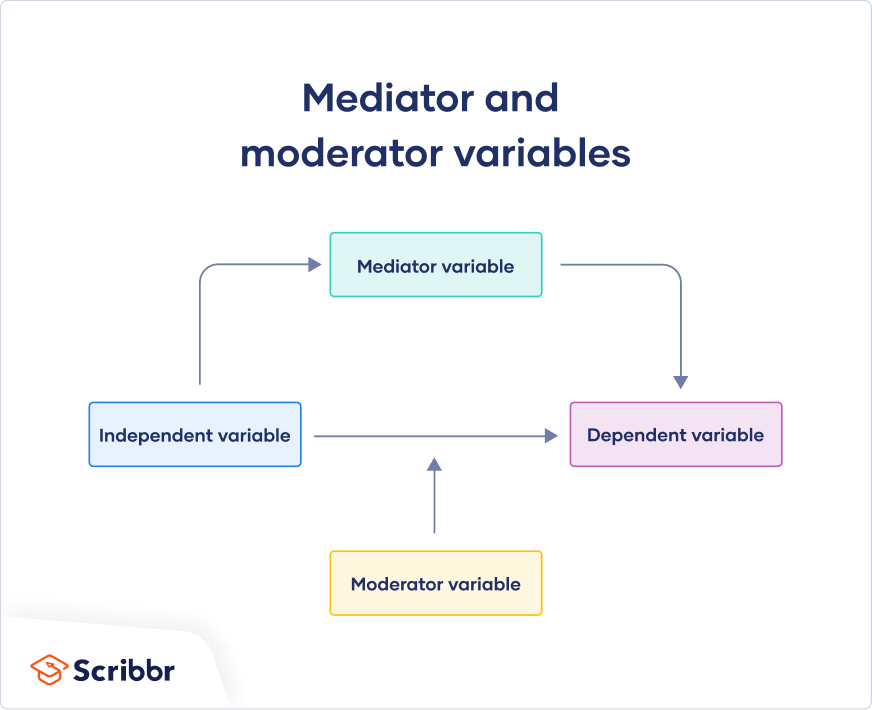
In the landscape of modern brand strategy and market research, data is the lifeblood of decision-making. However, raw data often tells a fragmented story. To truly understand consumer behavior, brand loyalty, or the efficacy of a marketing campaign, professionals must look beyond simple cause-and-effect relationships. This is where the concept of a moderating variable becomes indispensable. A moderating variable is the “it depends” factor in your analysis—a third variable that changes the strength or even the direction of the relationship between an independent variable (the cause) and a dependent variable (the effect). For brand strategists and marketers, identifying these variables is the difference between a campaign that flops and one that scales.
The Anatomy of Influence: Understanding the Mechanism
At its core, moderation is about context. When we analyze a marketing strategy, we often look for direct correlations: Does increasing advertising spend (independent variable) lead to higher sales (dependent variable)? While this relationship seems straightforward, it rarely exists in a vacuum. A moderating variable introduces a condition that alters how the independent variable impacts the outcome.
Defining the Independent, Dependent, and Moderating Variables
To conceptualize this, visualize a standard marketing funnel. The independent variable is your input—perhaps a new social media influencer campaign. The dependent variable is your output—conversion rates or brand sentiment. The moderating variable acts as a lever that can amplify or dampen the influence of that influencer campaign. For instance, if you are selling high-end tech, “disposable income” might be the moderator. The influencer’s content might be highly persuasive, but its effectiveness in driving sales is significantly higher among audiences with high disposable income than those with low disposable income.
Why Contextualization Matters in Brand Strategy
Without considering moderation, marketers fall into the trap of “average” thinking. If a campaign performs well in one segment but fails in another, a marketer who ignores moderating variables will simply see a lukewarm aggregate result and potentially kill a successful strategy. By identifying the moderator—be it geography, age, or brand familiarity—a team can pivot the strategy to target the specific segments where the moderator is most favorable, rather than abandoning the entire concept.
Identifying Moderating Variables in Marketing Data
The challenge for modern brand strategists is not just acknowledging that context matters, but scientifically identifying which variables are pulling the strings. This requires a shift from descriptive analytics (what happened) to diagnostic and predictive analytics (why and under what conditions it happened).
The Role of Customer Segmentation
Segmentation is essentially the process of searching for moderating variables. When you break your market into cohorts based on psychographics, behavior, or demographics, you are implicitly testing for moderation. If you notice that your email open rates are significantly higher for “returning customers” versus “new leads,” you have identified a moderating variable: brand relationship status. This relationship status modifies the impact of your email subject line on the open rate.
Testing for Moderation Through A/B Testing
Rigorous A/B testing is the gold standard for discovering these nuances. If you are running an experiment, simply looking at the conversion difference between version A and version B is only the beginning. The next step is to slice that data by a potential moderator. For example, does version A outperform version B only on mobile devices? If so, “device type” is your moderating variable. This insight allows for technical optimization—adjusting the landing page for mobile users—which is a much more surgical and effective approach than simply calling version A the “winner” and applying it to all traffic.

Strategic Implications for Brand Growth
Once a moderating variable is identified, it transforms from a data point into a competitive advantage. It changes the way a brand allocates its budget, designs its messaging, and manages its long-term growth trajectory.
Personalization at Scale
The holy grail of modern marketing is hyper-personalization. Understanding moderating variables allows brands to move beyond generic demographic targeting. Instead of assuming all 30-year-olds like the same products, you look for the moderators that influence their purchase decisions. Perhaps for one segment, “social proof” is a massive moderator that increases the conversion impact of your ads; for another, “technical specifications” are the true moderator. By using these moderators as triggers in your CRM or ad-buying platforms, you can deliver the right message to the right person at the right time.
Preventing “The Efficiency Trap”
Many brands suffer from the efficiency trap—spending more money on tactics that worked in the past without accounting for changing moderators. For example, a brand may have seen high ROI from TV advertising five years ago. They continue to dump budget into TV, unaware that “digital media consumption habits” have become a negative moderator. The input (TV ads) remains the same, but the moderator (the shift to streaming and social) has fundamentally altered the relationship, weakening the impact on the outcome (brand awareness). Recognizing this shift allows a brand to reallocate resources to channels where the variables are working in their favor.
Advanced Analytical Approaches
As brands gather more data, the complexity of these relationships grows. Modern marketing departments are increasingly moving toward multivariate analysis to track multiple moderators at once.
Multivariate Analysis and Machine Learning
In the era of AI and big data, manual segmentation is no longer sufficient. Machine learning models are incredibly efficient at identifying “interaction effects”—the technical term for moderation. These algorithms scan vast datasets to find patterns that a human analyst might miss. For instance, a model might reveal that your brand’s discount code (independent variable) only drives higher sales (dependent variable) if the customer has visited your site at least three times in the last month (moderator) AND is shopping from a desktop computer (second moderator). These complex, multi-layered insights are what drive true growth hacking.
The Human Element: Interpretation and Application
While machines can identify these correlations, the human element remains vital for interpretation. A machine can tell you that a moderating variable exists, but a strategist must decide if it is actionable. Is it cost-effective to tailor your strategy to every individual moderator? Probably not. The art of brand strategy lies in prioritizing which moderating variables are significant enough to warrant a strategic pivot and which are merely statistical noise. By focusing on the moderators that represent the largest segments of your target audience, you can drive significant impact without over-complicating your operational workflows.

Conclusion: Mastering the Nuance
In the professional world of brand strategy, the most successful leaders are those who embrace the complexity of the market. They understand that a simple A-to-B strategy is rarely sufficient in a dynamic consumer environment. By mastering the concept of the moderating variable, you gain a deeper understanding of your own data. You stop searching for a single “magic bullet” marketing tactic and start looking for the conditions that make your brand resonate.
The goal is to move beyond seeing sales as a simple function of marketing spend. Instead, see the market as an intricate web of influences. When you identify the moderating variables, you hold the keys to the engine room of your growth. Whether it is seasonality, economic climate, brand sentiment, or device usage, these variables provide the context required to turn data into a story, and a story into a strategy. In a world of increasing digital noise, clarity is your greatest asset. Identifying your moderating variables is the most reliable way to achieve that clarity, ensuring that your brand efforts are not just loud, but effectively positioned to capture the hearts and wallets of your target audience.
aViewFromTheCave is a participant in the Amazon Services LLC Associates Program, an affiliate advertising program designed to provide a means for sites to earn advertising fees by advertising and linking to Amazon.com. Amazon, the Amazon logo, AmazonSupply, and the AmazonSupply logo are trademarks of Amazon.com, Inc. or its affiliates. As an Amazon Associate we earn affiliate commissions from qualifying purchases.