
Defining the “middle class” in the United States has evolved from a simple measure of household earnings into a complex assessment of financial stability, purchasing power, and geographic economic realities. While many Americans identify as middle class, the actual dollar figure required to maintain that status has shifted dramatically due to inflation, the rising cost of housing, and the changing structure of the modern economy. Understanding where you stand requires looking beyond national averages and examining the nuances of cost-of-living adjustments, debt-to-income ratios, and long-term financial security.
The Quantitative Definition of Middle Class
For economists and researchers, the most common way to define the middle class is based on the Pew Research Center’s framework, which classifies households as middle-income if they earn between two-thirds and double the national median household income. Based on the most recent data from the U.S. Census Bureau, the national median household income hovers around $75,000. Under this formula, a middle-class household could range anywhere from roughly $50,000 to $150,000 annually.
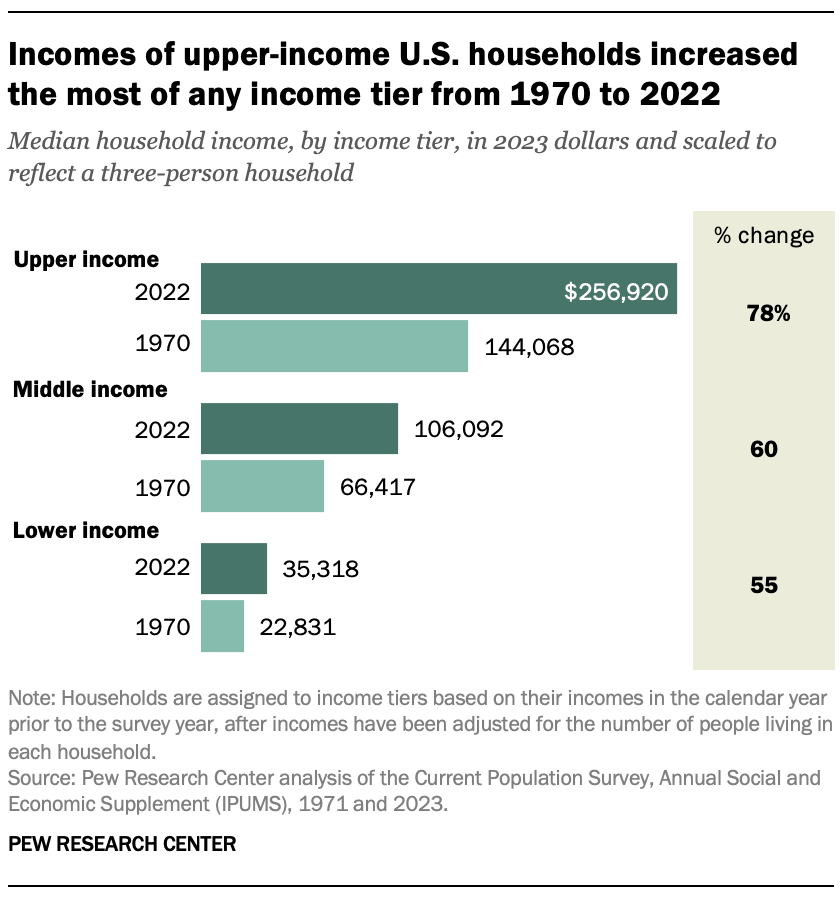
However, this broad range can be misleading. A family of four living in a rural area in the Midwest with a household income of $60,000 likely enjoys a very different quality of life than a family of four in a major coastal city earning the same amount. The definition is inherently relative, meaning that “middle class” is less about a specific tax bracket and more about one’s ability to participate in the standard of living associated with the American dream—owning a home, paying for higher education, and saving for retirement.
The Role of Geographic Disparity
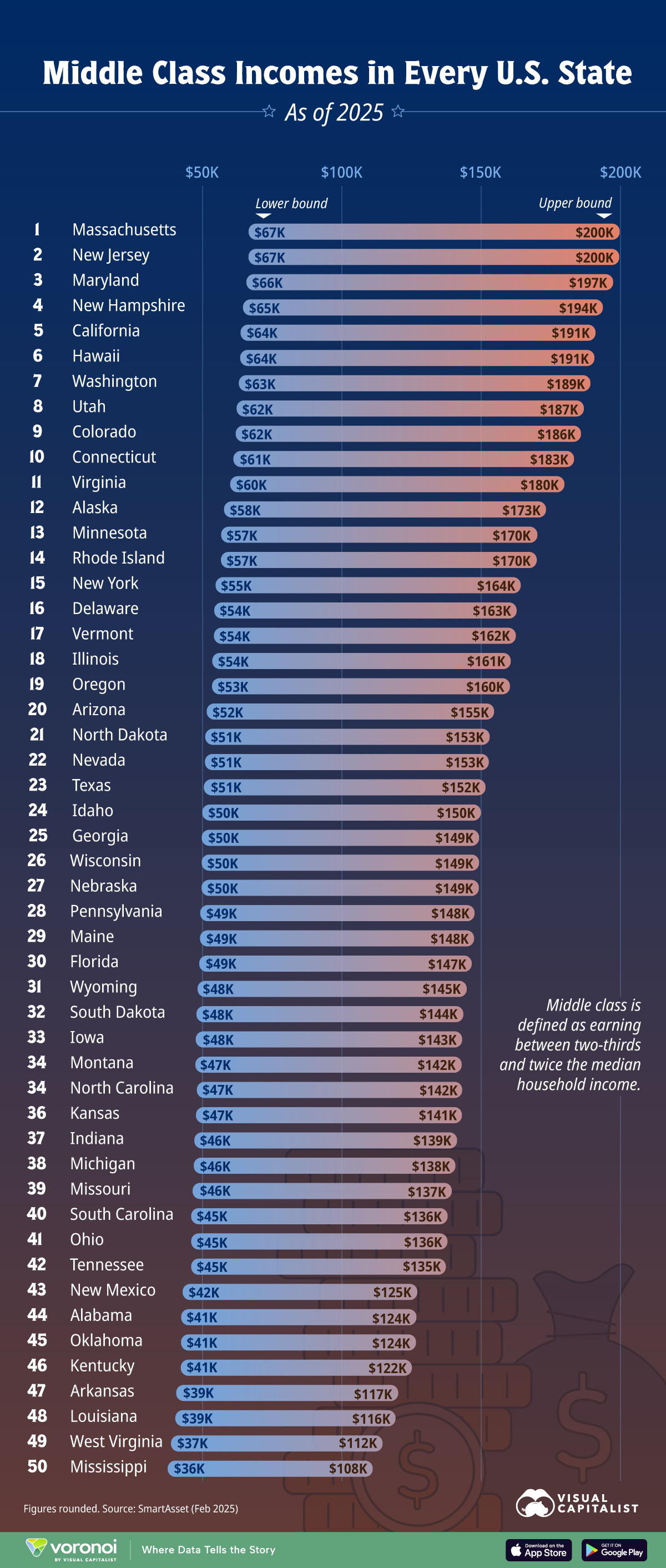
The primary disruptor to a singular “middle class” number is geography. In high-cost-of-living (HCOL) hubs like San Francisco, New York City, or Washington, D.C., an annual income of $150,000 might barely cover basic necessities and rent for a family. Conversely, in low-cost-of-living (LCOL) areas, that same salary would provide significant disposable income, allowing for robust savings, travel, and investment.
When evaluating whether you are middle class, you must look at regional purchasing power parity. If your income falls within the middle-income bracket nationally but your rent consumes 40% or more of your monthly take-home pay, your actual financial standing is arguably lower than the classification suggests.
The Shift from Income to Financial Stability
In recent years, financial experts have moved away from focusing solely on gross income and toward a “net-worth” or “cash-flow” perspective. Income is merely the input; the true measure of middle-class status is the ability to sustain a lifestyle without living paycheck to paycheck.
The Three Pillars of Middle-Class Security
To assess if your income is truly “middle class” in practice, you must analyze three critical financial pillars:
- The Ability to Absorb Financial Shocks: A true middle-class household should have a liquid emergency fund capable of covering three to six months of expenses. If an unexpected car repair or medical bill creates a debt-inducing crisis, the income level is insufficient to support a stable middle-class life, regardless of the annual salary.
- Discretionary Savings and Retirement Funding: Middle-class status implies that after all fixed obligations—housing, utilities, food, and insurance—are met, there is a remaining surplus. This surplus must be directed toward long-term goals like 401(k) contributions, Roth IRAs, or brokerage investments. If your income leaves zero room for wealth accumulation, you are likely in the working class rather than the middle class.
- Debt Management: The “middle class” once meant debt-free living. Today, it often includes manageable levels of debt, such as a mortgage or low-interest student loans. However, if your debt-to-income ratio (DTI) is consistently high due to revolving credit card debt, your income is failing to sustain your lifestyle, pushing you into a “precarious class” that mimics the middle class but lacks the underlying stability.
Why the “Middle Class” Feeling is Fading
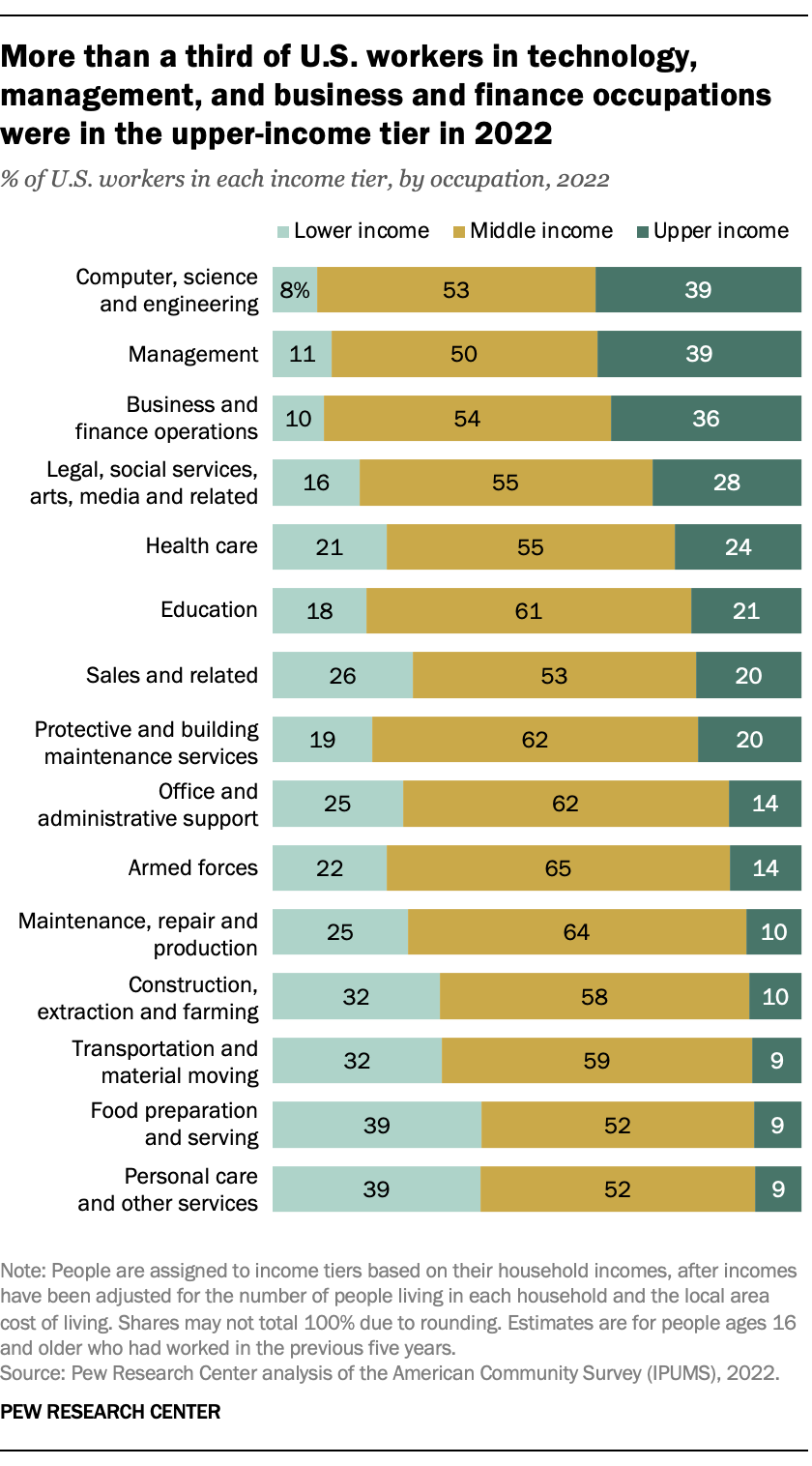
Many Americans who earn well above the median income report that they do not feel middle class. This phenomenon is driven by the “inflation of necessity.” Over the past three decades, the costs of the three major pillars of middle-class life—housing, healthcare, and education—have risen at rates significantly higher than wage growth.
The Housing Squeeze
Homeownership has historically been the primary vehicle for middle-class wealth building. When home prices decouple from local wage growth, the “middle class” becomes bifurcated. Those who bought property years ago and locked in lower interest rates are effectively wealthier than those earning the same salary today but entering the market at current interest rates and prices. This creates a psychological gap where two people with identical incomes have vastly different net worths and monthly cash-flow realities.
The Education and Healthcare Burden
The escalating cost of higher education has changed the calculation for middle-class families. For many, a “middle-class” income is now consumed by student loan payments, delaying the ability to buy homes or save for retirement. Similarly, the rise in out-of-pocket healthcare costs means that even with employer-sponsored insurance, a middle-class household can be one health crisis away from financial insolvency. These systemic costs have shifted the definition of a “middle-class salary” upward, forcing households that once felt comfortable to stretch their budgets significantly.
Strategies for Maintaining Middle-Class Status
Since the cost of living continues to evolve, maintaining middle-class status requires more than just a salary increase; it requires a strategic approach to financial management.
1. Optimize Your Tax and Investment Vehicles
If you earn a middle-class income, your primary tool for staying there is tax efficiency. Maximize your contributions to tax-advantaged accounts like HSAs (Health Savings Accounts) and 401(k)s. These tools effectively lower your taxable income while building assets that grow over time. By shielding more of your earnings from the IRS, you retain more of your purchasing power.
2. Guard Against Lifestyle Creep
As incomes rise, the temptation to upgrade housing, vehicles, and leisure activities often scales proportionally. This is “lifestyle creep,” and it is the greatest enemy of middle-class stability. To remain truly middle class, you must ensure that your savings rate increases alongside your income. Every raise should be treated as a combination of rewarding your current lifestyle and securing your future net worth.
3. Diversification of Income
In an unpredictable economy, relying on a single salary is no longer the hallmark of safety. The new middle class often includes individuals who have diversified their income streams. Whether through freelance work, side hustles, or dividend-paying investments, generating secondary income can bridge the gap during economic downturns and provide the extra cushion needed to remain secure when the primary household income is stagnant.
Conclusion: Redefining Your Personal Benchmark
There is no single “magic number” that defines a middle-class income in the United States. While the statistical range provides a starting point, your specific number is determined by your zip code, your debt profile, your family size, and your long-term goals.
Being middle class is ultimately a state of financial autonomy—it is the freedom to make choices about your future without the constant, immediate threat of systemic financial collapse. If you are struggling to reach that point, focus on the fundamentals: control your debt, prioritize your savings rate, and ensure your housing costs do not exceed the recommended 30% of your gross income. By mastering these financial behaviors, you can carve out a secure middle-class life regardless of the shifting economic landscape.
aViewFromTheCave is a participant in the Amazon Services LLC Associates Program, an affiliate advertising program designed to provide a means for sites to earn advertising fees by advertising and linking to Amazon.com. Amazon, the Amazon logo, AmazonSupply, and the AmazonSupply logo are trademarks of Amazon.com, Inc. or its affiliates. As an Amazon Associate we earn affiliate commissions from qualifying purchases.