
In the rapidly evolving world of information technology, the paradigm of software architecture is shifting away from monolithic, centralized structures toward decentralized, intelligent ecosystems. At the heart of this transformation lies the Multi-Agent System (MAS). As artificial intelligence continues to permeate every facet of digital infrastructure, understanding what a MAS is and how it functions has become essential for developers, tech strategists, and enterprise leaders alike.
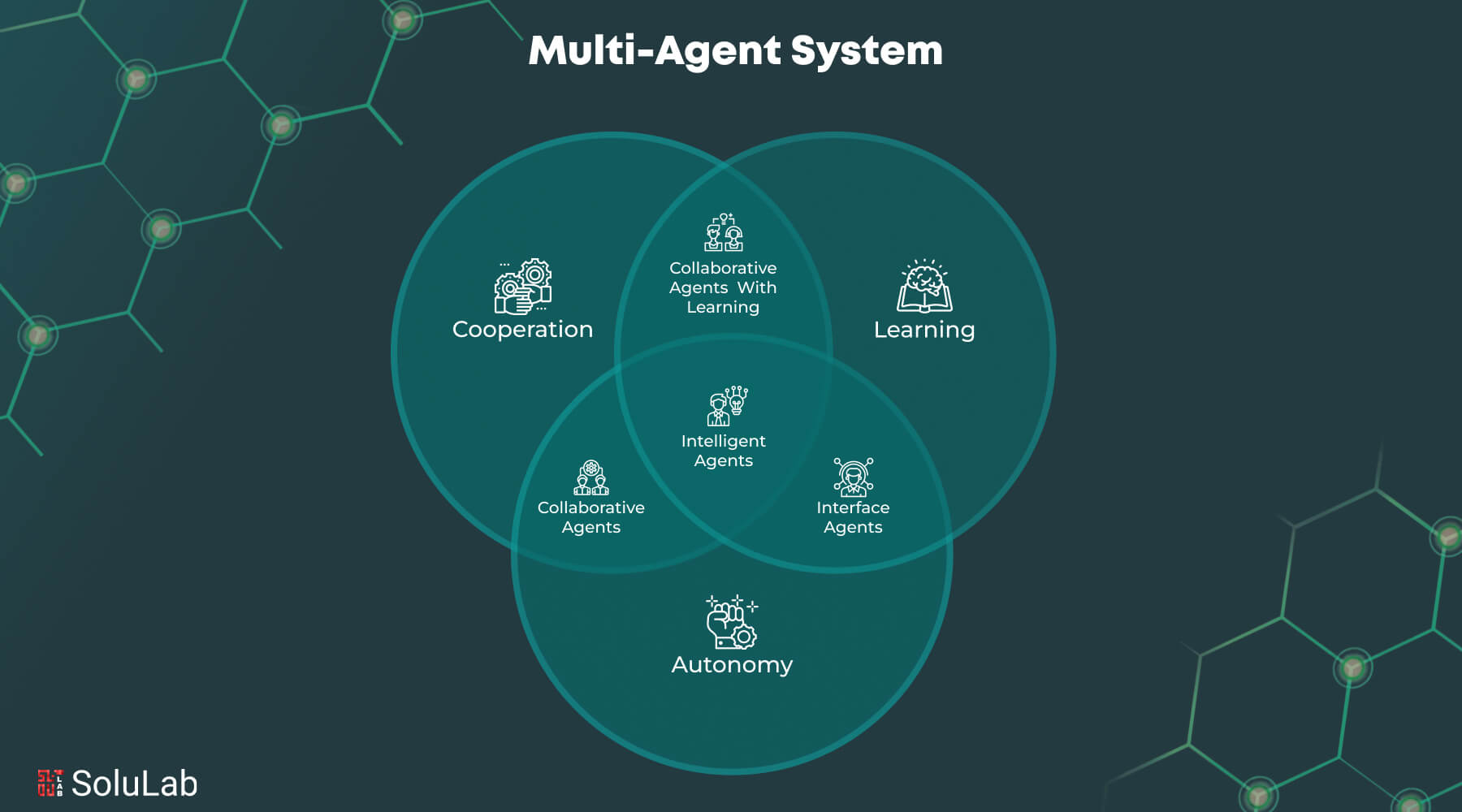
A Multi-Agent System is a computerized system composed of multiple interacting intelligent agents. While a single agent is an autonomous entity—such as a software program or a robot—that observes its environment and takes actions to achieve specific goals, a MAS is the collective framework that allows these agents to work together. This collaborative environment enables the resolution of problems that are too complex for an individual agent or a traditional centralized system to handle.

Defining the Multi-Agent System (MAS)
To grasp the significance of MAS, one must first understand the fundamental unit of the system: the agent. In a technical context, an agent is not merely a piece of code; it is a specialized software entity characterized by four primary traits: autonomy, social ability, reactivity, and proactiveness.
The Core Characteristics of Agents
Autonomy is the most critical feature of an agent. Unlike traditional software that requires a user command for every action, an agent operates without the direct intervention of humans or others and has some control over its actions and internal state. Social ability refers to the agent’s capacity to interact with other agents (and possibly humans) via an agent-communication language. Reactivity allows agents to perceive their environment and respond in a timely fashion to changes, while proactiveness enables them to take the initiative to reach their design goals.
When these agents are placed within a Multi-Agent System, they become part of a distributed network. In this environment, no single agent has a global view of the entire system, nor does any single agent have the power to control the whole. Instead, the “intelligence” of the system emerges from the interactions, negotiations, and competitions between the individual agents.
Distributed Intelligence vs. Centralized Processing
The primary differentiator between a MAS and a traditional centralized system is the location of logic and decision-making. In a centralized system, a single master controller processes all data and issues commands. This creates a “single point of failure”—if the controller crashes, the whole system dies.
In contrast, a Multi-Agent System utilizes distributed intelligence. Because the workload and decision-making power are spread across many agents, the system is inherently more robust. If one agent fails, others can often compensate or reroute tasks, ensuring the system remains operational. This decentralized nature makes MAS particularly effective for massive-scale operations, such as managing a global telecommunications network or a fleet of autonomous delivery drones.
How MAS Architecture Works
The architecture of a Multi-Agent System is designed to facilitate communication and coordination among autonomous units. Since agents may be developed by different vendors or written in different programming languages, the framework must provide standardized protocols for interaction.
Communication Protocols and Interoperability
For agents to work together, they need a common language. In the tech world, this is often achieved through Agent Communication Languages (ACL), such as FIPA-ACL (Foundation for Intelligent Physical Agents). These languages go beyond simple data transfer; they allow agents to convey “performatives”—intentions such as requesting information, proposing a deal, or refusing a task.
Interoperability is maintained through “middle agents” or “directory facilitators.” Think of these as the Yellow Pages of the MAS world. When a new agent enters the system, it registers its capabilities with a directory facilitator. When another agent needs a specific task performed (e.g., “calculate the most efficient shipping route”), it asks the facilitator to point it toward an agent with those specific skills.
Coordination and Conflict Resolution
In any system with multiple autonomous actors, conflict is inevitable. Two agents might compete for the same computing resources, or their individual goals might contradict one another. MAS architecture incorporates sophisticated coordination mechanisms to handle these scenarios.
One common method is through “market-based” mechanisms or auctions. An agent with a task to complete might put it out for “bid,” and other agents will respond with their “price” (in terms of time, energy, or computational cost). The system then settles on the most efficient agent for the job. Other systems use “negotiation protocols,” where agents go through rounds of proposals and counter-proposals until a mutually beneficial agreement is reached. This mimics human social and economic structures, applied at the speed of silicon.

Practical Applications of MAS in Today’s Software Ecosystem
The theoretical framework of Multi-Agent Systems is currently being applied to some of the most challenging problems in modern technology. From the way we manage energy to the way we build generative AI, MAS is the “hidden” logic driving efficiency.
Autonomous AI Agents and LLM Integration
We are currently witnessing a surge in “Agentic AI.” While Large Language Models (LLMs) like GPT-4 are powerful, they are essentially reactive. However, when integrated into a MAS framework, these models become autonomous agents.
In a tech environment, you might have one AI agent specialized in writing code, another specialized in security auditing, and a third specialized in project management. In a MAS setup, the “Project Manager Agent” can break down a software request, assign the coding task to the “Developer Agent,” and then pass the output to the “Security Agent” for review. This multi-agent collaboration allows for the creation of complex software with minimal human oversight, representing a massive leap in AI utility.
Smart Grids and Internet of Things (IoT)
The modern power grid is becoming increasingly complex with the addition of renewable energy sources like wind and solar. A MAS is the ideal way to manage this. Each solar array, wind turbine, and battery storage unit can be represented by an agent. These agents communicate in real-time to balance supply and demand. If a cloud passes over a solar farm, that farm’s agent can instantly signal a battery agent to discharge power, ensuring the stability of the grid without needing a central command center to micromanage every millisecond of activity.
Supply Chain Optimization and Logistics
In global logistics, a Multi-Agent System can represent every ship, truck, warehouse, and individual package as an agent. This allows for dynamic rerouting. If a port is blocked or a weather event occurs, the individual “truck agents” and “package agents” can negotiate new routes and storage solutions on the fly. This level of granularity and responsiveness is impossible for centralized logistics software to maintain at a global scale.
The Benefits and Challenges of Implementing MAS
While Multi-Agent Systems offer unparalleled flexibility, they are not without their complexities. Implementing a MAS requires a shift in how developers think about software design and maintenance.
Scalability and Robustness
The biggest advantage of MAS is scalability. Because agents are modular and autonomous, adding more agents to a system typically doesn’t require a total overhaul of the architecture. You can simply deploy more agents, which will then register themselves and begin interacting. This “plug-and-play” nature is vital for cloud computing and edge computing environments where the number of connected devices fluctuates constantly.
Furthermore, the robustness of a MAS is a major selling point for mission-critical software. In a decentralized system, there is no “brain” to kill. The intelligence is systemic, meaning the system can degrade gracefully rather than crashing catastrophically when things go wrong.
Complexity and Debugging Hurdles
The flip side of decentralized intelligence is unpredictability. Because agents are autonomous and their interactions are complex, a MAS can exhibit “emergent behavior”—actions or patterns that the original programmers did not explicitly code. While this is often a sign of high-level intelligence, it can make debugging a nightmare.
Testing a MAS requires simulating thousands of interactions and account for non-deterministic outcomes. Unlike a standard app where “Input A” always leads to “Output B,” in a MAS, “Input A” might lead to “Output B” today and “Output C” tomorrow, depending on how the various agents negotiate the state of the environment.
The Future of Multi-Agent Systems: Towards Collective Intelligence
As we look toward the future of technology, the role of MAS is set to expand significantly. We are moving toward a “Web of Agents,” where your personal digital assistant agent will interact with a restaurant’s booking agent, a ride-sharing service’s dispatch agent, and a city’s traffic management agent to handle your entire evening schedule automatically.
The convergence of MAS with blockchain technology is also a burgeoning field. Blockchain can provide a secure, immutable ledger for agents to record their transactions and “contracts,” providing a layer of trust and accountability to autonomous software systems.
Ultimately, Multi-Agent Systems represent the next stage in software evolution: the transition from tools that we use to ecosystems that act on our behalf. By leveraging the power of distributed intelligence, MAS is enabling a more resilient, scalable, and intelligent digital world. Whether it is managing the complexities of a smart city or automating the next generation of software development, the “agents” are already at work, collaborating in the background to solve the problems of tomorrow.
aViewFromTheCave is a participant in the Amazon Services LLC Associates Program, an affiliate advertising program designed to provide a means for sites to earn advertising fees by advertising and linking to Amazon.com. Amazon, the Amazon logo, AmazonSupply, and the AmazonSupply logo are trademarks of Amazon.com, Inc. or its affiliates. As an Amazon Associate we earn affiliate commissions from qualifying purchases.